


In the evolving landscape of PC gaming, few companies hold as much sway as Valve. Following the massive, transformative success of the Steam Deck—a device that effectively popularized the handheld PC gaming category—the conversation has naturally shifted toward what comes next. However, while consumers often clamor for a "Steam Deck 2," Valve is concurrently navigating the return of a different hardware philosophy: the Steam Machine.
In a recent, exclusive dialogue with Valve engineers Pierre-Loup Griffais and Yazan Aldehayyat, the company shed light on the divergent design philosophies governing its handheld and living-room hardware. Far from being a static roadmap of constant updates, Valve’s approach is a nuanced, data-driven strategy that mirrors the broader, more unpredictable cycles of the PC industry.
The Philosophical Divide: Steam Deck vs. Steam Machine
To understand Valve’s hardware future, one must first distinguish between the company’s two primary form factors. The Steam Deck is a curated, "fixed-target" experience. Its success relies on a consistent hardware baseline that allows developers to optimize games specifically for a known set of specifications. This reliability is the bedrock of the handheld’s appeal; when a user buys a Steam Deck, they have a reasonable expectation of performance for several years.
Conversely, the Steam Machine represents Valve’s attempt to bring the traditional PC gaming experience—with all its inherent variability—into the living room. During our discussion, Pierre-Loup Griffais underscored this distinction:
"I don’t think we’re thinking about the Steam Machine with quite as long of a timeframe as something like the Steam Deck. The Steam Deck, by its nature, needs a little bit more of a fixed performance target for both developers and users. Whereas the Steam Machine is very much in line with gaming PCs. There’s a big gradient of it: low-end CPUs, high-end CPUs, and GPUs. The Steam Machine sits somewhere on that gradient."
This fundamental difference means that while the Steam Deck requires a "generation" approach—where hardware leaps are timed to provide meaningful performance gains for a static software library—the Steam Machine operates more like a standard gaming desktop. It is designed to scale, making a rigid five-year update cycle less relevant to its core mission.
A Brief Chronology: From Concept to Reality
The journey of Valve’s hardware ecosystem has been long and punctuated by significant pivots.
- 2013–2015: The First Wave: Valve initially introduced the concept of Steam Machines as a series of pre-built, third-party Linux-based consoles. These were meant to challenge the console hegemony of Sony and Microsoft. However, the ecosystem struggled with a lack of native Linux software and high price-to-performance ratios, leading to a quiet decline.
- 2022: The Steam Deck Revolution: Valve returned to hardware with a singular, high-quality, in-house device. By leveraging SteamOS and Proton (a compatibility layer that allows Windows games to run on Linux), Valve solved the software library problem that plagued the original Steam Machines.
- 2026 and Beyond: The New Steam Machine: The modern iteration of the Steam Machine is a culmination of lessons learned. It is no longer just a "console" but a strategic extension of the Steam platform, designed to be more flexible and integrated into the modern living room environment, leveraging the massive success of the Steam Deck’s software foundation.
The Economic and Technical Landscape
The current hardware cycle is defined by a unique set of pressures, including global supply chain complexities and a changing semiconductor market. Valve is not immune to these realities. As consumers have noted, the price of high-end hardware—including recent 1TB iterations of the Steam Deck—has seen fluctuations that reflect the rising costs of R&D and manufacturing.
However, the team at Valve remains optimistic about the longevity of their current offerings. Yazan Aldehayyat noted that the industry is witnessing a "natural slowdown" in the PC upgrade cycle. In the past, hardware became obsolete every three years; today, a mid-range PC can remain competitive for significantly longer.
"I think we’re seeing a natural slowdown of the upgrade cycle for gaming PCs," Aldehayyat said. "In some ways, that probably means the Steam Machine is a viable product for longer than you would have expected if it was launching 10 years ago. It’s going to be in line with typical PC upgrade cycles."
This observation is critical. By aligning their hardware updates with the actual habits of PC gamers rather than the arbitrary release windows of traditional consoles, Valve is effectively hedging against the risk of premature obsolescence.
Official Responses: What We Know About "Version 2.0"
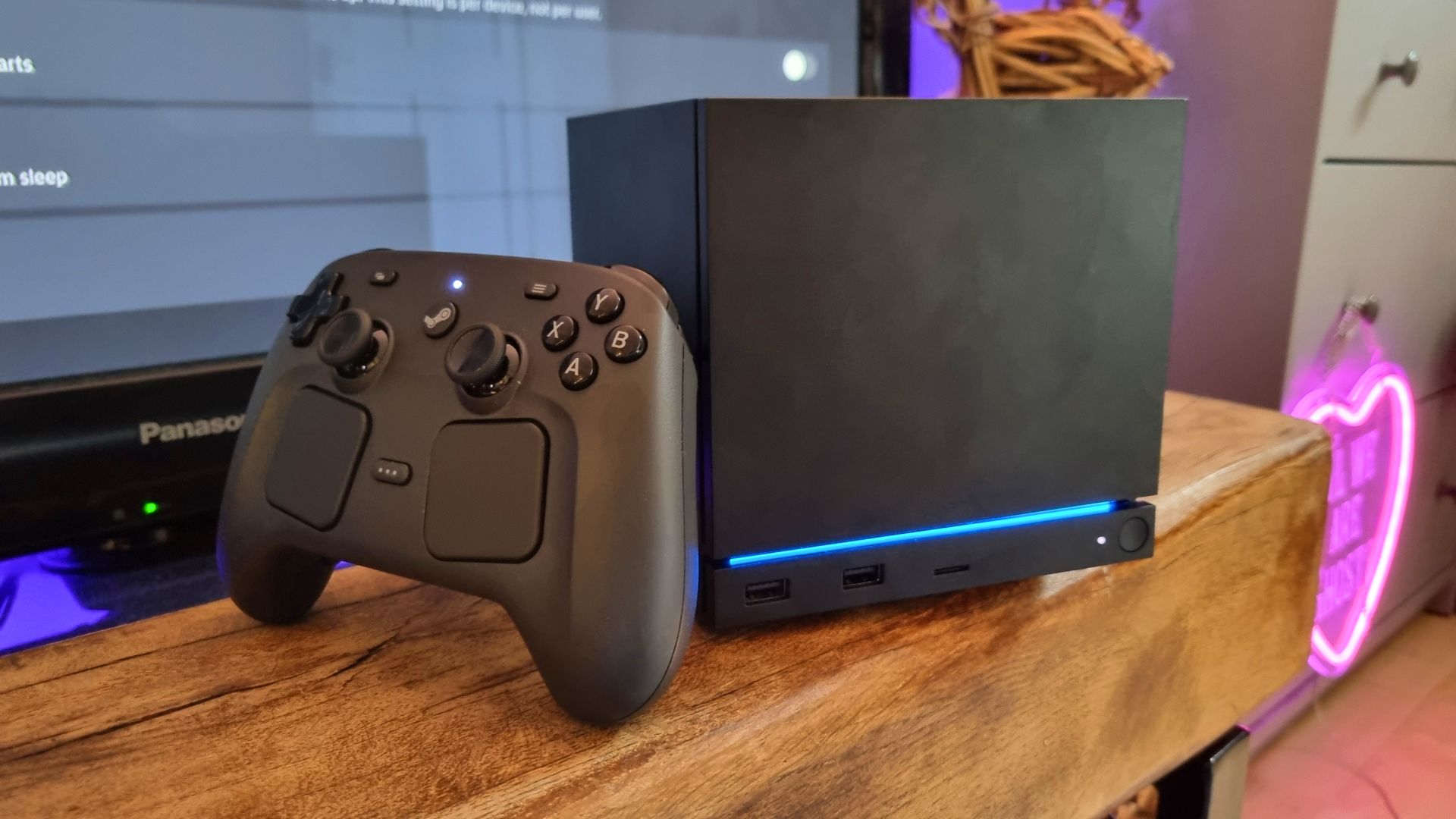
When asked directly about the timeline for a "Steam Machine 2," the responses from Griffais and Aldehayyat were measured. There is no immediate "N-year" roadmap for a successor. Instead, Valve is observing the market with a "wait-and-see" approach.
"We don’t really have immediate plans to be like, ‘In N years we’ll have a different performance target,’" Griffais explained. "We’re actually really curious to see how things pan out… there’s a lot of questions about the new systems generation, how that’s going to roll out, and how games are going to adapt."
Valve’s hesitation is strategic. They are waiting for the market to dictate the need for a hardware refresh. This "demand-pull" strategy means that if a wave of "next-gen" titles emerges on Steam that necessitates significantly higher compute power to maintain a playable experience, Valve will adjust its hardware roadmap accordingly.
In short: don’t expect a new Steam Machine simply because of a calendar date. Expect it when the software demands it.
The Implications for the PC Gaming Ecosystem
The implications of Valve’s strategy are twofold:
1. Stability for the Handheld Market
By keeping the Steam Deck on a different track than the Steam Machine, Valve protects the handheld’s identity. The Deck is intended to be a portable, consistent gaming machine. If Valve were to rush out a "Deck 2" too quickly, it would alienate the current user base who purchased the device for its long-term viability. By focusing on the longevity of the existing model, Valve is building trust with its consumers.
2. Living Room Flexibility
For the Steam Machine, the strategy is one of adaptation. By positioning it as a modular PC experience, Valve avoids the "console trap." If a user wants to upgrade their Steam Machine, they can, or they can wait for a newer, more efficient model that better matches the performance requirements of upcoming AAA releases. It turns the living room PC into a long-term investment rather than a disposable commodity.
Conclusion: Patience as a Strategy
Valve’s current hardware stance is a testament to the company’s unique position in the industry. As a private entity that is not beholden to quarterly shareholder pressure for new hardware launches, Valve has the luxury of time.
The message from the engineers is clear: the hardware will arrive when it is necessary, not when it is convenient for marketing cycles. For the consumer, this may mean a longer wait for the next iteration of the Steam Machine. However, it also promises a more meaningful upgrade when the time comes—one that is calibrated to the actual needs of the gaming community, the evolution of game engine technology, and the sustainable limits of modern hardware manufacturing.
Whether we are waiting for a hypothetical Cyberpunk 2 to trigger the next hardware wave or simply enjoying the current, highly capable generation of Steam devices, one thing is certain: Valve is in no rush to break what it has spent years perfecting. They are listening to the market, tracking the performance needs of modern software, and ensuring that when the next jump in performance occurs, it is both justified and impactful.

