

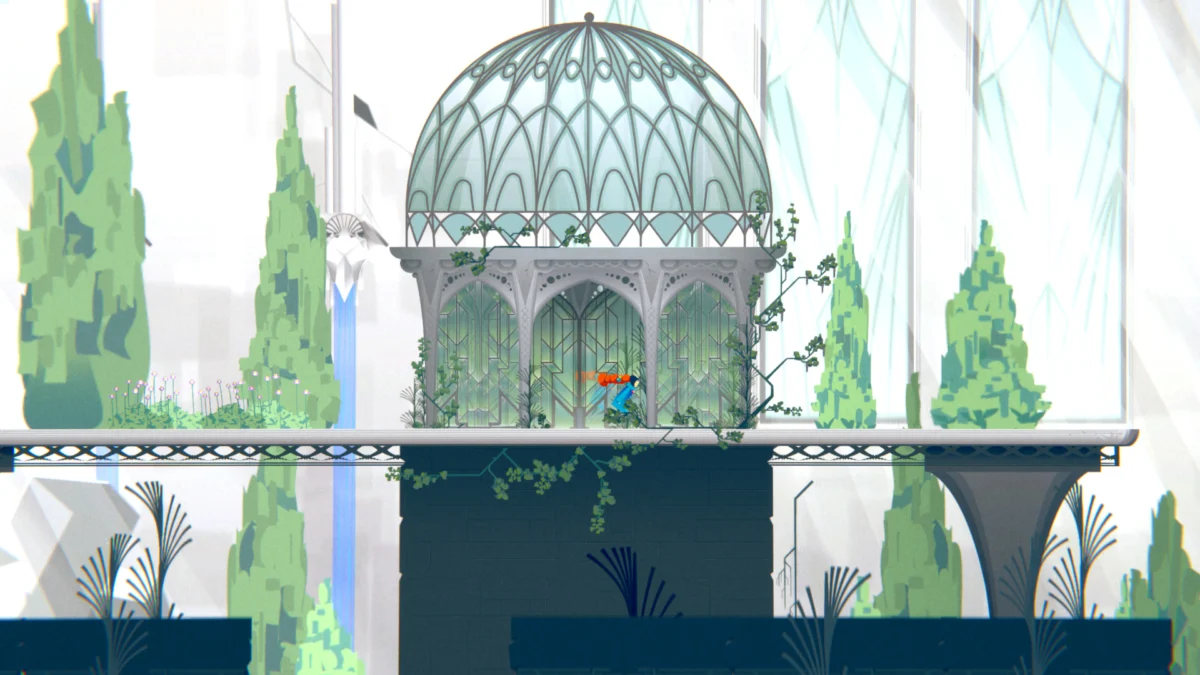
In the crowded landscape of contemporary indie gaming, the term "story-rich" has become a ubiquitous descriptor, often serving as a marketing shorthand for titles that prioritize atmosphere and visual flair over substantive narrative innovation. Released in late 2021, Wondernaut Studio’s Aspire: Ina’s Tale arrived with the promise of a meditative, puzzle-platforming odyssey. However, beneath its polished, hand-painted exterior lies a title that struggles to transcend the tropes of its genre, ultimately highlighting a growing disconnect between aesthetic ambition and mechanical execution.
Main Facts: The Anatomy of a Genre Piece
Aspire: Ina’s Tale is a 2D side-scrolling puzzle-platformer that follows the journey of Ina, a young girl who awakens within a massive, enigmatic structure known as the Tower. As the "Heart of the Tower," Ina is tasked with navigating the labyrinthine architecture to uncover her origins and return to her role as the "Keeper of Kamiura."
The core gameplay loop centers on environmental traversal and spatial puzzle-solving. Rather than engaging in traditional combat, the player uses light-emitting conduits and mystical power sources to manipulate the environment, move platforms, and bypass supernatural threats. The game features a distinct visual style characterized by crisp, vibrant color palettes and detailed lighting effects, positioning it alongside "art-house" platformers like Gris or Hoa.
However, critical reception—and player sentiment—has been polarized by the game’s reliance on familiar narrative beats. Ina is the quintessential "waifish protagonist"—a trope that has become standard in indie titles—navigating a world that seems built entirely to accommodate her specific set of environmental interactions. Despite the developer’s intent to craft a poignant journey, many players have found the experience to be emotionally detached, characterized by a narrative that feels more like a collection of generic fantasy tropes than a cohesive, original story.
Chronology: A Developmental and Narrative Arc
The development of Aspire: Ina’s Tale reflects the current industry trend of small-team, high-aesthetic projects.
- Pre-Release (Early 2021): The title was announced to significant fanfare, with trailers highlighting its fluid animations and striking art direction. These early previews generated anticipation for a game that promised to merge high-concept storytelling with accessible puzzle design.
- December 19, 2021: Aspire: Ina’s Tale officially launched across multiple platforms, including the Nintendo Switch and PC.
- The Post-Launch Window (Late 2021–Early 2022): Initial reviews highlighted the game’s beauty but quickly pivoted toward critiques regarding its repetitive puzzle mechanics and a lack of narrative depth. Players noted that while the game’s aesthetic was a standout feature, the "story-rich" label felt increasingly hollow as the gameplay became bogged down by trial-and-error sequences.
- Mid-2022 to Present: The game has settled into a niche position in the digital storefronts, often cited by critics as a cautionary tale of how visual polish cannot fully compensate for a lack of mechanical innovation or narrative originality.
Supporting Data and Mechanical Analysis
A deeper analysis of Aspire reveals significant friction between the player and the game’s systems. The game relies heavily on precision platforming, yet the movement mechanics often lack the necessary responsiveness to facilitate such demands.

The Problem with Precision
On platforms like the Nintendo Switch, the discrepancy between the player’s input and Ina’s movement is palpable. Precision platformers thrive on "tight" controls—where the player feels total agency over every pixel of movement. In Aspire, the physics, particularly during rope-swinging sequences, are described by many as "prohibitively stiff." This creates a scenario where the difficulty arises not from clever level design, but from battling the game’s own control scheme.
Puzzle Design Evolution
The puzzle progression follows a predictable trajectory:
- Introduction: Players are introduced to a specific mechanic (e.g., resizing blocks).
- Exploration: The game presents variations of this mechanic.
- The "Brick Wall": As the game progresses, these puzzles often devolve into tedious trial-and-error, where the solution is clear, but the execution is hampered by the game’s rigid physics engine.
While the game is generous with checkpoints—a feature that arguably prevents the title from being unplayable—this constant regeneration underscores a fundamental issue: the game design prioritizes repetition over mastery.
Official Responses and Developer Intent
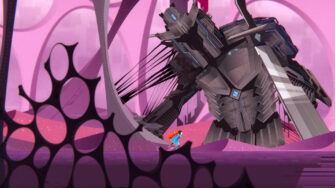
Wondernaut Studio has framed Aspire: Ina’s Tale as a labor of love, focusing on the "Tower" as a character in its own right. The developers have emphasized the narrative significance of the Architect and the mystery behind the Tower’s construction. Their marketing strategy leaned heavily into the "emotional journey" of Ina, hoping that the visual storytelling—the way light interacts with crystal, the way armor glints in the distance—would communicate more than text ever could.
However, the developer’s silence on the mechanical criticisms suggests a disconnect between the intended player experience and the reality of the game’s reception. By leaning into the "minimalist" narrative style, the studio perhaps underestimated the audience’s fatigue with stories about "pure, innocent protagonists with impaired memories." In the current market, minimalism is not a shield against narrative scrutiny; if a story is sparse, every element within it must carry significant weight.
Implications for the Indie Industry
Aspire: Ina’s Tale serves as a pertinent case study for the current state of independent game development. There are several broader implications for the industry at large:
The "Aesthetic Trap"
Developers are increasingly incentivized to prioritize visual "Instagrammability" to capture the attention of social media and storefront algorithms. While beauty is a legitimate draw, it can lead to an "aesthetic trap," where the game looks like a masterpiece but plays like a mediocre experience. For indie studios, the challenge is to ensure that artistic direction serves the gameplay, rather than masking a lack of substance.
The Saturation of "Story-Rich"
The term "story-rich" has lost its utility. Players have become desensitized to the phrase because so many games use it to describe a narrative that is actually quite thin. If a game is going to market itself as story-focused, it must provide either a truly innovative narrative structure or a unique perspective on human emotion. Re-treading the "chosen one" trope in a "spindly-legged waifish" archetype is no longer enough to stand out.
The Necessity of Mechanical Polish
If a game is going to incorporate precision platforming, the controls must be flawless. There is no room for "stiff" physics when the game demands pixel-perfect movement. Aspire demonstrates that even if a game is visually stunning, if the player spends the majority of their time fighting the controls, the immersion is shattered.
Conclusion: A Lesson in Ambition
Aspire: Ina’s Tale is not a "bad" game; it is a competent, beautiful, and occasionally frustrating experience. However, it stands as a reminder that visual splendor is only one component of a successful interactive medium. The game aspires to reach the heights of its predecessors—like Gris or Hoa—but it struggles to find its own voice in a genre that is rapidly becoming crowded with similar attempts at "understated" storytelling.
For future developers, the lesson is clear: do not rely on the beauty of your world to carry the weight of your narrative. If you are going to tell a story, make sure it has something new to say. If you are going to build a platformer, make sure the journey—not just the scenery—is worth the effort of the climb. Aspire is a game that is easy on the eyes, but it serves as a cautionary reminder that, in the world of gaming, you need a lot more than just a pretty face to make a lasting impact.

