

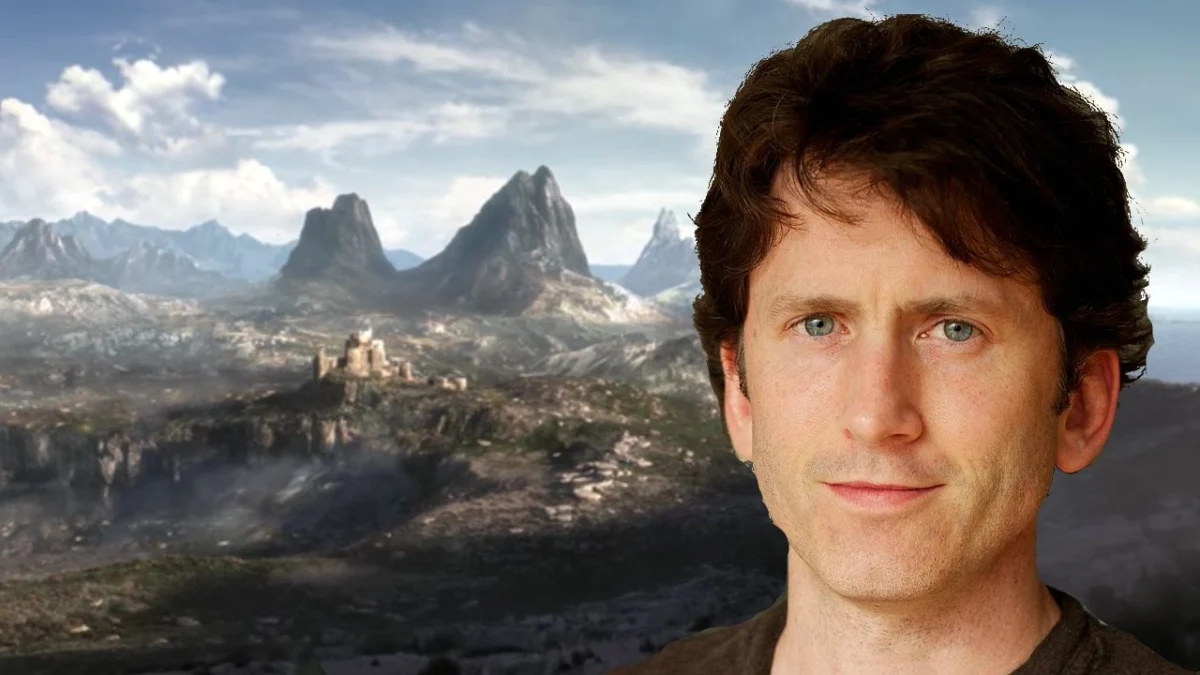
The landscape of modern gaming is defined by a handful of "titan" projects—titles so massive in scope and cultural footprint that their development cycles move with the slow, inexorable weight of tectonic plates. Alongside Rockstar Games’ Grand Theft Auto VI, Bethesda Game Studios’ The Elder Scrolls VI stands as the industry’s most scrutinized endeavor. For nearly thirteen years, fans of the high-fantasy epic have waited for a successor to Skyrim, a game that arguably redefined the open-world genre.
In a recent and rare moment of candor, Todd Howard, Executive Producer at Bethesda Game Studios and the visionary director behind the studio’s most iconic hits, addressed the elephant in the room: the staggering amount of time it is taking to bring the next chapter of Tamriel to life. Speaking with Entertainment Weekly (EW), Howard didn’t offer a release date or a deep dive into mechanics, but he did offer something perhaps more significant—an acknowledgment of the community’s dwindling patience and the immense pressure resting on the studio’s shoulders.
Main Facts: The "Biggest Project" in Bethesda’s History
The core of Howard’s recent communication centers on the current operational status of Bethesda Game Studios. Following the 2023 launch of the space-faring RPG Starfield, the studio has undergone a massive internal pivot. Howard confirmed that The Elder Scrolls VI is now the "biggest project" in the studio’s pipeline.
Crucially, he revealed that the "majority of the studio" has been reassigned to the project. While Bethesda has grown significantly since the days of Skyrim—expanding to multiple locations in Austin, Dallas, and Montreal—the concentration of its primary workforce on a single title marks the beginning of the "full production" phase that fans have anticipated since the game’s cryptic teaser reveal in 2018.
However, the most poignant part of Howard’s statement was his direct address of the timeline. "We know we need to get it right and it’s been a long time," Howard admitted. This simple sentence carries the weight of a decade of memes, shareholder inquiries, and the changing demographics of a fanbase that has literally grown up waiting for the next installment.
Chronology: A Decade of Silence and Teasers
To understand the gravity of Howard’s comments, one must look at the timeline of The Elder Scrolls franchise, which has shifted from a predictable release cadence to a generational odyssey.
- November 2011: The Elder Scrolls V: Skyrim is released to universal acclaim, eventually selling over 60 million copies and becoming a permanent fixture in gaming culture.
- 2015 – 2018: Bethesda focuses on Fallout 4 and the experimental multiplayer title Fallout 76. During this period, the studio maintains that The Elder Scrolls VI is in "pre-production."
- E3 2018: In a move later described as an attempt to manage fan expectations, Todd Howard reveals a 36-second teaser for The Elder Scrolls VI. The footage shows a sweeping mountain vista and a logo, confirming the game exists but is years away.
- 2021: Microsoft completes its $7.5 billion acquisition of ZeniMax Media (Bethesda’s parent company), bringing the franchise under the Xbox Game Studios umbrella.
- 2023: Starfield launches. While it receives positive reviews, the conversation quickly shifts back to what is next for the studio.
- June 2024: Howard’s interview with EW coincides with the eighth anniversary of the game’s announcement, highlighting a development cycle that has now spanned two console generations.
Supporting Data: The Rising Cost of Ambition
The "long time" Howard refers to is not merely a result of procrastination but a symptom of a broader industry trend toward "Hyper-AAA" development. When Skyrim was developed, the Bethesda team consisted of roughly 100 people. Today, modern Bethesda titles require the coordination of hundreds, if not thousands, of developers and contractors.
The technical requirements have also scaled exponentially. The Elder Scrolls VI is being built on Creation Engine 2, the same foundation used for Starfield. While Starfield served as a "proving ground" for this updated technology—introducing improved lighting, procedural generation, and character models—The Elder Scrolls VI is expected to push these systems further to create a seamless, high-fidelity fantasy world.
Market data also suggests why Bethesda is taking its time. Skyrim continues to generate revenue through its "Anniversary Edition" and various ports. The "long tail" of Bethesda games means that the studio isn’t just competing with other RPGs; it is competing with its own previous masterpiece. If the sequel fails to surpass Skyrim’s moddability and sense of discovery, the reputational damage could be irreversible.
Official Responses: The View from Xbox Leadership
While Todd Howard manages the creative vision, the corporate pressure comes from Microsoft. The acquisition of Bethesda was a strategic move to bolster the Xbox Game Pass library, and the absence of a flagship Elder Scrolls title is a notable gap in the service’s value proposition.
Reportedly, the new Xbox CEO, Asha Sharma, is pushing for faster development cycles across all Bethesda properties. This internal friction highlights the clash between the "Bethesda way"—a slow, iterative process—and the needs of a platform holder looking for consistent content.
However, the messaging from other executives remains optimistic. Matt Booty, Xbox’s Chief Content Officer, recently stated that he has seen The Elder Scrolls VI in motion. "It looks amazing," Booty remarked, adding that the game is "coming along well." He emphasized that Microsoft is committed to revealing the game "at the right time," suggesting that the company has learned from the premature announcement of titles like Fable and Perfect Dark.
Implications: What This Means for the Industry and the Fans
The implications of Howard’s "long time" admission are three-fold, affecting the studio, the players, and the industry at large.
1. The Risk of the "Duke Nukem" Effect
There is a psychological phenomenon in gaming where the longer a game is in development, the higher the "expectational debt" becomes. If a game takes five years, it needs to be great. If it takes fifteen years, it needs to be a life-changing experience. By acknowledging the time gap, Howard is subtly trying to manage that debt, though it remains to be seen if any software can live up to fifteen years of imagination.
2. The Stability of Bethesda within ZeniMax
The news of Howard’s focus comes amidst a turbulent time for ZeniMax Media. Recent reports from industry veterans, including Duke Nukem co-creator George Broussard, suggest that while Bethesda Game Studios remains the "golden goose" that "makes all the money," other subsidiaries under the ZeniMax/Microsoft umbrella are facing layoffs and restructuring. The success of The Elder Scrolls VI is not just a creative necessity; it is the economic anchor for thousands of jobs across the parent company.
3. A Shift in Marketing Strategy
The absence of the game at the 2024 Summer Game Fest suggests a shift in how Bethesda will market the title. Unlike the 2018 teaser, the next time the public sees The Elder Scrolls VI, it is likely to be a deep-dive "Direct" style presentation, similar to the one held for Starfield. Rumors point toward a potential update at The Game Awards in December, but Bethesda’s history suggests they prefer to show gameplay only when the release is within a 12-to-18-month window.
Conclusion: The Long Road to Hammerfell (or Beyond)
Todd Howard’s comments to EW serve as a bridge between the studio’s silent past and its high-pressure future. By acknowledging that "the majority of the studio" is now on the project and admitting the wait has been "a long time," Howard is signaling the start of the final marathon.
For the fans, the "grain of sand" of information provided by Howard may not satisfy the hunger for a release date, but it confirms a vital truth: the developer is aware of the clock. In an era where AAA games are increasingly criticized for being "more of the same," Bethesda is betting that the extra years will allow them to capture lightning in a bottle for a second time.
As the industry moves toward the end of the current console generation, the question is no longer if The Elder Scrolls VI will be a hit, but whether it can survive the weight of the decade that preceded it. For now, the "biggest project" in Bethesda’s history remains shrouded in mist, with a director who knows exactly how much is at stake.

