

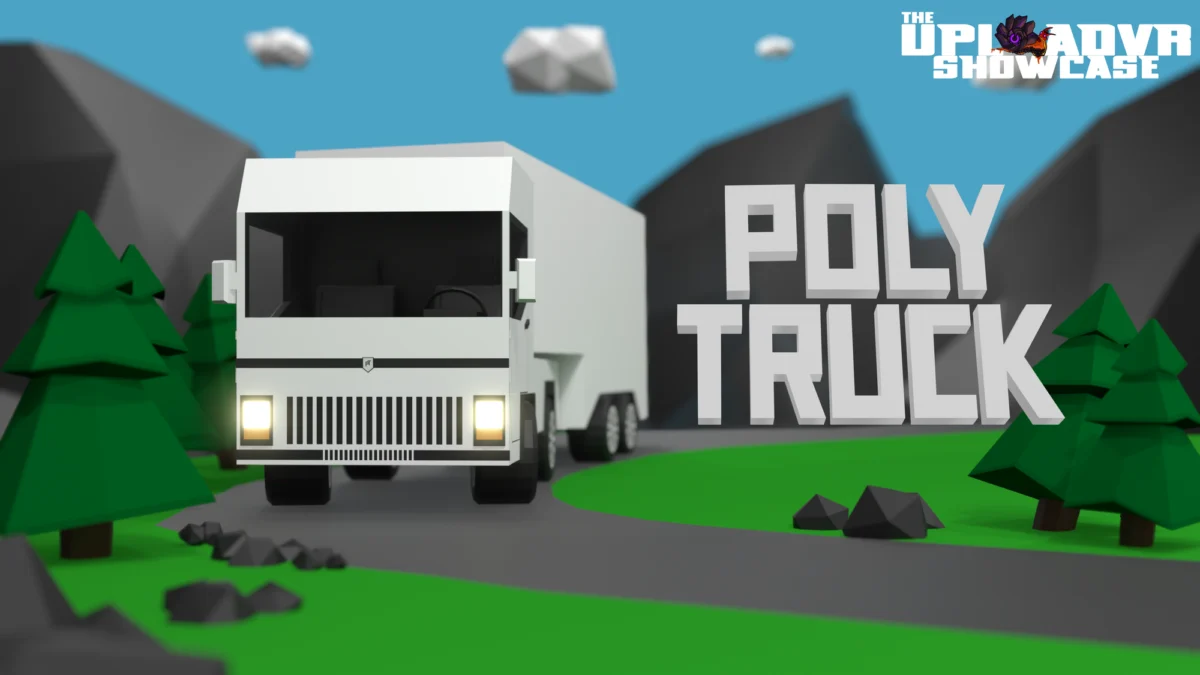
The world of virtual reality simulation has long been dominated by hyper-realistic, high-fidelity titles that demand powerful PC rigs and complex peripheral setups. However, a shift toward accessible, "cozy" gaming experiences has begun to take root. Leading this charge is Poly Truck, a new physics-driven truck simulator that debuted a captivating gameplay trailer during today’s UploadVR Summer Showcase. The presentation confirmed that the title is officially slated for a Q4 2026 release, positioning it as a standout addition to the Meta Quest library.
Poly Truck promises to strip away the intimidating barrier to entry found in traditional trucking sims, offering a tactile, low-poly world where the focus is on immersion, physics, and the simple joy of the open road.
Main Facts: A New Chapter for VR Trucking
At its core, Poly Truck is designed to be a tactile experience. Unlike many mobile-based VR sims that rely on simplified menu navigation, Poly Truck features a fully interactive cockpit. Players can physically interact with every element of the cabin; turning the ignition key, shifting gears, and toggling dashboard controls are all achieved through direct hand-tracking and controller-based interaction.
For those who find manual, hand-based operation too cumbersome for long hauls, the developers have confirmed robust support for standard analog stick and face-button driving inputs on Meta Quest controllers. This hybrid approach ensures that the game remains accessible to both VR enthusiasts seeking deep simulation and casual players looking for a relaxing, low-pressure experience.
The gameplay loop is structured around exploration and progression. Players are tasked with navigating expansive, stylized maps to locate and collect "golden trucks." Once these collectibles are gathered, the player unlocks the main trailer required for their final delivery. Completing these delivery contracts serves as the primary gateway to unlocking subsequent levels and environments.
Chronology: The Road to the Showcase
The development of Poly Truck has been a quiet but steady endeavor. While the project has been circulating in niche VR development circles for some time, today’s UploadVR Summer Showcase marked its most significant public milestone to date.
- Early Development: The project began as a proof-of-concept for the Godot engine, aiming to see if a complex physics-based vehicle simulation could be optimized for standalone mobile VR hardware.
- Engine Selection: Unlike the vast majority of VR titles, which utilize industry-standard engines like Unity or Unreal Engine 5, Poly Truck is built entirely on Godot. This choice is significant, as it highlights the increasing viability of open-source engines in the professional VR space.
- Community Awareness: Throughout early 2026, the developers released sporadic dev-logs, showcasing the "golden truck" collection mechanic and the physics interactions of the cab.
- The Showcase Reveal: During the Summer 2026 UploadVR event, the gameplay trailer provided the first look at the game’s final art style and confirmed the Q4 2026 release window.
The timeline indicates a deliberate, measured approach to development, prioritizing the "feel" of the truck physics—the weight of the vehicle and the response of the cabin—over rushed feature implementation.
Supporting Data: Why Godot Matters in the VR Ecosystem
The choice to develop Poly Truck in Godot is a technical milestone worth examining. For years, the VR development landscape has been a duopoly between Unity and Unreal Engine. These engines provide extensive out-of-the-box support for VR rendering, spatial audio, and controller tracking.
By opting for Godot, the developers of Poly Truck have had to engineer custom solutions for physics-based VR interactions. This is a bold gamble. However, the performance shown in the trailer suggests that the engine is more than capable of handling the low-poly aesthetic, which prioritizes a high frame rate—essential for preventing motion sickness in VR—over photorealistic lighting and high-resolution textures.
The game’s aesthetic, characterized by clean lines and vibrant, saturated colors, fits perfectly within the capabilities of the Meta Quest 3 hardware. By lowering the graphical overhead, the developers have ensured that the physics engine has more processing power to dedicate to the tactile feel of the steering column and the suspension simulation, which are the game’s primary selling points.
Official Responses and Developer Philosophy
While the development team has remained relatively tight-lipped regarding the specifics of the map size and the number of vehicles, their communication has centered on the "cozy" factor.
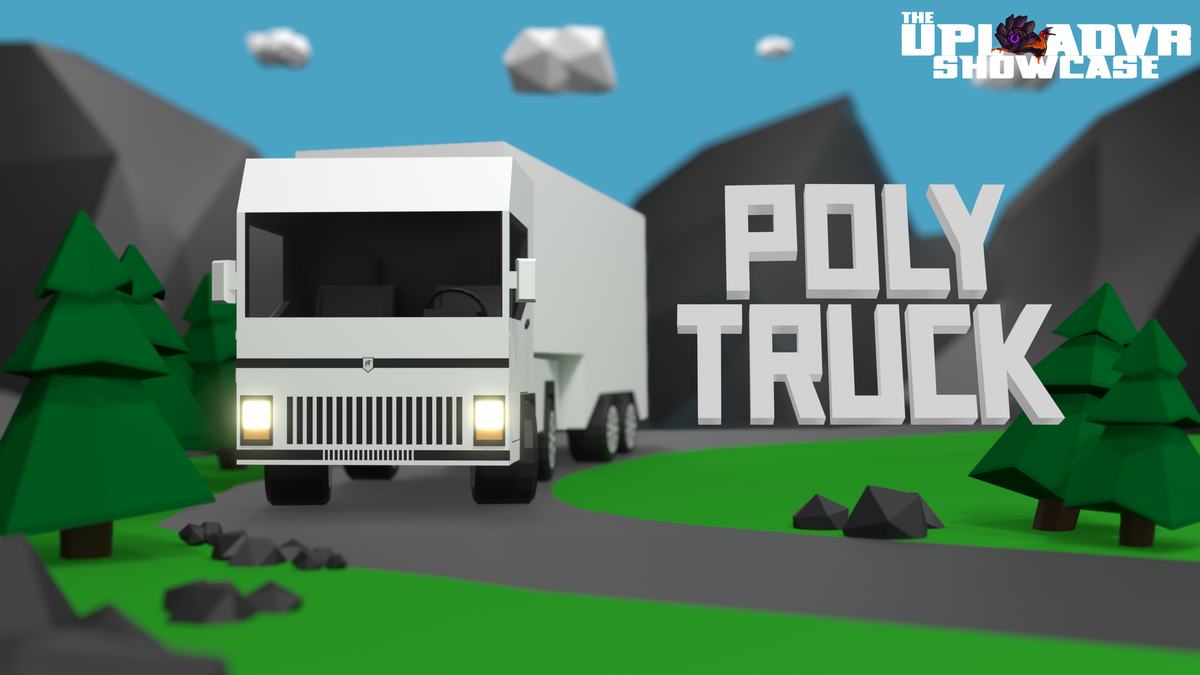
In a statement accompanying the showcase, the development team noted: "We wanted to create a game that captures the soul of long-haul driving without the stress of managing fuel prices, engine maintenance, or complex GPS navigation systems. Poly Truck is about the environment, the mechanics of the truck, and the satisfaction of a job well done."
This philosophy directly contrasts with the "hardcore" simulation market. While players of American Truck Simulator or Euro Truck Simulator often invest hundreds of dollars in steering wheels, pedals, and shifters to achieve realism, Poly Truck seeks to replicate that satisfaction through virtual embodiment. By making the cabin tactile, the developers are leveraging the unique strengths of the Meta Quest’s inside-out tracking to provide an experience that is physically rewarding in a way that traditional PC sim rigs cannot emulate.
Implications: A New Niche for Standalone VR
The arrival of Poly Truck comes at a pivotal time for the VR industry. Standalone headsets like the Meta Quest 3 have opened the door for a massive audience that does not own high-end gaming PCs. Historically, these players have been underserved when it comes to vehicle simulation.
Filling the Void
Until now, the VR trucking space has been dominated by PC-tethered titles. Standalone users have had to settle for arcade-style racers or simplified mobile ports. Poly Truck acts as a bridge, offering a "middle ground" experience—a simulator that feels substantial and rewarding but is built for the hardware constraints of a mobile chip.
The Rise of the "Cozy" Sim
The success of games like Animal Crossing and Stardew Valley has proven that there is a massive market for low-stress, high-immersion gaming. Applying this design philosophy to the truck simulator genre is a shrewd move. By removing the "work" from "work-simulators," Poly Truck could potentially attract a demographic that has never considered a simulator game before.
Future Proofing
Should Poly Truck find success, it could pave the way for other indie developers to utilize Godot for more complex VR projects. Proving that a small, dedicated team can produce a performant, physics-heavy simulation on the Quest 3 will likely encourage more experimentation with alternative engines, potentially diversifying the VR software market beyond the current industry giants.
The Road Ahead: Q4 2026 and Beyond
As of today, the Meta Quest store page for Poly Truck is live, and the developer has encouraged interested players to add the title to their wishlists. This move is essential for boosting visibility in the crowded Quest store algorithm, ensuring that the game receives a strong push when it launches later this year.
The Q4 2026 window places the game firmly in the holiday release cycle, a period known for high user engagement on the Quest platform. If the developers can deliver on the promise of the trailer—specifically the fluid, responsive cabin interactions and the satisfying physics of heavy-load transportation—Poly Truck could well become the definitive "cozy" simulation experience for the Quest 3.
For now, the trailer stands as a testament to what is possible when developers focus on the core sensory feedback of VR. Whether you are a fan of traditional trucking simulators or simply looking for a relaxing way to spend a few hours behind a virtual wheel, Poly Truck is undoubtedly a title to watch as we head into the final quarter of 2026.
The open road is calling, and if the early gameplay is any indication, it’s going to be a smooth, low-poly ride. Players interested in securing their copy upon launch are encouraged to visit the official Meta Quest store page to wishlist the game, ensuring they are notified the moment the engines start in Q4.

