

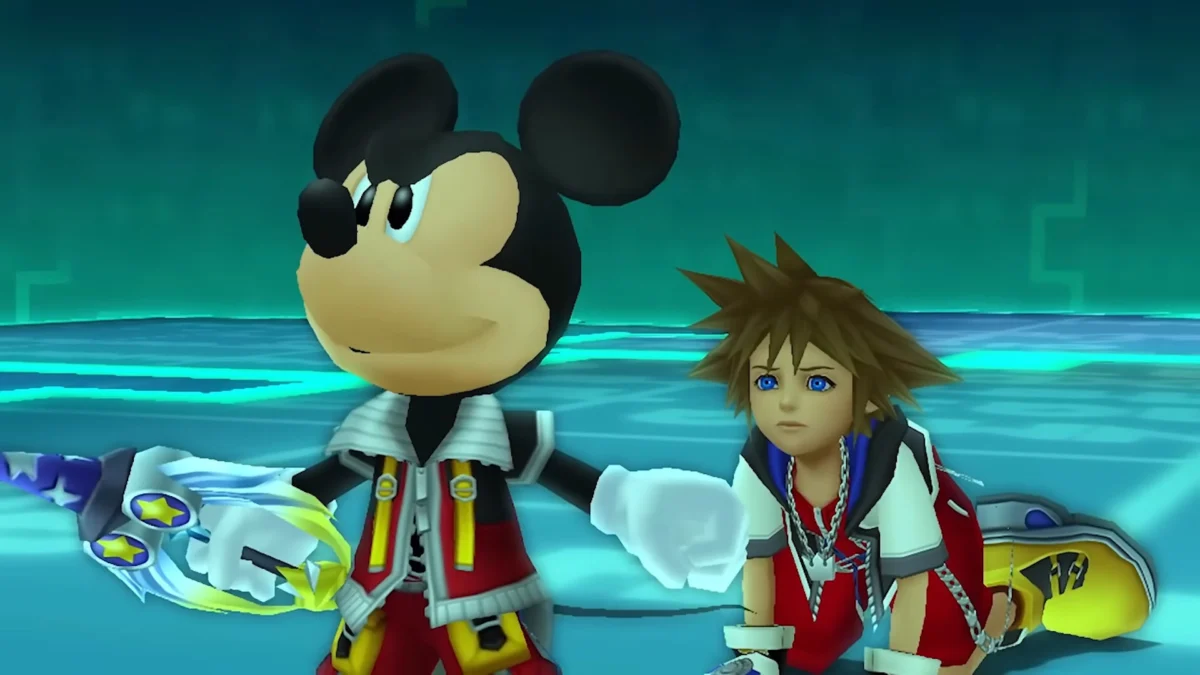
The landscape of modern Japanese role-playing games (JRPGs) is inextricably linked to the creative whims of Tetsuya Nomura. For decades, his name has been synonymous with the visual identity of Square Enix’s most prestigious franchises. From the iconic, spiky-haired silhouettes of Final Fantasy VII to the intricate, fashion-forward designs of The World Ends With You, Nomura’s influence is pervasive. However, in a recent revealing interview with Famitsu, the legendary director and designer clarified his own perspective on his sprawling career. Despite his foundational contributions to the Final Fantasy mythos, Nomura identified the Kingdom Hearts series as his true "life’s work."
This declaration comes at a pivotal moment for the franchise as it prepares to transition into its next major phase with Kingdom Hearts 4. As the series matures, moving away from the "Dark Seeker Saga" and into the mysterious "Lost Master Arc," Nomura’s reflection offers a rare glimpse into the personal stakes involved in managing one of the most complex and beloved crossovers in media history.
Main Facts: A Career-Defining Realization
In the interview with Famitsu, translated by industry analyst Genki, Tetsuya Nomura spoke candidly about the longevity and personal significance of the Kingdom Hearts series. "Kingdom Hearts has become my life’s work, so I can’t leave it out," Nomura stated, placing the franchise above the numerous other high-profile projects he has helmed. This is a significant statement considering Nomura’s role as the Creative Director for the Final Fantasy VII Remake trilogy and his historical work as a character designer for the titles that defined the PlayStation 1 and 2 eras.
Nomura’s comments coincide with several major updates regarding the future of the series:
- The Significance of Kingdom Hearts 4: Nomura confirmed that the upcoming fourth installment is not merely a continuation but a platform for "trying something new." This includes a radical shift in art style toward a more realistic aesthetic, set in the Tokyo-inspired world of Quadratum.
- Technological Leap and Platform Strategy: Unlike previous entries that often faced staggered releases or platform exclusivity, Kingdom Hearts 4 is slated for a simultaneous multi-platform launch. Notably, the game is expected to arrive on PC, PlayStation 5, Xbox Series X|S, and—most intriguingly—Nintendo’s yet-to-be-announced successor to the Switch (referred to colloquially as the "Switch 2").
- Cross-Media Continuity: The director also hinted at the deep narrative ties between the main console entries and the mobile spin-offs, specifically the recently delisted Kingdom Hearts Missing-Link, proving that his vision for the "life’s work" encompasses every facet of the franchise’s ecosystem.
Chronology: From an Elevator Pitch to a Global Phenomenon
To understand why Nomura views Kingdom Hearts as his life’s work, one must look at the improbable journey the series has taken since its inception in the late 1990s.
The Genesis (1999–2002)
The origin of Kingdom Hearts is one of the most famous anecdotes in gaming history. Developers at what was then Square Co. were inspired by the 3D movement and exploration of Nintendo’s Super Mario 64. However, the team realized that to compete with the brand recognition of Mario, they needed characters of equal cultural weight.
The solution came through a chance encounter. Shinji Hashimoto, a Square producer, met a Disney executive in an elevator (the two companies shared an office building in Tokyo at the time). This brief meeting led to the pitch of a lifetime: a collaboration between the masters of the JRPG and the world’s most famous animation studio. Nomura, who was already making a name for himself as a character designer, was tapped to direct.
The Expansion (2002–2012)
What began as a relatively straightforward story about a boy named Sora searching for his friends quickly evolved into a sprawling epic. Following the success of the original game in 2002, Nomura began weaving a complex web of lore. Kingdom Hearts II (2005) introduced the concept of "Nobodies" and the villainous Organization XIII, while handheld titles like Birth by Sleep and 358/2 Days expanded the timeline into the past and the spaces between major entries.
During this decade, Nomura’s signature style—characterized by an abundance of zippers, belts, and oversized footwear—became the visual shorthand for the series. He was no longer just a designer; he was the architect of a multiverse.
The Modern Era (2019–Present)
After a long development cycle, Kingdom Hearts III was released in 2019, concluding the "Dark Seeker Saga" that had spanned nearly 20 years. Many wondered if Nomura would move on to other projects, particularly with his heavy involvement in the Final Fantasy VII remake project. However, the announcement of Kingdom Hearts 4 in 2022 made it clear that he was far from finished.
Supporting Data: The Impact of a "Life’s Work"
The weight of Nomura’s "life’s work" is supported by staggering commercial and critical data. As of 2024, the Kingdom Hearts franchise has sold over 36 million units worldwide. It remains one of Square Enix’s three "pillar" franchises, alongside Final Fantasy and Dragon Quest.
The series’ success is also measured by its unique ability to bridge disparate demographics. It maintains a dedicated "hardcore" fanbase that tracks its labyrinthine plot across multiple consoles and mobile devices, while simultaneously attracting "casual" Disney fans who simply wish to explore the worlds of Frozen, Toy Story, or Pirates of the Caribbean.
Nomura’s personal investment is further evidenced by his "hands-on" approach to Disney relations. In his Famitsu interview, he recalled his frequent trips to Disney headquarters in Burbank, California, during the early days of the project. He noted that many of the ambitious ideas discussed decades ago are only now coming to fruition, suggesting a long-term creative roadmap that few directors in the industry have the opportunity to execute.
Official Responses: Nomura on the "Land of Dreams"
Nomura’s dialogue with Famitsu highlights a sentimental side of the director that is often obscured by his enigmatic public persona. He described the partnership with Disney as a transformative experience that shaped his career.
"At the beginning of the project, I made numerous trips to Disney headquarters for meetings, and many of the things we discussed back then have come to fruition over time," Nomura told Famitsu. "It truly has become a land of dreams and magic."
This sentiment explains his reluctance to leave the series behind. While Final Fantasy is a collaborative effort where the mantle of director is often passed from one veteran to the next (from Sakaguchi to Kitase to Ito to Yoshida), Kingdom Hearts is uniquely Nomura’s. He has directed every major entry and written or supervised every narrative beat. For Nomura, the "magic" isn’t just a Disney marketing slogan; it represents the creative freedom he has found in blending Square Enix’s mechanical depth with Disney’s narrative whimsy.
Regarding Kingdom Hearts 4, Nomura was brief but firm in his excitement: "There are still things I want to accomplish, and we are trying something new in the fourth installment, so please look forward to it."
Implications: The Future of Sora and the Switch 2
Nomura’s confirmation that Kingdom Hearts is his life’s work has profound implications for the future of the franchise and the gaming industry at large.
The Technological Evolution
The mention of the "Switch 2" as a target platform is particularly significant. The original Kingdom Hearts trilogy was only available on the current Nintendo Switch via "Cloud Versions," a move that was widely criticized by fans due to latency and connectivity issues. By targeting the Switch 2 for a native, simultaneous release alongside the PS5 and Xbox Series X, Square Enix is signaling that the next Nintendo hardware will possess the graphical horsepower necessary to run Unreal Engine 5—the engine powering Kingdom Hearts 4.
A Tonal Shift
The move toward a "realistic" Tokyo (Quadratum) suggests that Nomura is interested in exploring more mature, "meta" themes. Fans have long speculated that Kingdom Hearts 4 will serve as a bridge between the Disney-centric past and a future that incorporates other properties or even reflects Nomura’s "lost" project, Final Fantasy Versus XIII. By labeling this his life’s work, Nomura is essentially telling the audience that every creative risk taken in KH4 is a calculated part of a grander vision.
The Legacy of the Auteur
In an era where many AAA games are designed by committee, Nomura remains one of the few true auteurs in the blockbuster space. His commitment to Kingdom Hearts ensures that the series will maintain its idiosyncratic identity—for better or worse. Whether it is the inclusion of characters from delisted mobile games or the sudden shift in Sora’s art style, these choices are the hallmarks of a creator who is no longer just making a product, but is instead curating his own legacy.
As the industry looks toward the release of Kingdom Hearts 4, Nomura’s reflections serve as a reminder of the human element behind the pixels. For him, the journey with Sora, Donald, and Goofy isn’t just a job; it is a decades-long odyssey through a "land of dreams" that he helped build from the ground up. For the fans, it is a promise that the heart of the series remains in the hands of the man who gave it life.

