

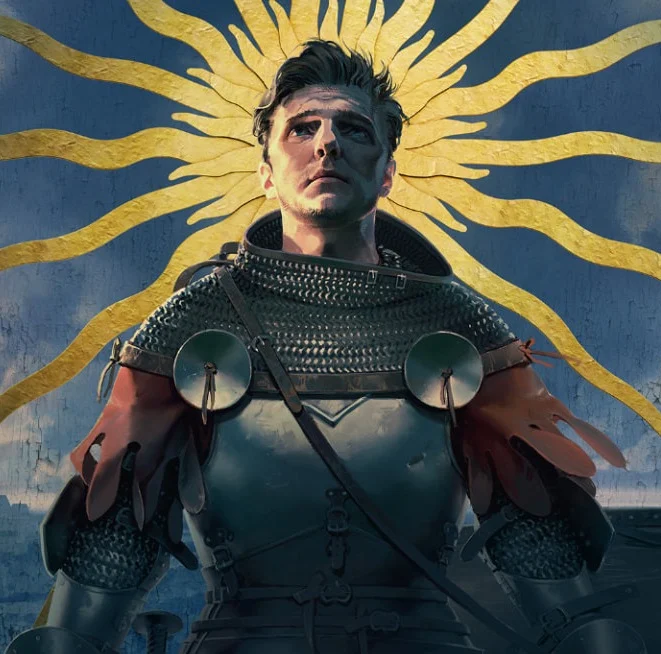
In the pantheon of computer role-playing games (CRPGs), few names command as much reverence as Ultima. Created by Richard "Lord British" Garriott, the series did more than just define a genre; it established the grammar of modern interactive storytelling. For decades, however, the series has languished in the archives of Electronic Arts (EA), a dormant titan of industry history. That period of stagnation may finally be drawing to a close.
In a recent development that has sent ripples of excitement through the retro-gaming community and industry observers alike, it has been revealed that Richard Garriott is on the verge of reclaiming the copyrights to the Ultima series from Electronic Arts. This shift in ownership, made possible by specific provisions within United States copyright law, marks a potential turning point for one of gaming’s most influential franchises.
A Legacy of Innovation: Why Ultima Matters
To understand the magnitude of this news, one must first appreciate the scope of Ultima’s contribution to digital entertainment. Beginning in 1981 with Ultima: The First Age of Darkness, Garriott’s series pioneered the concept of persistent, living game worlds. Unlike its contemporaries, which often focused on repetitive dungeon crawling, Ultima introduced players to the land of Britannia—a world defined by its morality, its philosophy, and its complex socio-political systems.
The series evolved rapidly. Ultima IV: Quest of the Avatar famously shifted the focus from merely defeating a villain to the internal character development of the player, asking them to embody eight virtues. This moral complexity set the stage for later breakthroughs. The series’ influence is unmistakable in the modern era: Larian Studios, the developers behind the global phenomenon Baldur’s Gate 3 and Divinity: Original Sin, have frequently cited Ultima VII: The Black Gate as a fundamental touchstone for their design philosophy, particularly regarding world-interactivity and emergent gameplay.
Beyond the mainline entries, the Ultima brand birthed two of the most important spin-offs in gaming history. Ultima Underworld: The Stygian Abyss is widely credited as the progenitor of the immersive sim genre, laying the groundwork for System Shock, Thief, and Deus Ex. Simultaneously, Ultima Online became the blueprint for the massively multiplayer online (MMO) genre, proving that tens of thousands of players could inhabit a shared digital space simultaneously.
The Chronology of an Acquisition and Dormancy
The relationship between Garriott and EA began in 1992, when Origin Systems—the studio behind Ultima—was acquired by Electronic Arts for approximately $30 million. At the time, the acquisition seemed like a strategic marriage of visionary creativity and corporate distribution power.

For a few years, the partnership flourished. Ultima VII and Ultima Online were released under the EA umbrella, cementing the series’ cultural dominance. However, as the 1990s bled into the 2000s, the relationship between the creator and the publisher began to sour. The industry’s shift toward high-fidelity 3D graphics and console-centric development saw EA moving away from the complex, simulation-heavy design that defined the Ultima ethos.
Following Garriott’s eventual departure from the company, the series suffered from a series of mismanaged attempts at revival. Titles such as Lord of Ultima (a browser-based strategy game) and Ultima Forever (a mobile-focused RPG) were met with lukewarm reception and were eventually shuttered. For over a decade, Ultima has been little more than an intellectual property sitting in a digital vault, occasionally surfacing in mobile remakes or licensing deals that failed to capture the magic of the original series.
Legal Mechanisms: The 35-Year Rule
The potential return of the franchise to Garriott is not a result of a sudden change of heart by Electronic Arts, but rather the activation of a specific provision in U.S. copyright law. Under the Copyright Act of 1976, authors—or their heirs—have the right to terminate grants of copyright transfer 35 years after the original agreement.
Since Garriott sold the rights to Origin Systems (and by extension, the Ultima library) to EA in 1992, the 35-year window will close in 2027. Garriott has confirmed that he has been tracking this date closely. Speaking to Brian Gaar of Inside Games, Garriott noted that his previous attempts to collaborate with EA on a revival were met with corporate apathy. "Every decade or so, I tried to work with EA on a revival of Ultima," Garriott explained. "They always seemed interested enough to start talking, then abandoned talks just as quickly."
By exercising his termination rights, Garriott is effectively sunsetting EA’s control over his original creative output, allowing the copyright to revert to his personal ownership.
The Trademark Caveat: What’s in a Name?
While the news of the copyright reversion is momentous, there is a critical distinction that fans must keep in mind: the difference between copyright and trademark.

EA continues to hold the trademark for the word "Ultima." This means that even after the copyright reverts to Garriott, he cannot simply release a new game titled Ultima 10. The legal framework requires him to differentiate his new projects from the existing brand assets held by the publisher.
Garriott has indicated that he is well aware of this constraint. His proposed solution is to utilize his well-known persona and the pedigree of the series to rebrand his future efforts. During his discussion with Inside Games, he referenced a potential Lord British’s Ultima. By using his established moniker, Garriott aims to signal to the fanbase that his upcoming projects are the true spiritual successors to the original series, effectively side-stepping the trademark issue while retaining the essence of the intellectual property.
Implications for the Future of RPGs
The prospect of a creator of Garriott’s stature returning to his magnum opus arrives at an ideal time. The gaming market has undergone a significant transformation in recent years, with a massive resurgence in demand for "old-school" CRPG design. The massive success of Baldur’s Gate 3 proves that players are hungry for systems-driven, reactive, and narratively deep experiences—the very pillars that Garriott built with the Ultima series in the 1980s and 90s.
Industry experts are currently debating how a "new" Ultima project might take shape. Will Garriott look to modernize the mechanics for a contemporary audience, or will he double down on the hardcore simulation elements that alienated modern publishers in the past?
Garriott is scheduled to attend Dragon Con this year, where he is expected to provide further clarity on his vision. For many, the return of Ultima is not just about a new game; it is about the restoration of a lineage. The reclaiming of the copyright serves as a symbolic victory for creators in an industry that is increasingly dominated by consolidated corporate interests.
Whether Lord British’s Ultima can reach the heights of its predecessors remains to be seen. However, for the first time in over 30 years, the future of Britannia is once again in the hands of the man who first invited us to explore its shores. As we move closer to 2027, the gaming world watches with bated breath, waiting to see if the Avatar will indeed return to save the world once more.

