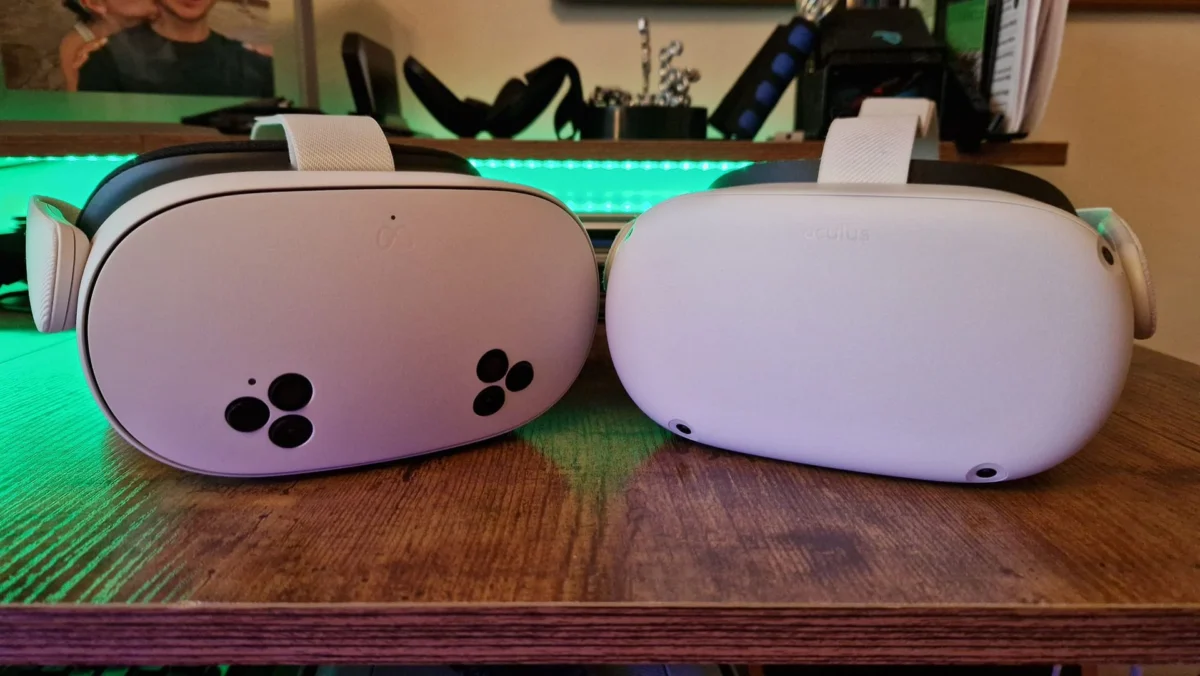
The virtual reality landscape is undergoing a profound and potentially irreversible transformation. For years, Meta has absorbed staggering financial losses in its relentless pursuit of mainstream virtual and mixed reality dominance through its popular Quest headset lineup. However, recent developments—crystallized during Meta’s Q3 earnings call and the preceding Meta Connect conference—indicate that the tech giant is charting a radically different course.
CEO Mark Zuckerberg has directly addressed the economic realities of the company’s hardware division, signaling a strategic retreat from traditional, consumer-facing VR gaming hardware. Instead, Meta is reallocating its considerable resources toward artificial intelligence integration, lightweight form-factor smart glasses, and the pursuit of "personal superintelligence." For gamers, developers, and hardware enthusiasts, this shift marks the end of an era and raises urgent questions about the future viability of mainstream VR gaming.
Main Facts: What Meta’s Strategy Shift Entails
Meta’s recent announcements have fundamentally altered the roadmap for its hardware division, Reality Labs. The core takeaways from Zuckerberg’s strategic update include:
Pacing Hardware Releases: Meta is moving away from iterative, annual, or biennial updates for standalone gaming headsets like the Quest series. Moving forward, the company will only ship new VR devices when they represent "major breakthroughs."
The Rise of AI Wearables: The focal point of Meta’s hardware ecosystem has pivoted to lightweight AI-powered glasses. These devices blend augmented reality capabilities with everyday utility, rather than isolating users inside fully enclosed VR headsets.
Financial Restructuring: Reality Labs has been a notorious financial drain, haemorrhaging billions of dollars quarterly. Zuckerberg projects that operational losses will narrow to around $15 billion next year, with a long-term trajectory toward profitability driven by AI integration.
Retreat from Dedicated Gaming Studios: In tandem with these hardware shifts, Meta has downsized its gaming ecosystem, closing major internal development studios responsible for high-profile VR titles.
Chronology of a Pivot: From Metaverse Ambitions to AI Integration
To understand how Meta reached this critical juncture, it is necessary to examine the timeline of events that reshaped the company’s hardware philosophy over the past several years.
Phase 1: The Quest for the Metaverse (2020–2022)
When Facebook rebranded to Meta in late 2021, Zuckerberg staked the company’s future on the "Metaverse"—a shared, immersive digital space accessed primarily through virtual reality. The launch of the Meta Quest 2 acted as a catalyst for this movement, democratizing VR through aggressive, loss-leading pricing. For a brief window, affordable standalone VR appeared poised to break into the mainstream.
Phase 2: The Financial Hemorrhage and Market Realities (2023–2024)
As economic pressures mounted and consumer adoption of the Metaverse stalled short of hyper-growth, Reality Labs began posting catastrophic financial losses. Divisions lost upwards of $4 billion per quarter, prompting widespread skepticism from investors. Meta responded with rolling waves of layoffs, structural reorganizations, and studio closures. Despite the launch of the budget-friendly Meta Quest 3S, internal priorities began to fracture.
Phase 3: The AI Revolution and Meta Connect (Late 2024–Present)
The inflection point arrived during the recent Meta Connect conference, where the company showcased its new flagship VR/AR glasses alongside "Muse"—a user-focused AI model designed to operate natively across Meta’s wearable devices. During the Q3 earnings call, Zuckerberg formalized what industry analysts had suspected: consumer VR headsets are no longer the tip of Meta’s spear. The era of rapid hardware iteration for the living room gamer has officially been sidelined in favor of an AI-first paradigm.
Supporting Data: The Financial and Structural Toll on Reality Labs
The numbers behind Meta’s hardware experiment paint a stark picture of the economic pressures forcing this strategic pivot. Reality Labs has functioned as a massive financial black hole, absorbing tens of billions of dollars in R&D, infrastructure, and acquisitions.
Quarterly Losses: Throughout various fiscal quarters leading into 2024, Reality Labs regularly reported operating losses exceeding $4 billion per quarter, driving cumulative deficits well past the $50 billion mark since the division’s inception.
Corporate Restructuring: Meta has implemented multiple rounds of layoffs within Reality Labs, targeting hardware engineers, product designers, and first-party game developers. High-profile internal closures shuttered studios working on major virtual reality adaptations, including projects associated with Resident Evil, Deadpool, and Asgard’s Wrath.
Industry Consolidation: The ripple effects extend beyond Meta. Competitors are increasingly reluctant to absorb the financial risks of loss-leading hardware. Notably, recent reports indicate that Sony has sold hundreds of its PlayStation VR (PSVR 2) patents to Meta, signaling Sony’s quiet retreat from the dedicated VR hardware market following sluggish adoption and persistent stock shortages.
The Competitor Landscape: High-end alternatives like the Steam Frame have entered the market at the $1,000+ price point, occupying a niche tier rather than a mass-market consumer base. Meanwhile, competitors like Pico are focusing their upcoming high-end hardware—such as the anticipated Project Swan—toward enterprise and productivity rather than accessible gaming.
Official Responses: What Mark Zuckerberg Said
Addressing shareholders and tech analysts during the Q3 earnings call, Zuckerberg was remarkably candid about the friction between historical ambitions and future fiscal realities:
"I also shared at Connect that we are changing our approach to virtual reality to only ship new devices when we have major breakthroughs like we had with the Meta VR Glasses this year… which of course are the first VR experience ever in a pair of glasses."
Zuckerberg elaborated on the philosophical shift regarding how physical and digital worlds will eventually merge:
"I continue to believe that the path to delivering the holographics experience of bringing together the physical and digital worlds in everyday glasses will come through VR first, but we will pace this aspect of our investment more to focus on delivering personal superintelligence first."
Detailing the integration of conversational and contextual AI, Zuckerberg highlighted the core utility envisioned for the company’s hardware future:
"Our work on personal superintelligence is now also the focus of Reality Labs. Muse is coming to Meta Glasses starting next month, and that will be an important step towards this. People already love many features of the glasses already—music, calling, capturing moments, hearing assistance, and more—but over time we expect Muse and having your personal superintelligence with you throughout the day will be the most important part of the experience."
Finally, on the financial trajectory of Reality Labs, Zuckerberg offered reassurance to investors looking for fiscal discipline:
"So with these factors combined, we expect that the P&L of Reality Labs to improve from here, with operating loss coming down to around $15B next year and trending towards profitability from there."
Implications: What This Means for Gamers and the VR Industry
The ramifications of Meta’s pivot extend far beyond corporate balance sheets, sending shockwaves through the gaming community and the broader tech sector.
1. The Death of the Quest 4 (As We Knew It)
For everyday consumers hoping for a traditional, affordable sequel to the Quest 3, the immediate future looks bleak. While Meta’s new wearable glasses can run compatible software and utilize controllers, their primary design philosophy is fundamentally decoupled from the living-room gaming market. With high price tags and an emphasis on lightweight utility over immersive graphical fidelity, these devices do not serve as direct spiritual successors to the Quest hardware line.
2. A Vacuum in Mainstream VR Gaming
With PlayStation selling off its VR patents and stepping back from the market, and Meta shifting its focus away from subsidized gaming hardware, the ecosystem of affordable consumer VR is contracting rapidly. Independent developers who relied on Meta’s hardware subsidies and funding initiatives now face a contracting market with fewer platforms to target. The closure of Meta’s premier internal gaming studios further eliminates the marquee software drivers necessary to keep hardware moving off store shelves.
3. The Rise of the AI Wearable Ecosystem
Meta is betting its hardware future on the premise that consumers do not want to strap heavy plastic visors to their faces for entertainment, but rather desire subtle, AI-augmented glasses for daily productivity, communication, and environmental interaction. By streamlining Reality Labs’ operational expenditures and targeting a path to profitability around a $15 billion loss ceiling next year, Meta is positioning itself not as a gaming company, but as an ambient computing and artificial intelligence titan.
Ultimately, the dream of an accessible, mass-market virtual reality metaverse has been sidelined. As the tech industry rushes headfirst into the age of personal AI assistants, the virtual reality headset risks becoming a casualty of corporate pragmatism—leaving gamers to wonder who, if anyone, will carry the torch for affordable immersive entertainment in the years to come.