

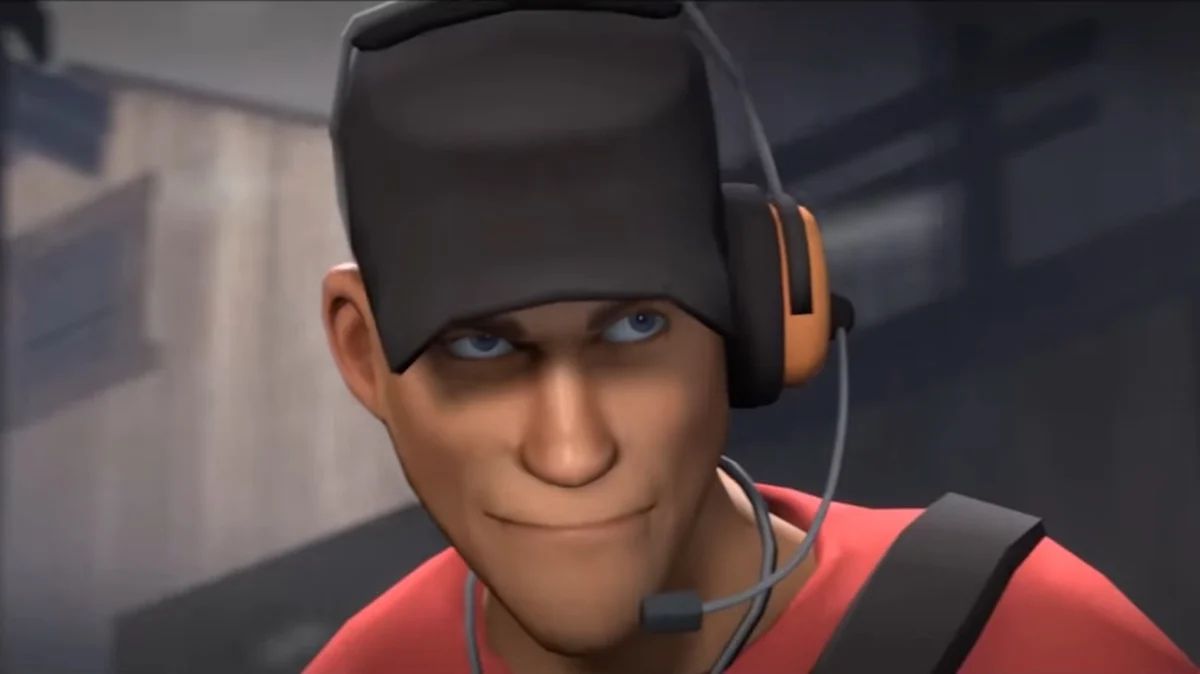
For decades, the gaming industry has operated on a treadmill of “live service” content. Players have come to expect massive, seasonal overhauls, sprawling expansions, and aggressive roadmaps designed to keep engagement metrics high. Yet, amidst this landscape of constant iteration, Valve Corporation has stood as a defiant, enigmatic outlier. Titles like Counter-Strike and Team Fortress 2 (TF2) have remained cultural titans despite receiving update schedules that, by modern industry standards, appear almost skeletal.
For the legions of players who have spent thousands of hours in the dusty corridors of Dust 2 or the chaotic battlefields of 2Fort, the question has long been a source of frustration: Why do these behemoth games receive so little consistent attention compared to their peers?
It turns out, the employees at Valve were asking the exact same question.
The Valve Paradox: A Veteran’s Confession
Chet Faliszek, a cornerstone of Valve’s writing team from 2004 to 2017, recently pulled back the curtain on the studio’s internal culture. A key creative force behind legendary titles such as Half-Life, Portal, Left 4 Dead, and the aforementioned Counter-Strike and TF2, Faliszek offered a rare, candid glimpse into the company’s internal philosophy during a recent video interview.
His revelation was striking: the developers themselves were often baffled by the community’s unwavering loyalty in the face of what they perceived as meager, infrequent updates.
"Even at Valve, we’d be like, ‘I can’t believe we get away with this,’" Faliszek admitted. He clarified that this wasn’t a malicious attempt to deceive the player base, but rather a genuine observation of the disparity between the resources Valve put into these titles and the enthusiasm the community returned.
"These other teams [in the industry] have a thousand people working on a gajillion different things and all these different features, and Valve’s like, ‘here’s five skins,’" Faliszek remarked, punctuating his point with a sarcastic, thumbs-up gesture. "And people are like, ‘cool.’"
This disconnect between effort and impact is the essence of the "Valve Paradox." While other developers toil to churn out massive content drops to prevent churn, Valve’s foundational titles seem to possess an inherent, self-sustaining gravity that requires very little external force to maintain.
A Chronology of Content: From Development to Maintenance
To understand how Valve reached this state, one must look at the company’s evolution. In the mid-2000s, Valve was in its prime, releasing groundbreaking narrative experiences like Half-Life 2: Episode Two and the original Portal. At that time, Team Fortress 2 was the testbed for a new kind of "games-as-a-service" model.
- 2007: The Orange Box launches, containing TF2. It was a fully featured game, but it was also the beginning of the "Hat Era."
- 2011: Team Fortress 2 goes free-to-play, a move that fundamentally shifted the game’s economy and reliance on microtransactions.
- 2012: Counter-Strike: Global Offensive (CS:GO) is released. It was not initially a hit; it took years of community feedback and the introduction of the "Arms Deal" update (which added weapon skins) to turn the game into the juggernaut it is today.
- 2017: The year of Faliszek’s departure. By this point, Valve had fully transitioned into a company primarily defined by the Steam storefront and the massive, self-sustaining economies of its two primary competitive shooters.
The shift, as Faliszek notes, was toward a leaner operation. As Steam grew to become the undisputed digital storefront for PC gaming, the internal pressure to create new games waned. The focus shifted toward supporting the massive ecosystems of CS:GO and Dota 2, often through community-driven content or minimalist, high-impact aesthetic changes rather than massive mechanical overhauls.
Supporting Data: The Power of the Platform
Why does this strategy work for Valve when it would destroy a studio like Ubisoft or EA? The answer lies in the "Steam Effect."
Valve does not just sell games; they own the marketplace where games are sold. Because their revenue is largely decoupled from the immediate success of a specific title’s update cycle, they have the luxury of patience.
According to various industry estimates, Valve’s revenue from the Steam marketplace—specifically the transaction fees generated by the trading of CS:GO and TF2 items—dwarfs the revenue generated by traditional game sales. In this model, the game is not a product to be finished; it is a persistent, digital economy.
When Valve releases a few new weapon skins, they aren’t just updating a game; they are injecting liquidity into a massive, global market. The "five skins" Faliszek referenced aren’t just cosmetic; they are high-value digital assets that keep players engaged, trading, and spending. The community’s "cool" response isn’t blind loyalty—it is the rational reaction of a user base that understands the value of the ecosystem they participate in.
The Evolution of Corporate Philosophy
While Faliszek’s insights are invaluable, it is important to contextualize them. His departure in 2017 marked the end of an era for the company. The launch of Counter-Strike 2 in 2023 shows that Valve is capable of massive, engine-level overhauls, even if they arrive on a schedule that defies traditional industry standards.
Valve’s internal structure—often described as a "flat hierarchy"—is both its greatest strength and its most infamous hurdle. Employees have historically been free to work on whatever project they deem most interesting. This lack of top-down management is why projects like Half-Life: Alyx can exist, but it is also why "Valve Time"—the company’s tendency to delay projects indefinitely—has become a meme.
When a team of developers at Valve decides that a new game engine is more exciting than a balance patch for an old shooter, the shooter waits. This isn’t necessarily a failure of management; it is a deliberate, albeit polarizing, corporate strategy that prioritizes innovation and developer autonomy over the treadmill of standard service-game obligations.
Implications: Is the Industry Changing, or is Valve an Anomaly?
The "Valve model" has profound implications for the gaming industry. Many modern developers are trapped in a "content hamster wheel," where they must constantly feed the player base new missions, characters, and events to avoid a catastrophic drop in player count.
Valve, however, has proven that if a game’s core mechanics are sufficiently compelling, the "content" is actually provided by the players themselves. Whether through the competitive tension of Counter-Strike or the whimsical, community-driven modding scene of TF2, these games have achieved a state of "perpetual relevance."
Faliszek’s comments highlight a realization that the industry is still struggling to accept: you cannot manufacture a community-driven ecosystem. Valve was "lucky" because they built games that were so fundamentally robust that they became self-sustaining entities. They didn’t need to "get away" with small updates; they simply created a environment where the players were happy to keep the game alive themselves.
Conclusion: The Myth of the "Dead Game"
As we look toward the future, the legacy of Valve’s minimalist approach remains a point of intense debate. Critics argue that Valve is leaving money on the table and ignoring its loyal base. Supporters argue that Valve’s refusal to chase the "live service" trends of the industry is exactly what keeps their games feeling authentic and timeless.
Chet Faliszek’s reflection serves as a reminder that even the creators of these worlds are susceptible to the magic of their own success. When the developers themselves look at their work and ask, "Why do they stay?" it underscores the reality that the relationship between a developer and a community is often built on something far more complex than just the frequency of patches.
For now, the servers stay up, the skins continue to trade, and the players continue to play. In the world of Valve, that is not just enough—it is exactly how it was meant to be.

