

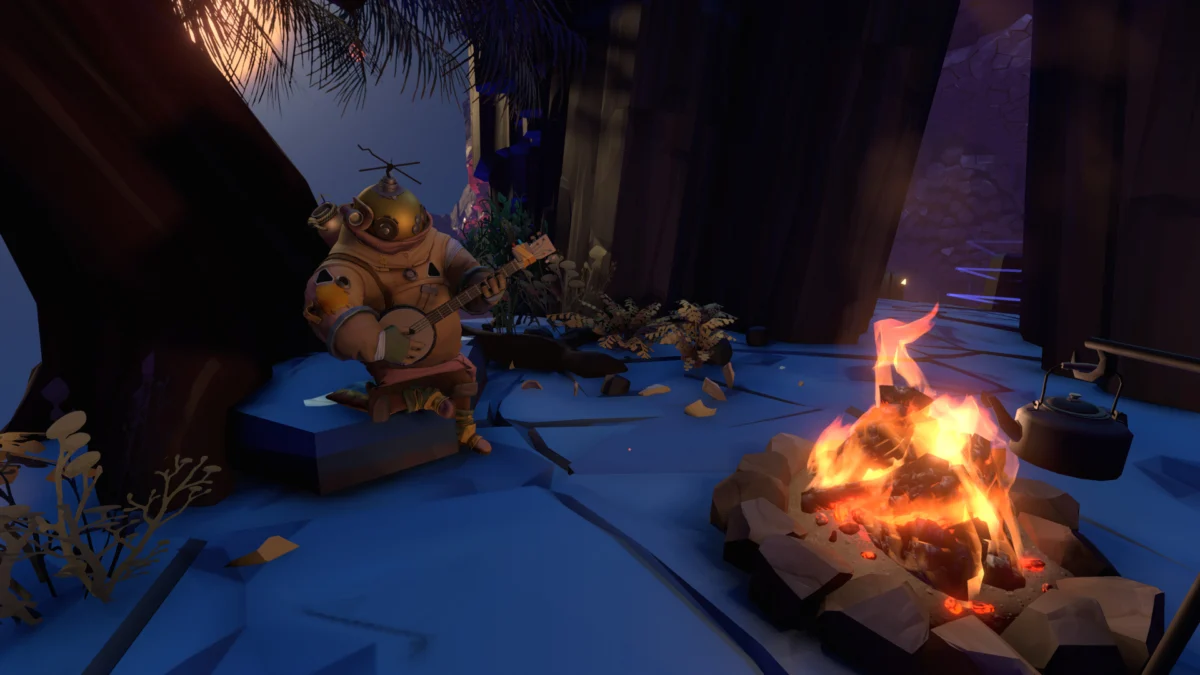
Since its release in 2019, Mobius Digital’s Outer Wilds has carved out a unique space in the gaming pantheon. It is rarely described merely as a "good game"; instead, it is discussed in hushed, reverent tones, often cited as a life-altering experience. As we look back on the landscape of independent titles over the last few years, Outer Wilds stands as a titan of emergent narrative and systemic design. For those currently seeking an escape during the holiday season or a quiet period of leave, it remains, arguably, the most essential title one could pick up.
The Core Concept: Knowledge as Progression
At its heart, Outer Wilds is a game about the intersection of astrophysics, archaeology, and existential dread. Players take on the role of a fledgling astronaut from the timber-hewn planet of Timber Hearth, tasked with venturing into a solar system trapped in a 22-minute time loop. Every 22 minutes, the sun goes supernova, obliterating everything in its wake, and the player is reset to the moment they first awoke by their campfire.
Unlike traditional RPGs or action-adventure titles, Outer Wilds features no gear upgrades, no leveling systems, and no increased health bars. The only currency that matters is knowledge. The game functions as a giant, non-linear puzzle box. The information you gather in one loop—a frequency code, the location of a hidden entrance, the timing of a planet’s environmental shift—is the only thing that carries over to the next. This creates a gameplay loop that is as intellectually stimulating as it is emotionally taxing. You do not conquer the game through mechanical skill; you conquer it through understanding.
Chronology: A Legacy of Critical Acclaim
The journey of Outer Wilds began long before its 2019 release, rooted in a successful crowdfunding campaign that promised a game about space exploration that defied the tropes of the genre.
- 2013: Alex Beachum, the creative lead, develops the initial prototype for Outer Wilds as a master’s thesis at the University of Southern California (USC) Interactive Media & Games Division.
- 2015: The game wins the Seumas McNally Grand Prize and the Excellence in Design award at the Independent Games Festival, signaling to the industry that something special was being built.
- 2018: Annapurna Interactive joins as a publisher, providing the support necessary to bring the vision to a wider audience.
- May 2019: Outer Wilds officially launches on PC and Xbox One. It is met with immediate, glowing praise from critics who laud its innovative approach to storytelling.
- 2021: The release of the Echoes of the Eye expansion provides a substantial, masterfully integrated addition, further cementing the game’s reputation as a peerless exploration experience.
The Philosophy of Failure
Many modern games are designed to be "player-friendly," offering signposting, quest markers, and forgiving checkpoints. Outer Wilds rejects these conventions. It is a game that forces you to die—often, repeatedly, and sometimes spectacularly.
Whether it is being crushed by the shifting sands of the Hourglass Twins, falling into the black hole at the center of Brittle Hollow, or being caught in the suffocating depths of Giant’s Deep, death is not a failure state in the traditional sense. It is a fundamental mechanic. By dying, you learn. By failing to navigate a treacherous jump, you discover a secret path hidden below. This "trial-and-error" design is what intimidates some, but it is also what creates the immense sense of satisfaction upon finally solving a mystery. When you finally unlock a gate that has stymied you for hours, it is not because the game handed you the key, but because you spent the time to learn the rhythm of the universe.
Supporting Data: Why It Remains Essential
While sales figures are often guarded by publishers, the sustained cultural footprint of Outer Wilds is visible in its community engagement and critical reception.

- Critical Reception: The game holds a near-perfect aggregate score on platforms like Metacritic and OpenCritic, with reviewers consistently citing its narrative structure as a benchmark for the medium.
- Industry Awards: It secured the "Best Game" award at the 2020 BAFTA Games Awards, beating out massive AAA titles and proving that smaller, vision-led projects can resonate just as strongly as blockbusters.
- Player Retention: Unlike many single-player titles that see a sharp drop in engagement after the first week, Outer Wilds maintains a steady stream of new players. Its "Very Positive" rating on Steam, with tens of thousands of reviews, remains consistent years after its debut, a testament to the game’s "evergreen" status.
Official Responses and Developer Intent
The developers at Mobius Digital have consistently spoken about the goal of Outer Wilds: to recreate the feeling of discovery. In various interviews, Alex Beachum has noted that the team wanted to avoid the "checklist" style of open-world design.
"We wanted the player to feel like they were a detective in their own space program," Beachum has stated. The development team spent years refining the physics of the solar system, ensuring that the planets didn’t just feel like static backdrops, but like living, breathing, and dying entities. This level of technical dedication—simulating orbital mechanics and gravitational shifts—is what gives the game its "bewitching" quality. Even when the game is at its most frustrating, the underlying logic is always sound. There is always a reason for why things happen, and once the player understands that logic, the frustration turns into a profound sense of awe.
Implications for the Gaming Industry
Outer Wilds serves as a counter-argument to the industry trend of over-bloated, microtransaction-heavy, and overly-guided experiences. It proves that there is a massive, hungry audience for games that treat the player as an intelligent participant rather than a consumer of content.
- The Rise of "Knowledge-Based" Progression: Developers have started looking at the Outer Wilds model as a blueprint for how to handle nonlinear narratives. By decoupling progress from power, developers can create more meaningful, curiosity-driven exploration.
- Narrative Integration: The way Outer Wilds weaves its story into the environment—through ancient texts, architectural design, and environmental storytelling—has set a new standard for how environmental narrative can be executed without the need for endless cutscenes.
- The Power of Indie Vision: The game stands as a reminder that the most impactful titles often come from small, focused teams with a singular, uncompromised vision.
Conclusion: A Call to Exploration
If you have yet to step into the cockpit of your rickety, wooden spaceship, you are missing one of the defining artistic achievements of the 21st century. Outer Wilds is not just a game; it is a meditation on the fleeting nature of time and the beauty of the unknown.
It is challenging, yes. It requires patience, curiosity, and the willingness to be humbled by the vacuum of space. But in return, it offers a sense of discovery that is unparalleled in any other medium. It asks you to go out into the dark, to look, to listen, and to learn. And when the music finally swells during the game’s breathtaking climax, you will understand exactly why it remains a topic of conversation years after its release.
Do not wait for a special occasion or for a "better time." Install it, launch it, and prepare to be changed. As the developers themselves seem to imply through the game’s design: the universe is waiting, and its mysteries are yours to solve—if you are brave enough to try.

