


For many players, the initial allure of Bethesda Game Studios’ Starfield was the promise of boundless discovery. As the studio’s first original intellectual property in over 25 years, the title was marketed as a definitive spacefaring odyssey—a sprawling galaxy where the "final frontier" was not just a destination, but a playground of infinite scale. However, upon release, the reality of the experience frequently clashed with the engine powering it. For a game predicated on the majesty of the cosmos, Starfield often felt claustrophobic, fragmented by the persistent presence of loading screens that pulled players out of their ships and back into the cold reality of technical menus.
Now, a dedicated modder is taking the fight to these digital barriers. By attempting to bridge the gap between Bethesda’s Creation Engine 2 and the seamless exploration popularized by competitors like No Man’s Sky, the community is once again proving that the longevity of Bethesda titles rests firmly in the hands of its users.
The Friction of Transition: The Core Problem
The central tension within Starfield lies in the conflict between its artistic ambitions and its technical infrastructure. Bethesda’s legacy engines are built on a "cell-based" architecture, designed to load specific, compartmentalized chunks of data at a time. This allows for the high level of object persistence that defines games like Skyrim and Fallout, where a cheese wheel left on a table stays there for eternity.
However, when applied to a galactic scale, this architecture becomes a significant immersion breaker. In Starfield, space travel is not a fluid, continuous journey. It is a series of point-to-point "teleports." Players frequently encountered loading screens during docking sequences, planet landings, and takeoff procedures. These interruptions served as jarring reminders that the "galaxy" was not a singular, unified space, but a collection of disparate rooms linked by progress bars.
Critics of the game were quick to point out this discrepancy, often comparing Starfield unfavorably to titles that allow for atmospheric entry and exit without cutting to a black screen. For many, the lack of seamless transitions stripped the experience of its sense of awe, turning a grand adventure into a series of menus.
A Breakthrough: The "Seamless Planet Takeoffs" Mod
Enter 0xBobby, an ambitious modder who has decided to challenge the constraints of the Creation Engine. Through their project, titled Seamless Planet Takeoffs, they are attempting to restore the sense of scale that Bethesda left on the cutting room floor.
The mod, currently in its beta phase, focuses on the departure sequence. Instead of triggering a cutscene that shifts the player from the cockpit to a third-person cinematic view of their ship lifting off—a sequence punctuated by a loading screen—the mod attempts to keep the player locked in the first-person perspective. As the ship ascends, the player watches the planetary atmosphere thin, gradually giving way to the blackness of space.
It is a clever workaround. By masking the transition, 0xBobby is essentially tricking the engine into masking the underlying cell swap. While the mod is not technically removing the loading process—the engine still requires that time to dump assets from one area and load those for the next—it significantly reduces the psychological impact of the transition. The player is no longer ripped out of their seat; they are merely taking a long, upward flight.
The Technical Reality: Why "Perfect" is Out of Reach
It is crucial to manage expectations regarding this mod. 0xBobby has been transparent about the current limitations of their work. The "seamlessness" of the takeoff varies heavily based on the planet’s specific atmosphere and local weather conditions. Because the mod operates within the existing framework of the game’s code, it is essentially working against the grain of the engine’s design.
"The seamlessness of the transition will depend on the atmosphere and weather of the planet," 0xBobby noted in their project documentation. "I’m working on making the transition even smoother."
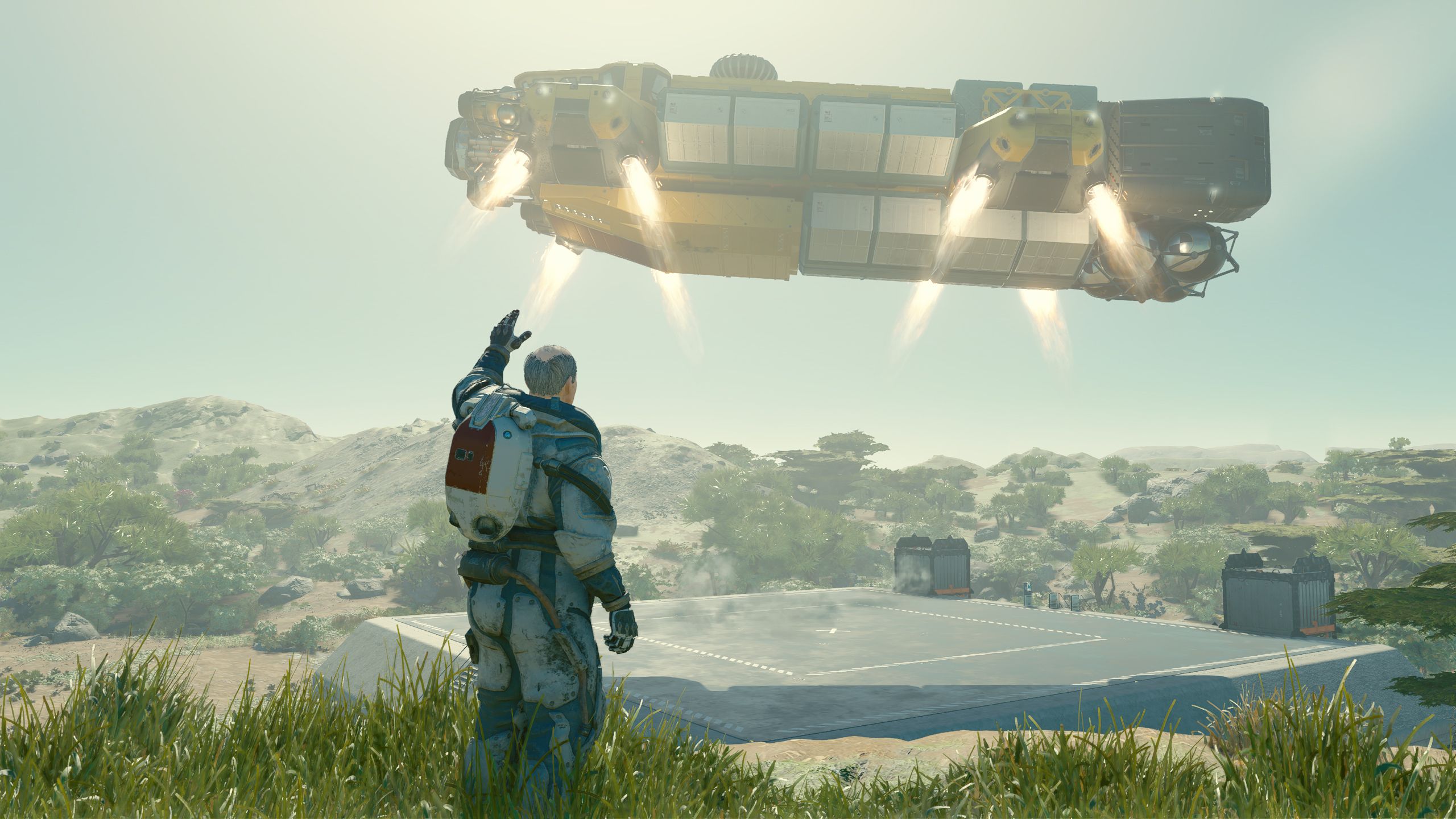
Furthermore, there is a clear boundary to what can be achieved. While takeoff is seeing progress, the inverse—landing on a planet—remains a hurdle that the modder considers effectively insurmountable under current conditions. In a candid admission, 0xBobby explained why they have ruled out seamless landings:
"It probably won’t ever happen, at least not from me. Yes, I know of all the tricks I could use, hiding the loading through clouds or entry flames, etc., but even that would be way more complex than what this mod or seamless grav jumps do."
The technical debt involved in generating a high-fidelity planetary surface while a ship is descending is immense. Loading the geometry of a planet’s surface, the placement of flora and fauna, and the rendering of static objects in real-time without a loading screen would likely exceed the engine’s streaming capabilities, leading to performance stuttering or outright crashes.
Implications for the Bethesda Modding Community
The existence of this mod speaks to a larger, recurring theme in the history of Bethesda Game Studios: the "Modder-as-Fixer" paradigm. Historically, Bethesda games have been launched as "frameworks" rather than final, polished products. From the Unofficial Skyrim Patch to the various UI overhauls for Fallout 4, the community has consistently stepped in to provide the quality-of-life updates that the developer initially overlooked or deemed too costly to implement.
This dynamic creates a unique relationship between the developer and the player base. While some critics argue that Bethesda relies too heavily on the modding community to "finish" their games, others see it as the ultimate expression of the studio’s design philosophy: creating tools that are accessible enough for the community to shape the experience to their liking.
However, Starfield represents a unique challenge. Because the game’s core structure is more rigid than previous titles, modders are finding that they are not just adding content, but actively fighting the engine to change its fundamental behavior. This marks a shift from "content creation" (adding new weapons or quests) to "engine manipulation."
The Future of Starfield: Patching the Void
Bethesda has acknowledged the community’s desire for a more seamless experience, though official responses regarding technical overhauls have been guarded. The studio has focused its post-launch support primarily on bug fixes, performance optimizations, and the implementation of requested features like the "Rev-8" land vehicle, which significantly improved ground traversal.
Whether Bethesda will ever implement a native "seamless" mode remains to be seen. Given the engine’s reliance on cell loading for stability, a complete removal of loading screens would likely require a significant, perhaps impossible, overhaul of the game’s core architecture. For now, players must rely on the ingenuity of individuals like 0xBobby.
Conclusion: The Persistence of Ambition
The Seamless Planet Takeoffs mod is a testament to the persistent desire of players to inhabit the worlds they love without interruption. Even if the mod is not a perfect, "no-loading-screen" reality, it represents a significant step toward the version of Starfield that many players envisioned when the first trailers dropped.
It highlights a critical truth about modern gaming: technology often lags behind the dreams of designers. While Bethesda aimed to build a universe of infinite wonder, they were constrained by the tools at their disposal. The modding community, however, continues to push those tools to their absolute limit. As Starfield continues to evolve through official updates and community interventions, the gap between the game’s technical reality and its cosmic fantasy continues to narrow—even if it has to be bridged one loading screen at a time.

