

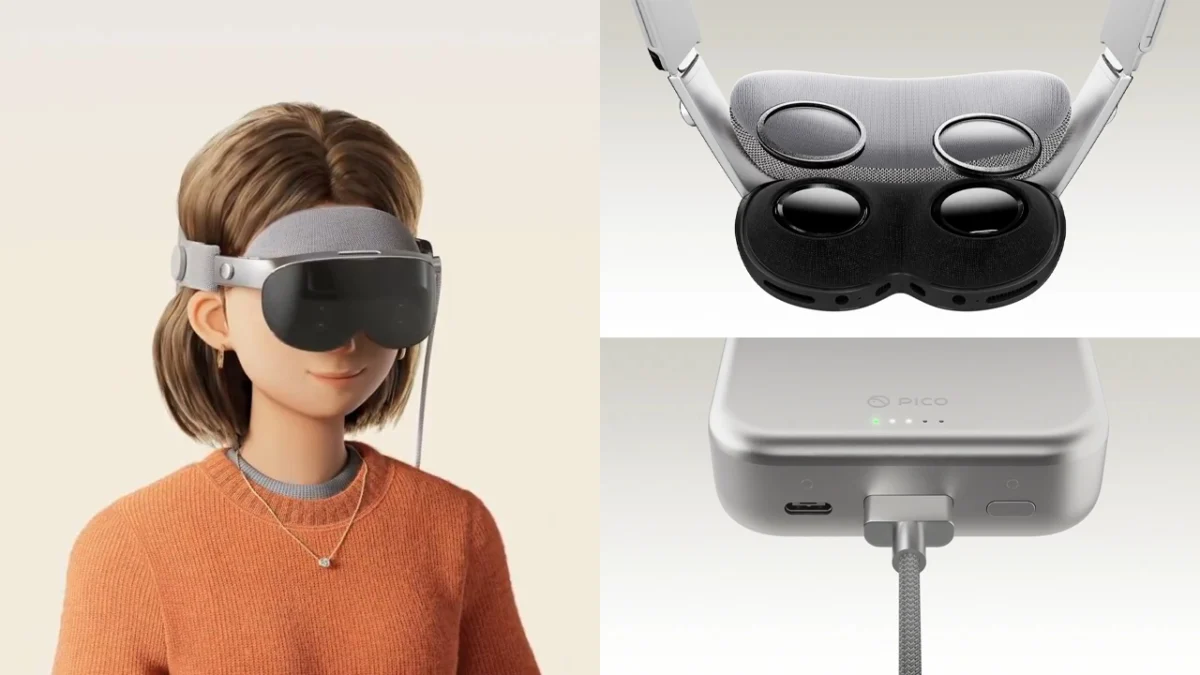
The competitive landscape of spatial computing is heating up, and ByteDance-owned Pico is no longer content to operate in the shadows. Following months of speculation and a carefully curated teaser campaign, the veil has been lifted on the physical design of "Project Swan"—the company’s highly anticipated next-generation XR headset.
Through a fortuitous discovery by XR enthusiast Luna, who unearthed design assets within a public Pico SDK, the industry now has its first clear look at the hardware. The visual evidence suggests a bold strategic pivot: Pico is moving away from the mass-market, standalone-centric philosophy of the Pico 4 and aiming squarely at the premium, high-end ecosystem currently occupied by Apple’s Vision Pro and the forthcoming Samsung Galaxy XR.
The Design Aesthetic: A Convergence of Industry Icons
The leaked SDK assets reveal a device that balances familiar ergonomic tropes with a distinctly futuristic, industrial silhouette. To the trained eye, the design language is a synthesis of the most successful high-end headsets currently on the market.
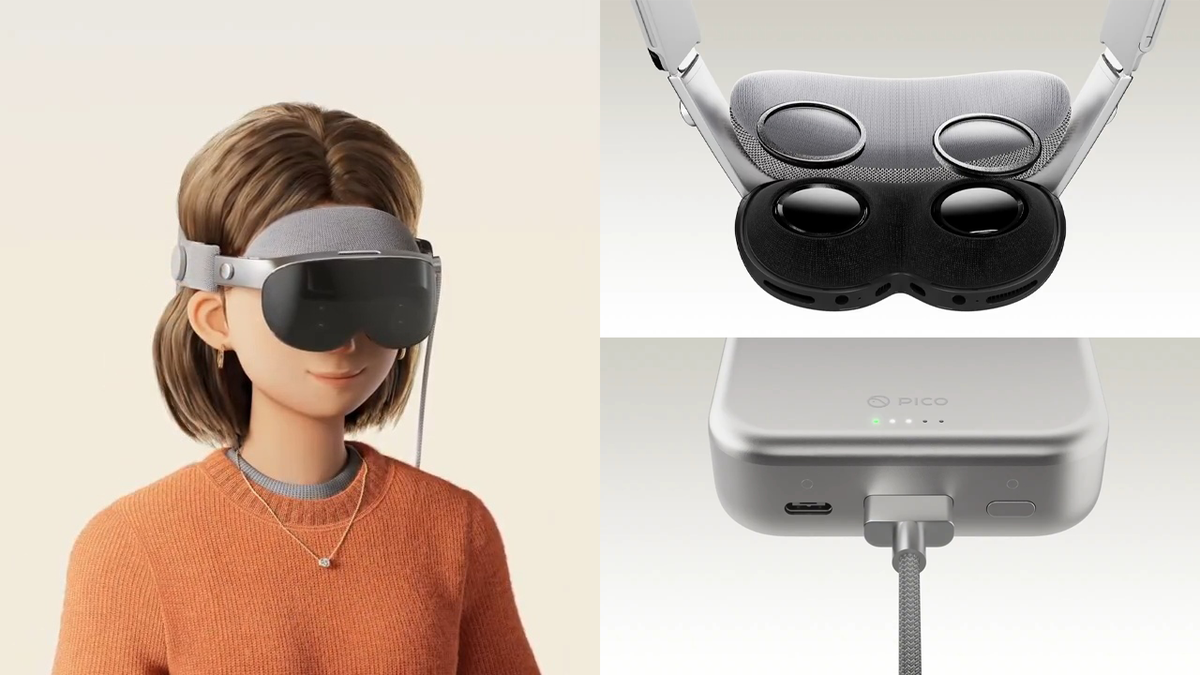
The rear head strap, as depicted in the SDK videos, bears a striking resemblance to Apple’s "Solo Knit Band," suggesting a focus on lightweight comfort and long-term wearability. This choice signals that Pico is prioritizing a balanced weight distribution, likely necessitated by the internal display technology. Conversely, the front visor and the forehead interface draw heavy inspiration from the leaked design language of the Samsung Galaxy XR, emphasizing a sleek, wrap-around facial aesthetic that minimizes the "goggle" look of previous-generation VR hardware.
Perhaps the most significant design revelation is the inclusion of an external tethered puck. While the SDK footage does not explicitly define the puck’s function, it is widely believed to be either a dedicated battery pack or a secondary compute unit. By moving the battery or additional processors off the head, Pico is clearly prioritizing neck comfort, allowing the headset itself to remain slim and aerodynamic—a necessary evolution for a device intended for extended spatial computing tasks.
Furthermore, the leaked videos demonstrate the use of tracked controllers—visually similar to those bundled with the Pico 4 Ultra. The presence of these controllers, coupled with the demonstration of boundary-setting in the software, suggests that while Pico is chasing the "spatial computing" market, it refuses to abandon the high-fidelity input requirements of traditional VR gaming.

Chronology: From Rumors to Reality
The journey toward Project Swan has been one of calculated reveals and growing industry anticipation.
- Pre-2024: Whispers of a "next-gen" Pico device circulated within developer circles, largely focused on the potential for a dual-chip architecture to handle the growing demands of mixed reality (MR).
- March 2024: Pico officially acknowledged "Project Swan." The company broke its silence by confirming key display and compute specifications, aiming to shift the conversation from "when will it launch" to "what will it offer."
- Mid-2024: Detailed information regarding the internal software began to emerge. Pico confirmed the development of its new OS—a platform heavily inspired by visionOS—and the "Pico Spatial Engine," designed to replicate the fluidity of Apple’s RealityKit.
- June 2026 (Present): The public SDK leak provides the final piece of the puzzle: the form factor. With the hardware design now in the public domain, the industry shift from speculation to analysis is complete.
Supporting Data: Under the Hood of the Swan
Project Swan is not merely an exercise in industrial design; it is a technical powerhouse designed to bridge the gap between consumer VR and professional-grade spatial computing. The specifications teased back in March paint a picture of a device built for extreme clarity and performance.
Display and Visual Fidelity
The headset is slated to feature micro-OLED panels capable of reaching 4,000 pixels per inch (PPI). In the context of modern XR, this is a significant leap. Current market leaders like the Meta Quest 3 and the Pico 4 Ultra rely on pancake lens configurations with significantly lower pixel density. By pushing for 4,000 PPI, Pico is targeting a "retina" display experience, effectively eliminating the screen-door effect and allowing for the crisp rendering of text and fine UI elements that are essential for productivity applications.
The Compute Architecture
The most compelling aspect of Project Swan is its dual-chip architecture. Pico is moving away from the "all-in-one" SoC (System on a Chip) model. Instead, the device will utilize:
- A primary processor: Engineered to deliver double the CPU and GPU performance of the Snapdragon XR2 Gen 2. This processor will handle the heavy lifting of spatial rendering, gaming, and 3D application environments.
- A proprietary coprocessor: Specifically designed for computer vision and image processing. This chip will handle the "passthrough" pipeline, ensuring that the latency between the physical world and the digital overlay is imperceptible—a crucial requirement for convincing mixed reality.
The Software Ecosystem: A New OS Paradigm
Pico’s strategic shift is as much about software as it is about hardware. By building an operating system that mirrors the user experience of Apple’s visionOS, Pico is clearly attempting to lower the barrier to entry for users transitioning from traditional computing environments.
The "Pico Spatial Engine" appears to be the backbone of this strategy. It is designed to handle "spatial anchors," ensuring that virtual windows and 3D objects remain locked in physical space even as the user moves around the room. This focus on "spatial persistence" is the defining characteristic of the next wave of XR, and by codifying it within their SDK, Pico is encouraging developers to build apps that feel like native extensions of the user’s real-world environment.

Implications: The Strategic Pivot
The existence of Project Swan and its design cues reveal a fundamental change in Pico’s market positioning.
Leaving the Budget War Behind
For years, the industry was defined by a "race to the bottom" regarding price, with Pico and Meta fighting for the $300–$500 market. With Project Swan, Pico is signaling its exit from that skirmish. By investing in micro-OLEDs, custom coprocessors, and premium industrial design, the company is positioning itself as a direct competitor to Apple and Samsung. This implies a significantly higher price point—likely moving into the $1,000+ category.
The "Tethered" Paradox
The inclusion of a tethered puck is a double-edged sword. While it enables superior performance and ergonomics, it sacrifices the "pick-up-and-go" convenience that made the Quest 2 and Pico 4 so successful. However, for the productivity-focused user—the target demographic for a device of this caliber—the trade-off is likely acceptable.

A Response to the Industry
Pico is not the only company moving toward this "puck-based" design. Recent findings in Meta’s own firmware, relating to a device codenamed "Phoenix," suggest that even the market leader is experimenting with similar hardware architectures. The industry is converging on a standard: high-end compute, off-head battery/processor units, and ultra-high-resolution displays.
Conclusion: What Comes Next?
The leak of the Project Swan design is more than just a momentary reveal; it is a preview of the "Pro" era of spatial computing. As Pico continues to refine its OS and finalize the hardware, the spotlight will remain fixed on how well they can execute on their promises.
If the hardware lives up to the specs, and if the software provides the seamless, intuitive experience that the design suggests, Pico could successfully transition from being a "value-alternative" to being a genuine innovator in the spatial computing space. We expect further announcements in the coming months regarding regional availability, specific launch pricing, and a formal developer rollout. For now, the "Swan" has emerged from the mist, and the competition has been served notice.

