

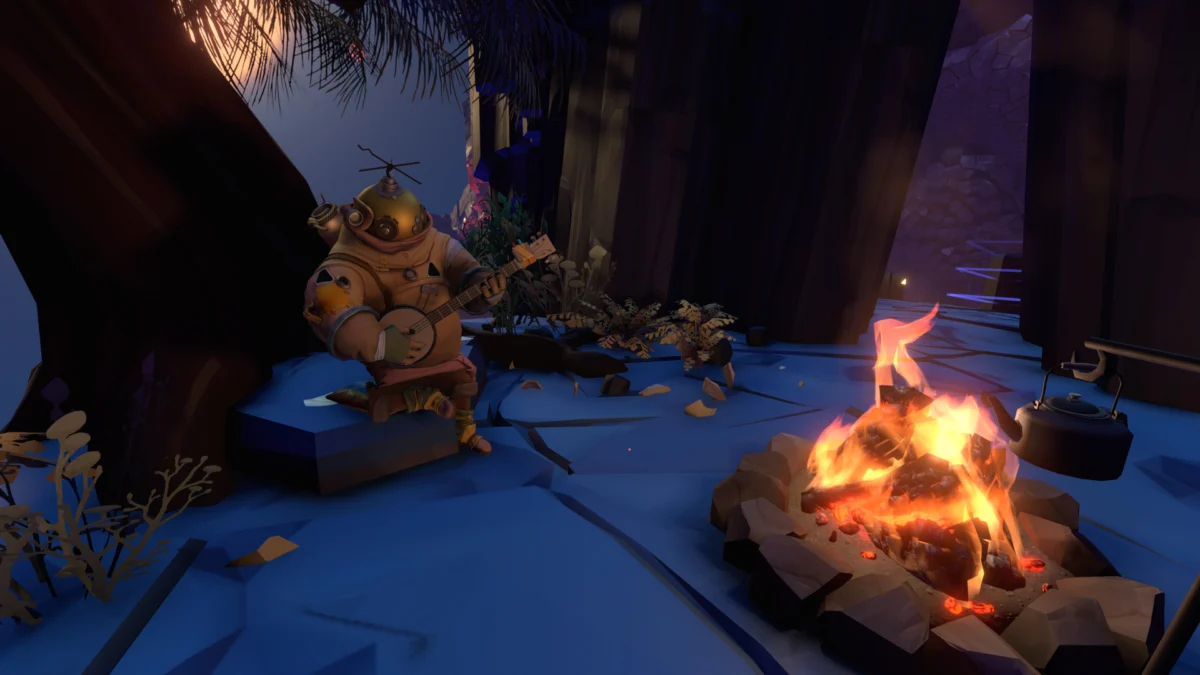
Since its initial release in 2019, Mobius Digital’s Outer Wilds has carved out a unique space in the pantheon of modern gaming. It is a title that frequently surfaces in the discourse of critics, developers, and players alike, often cited as a definitive example of what the medium can achieve when mechanical design and narrative storytelling are inextricably linked. For those currently seeking a transformative experience during their holiday downtime, Outer Wilds stands as an unmissable, albeit challenging, invitation to explore the cosmos.
The Architecture of Curiosity: An Overview
At its core, Outer Wilds is a space-exploration mystery set within a miniature, handcrafted solar system trapped in an infinite time loop. Players assume the role of an astronaut for the "Outer Wilds Ventures," a fledgling space program tasked with uncovering the secrets of an extinct civilization known as the Nomai.
The game’s brilliance lies in its lack of traditional progression systems. There are no weapon upgrades, no leveling up, and no skill trees to climb. Instead, the only "upgrade" available to the player is knowledge. By exploring the various planets—each with distinct physical properties and environmental hazards—players piece together a cosmic puzzle. Every death is not a failure, but a necessary reset that provides the context required to reach previously inaccessible areas in the next loop.
Chronology of a Cult Classic
To understand the impact of Outer Wilds, one must look at its trajectory from a crowdfunded passion project to a critically acclaimed industry landmark.
- 2012-2015: Originally created by Alex Beachum as a master’s thesis at the USC Interactive Media & Games Division, the game gained immediate traction for its novel approach to non-linear narrative.
- 2015: Mobius Digital launched a successful Fig crowdfunding campaign, signaling significant interest from the gaming community.
- May 2019: After years of meticulous development, Outer Wilds launched on PC and Xbox One. The reception was near-unanimous in its praise, garnering high scores from major outlets and winning several "Game of the Year" awards.
- 2020-2021: The game expanded to PlayStation 4 and Nintendo Switch, further cementing its reach. During this period, it became a staple of "must-play" lists, frequently discussed in podcasts and post-mortem design forums for its mastery of "information-gated" gameplay.
- September 2021: The release of the Echoes of the Eye expansion added a massive, self-contained narrative thread that challenged players to rethink their understanding of the game’s core mysteries.
Supporting Data: Why It Defies Conventional Metrics
While commercial sales figures for indie titles are often kept private, Outer Wilds thrives on a metric far more valuable in the modern digital age: player retention and community advocacy.
Statistically, Outer Wilds boasts one of the highest "completion to review" ratios of any modern title. Steam user reviews consistently hover in the "Overwhelmingly Positive" category, a rarity for a game that relies so heavily on player patience. Unlike action-heavy titles that rely on dopamine loops created by loot drops, Outer Wilds relies on the "Aha!" moment—the psychological satisfaction of solving a complex puzzle through deduction rather than mechanical prowess.
Data from player forums suggest that the average playthrough lasts between 20 to 30 hours, though the "value" of the experience is frequently cited as being far higher than the retail price point. Its cultural footprint is evidenced by the persistent nature of its fanbase, which continues to produce fan art, musical covers of the hauntingly beautiful soundtrack, and deep-dive lore videos years after the initial launch.
Official Responses and Developer Philosophy
The creators at Mobius Digital have been vocal about the design philosophy that makes Outer Wilds so distinct. In various post-mortems, Alex Beachum and his team have emphasized the "curiosity-driven" design. They argue that the industry has spent decades teaching players to follow waypoints, icons, and quest logs. Outer Wilds deliberately strips these away, forcing the player to observe the environment.
"We wanted to create a game where the player’s goal is to learn how the world works," Beachum noted in a 2020 interview. "If you know how the world works, you can go anywhere. If you don’t, you are trapped." This philosophy is a direct response to the "hand-holding" tropes common in AAA development. By trusting the player’s intelligence, Mobius Digital inadvertently created a game that respects the player’s agency, resulting in a deeper emotional investment in the story of the Nomai and the player’s own journey.

The Implications for the Future of Gaming
The success of Outer Wilds serves as a critical case study for the industry. It proves that there is a massive, underserved audience for "intellectual" gaming—experiences that do not necessarily require fast reflexes, but do require deep cognitive engagement.
1. The Death of the ‘Tutorial’
Outer Wilds successfully avoids a formal tutorial. It teaches players how to fly a ship and how to read ancient text through environmental immersion. This has influenced a new wave of indie developers to rethink how they introduce mechanics, moving away from intrusive pop-up windows toward organic, world-based learning.
2. Narrative Non-Linearity
The game’s structure is a masterclass in non-linear storytelling. Because the player can visit almost any location at any time, the narrative must remain coherent regardless of the order in which information is discovered. This "fragmented narrative" approach has become a gold standard for developers working on mystery-heavy titles.
3. Emotional Resonance in Simulation
Finally, Outer Wilds challenges the idea that a simulation-heavy game cannot be emotionally resonant. By grounding the existential dread of a dying sun in the intimate, relatable desire to explore, the game hits a profound emotional chord. It forces players to confront themes of entropy, legacy, and the beauty of a finite existence.
A Final Verdict: Why You Should Play It
It is rarely accurate to call a piece of media "essential," but Outer Wilds earns the distinction. It is a game that fundamentally changes how you view the act of playing.
For the uninitiated, the early hours can be punishing. You will die by falling into black holes, getting crushed by celestial bodies, or running out of oxygen while drifting in the vacuum of space. You will feel frustration. However, these obstacles are the friction required to generate the heat of discovery. Once the first major mystery is solved—once you realize that the clockwork mechanism of the solar system is not just a backdrop but a puzzle to be decoded—you will be hooked.
If you have been looking for a game that respects your time by offering meaningful content rather than filler, Outer Wilds is the answer. It is a singular, unrepeatable experience that reminds us why we play: not just to win, but to understand. Whether you find yourself laughing at a clumsy landing or crying at the final, poignant conclusion, you will walk away from the experience changed.
The Nomai left their story behind for someone to find. The question is: are you ready to go find it? If you haven’t played it yet, the answer should be a resounding yes. Visit your digital storefront of choice, download it, and prepare to lose yourself in one of the most remarkable universes ever crafted.

