

In the rapidly evolving landscape of interactive entertainment, few companies are as influential—or as polarizing—as Epic Games. As the architect behind the industry-standard Unreal Engine and the powerhouse Epic Games Store, the company’s strategic shifts often signal tectonic changes for developers worldwide. This November, Epic is set to host the "2026 Epic AI MegaJam," an event that serves not merely as a competition, but as a bold manifesto for the future of game production.
The event has already sparked a firestorm of discourse, ranging from questions about the technical necessity of AI to debates over the soul of creative labor. While Epic initially framed the event as an AI-exclusive mandate, a swift community backlash forced the company to refine its stance, highlighting the delicate tightrope the industry is walking as it integrates generative tools into the traditional creative process.
The Genesis of the 2026 AI MegaJam
The 2026 Epic AI MegaJam is designed to challenge the status quo of rapid prototyping. Scheduled for mid-November, the event will officially unveil its theme on November 11, followed by a three-day development sprint from November 12 to 15. The core premise is simple: leverage the speed of modern artificial intelligence to transform a concept into a playable experience in just 72 hours.
Epic has positioned the event as a solution to the "prototyping bottleneck." By utilizing generative AI tools—ranging from asset generation and code completion to logic structuring—the company claims that developers can bypass the tedious, months-long cycles typically required to bring a core game loop to life.
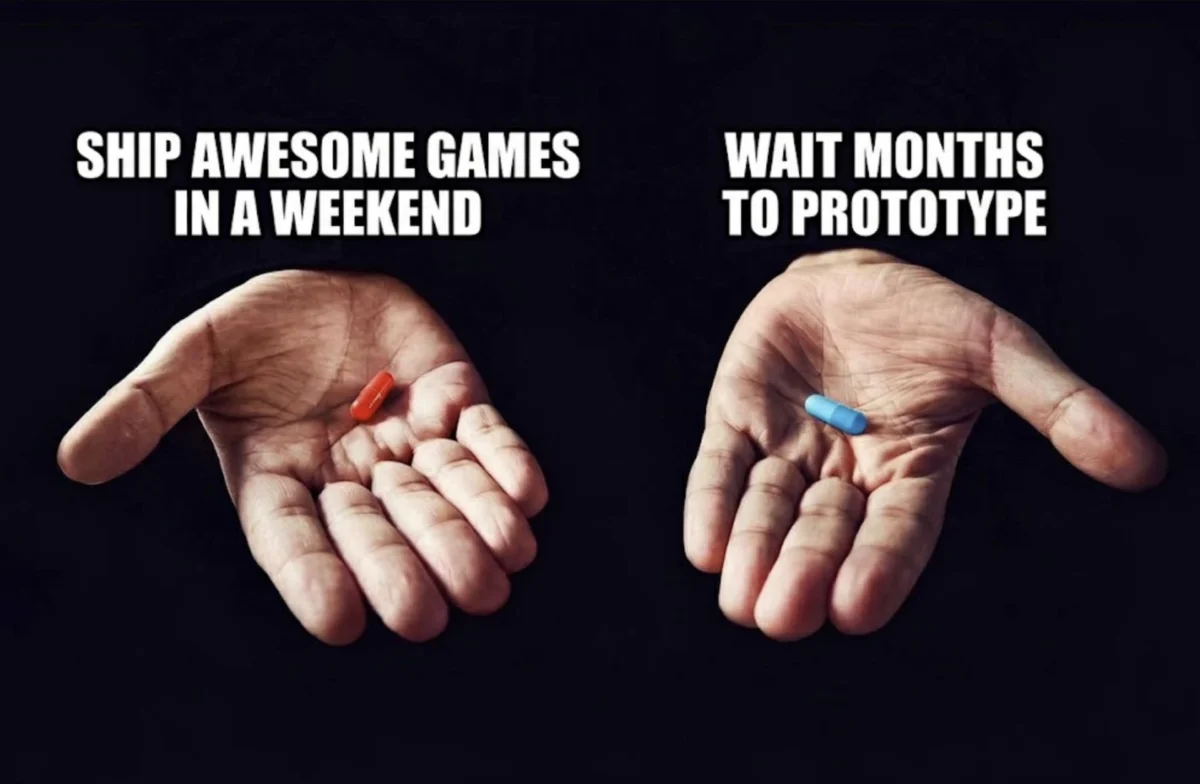
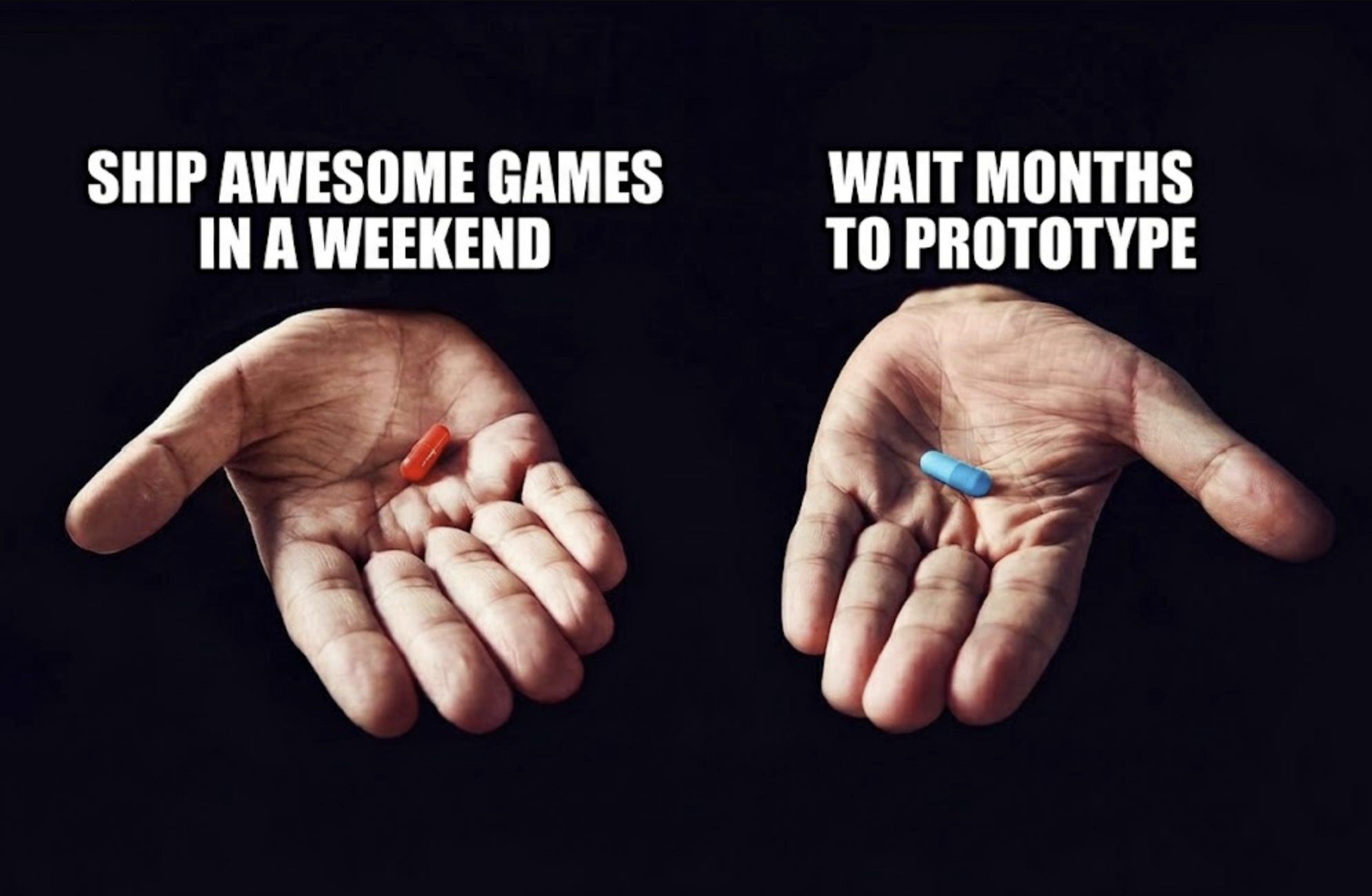
However, the announcement was accompanied by a controversial marketing campaign. Using imagery that riffed on The Matrix—specifically the iconic choice between the red and blue pills—Epic invited developers to "take the red pill" and embrace AI-driven development. The promotional artwork, which featured a hand offering a red pill, became an immediate subject of mockery online; the hand, likely generated by an AI tool itself, featured an extra finger, a common artifact of current generative models. For critics, the blunder was a poignant metaphor for the current state of AI in art: technically ambitious but often lacking the human touch.
A Chronology of the Controversy
The path to the MegaJam has been anything but smooth. The timeline of events reveals how quickly corporate policy can shift under the pressure of public perception:
- October 22, 2026: Epic Games officially announces the "2026 Epic AI MegaJam" on social media, emphasizing the necessity of AI for "shipping awesome games in a weekend."
- October 23, 2026: Social media users and independent developers push back against the exclusionary nature of the rules, questioning why a game jam would require specific tools rather than focusing on creative output.
- October 24, 2026: In a rapid response, Epic Games issues a correction via their official Unreal Engine social media channels. The company clarifies that the "requirement" was a mistake in the FAQ.
- Late October 2026: Discussions regarding the broader integration of AI within Epic’s internal teams—specifically the "AI-first" pivot of their Star Wars and Marvel crossover projects—continue to circulate, linking the MegaJam to a larger, company-wide strategy.
Supporting Data and Financial Stakes
The incentives for the 2026 MegaJam are substantial, reflecting Epic’s desire to normalize these workflows. The prize pool includes $7,500 for winners in each of the three primary categories, with additional cash prizes for runners-up and special awards like "best team."
Perhaps more significant than the immediate cash prizes are the "Development Continuation Grants." Epic has pledged up to $50,000 per team for projects that demonstrate high potential for future growth. This is a clear indicator that Epic is not just interested in a weekend experiment; they are looking to identify, incubate, and potentially fund the next generation of "AI-native" studios.
The strategy mirrors the company’s recent internal retooling. Reports indicate that Epic is actively moving developers to retool for "maximum AI acceleration." By incentivizing external developers to adopt these tools, Epic is effectively expanding its R&D pool, gathering data on how AI models perform in real-world, high-pressure game development environments.
Official Responses and the "Vibe Coded" Philosophy
The leadership at Epic, particularly CEO Tim Sweeney, has been vocal about the necessity of this pivot. Sweeney has characterized the shift to AI as a survival imperative, suggesting that the industry must evolve or face obsolescence. In recent statements, he encouraged developers to shed their fear of public backlash, arguing that the majority of the industry is already utilizing these tools in private.
"Developers who are getting value from AI should speak up," Sweeney stated on X. "There’s safety in numbers. Most developers are doing it and loving it."
This sentiment was reinforced by the launch of the new Epic Games Store launcher, which the company described as "vibe coded"—a colloquialism suggesting that the software relies heavily on generative AI and automated processes rather than traditional manual coding. By embracing the terminology of the internet-native generation, Epic is attempting to frame AI adoption not as a cold, corporate mandate, but as a trendy, efficient, and inevitable evolution of the craft.
Implications for the Future of Game Development
The implications of the 2026 Epic AI MegaJam extend far beyond a single weekend of competition. Several key areas are likely to see long-term impact:
1. The Redefinition of "Creative Work"
Sweeney has suggested that creative work in the future will be less about the manual labor of sculpting assets or writing lines of code and more about "direction." In this paradigm, the developer becomes a conductor, orchestrating AI agents to produce the desired output. This marks a fundamental shift in the definition of a "developer," potentially lowering the barrier to entry while raising the bar for conceptual and structural mastery.
2. The Cultural Divide
The resistance to the MegaJam highlights a deep-seated cultural rift within the gaming community. Many independent developers, particularly those rooted in the "indie" spirit, view the use of AI as an affront to human artistry and a threat to the livelihoods of artists and writers. The backlash from users like those who mocked the "six-fingered hand" in the promotional image shows that the public is highly sensitive to the aesthetic and ethical failures of current AI models.
3. Industry Standardization
If the MegaJam is successful in producing high-quality games, it could act as a proof-of-concept that triggers widespread adoption across the industry. Major studios are already looking for ways to cut costs and shorten development cycles; if Epic can prove that an "AI-first" workflow produces competitive results, it will likely become the industry standard within the next five years.
4. Legal and Ethical Considerations
Despite the technical advancements, the shadow of copyright and training data remains. Critics of the MegaJam point to the ethical concerns of using models that may have been trained on the work of artists without their consent. By heavily promoting an AI-centric event, Epic is putting itself at the forefront of this legal battle, essentially daring the industry to challenge the status quo.
Conclusion
The 2026 Epic AI MegaJam is a snapshot of an industry in transition. By backtracking on the mandatory nature of AI usage, Epic has shown a pragmatic willingness to listen to its community, yet its commitment to an "AI-first" future remains unshaken.
As we approach November, the event will serve as a bellwether for the gaming industry. Whether it results in a wave of innovative, AI-assisted masterpieces or merely underscores the limitations of current generative tools, one thing is certain: the conversation around AI in gaming has shifted from "if" to "how." Epic Games is betting that the developers who learn to work with the machine will be the ones to define the next era of play. For the rest of the industry, the choice—much like the one in the Matrix—is no longer hypothetical. The red pill is on the table, and the clock is ticking.

