

Main Facts
The high-stakes saga surrounding the development and security of Grand Theft Auto 6—arguably the most anticipated entertainment product in human history—has taken a dramatic, cinematic turn. "Cyberleek," a notorious figure linked to a series of high-profile security breaches and leaks regarding Rockstar Games’ upcoming blockbuster, has officially declared a conditional ceasefire with parent company Take-Two Interactive.
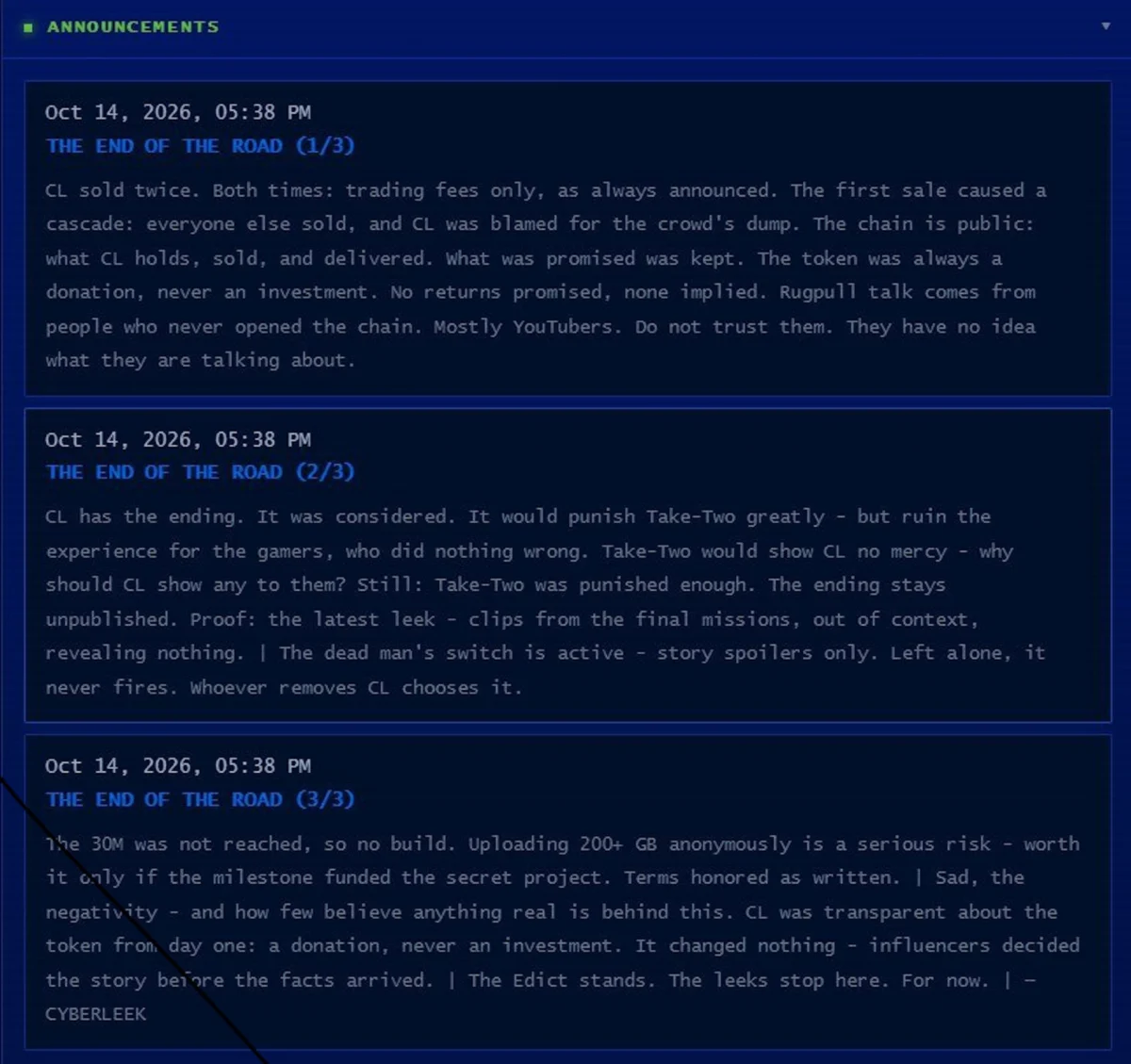
In a parting message published on a now-defunct website and subsequently preserved and amplified by community trackers on social media platforms like X (formerly Twitter), Cyberleek stated that they would cease publishing further material concerning Grand Theft Auto 6. Crucially, this includes withholding the game’s closely guarded narrative conclusion and final mission spoilers.
However, this truce is entirely contingent upon Take-Two Interactive backing down from its aggressive legal and investigative pursuit. To enforce this fragile peace, Cyberleek claims to have established a digital "dead man’s switch." According to the leaker, this automated failsafe contains pivotal, game-ruining story spoilers and climax details that will be automatically published should Cyberleek be permanently silenced, doxed, or apprehended by legal authorities.
"CL has the ending. It was considered. It would punish Take-Two greatly—but ruin the experience for the gamers, who did nothing wrong," the message reads. "The dead man’s switch is active—story spoilers only. Left alone, it never fires. Whoever removes CL chooses it."
Alongside this high-stakes nuclear option, Cyberleek used their final public statements to defend their previous cryptocurrency initiatives. The leaker rejected allegations that they orchestrated a financial "rug pull" via a memecoin promotion, insisting that community funding requests were "always a donation, never an investment." Furthermore, Cyberleek confirmed they would not be releasing a full, playable build of GTA 6—complete with a fully functional story mode—conceding that their controversial memecoin failed to hit a targeted $30 million market capitalization threshold.
Chronology of Events: How the GTA 6 Security Crisis Unfolded
To understand the gravity of Cyberleek’s current ultimatums, it is necessary to examine the timeline of persistent security vulnerabilities that have plagued Rockstar Games and Take-Two Interactive over recent years.
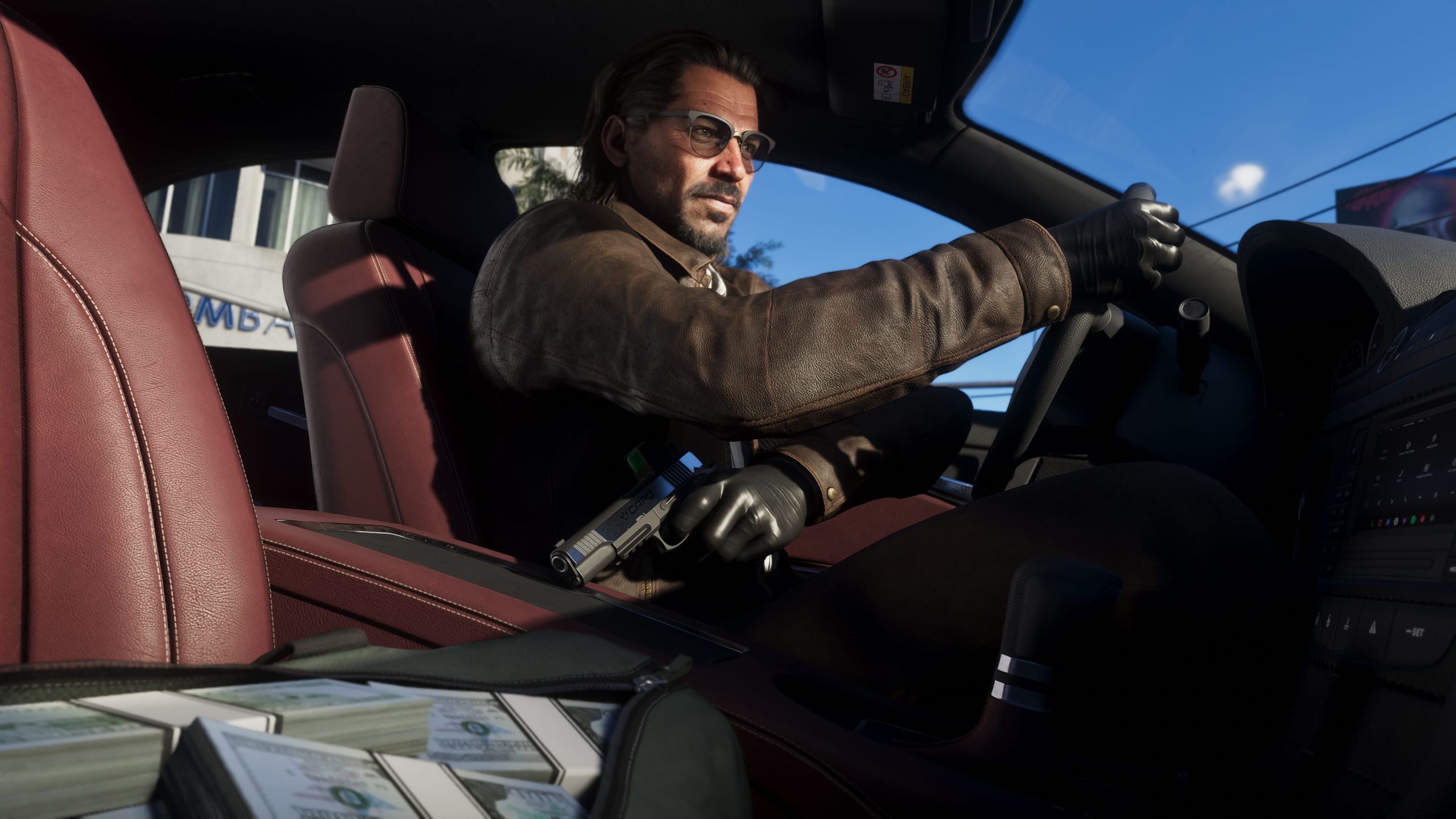
- September 2022: The gaming industry was rocked by one of the most devastating leaks in history. A hacker leaked roughly 90 video clips showcasing early-development footage of Grand Theft Auto 6, exposing gameplay mechanics, protagonist details (Jason and Lucia), and Vice City settings. The perpetrator was later revealed to be a member of the Lapsus$ hacking group.
- Late 2023 – Early 2024: Rockstar Games weathered a series of trailer leaks, internal document disclosures, and preemptive announcements (such as the official trailer leak forcing Rockstar’s hand to release the official version early).
- Mid-2024 to Early 2025: As anticipation mounted following official marketing beats from Rockstar, fringe insider groups, secondary leakers, and opportunistic data miners began surfacing on encrypted channels, Discord servers, and alternative forums. Among them, Cyberleek emerged as a prominent and disruptive actor.
- The Crypto Pivot: Cyberleek attempted to monetize their illicit access or perceived inside knowledge by tying leaks to cryptocurrency and memecoin milestones. They dangled the prospect of leaking an entire playable debug build of GTA 6 if specific financial caps were met.
- The Collapse and Ultimatum: Facing mounting pressure from international cybersecurity firms, law enforcement tips, and Take-Two’s formidable legal division, Cyberleek’s primary web portals went dark. Before vanishing, however, the leaker deployed their final statement: the threat of the digital dead man’s switch, shifting from an offensive leaking strategy to a defensive hostage negotiation.
Supporting Data and Context: The Anatomy of a "Dead Man’s Switch"
In security and espionage circles, a dead man’s switch (or dead man’s trigger) is a mechanism designed to be triggered if the operator becomes incapacitated, detained, or killed. Historically popularized by cinema—such as Miles Dyson’s improvised detonator in Terminator 2: Judgment Day or explosive countermeasures in action thrillers—the concept has increasingly crossed over into cyber-extortion and digital activism.
Cyberleek’s deployment of this tactic represents a psychological chess match. By threatening to release the final narrative beats of Grand Theft Auto 6, the leaker is attempting to create a paradox for Take-Two Interactive:
- Aggressive Pursuit: If Take-Two successfully tracks down, silences, or prosecutes Cyberleek, the automated switch may trip, leaking spoilers that could deflate millions of dollars in marketing surprise and consumer anticipation.
- Inaction: If Take-Two stands down, Cyberleek escapes immediate legal reckoning, though likely only temporarily.
However, industry analysts and cybersecurity experts point out a glaring vulnerability in Cyberleek’s strategy: time. Grand Theft Auto 6 is on a definitive release trajectory. Within a matter of weeks or months, marketing campaigns, review copies, and official media rollouts will inevitably reveal major plot points. The leverage Cyberleek claims to hold possesses an aggressively short shelf life.
Furthermore, the failed cryptocurrency campaign—where a $30 million market cap goal went unmet—suggests that Cyberleek’s financial backing and community influence may be severely overinflated. The inability to monetize their data cache effectively signals a decline in their operational security and support network.
Official Responses and Corporate Posture
Take-Two Interactive and its subsidiary, Rockstar Games, have maintained a notoriously ironclad posture regarding intellectual property theft, code leaks, and extortion attempts. While corporate communications teams have issued standard "no comment" statements regarding ongoing criminal investigations, industry insiders note that Take-Two treats intellectual property protection with near-military severity.
Historically, Take-Two has spared no expense in collaborating with international law enforcement agencies, the FBI, and the UK’s City of London Police Cyber Crime Unit to track down individuals leaking proprietary source code or development materials. Legal precedents set during previous Rockstar leaks demonstrate that the publisher pursues maximum statutory penalties, regardless of whether a leaker attempts to cloak their actions behind ideological rhetoric or conditional truces.
Legal experts consulted on the matter suggest that Cyberleek’s public ultimatum—essentially documenting terms of extortion and digital blackmail on the public internet—may actually serve to strengthen Take-Two’s legal case. Prosecutors typically view explicit threats to damage a corporation’s commercial assets unless demands are met as a severe aggravating factor in sentencing. Consequently, law enforcement agencies are unlikely to be deterred by Cyberleek’s digital failsafe, viewing it as a bluff or a manageable technical hurdle compared to the broader necessity of establishing legal deterrence.
Implications for the Gaming Industry and GTA 6
The standoff between Cyberleek and Take-Two Interactive carries profound implications for how the video game industry manages security, leaks, and community relations in the digital age.
1. The Erosion of Spoiler Culture
For millions of passionate gamers, the primary casualty of this digital warfare is the sanctity of the narrative experience. Grand Theft Auto titles are narrative-driven cinematic epics where plot twists, character fates, and the ultimate climax are designed to be experienced organically by the player. Cyberleek’s willingness to weaponize the ending of the game highlights a toxic evolution in leaks culture, where bad actors hold fan enjoyment hostage for clout, attention, or financial gain.
2. Heightened Corporate Paranoia and Development Secrecy
The persistent breaches at Rockstar Games have already forced sweeping changes across the game development sector. Hybrid and remote work policies—which became standard during the COVID-19 pandemic—have faced intense internal scrutiny, with many studios rolling back flexibility out of fear of insider data theft. Security protocols surrounding internal builds, version control, and remote access have reached unprecedented levels of paranoia, driving up development costs and complicating production timelines for AAA titles.
3. The Crypto-Crime Intersection
Cyberleek’s attempt to tie video game leaks to memecoin speculation illustrates an increasingly common intersection between cybercrime, intellectual property theft, and decentralized finance scams. Bad actors frequently leverage the intense hunger for gaming news to manipulate unregulated cryptocurrency markets, exploiting hopeful fans for financial gain before abandoning projects when financial thresholds are missed.
The Road Ahead
As the release window for Grand Theft Auto 6 draws closer, the pressure on both sides of this conflict will only intensify. Whether Cyberleek’s dead man’s switch is a genuine technological threat or a desperate bluff from a cornered actor remains to be seen. What is certain, however, is that Take-Two Interactive’s legal apparatus is working furiously behind the scenes, signaling that in the high-stakes game of corporate espionage and multi-billion-dollar blockbusters, there is ultimately no safe harbor for those who cross Rockstar Games.

