

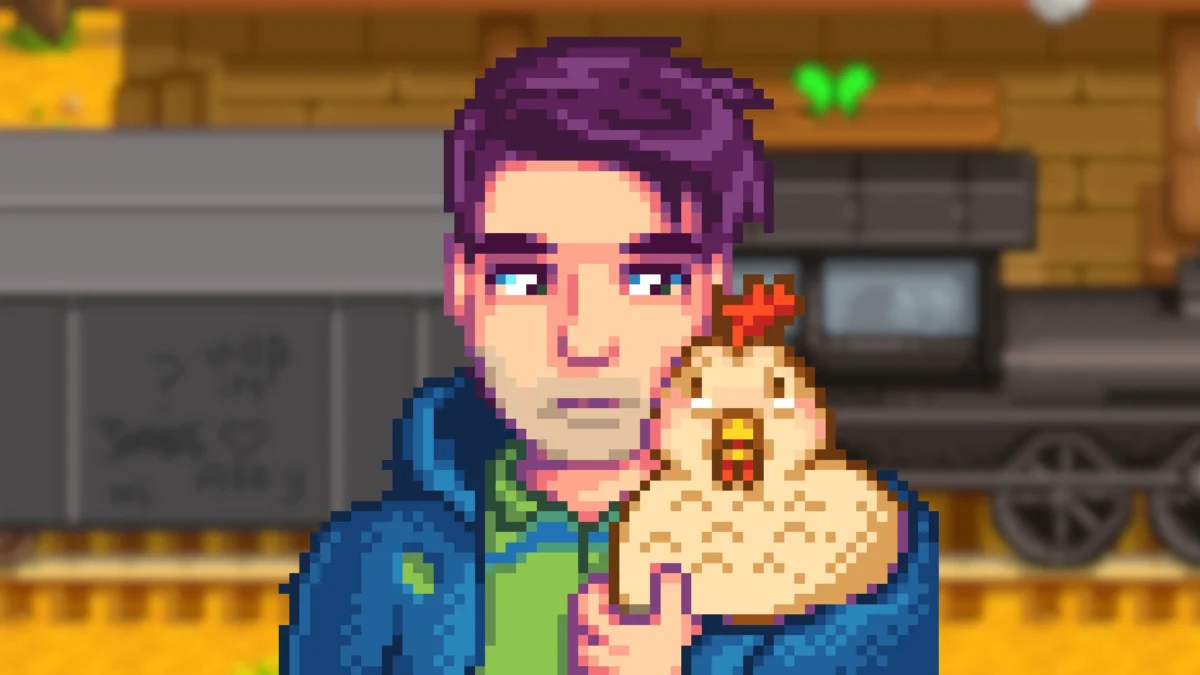
In the high-pressure world of independent game development, where early access programs and iterative feedback loops have become the industry standard, Eric "ConcernedApe" Barone remains a notable outlier. As the creator of the global phenomenon Stardew Valley, Barone has cultivated a reputation for uncompromising creative control and an almost monkish dedication to his craft. His upcoming project, Haunted Chocolatier, is currently one of the most anticipated titles in gaming, yet even those closest to him—including his partner, Amber—have yet to experience the game in its current state.
For Barone, the development of Haunted Chocolatier is not a collaborative experiment, but a singular culinary endeavor. He likens the process to roasting a Thanksgiving turkey: if you pull the bird out of the oven before it is fully cooked, the result is an embarrassment to the host and a disappointment to the guests. In his view, a game, much like a feast, must be presented only when the internal temperature has reached perfection.
The Chronology of a Solitary Vision
The journey toward Haunted Chocolatier began in the wake of Stardew Valley’s unprecedented success. Released in 2016, Stardew Valley was the product of four years of intense, solitary labor. Barone handled everything—programming, art, music, writing, and sound design—essentially reinventing the farming simulation genre while proving that a single developer could achieve AAA-level impact.
Following the release of Stardew, Barone spent years providing massive, free content updates, effectively doubling the game’s scope. It wasn’t until October 2021 that he officially unveiled his next project: Haunted Chocolatier. The reveal trailer showcased a moody, atmospheric aesthetic—a departure from the sunny, rural optimism of Stardew Valley. Players were introduced to the concept of a chocolatier living in a haunted mansion, gathering rare ingredients to craft sweets for a supernatural clientele.
Since that announcement, Barone has been characteristically quiet. While he periodically shares snippets of music or brief glimpses of gameplay mechanics, he has resisted the urge to engage in public playtesting or early alpha releases. This "silent phase" of development is a direct continuation of the methodology he perfected during his Stardew years.
The Philosophy of Solo Development
In a recent, expansive interview with GQ, Barone reaffirmed his commitment to the solitary development model. With the exception of external marketing and logistics support, he remains the sole architect of the game’s creative direction.
"No one’s playing the game until I’m ready to show it," Barone stated. This approach is rooted in a desire to maintain a pure, unadulterated vision. In an era where "community-driven development" often leads to feature creep or design by committee, Barone’s insistence on isolation serves as a protective barrier. By remaining the only one playing the game during its formative stages, he avoids the pressure to pivot based on external opinions before he has fully realized his own intent.
For the average consumer, this delay can be frustrating. However, for Barone, the pressure to "get it right" is amplified by the colossal success of his debut. He has previously admitted that he struggles with the "precedent he accidentally set." Millions of players expect the same level of depth, charm, and longevity from Haunted Chocolatier that they found in Stardew Valley. The fear of falling short of that monumental legacy is, perhaps, the primary ingredient in his slow-cooking process.
Shifting Gears: From Farming to Action RPG
While Stardew Valley was defined by its relaxing rhythm of planting, harvesting, and community building, Haunted Chocolatier promises a slightly more aggressive shift in gameplay. Barone has described the game as "more of an action RPG" than its predecessor.
This evolution is specifically designed for the segment of the Stardew player base that found their joy in the deeper, more dangerous recesses of the game’s mines. In Stardew Valley, mining was a secondary activity—a way to gather ore for upgrades. In Haunted Chocolatier, it appears that combat, exploration, and the pursuit of rare, monster-guarded ingredients will be central to the gameplay loop.
Barone’s admission that he is building the game for fans who "yearn for the mines" suggests a more combat-heavy experience, though he is careful to note that the signature "cozy" atmosphere of his work will remain. The core appeal—the cycle of effort, progression, and reward—is being recalibrated to prioritize the thrill of the hunt over the patience of the harvest.
The Implications of the "Turkey Metaphor"
Barone’s use of the "Thanksgiving turkey" metaphor provides a fascinating insight into his psyche. By comparing his game to a food item that requires a specific, non-negotiable cooking time, he is signaling that the development process is governed by a internal biological or creative clock rather than market demand.
From a culinary standpoint, the USDA and institutions like Butterball recommend specific temperatures to ensure safety and quality. In the world of software, there is no digital thermometer for "fun." A game can be bug-free but lack soul, or it can be a technical disaster that is nonetheless captivating. By keeping the game hidden, Barone is essentially refusing to serve his audience a "raw" product.
This creates a significant implication for the industry: the rise of the "Auteur Developer." As games become increasingly expensive and complex to produce, the idea of a single person holding the reins of an entire project is becoming a romanticized rarity. Barone’s success serves as a beacon for other solo developers, but it also highlights the extreme personal cost of this model. The "struggle" he has documented—the mental and physical toll of carrying the weight of a million expectations—is the unseen price of this independence.
Looking Forward: The Weight of Expectation
As the wait for Haunted Chocolatier continues, the gaming community remains in a state of suspended animation. The lack of a release date is not a sign of failure, but a tactical decision to avoid the "half-baked" fate Barone dreads.
Industry analysts often point out that the biggest risk to a sequel is the "Shadow of the Predecessor." Stardew Valley is not just a game; it is a cultural touchstone that has defined the farming sim genre for a decade. Haunted Chocolatier does not need to be Stardew Valley 2.0; it needs to be its own distinct entity. By keeping the game internal, Barone is allowing himself the freedom to pivot, rewrite, and discard ideas that don’t fit the vision, without having to answer to an investor or a community that might demand he stick to a "formula."
Ultimately, the development of Haunted Chocolatier is an act of trust. Barone is asking his audience to trust that the man who gave them the most beloved indie game of the 2010s knows exactly when the "turkey" is done. Whether the result is a massive departure from his previous work or a spiritual successor that refines the formula, the gaming world is waiting with bated breath.
For now, the kitchen remains closed. Barone continues to work in isolation, refining his mechanics, tweaking his combat, and ensuring that when he finally pulls that metaphorical turkey out of the oven, it is nothing short of a masterpiece. In an industry that often prioritizes speed and monetization, there is something profoundly refreshing about a creator who is willing to take his time, even if it means keeping his own partner waiting at the table.

