

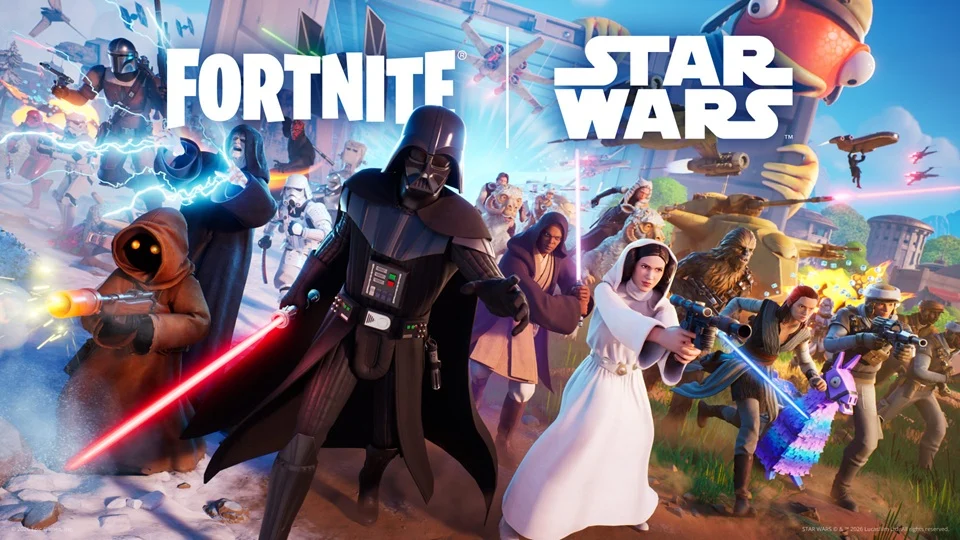
In a move that has sent shockwaves through the gaming industry, Epic Games has officially delayed its highly anticipated collaboration with Disney—a marquee shooter title featuring an ensemble cast from the Marvel and Star Wars universes. Originally slated for a March release, the project has now been pushed back indefinitely as the company mandates a radical shift toward an "AI-first" production model.
The pivot, which was communicated to staff during a video conference last week, signals a fundamental change in how AAA titles may be produced in the future. As Epic attempts to reconcile internal development hurdles with its massive $1.5 billion partnership with Disney, the industry is left grappling with the ethical, technical, and professional implications of a studio attempting to automate the core of game creation.
The Disruption: A Project in Limbo
The collaboration between Epic Games and Disney was heralded as a watershed moment for the medium. Following a $1.5 billion equity investment by Disney in 2024, the two entertainment titans announced a broad partnership to build an expansive, persistent universe within the Epic ecosystem. This upcoming shooter was intended to be the flagship title of that alliance.
However, sources familiar with the project have indicated that development had fallen significantly behind schedule. Epic management reportedly miscalculated the resources required for a project of this scale, leading to a bottleneck that forced a re-evaluation of the production pipeline. Rather than scaling up traditional headcount, the leadership has opted for a aggressive technological pivot, effectively turning the project into a testbed for generative AI at a massive scale.
Chronology of a Shift
The timeline leading to this development reveals a company under intense pressure to maintain its market dominance while managing a volatile economic landscape.
- February 2024: Disney announces a massive $1.5 billion investment in Epic Games, confirming a multi-year partnership to integrate Disney’s intellectual property into a persistent games and entertainment universe.
- March 2024: Epic Games announces a restructuring, resulting in the layoffs of approximately 1,000 employees. The company cited a downturn in Fortnite engagement and a need to align costs with long-term growth.
- Late 2025 – Early 2026: Development on the Disney-licensed shooter hits internal milestones that fall short of expectations, as the project struggles with technical debt and production timelines.
- October 2026: In a decisive internal briefing, project directors inform staff that the game will pivot to an "AI-first" model, prohibiting further hand-written code and requiring all art assets to be generated through AI workflows. The March 2026 release date is scrubbed.
The Mandate: "No More Hand-Written Code"
The most striking element of the news is the specific directive issued by project leadership. According to internal messages seen by Bloomberg, the mandate is absolute: "No more hand-written code."
The workflow is reportedly being overhauled to prioritize AI tools, including Anthropic’s Claude, to handle the heavy lifting of programming and asset creation. Staff members, who were reportedly "stunned" by the announcement, have been transitioned into oversight roles, tasked with managing the output of these generative models rather than crafting the underlying systems manually.
This approach is unprecedented for a title of this caliber. While many studios utilize AI to assist in repetitive tasks like texture generation or non-player character (NPC) dialogue, no major studio has attempted to construct a core gameplay loop and visual identity primarily through generative AI. The risks are substantial: concerns regarding IP copyright, the lack of human "soul" in the gameplay, and the technical stability of AI-generated code remain significant points of debate among software engineers.
Official Responses and Corporate Stance
Epic Games has been swift to frame this transition as a progressive advancement in development efficiency rather than a cost-cutting measure.
In a statement provided to the press, Epic communications director Jake Jones clarified the company’s vision: "We are embracing AI-accelerated development, led by Epic developers who are the visionaries and creative drivers for everything we do." The statement underscores a corporate culture that views AI not as a replacement for human talent, but as a force multiplier—a perspective that currently stands in stark contrast to the sentiments of a large portion of the game development workforce.
Disney, which holds a significant financial stake in the outcome of this project, has remained largely silent on the matter, having not yet responded to formal requests for comment. The silence from the House of Mouse is notable, given that the project involves some of the world’s most valuable intellectual property. Whether Disney signed off on this AI-driven approach remains an open question that will likely be scrutinized by stakeholders in the coming months.
Supporting Data: An Industry at a Crossroads
The move by Epic occurs against a backdrop of increasing anxiety within the gaming sector. The 2026 GDC (Game Developers Conference) survey provides a grim portrait of an industry in flux. According to the report, more than a third of game developers are currently integrating AI into their workflows—a figure that has surged in just two years.
However, the human cost is becoming impossible to ignore. Layoffs across the industry have risen by over 36% compared to previous cycles, and over half of those surveyed by GDC explicitly believe that the rise of AI in game development is "harmful" to the industry’s future. The tension between the push for efficiency and the desire for job security has reached a breaking point, with support for unionization reaching record highs among developers in the United States.
Furthermore, the "democratization" of game creation through AI is creating a strange duality in the market. While massive projects like the Disney shooter are attempting to automate production to meet massive budgets, smaller creators are utilizing the same tools to bypass traditional development hurdles entirely. Yuji Horii, the legendary creator of the Dragon Quest series, recently made headlines by producing a playable game in roughly 30 minutes using AI tools. While this highlights the accessibility of the technology, it also underscores the growing gap between boutique, creator-led projects and the corporate-mandated, AI-optimized blockbusters.
Implications for the Future of AAA Gaming
The decision by Epic Games to steer its most high-profile project toward an AI-only workflow carries significant implications for the future of the medium.
1. The Quality Control Challenge
The primary concern for players and critics alike is the "uncanny valley" of gameplay. Can an AI-generated shooter replicate the tight, responsive mechanics that have defined Epic’s Fortnite? If the code is generated by an LLM, debugging becomes an entirely different process, potentially leading to a game that is functionally unstable or lacking the unique creative "spark" that only human designers provide.
2. The Legal and Intellectual Property Landscape
Using AI to generate assets for iconic franchises like Marvel and Star Wars opens a Pandora’s Box of legal questions. Who owns the copyright to code or art generated by an AI model trained on a massive, heterogeneous dataset? Disney is notoriously protective of its IP; if the game is produced via AI, the company may face hurdles in enforcing copyright protection for the resulting assets.
3. The Future of Employment
If the "no hand-written code" policy proves successful, it will likely set a dangerous precedent for other studios. Epic Games is an industry leader; its choices often dictate the standards for the entire field. If the company succeeds in producing a high-quality product using this workflow, it may trigger a industry-wide pivot that prioritizes "prompt engineering" over traditional software engineering, potentially leading to further widespread displacement of junior and mid-level developers.
4. The "Persistent Universe" Vision
The Disney-Epic partnership was designed to create a long-term, living environment. The use of AI might be a strategic choice to facilitate constant content updates—a "procedural" approach to world-building that could allow for near-infinite expansion. If successful, this could revolutionize live-service games. If it fails, it could permanently tarnish the reputation of both Disney and Epic.
Conclusion
The delay of the Disney-Epic shooter is more than just a scheduling mishap; it is a signal of a seismic shift in the technological foundation of game development. By choosing to experiment with an "AI-first" model on one of the most high-stakes projects in history, Epic Games is essentially betting its reputation—and the value of its Disney partnership—on the promise that generative AI can match the output of human creativity.
As the industry watches with a mixture of skepticism and anxiety, the outcome of this project will undoubtedly serve as the primary case study for the role of AI in the next decade of gaming. For now, the developers remain in the hot seat, tasked with navigating a landscape where the tools of the trade are evolving faster than the people tasked with using them. Whether this is a visionary leap into a more efficient future or a hubristic gamble that undermines the artistry of game design remains to be seen.

