

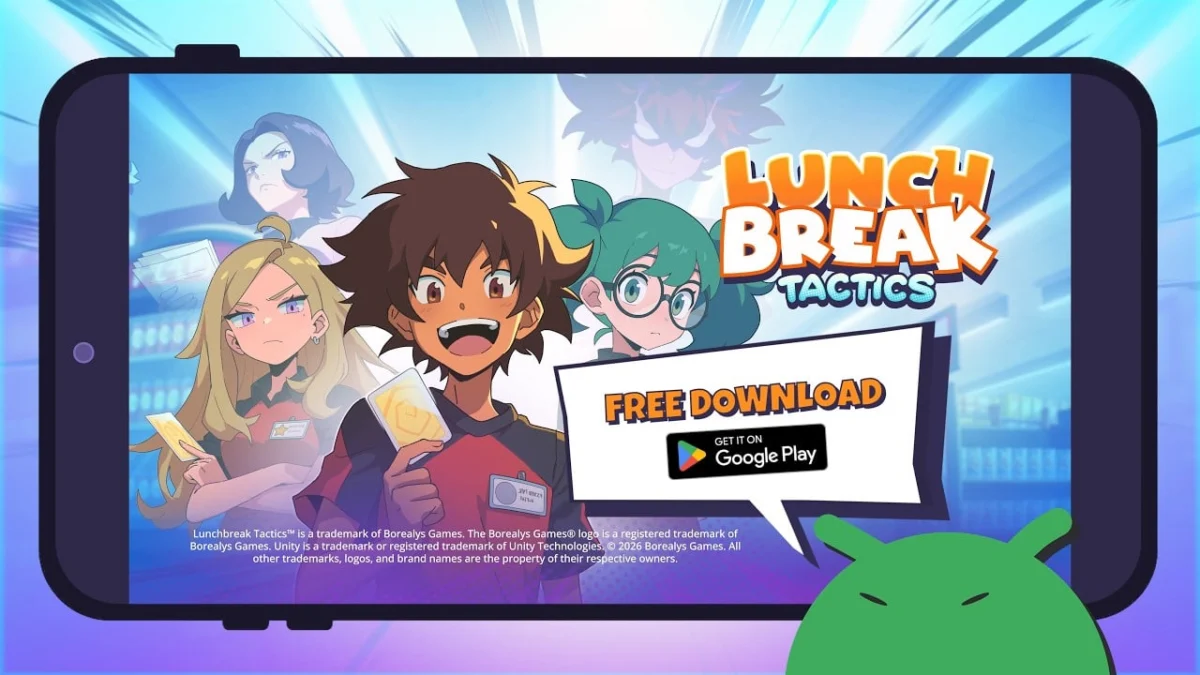
In the modern gaming landscape, the "auto-battler" genre has largely been defined by high-fantasy themes, complex lore, and intense, fast-paced competitive ladders. However, developer Borealys Games has decided to flip the script entirely. With the launch of their latest title, Lunchbreak Tactics, on Android, the studio is proving that you don’t need dragons or space marines to build a deep, compelling strategy game. All you really need is a mundane retail job, a sense of deep-seated boredom, and a pile of supermarket merchandise.
Lunchbreak Tactics has arrived on the Google Play Store, offering a refreshing, tongue-in-cheek take on the genre. By blending the tactical depth of Hearthstone with the accessible, automated chaos of Super Auto Pets, Borealys Games has crafted an experience that turns the drudgery of a supermarket shift into a high-stakes arena.
The Genesis of the “Slacker” Meta: Main Facts
At its core, Lunchbreak Tactics is an asynchronous auto-battler where players assume the role of a new trainee at "Anymart," a retail environment so profoundly dull that the employees have invented a competitive card game to preserve their sanity.
The game’s premise is deceptively simple: your goal is to rise through the ranks to become the "Ultimate Slacker of the Month." While the title sounds humorous, the gameplay mechanics are surprisingly robust. Players draft squads, leverage powerful synergies, and manage resources over a twelve-round sprint. Because the battles are asynchronous, the game respects the player’s time, allowing for strategic depth without the pressure of live-server matchmaking latency.
The title is currently available for download as a free-to-play "lite" version, which provides players with two Heroes and two Clans to experiment with. For those who find themselves hooked by the addictive loop of store-aisle combat, a one-time purchase of $5.99 unlocks the full roster and features.
A Chronicle of Procrastination: The Chronology of Development
The journey of Lunchbreak Tactics from a concept to a fully realized Android title reflects the studio’s desire to create a game that resonates with the universal feeling of workplace stagnation.
- Early Conceptualization: Borealys Games sought to strip away the "epic" baggage of traditional CCGs. They focused on the idea of taking inanimate, everyday objects and projecting personality onto them.
- The Prototyping Phase: The developers spent significant time balancing the asynchronous nature of the combat. Unlike live auto-battlers, Lunchbreak Tactics requires the AI to interpret the player’s board state perfectly against the opponent’s strategy, ensuring that the game feels fair even when the opponent isn’t present.
- The "Anymart" World-Building: The narrative framing—a trainee at the world’s most boring store—was designed to ground the fantastical elements of the card battles. By anchoring the game in a familiar, mundane setting, the absurdity of a toilet-paper-wielding warrior becomes a comedic highlight rather than a jarring design choice.
- The Launch: Following a period of testing, the game officially hit the Google Play Store, marking a pivot for Borealys Games into the mobile-first, casual-competitive space.
Analyzing the Mechanics: Supporting Data
To understand why Lunchbreak Tactics is resonating with players, one must look at its underlying mathematical and strategic architecture. The game operates on a draft-and-deploy system that rewards long-term planning over twitch-reflexes.
The Hero and Clan Ecosystem
Each run begins with a critical decision: selecting one Hero and two Clans. This is the cornerstone of your strategy.
- Heroes: These serve as your "leader." Each Hero possesses a unique passive ability. These abilities act as a multiplier for your playstyle, forcing the player to adapt their board build to maximize the Hero’s inherent strengths.
- Clans: Your choice of two Clans dictates the card pool available to you. This creates a branching path of synergies; a player might combine a "Household Cleaning" clan with a "Snack Aisle" clan to create unique buff chains that wouldn’t be possible otherwise.
The Economic Loop
The game employs a classic gold-management system. During each of the twelve rounds, players are allocated a set amount of gold. This gold can be spent on:
- Purchasing Units: Recruiting sentient supermarket items.
- Upgrading: Combining duplicate cards to enhance their stats.
- Freezing: If a player sees a vital unit but lacks the gold, they can "freeze" the shop to ensure that card remains available in the next round.
- Itemization: Applying power-ups to units to alter their offensive or defensive capabilities.
The twelve-round limit is a crucial design choice. By capping the run length, the developers have ensured that the game fits perfectly into the "lunch break" motif. A full run takes roughly the same amount of time as a standard break, emphasizing the game’s meta-narrative.
The Developer Perspective: Official Responses
In communications regarding the game’s release, the team at Borealys Games emphasized that Lunchbreak Tactics was never intended to be a grueling grind.
"We wanted to capture the feeling of finding joy in the mundane," a spokesperson for the studio noted. "We’ve all been in jobs where you’re just staring at the clock. Lunchbreak Tactics is our way of imagining what would happen if the office supplies started fighting back. We didn’t want to make another ‘hardcore’ card game that requires you to spend hundreds of dollars. We wanted a game that you could pick up for fifteen minutes, feel clever, and then get back to your day."
The studio also addressed the decision to offer a free-to-play lite version. They argued that in the saturated market of the Google Play Store, players deserve to experience the core "feel" of a game before committing to a purchase. By allowing access to two Heroes and two Clans, the developer provides a substantial "demo" that showcases the game’s depth without requiring an upfront investment.
Strategic Implications and the Competitive Scene
What does the arrival of Lunchbreak Tactics mean for the mobile auto-battler market?
A Shift Toward "Casual-Competitive"
Most auto-battlers demand constant attention and long play sessions. Lunchbreak Tactics challenges this by proving that asynchronous gameplay is a viable, and perhaps even preferred, model for mobile users. Players can engage with the game in short, high-density bursts, making it ideal for commuting, queuing, or—true to its name—the actual lunch break.
The Potential for "Meta" Evolution
Because the game relies on synergies between specific clans and heroes, the "meta" is likely to shift rapidly as the player base discovers broken combinations. The use of everyday objects—like slow cookers or rolls of toilet paper—as combatants allows for a lighthearted community culture. It is easy to imagine forums and social media groups dedicated to "best shop-floor builds," where players debate the efficacy of a "Snack Aisle" rush versus a "Cleaning Supplies" control deck.
Long-Term Retention
The $5.99 premium model for the full version is a significant signal of intent. It suggests that Borealys Games is prioritizing the integrity of the gameplay experience over aggressive monetization tactics like loot boxes or energy meters. If the game maintains a fair balance, it could establish a dedicated, long-term player base that values a complete, non-predatory product.
Conclusion: Why You Should Care
Lunchbreak Tactics is more than just a quirky mobile game; it is a masterclass in thematic design. By taking the high-level strategy of modern card battlers and applying a coat of "supermarket humor," Borealys Games has lowered the barrier to entry without sacrificing the strategic depth that genre veterans crave.
Whether you are a fan of Hearthstone, a regular player of Super Auto Pets, or simply someone looking for a way to pass the time while you wait for your next meeting to start, Lunchbreak Tactics offers a compelling, hilarious, and deeply strategic escape.
As you navigate the aisles of Anymart, collecting your items and outsmarting your fellow "slackers," you might just find that you’ve become the very thing you set out to be: the Ultimate Slacker of the Month. The game is live now on the Google Play Store, waiting for its next employee to punch in. Will you be the one to master the art of the shelf-raid, or will you just be another trainee lost in the monotony of the warehouse? The choice—and the synergy—is yours.
For more mobile gaming news, check out our recent coverage of the idle-clicker sensation Buttons Up!, which explores the addictive potential of simple mechanics.

