


By Rick
Main Facts
- The Project: No Law is an upcoming first-person, open-world shooter RPG developed by Neon Giant, the 24-person indie studio previously known for the grimy cyberpunk twin-stick shooter The Ascent.
- The Setting: Set in a dense, handcrafted fictional metropolis known as Port Desire, players assume the role of Grey Harker, a reluctant military veteran thrust back into a life of violence.
- Core Philosophy: Unlike Cyberpunk 2077—which evolved into an action-heavy RPG with linear main story arcs—No Law is positioning itself closer to a true immersive sim, emphasizing player agency, systemic interactions, and consequence-driven world design.
- Key Innovations: Handcrafted architectural layouts (eschewing procedural generation), navigation entirely reliant on in-world signage via an "Immersive" difficulty mode, and reactive storytelling dictated by player behavior rather than traditional branching dialogue trees.
- The Catch: Despite boasting ambitious mechanics—such as hacking remote devices and weaponizing environment physics—the game features traditional XP and skill progression systems, raising questions about whether a tiny team of 24 developers can safely pull off an immersive open-world sim without falling into development pitfalls.
Chronology: From Disappointment to a New Hope
The Cyberpunk 2077 Paradigm Shift
Like millions of players around the globe, I felt a distinct wave of disappointment when CD Projekt Red initially launched Cyberpunk 2077 in December 2020. The technical performance issues, broken promises, and shallow systems painted a stark contrast against the immersive simulator experience many of us had projected onto early trailers and gameplay demonstrations.
Yet, much like the broader gaming community, I eventually grew to deeply respect the redemption arc of the game. Following patches and the transformative Phantom Liberty expansion, Cyberpunk 2077 secured a place in my rotation, arguably eclipsing even The Witcher 3 in sheer atmosphere and gunplay satisfaction.

However, even in its polished, modern incarnation, Night City is not the game I truly wanted it to be. I wanted an open-world Deus Ex.
Tracing the DNA of Immersive Sims
CD Projekt’s early marketing hinted at deep simulation elements: diverse ability trees, a seamless blend of stealth and action, mischievous hacking mechanics, and compounds designed with multiple tactical vectors of approach. While those elements exist in fragments within the final release, Cyberpunk 2077 ultimately anchors its progression too heavily to character levels. Skill point allocation can swing mechanics like stealth from being completely useless to utterly game-breaking. Furthermore, whenever the main narrative takes center stage, open-ended sandboxing gives way to a linear, highly scripted trajectory reminiscent of a Call of Duty campaign.
Enter No Law.

Revealed via successive trailers—culminating in an impressive showing at Gamescom’s Opening Night Live—Neon Giant’s next project appears to manifest the precise blueprint I envisioned. It promises to answer a lingering gaming question: what does an open-world, first-person immersive sim set in a sprawling cyberpunk dystopia actually look like when executed correctly?
Supporting Data and Design Analysis
Micro-Design vs. Macro-Scale: The Architecture of Port Desire
One of the most frequent pitfalls of modern open-world design is the temptation to prioritize breadth over depth. Night City is a marvel of scale, but its vastness often works against the intimate, exploratory ethos of classic immersive sims like Thief, Dishonored, or Deus Ex.
Neon Giant is consciously tackling this issue from the opposite direction. In interviews with outlets like Video Games Chronicle (VGC), the studio has emphasized the density of Port Desire. Most notably, the developers confirmed that every single apartment within the game’s world has been handcrafted rather than procedurally generated.

A metropolis built entirely of bespoke, Adam Jensen-style apartments fundamentally changes how a player interacts with 3D space. The hallmark joy of an immersive sim relies on learning a map’s verticality and architecture intimately—memorizing air vents, security blind spots, shortcut rooftops, and hidden maintenance corridors.
To reinforce this design philosophy, No Law will feature a dedicated setting at launch titled the "Immersive" mode. Turning this on strips away standard UI-based navigational breadcrumbs and waypoint markers, forcing players to read actual street signs, structural numbers, and architectural landmarks to find their destinations.
Systemic Player Freedom and Creative Malice
The core test of any modern immersive sim lies in its sandbox flexibility. Recent trailers have highlighted a staggering variety of tactical approaches for Grey Harker:

- Brute Force: Direct gunplay with high-impact visceral impacts, such as a devastating kick used to shatter doors off hinges or hurl adversaries over structural ledges.
- Subterfuge: Navigating through ventilation networks and performing silent, environmental takedowns.
- Sci-Fi Anomalies: Unconventional abilities that can cause enemy heads to explode or entire bodies to violently rupture.
- Indirect Problem-Solving: A standout moment from promotional footage showcased Harker attaching an explosive charge to a laptop-controlled cleaning robot (a sci-fi Roomba), hacking its mobility pathways, and driving it directly into a garage full of armed guards before detonating it remotely.
Official Responses and Developer Insights
Speaking directly to the design ethos behind No Law, Neon Giant’s Arcade Berg outlined how the studio intends to handle player progression without railroading user choice:
"You have experience points and skill trees, and you opt into how you want to play the game," Berg noted during a post-reveal interview. "Do you want to be more into lockpicking, or do you want to be a hacker, or do you want to be a specialist with certain types of weapons… We never tell you which route to take, we say that the player can never play the game wrong."
Furthermore, Neon Giant has clarified how player actions permanently impact the game world. Rather than leaning purely on traditional dialogue trees to steer the narrative, No Law adjusts how non-player characters react based on how missions are executed. Go in guns blazing, and the city responds with hostility and locked doors. Sneak through shadows, and you might preserve fragile alliances.
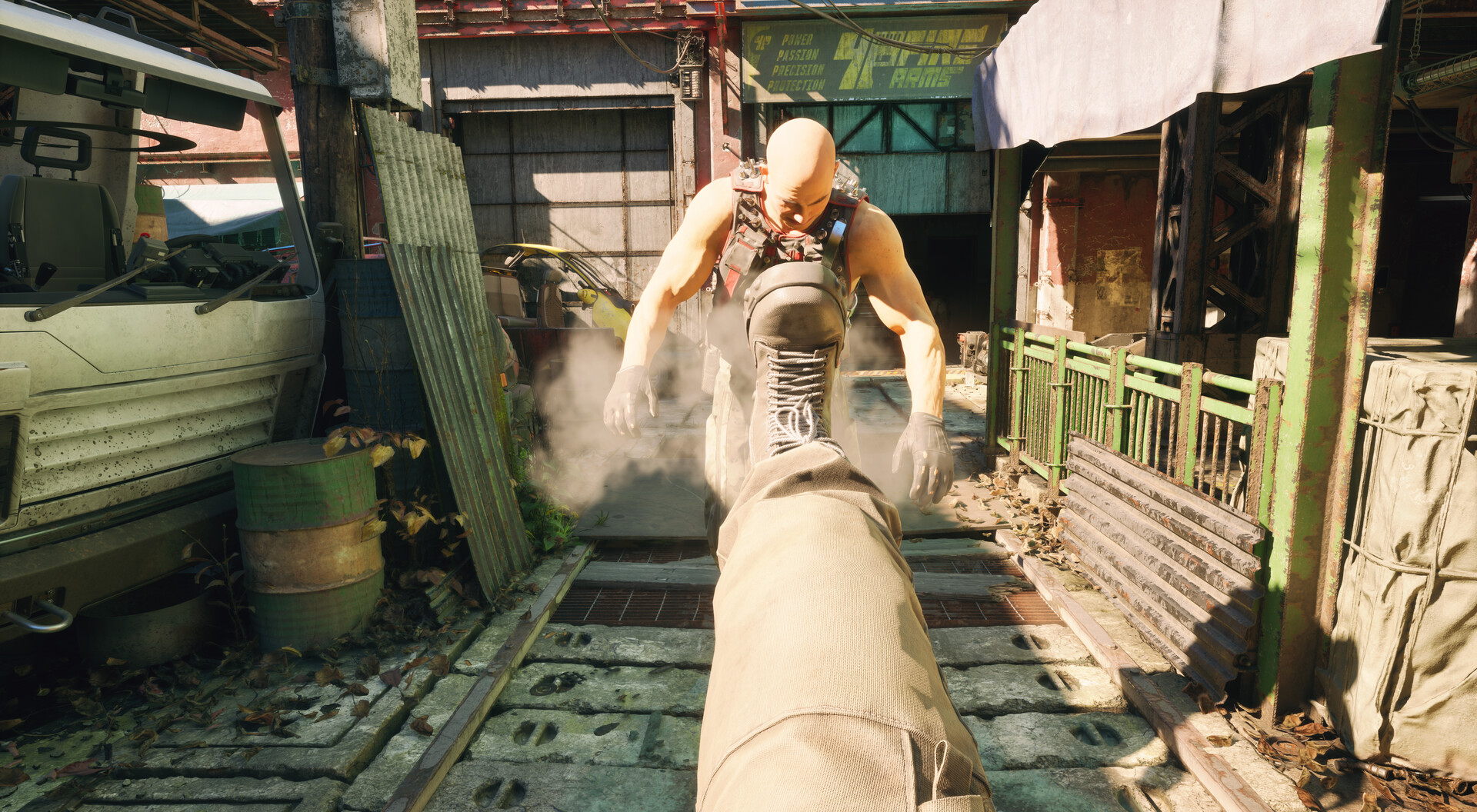
Crucially, the studio confirmed a strict consequence rule: if a civilian or vendor NPC is killed in the open world, they stay dead permanently, cutting off any services or narrative paths tied to them for the remainder of the campaign.
Implications and Potential Risks
Despite the overwhelming enthusiasm surrounding No Law, a healthy dose of skepticism remains warranted, rooted primarily in the stark realities of game development scales.
The Team Size Equation
Neon Giant operates as an independent studio comprising a tight-knit team of just 24 developers. To put that in perspective, that is a fraction of the workforce deployed on Cyberpunk 2077, and remarkably, it is even smaller than the original team that built Ion Storm’s genre-defining Deus Ex in 2000.
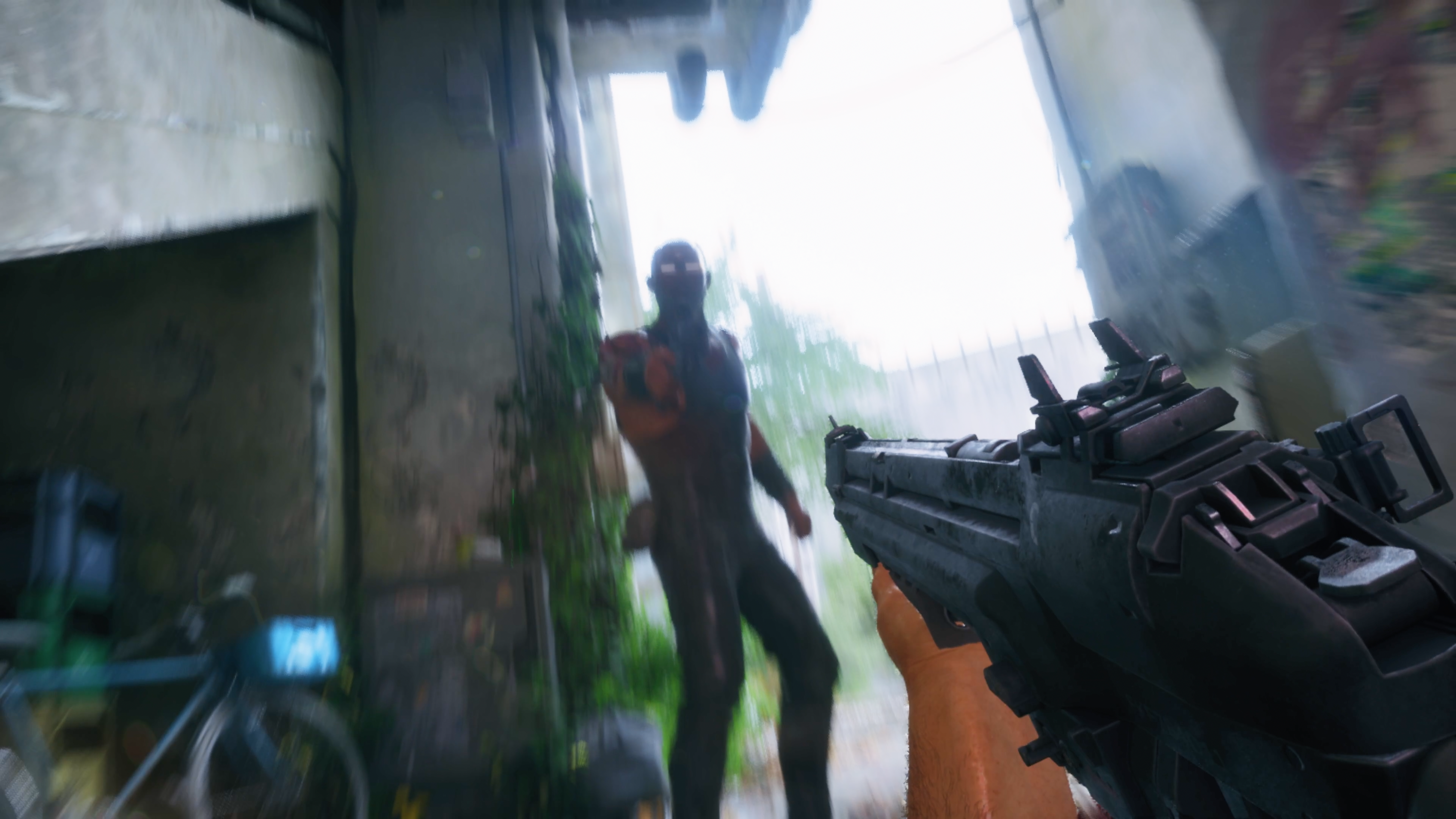
Attempting to engineer a sprawling, graphically rich, open-world first-person RPG with deep systemic physics and handcrafted environments using a micro-team is an immense gamble. The industry is littered with the cautionary tales of independent studios biting off more than they can chew, resulting in technical instability or compromised scope.
Yet, if Neon Giant can successfully pull off this high-wire act without repeating the catastrophic technical hurdles that plagued other major cyberpunk launches of the past decade, No Law has all the raw ingredients required to become the breakout critical darling—and the ultimate realization of the cyberpunk immersive sim—when it targets release.

