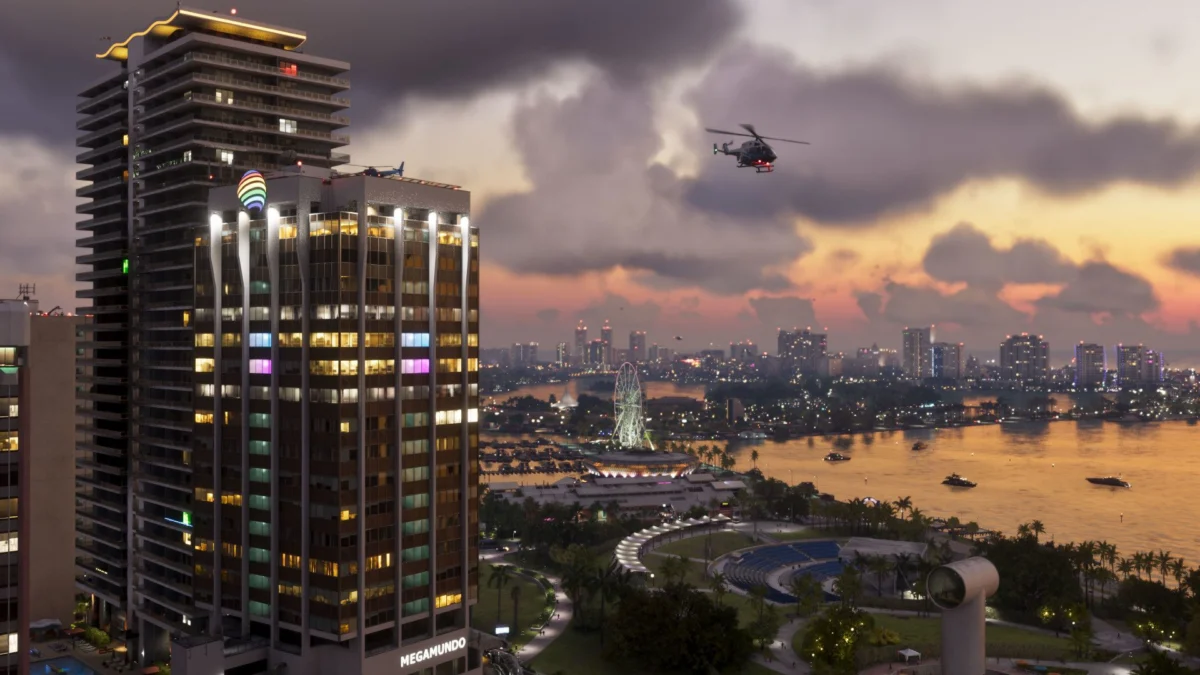
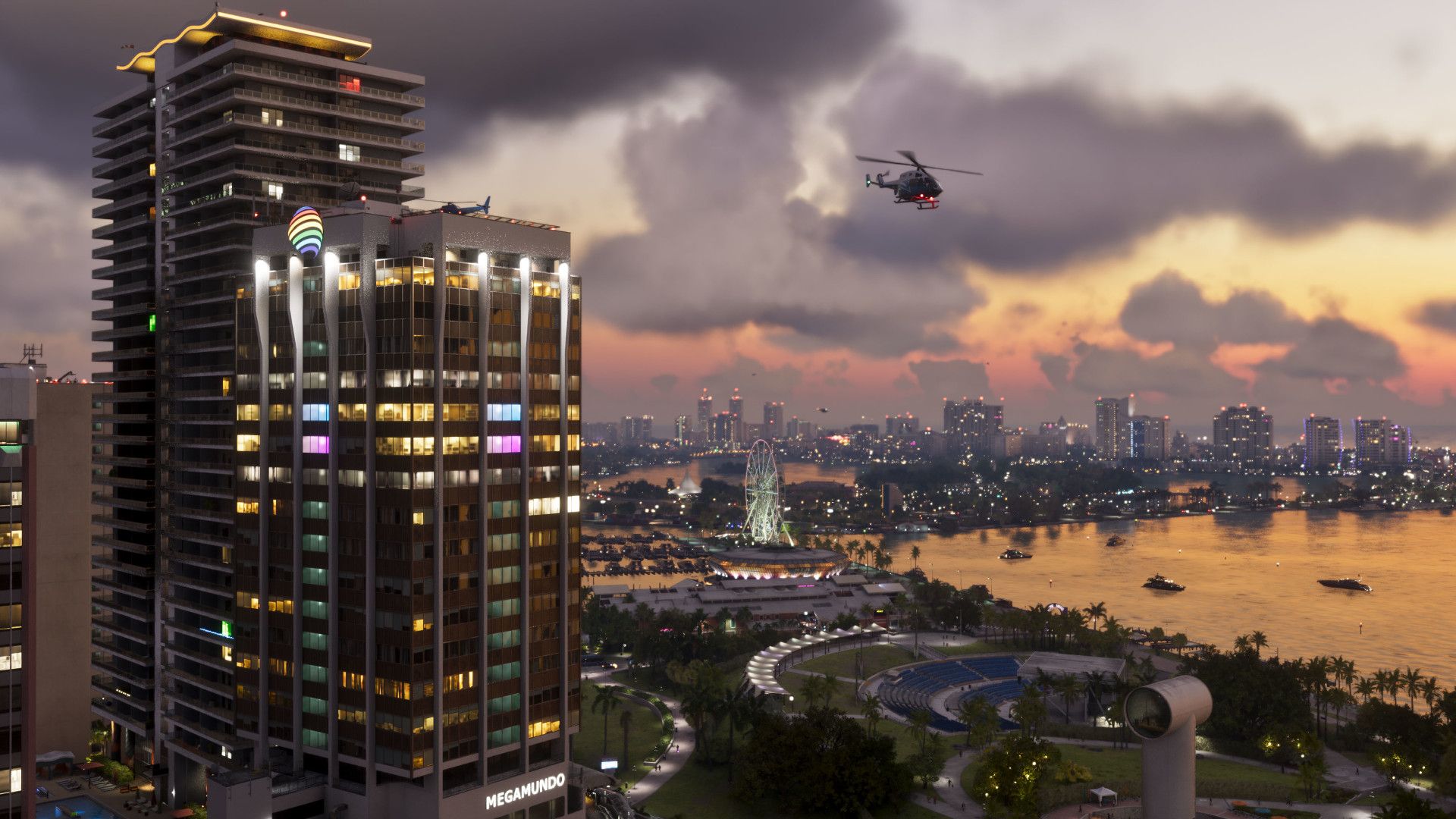
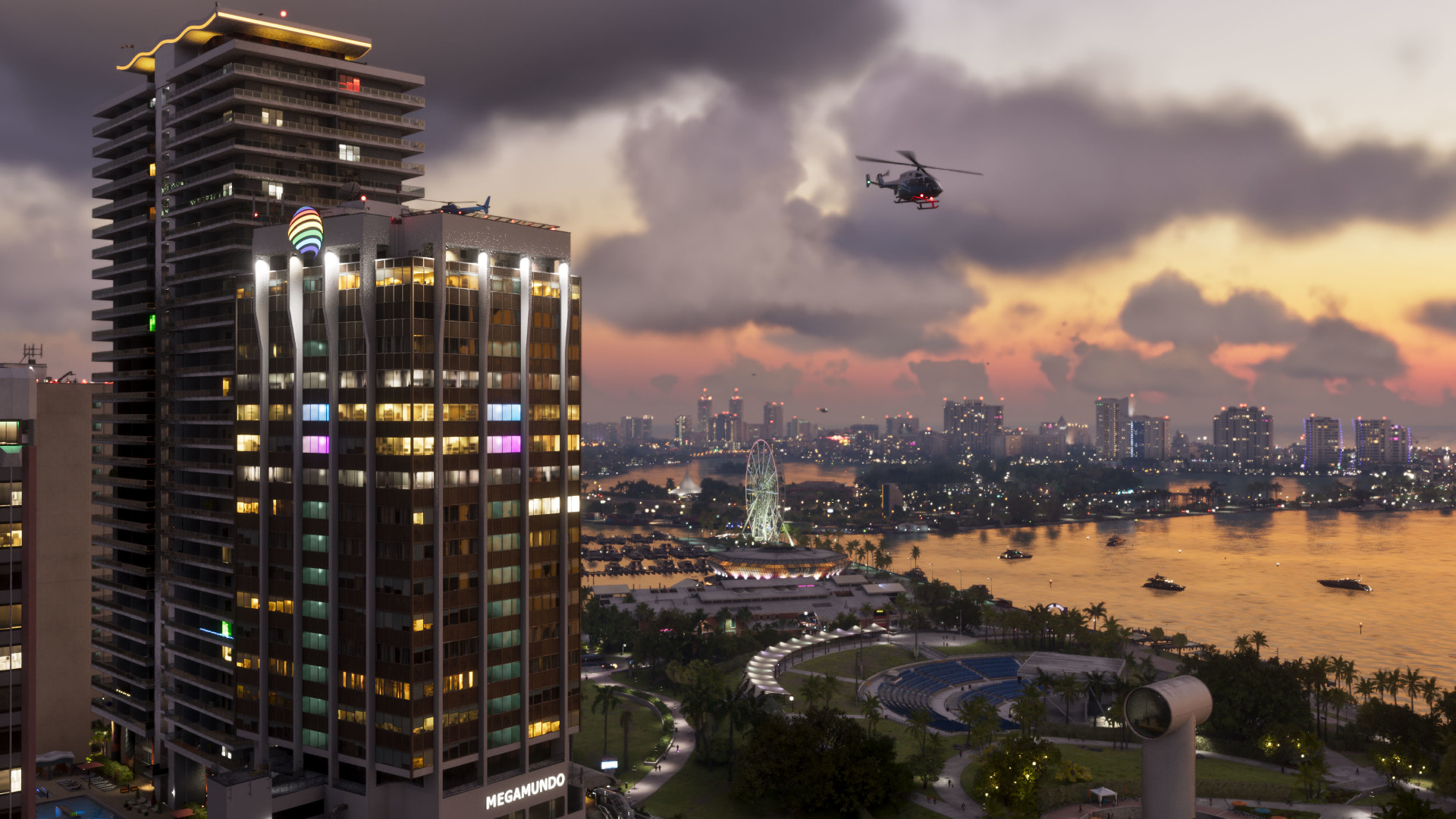
Rockstar Games has long held a reputation as an industry pioneer when it comes to the minute, hyper-realistic details that breathe life into virtual worlds. From the muddy, horse-hoof-churned trails of Red Dead Redemption 2 to the bustling, pedestrian-dense sidewalks of Grand Theft Auto V, the studio consistently sets the benchmark for environmental fidelity in video games. Now, as the gaming community turns its collective gaze toward the horizon of the medium’s most anticipated release, Grand Theft Auto 6, fresh details have emerged regarding the game’s technological backbone.
According to recent disclosures from Owen Shepherd, Rockstar’s Vice President of Art for Lighting and Rendering, GTA 6 will feature a completely overhauled, next-generation weather and atmospheric system. Moving far beyond the already impressive systems seen in previous titles, players roaming the sun-drenched, neon-soaked fictional state of Leonida will experience an ecosystem that feels startlingly alive, unpredictable, and reactive.
Rather than relying on scripted, static skyboxes or simple texture changes, GTA 6 implements a dynamic simulation driven by volumetric cloud formations drifting organically overhead. The weather engine scales across a vast spectrum of conditions. Players will navigate everything from blistering, oppressive heatwaves that shimmer over asphalt to sudden, torrential downpours and full-scale, life-threatening hurricanes.
This technological leap is not merely aesthetic. Every meteorological shift directly impacts the physics of the world, altering water surfaces, shifting flora, and dynamically modifying how players and non-player characters (NPCs) interact with their surroundings. With over a decade of development and iteration behind it, GTA 6 appears poised to redefine what players can expect from open-world environmental design.
Chronology: The Evolution of Rockstar’s Environmental Systems
To understand the magnitude of the technological jump in GTA 6, it is essential to trace how Rockstar Games has progressively evolved its approach to environmental physics and atmospheric rendering over the past two decades.
The Era of Static Skies: Grand Theft Auto IV and V
When Grand Theft Auto IV launched in 2008, its gritty, rain-slicked depiction of Liberty City was praised for its gloomy atmosphere and puddles that reacted to downpours. However, the weather system was largely binary: clear skies transitioned into rain or fog via straightforward script triggers.
By the time Grand Theft Auto V arrived in 2013, the sunny expanses of Los Santos and Blaine County introduced a brighter, more expansive palette. While the game featured dynamic cycles, the clouds remained flat textures, and the weather transitions—while effective for their time—lacked the organic, emergent qualities seen in modern simulations.
The Watershed Moment: Red Dead Redemption 2 (2018)
The true turning point for Rockstar’s environmental simulation arrived with Red Dead Redemption 2. Stepping into the boots of Arthur Morgan, players were introduced to a breathtakingly reactive frontier. Clouds formed volumetrically across the sky, casting realistic shadows over mountains and valleys. Mud deformed dynamically beneath wagon wheels and boots, and animal behavior shifted based on temperature and precipitation.
For years, Red Dead Redemption 2 stood as the gold standard of open-world immersion. However, industry insiders noted that the processing power required to run such complex systems was tailored specifically to the slower, more deliberate pacing of a late-19th-century western.
The Next Frontier: Grand Theft Auto 6 (In Development)
Entering the modern console generation, Rockstar faced the challenge of scaling these advanced systems up to support a dense, modern metropolis and its surrounding countryside in Leonida. With next-generation hardware powering the PlayStation 5 and Xbox Series X/S, the studio undertook a total rewrite of its weather and lighting codebase.
According to Owen Shepherd’s recent commentary in Game Informer, the new engine surpasses the limits of Red Dead Redemption 2, introducing micro-climates, localized wind physics, and meteorological events on a scale never before attempted in an open-world action game.
Supporting Data: Engineering the Elements of Leonida
The technical ambition behind GTA 6’s weather engine relies on a complex interplay of rendering techniques, physics calculations, and artistic direction. While Rockstar has kept full technical specifications under wraps, industry analysts and insights from the development team highlight several key pillars supporting the system:
Volumetric Cloud Architecture: Unlike traditional skyboxes, the clouds in GTA 6 are fully three-dimensional entities simulated in real-time. They evolve, merge, and disperse based on wind speed and atmospheric pressure, casting dynamic, shifting shadows across the entire map of Leonida.
Micro-Scale Wind Physics: Wind is no longer a global aesthetic modifier. In GTA 6, localized wind currents create observable phenomena down to individual hair strands, clothing movement, and subtle ripples across water bodies. Updrafts and gusts will behave differently depending on geographical elevation and urban canyons.
Advanced Hydrology and Precipitation: Rain interacts with surfaces at a granular level. Beyond standard wet-surface shaders, the game simulates persistent, realistic puddles that accumulate over time during heavy storms. Conversely, bright sunlight following a rainstorm interacts with moisture in the air to produce persistent, optically accurate rainbows arching across the horizon.
Macro-Weather Events: Leonida—modeled heavily after Florida and its surrounding regions—is prone to extreme weather. The inclusion of full-scale hurricanes introduces systemic disruptions to gameplay, forcing players and NPCs to adapt to drastically reduced visibility, high-speed debris, and flooded infrastructure.
Official Responses and Developer Insights
Rockstar Games has traditionally maintained a cautious approach to pre-release marketing, preferring to let meticulously crafted trailers and technical breakdowns speak for themselves. However, the sparse details shared by key figures like Owen Shepherd offer a rare glimpse into the philosophy driving the studio’s development teams.
Speaking on the challenges of rendering lighting and weather for an ultra-dense modern environment, Shepherd emphasized that the goal was never just graphical fidelity for its own sake, but rather emotional resonance and immersion.
"You can encounter all sorts of conditions, ranging from high temperatures to rain, right through hurricanes," Shepherd noted, explaining that the engine was built from the ground up to ensure unpredictability. "The entire weather system’s been re-done to allow for more dynamism and unpredictability than we’ve seen prior."
Industry observers have noted that this commitment to systemic realism aligns with Rockstar’s broader design philosophy: creating worlds that feel as though they operate independently of the player’s actions. When a player steps away from a chaotic, high-stakes mission—metaphorically and literally covered in the consequences of their virtual actions—and steps into a sports car beneath a rapidly clearing sky framed by a sprawling rainbow, it represents the specific brand of cinematic juxtaposition that fans have come to expect from the franchise.
Implications: What This Means for the Future of Open-World Gaming
The implementation of next-generation weather and environmental systems in Grand Theft Auto 6 carries profound implications not only for Rockstar Games, but for the entire video game industry.
Setting a New Benchmark for Immersion
As hardware capabilities expand, player expectations for open-world interactivity continue to rise. For years, open worlds have occasionally suffered from feeling like static theme parks populated by scripted set-pieces. By investing heavily in emergent, systemic weather that affects physics, visibility, and aesthetics concurrently, Rockstar is pushing the industry toward a future where worlds feel genuinely systemic and alive.
Gameplay and Tactical Variety
Dynamic weather is not just a visual treat; it fundamentally alters player strategy. The introduction of localized downpours, high winds, and severe storms like hurricanes means that players navigating Leonida will need to adapt their tactics on the fly. Driving mechanics, air navigation, line-of-sight for stealth missions, and NPC behavior will all shift in response to the environment, injecting an extra layer of emergent gameplay into every session.
The Weight of 13 Years of Development
With Grand Theft Auto V releasing in 2013, the gap between mainline entries in the franchise will span well over a decade by the time GTA 6 hits store shelves. That unprecedented development cycle has allowed Rockstar the runway necessary to innovate at a foundational level. If the weather system proves as revolutionary in practice as it sounds on paper, it will once again establish a high-water mark that competing studios will spend the next generation trying to emulate.
As the gaming world awaits further official reveals, one thing is abundantly clear: when players finally step foot into Leonida, the skies above them will be unlike anything they have ever seen in a video game before.