

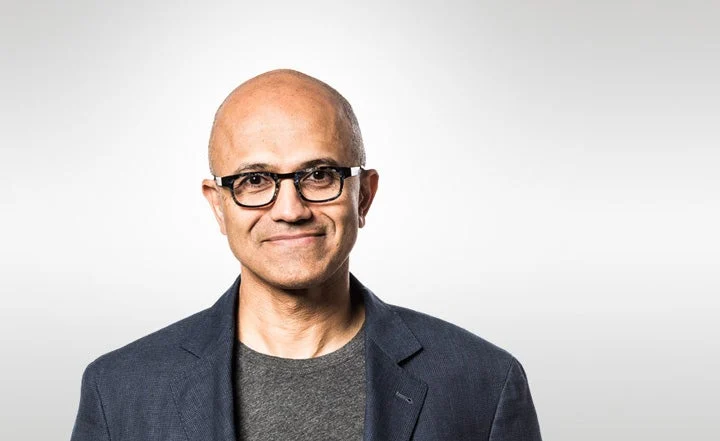
In a candid appearance on the Sources Podcast, Microsoft CEO Satya Nadella has offered a rare, high-level defense of the aggressive restructuring currently underway at the company’s gaming division. As Xbox continues to navigate a turbulent period marked by widespread layoffs, studio divestments, and the wholesale reorganization of some of its most storied franchises, Nadella signaled his full support for the “streamlining” efforts led by new Xbox chief Asha Sharma.
While the executive leadership frames these changes as a necessary evolution toward a sustainable business model, the human cost—totalling thousands of jobs—has cast a long, somber shadow over the gaming industry.
The Vision for a "Sustainable" Xbox
Nadella’s remarks centered on the necessity of reinventing the Xbox business model. The company, which has spent billions over the last decade acquiring massive portfolios like ZeniMax Media and Activision Blizzard, is now under pressure to prove that these investments can yield consistent, long-term returns.
"If I look at the studios, the IP portfolio we have, and our ability to then take that and produce great games going forward, I feel fantastic," Nadella stated. "There’s some amount of streamlining the team is doing, and Asha is doing, which is great to see. And then we have to invent the right sustainable business model that allows us to deliver gaming to more and more people."
For Nadella, the goal is clear: Microsoft aims to solidify its position as both a premier publisher and a robust platform provider, bridging the gap between PC and console gaming. However, the path to that "sustainable" future has been paved with significant institutional upheaval.
A Chronology of Contraction
The current state of the Xbox division is the result of a compounding series of strategic pivots that began in earnest earlier this year. To understand the scale of the current "streamlining," one must look at the timeline of the last several months:
- July 2024: Microsoft shocked the industry by announcing plans to reduce the Xbox workforce by 3,200 employees. This announcement was not merely a headcount reduction; it included the divestment of five separate studios, signaling a retreat from the "growth at all costs" mentality that defined the Xbox Game Pass expansion era.
- Late Summer/Early Autumn: Following the initial wave of layoffs, internal turbulence continued as the company sought buyers for various entities. Despite these efforts, some deals failed to materialize, leading to increased uncertainty for staff at studios like Ninja Theory and Arkane.
- Recent Weeks: Microsoft confirmed an additional 268 job cuts, primarily focused on administrative and support roles. Simultaneously, the company announced a major reshuffling of its internal structure, moving legendary franchises—including Halo, Rare, and Age of Empires—under the oversight of the Activision umbrella.
This consolidation suggests that Microsoft is moving away from a decentralized model where individual studios operated with relative autonomy, instead favoring a centralized, efficiency-driven approach managed by the Activision leadership team.
The Human Toll: Supporting Data and Studio Impacts
The statistics regarding the recent job cuts paint a bleak picture of the current gaming landscape. With over 3,400 positions eliminated in a matter of months, the impact on the industry’s talent pool is profound.
The rationale provided by Xbox’s Chief Content Officer, Matt Booty, has been largely focused on the failure of external negotiations. Regarding the potential closure of Ninja Theory, Booty noted that "two separate agreements" to sell or spin off the studio fell through, leaving Microsoft with little choice but to enter consultations for potential closure. Similar consultations remain ongoing for Arkane, as the company grapples with the complexities of unwinding long-standing development agreements.
Industry analysts suggest that this "streamlining" is a direct response to the stagnating growth of Xbox Game Pass and the rising costs of AAA game development. As budgets for high-fidelity titles balloon into the hundreds of millions, Microsoft is increasingly prioritizing "safe" IPs that can be monetized across multiple platforms, effectively de-prioritizing the experimental or niche titles that once gave Xbox a reputation for creative diversity.
Official Responses and Internal Tensions
The divide between executive optimism and the reality of the workforce is stark. While Nadella speaks of "fantastic" prospects and a return to growth by the 2027/28 fiscal year, the internal culture at Microsoft’s gaming studios has been described by many former employees as one of anxiety and disillusionment.
Asha Sharma’s role in this transition has been pivotal. Tasked with operationalizing the massive organization created by the Activision acquisition, she is effectively tasked with eliminating redundancy. From an investor’s perspective, the logic is sound: reduce overhead, consolidate management, and focus resources on the most profitable franchises. From the perspective of the developer, however, the "streamlining" feels like an erasure of the creative independence that attracted many to the company in the first place.
Microsoft’s defense of this strategy is rooted in the "platform provider" mandate. By aligning Halo and Rare with Activision, the company is attempting to create a "mega-studio" structure that can deliver a steady cadence of content—a requirement for maintaining a subscription-based model like Game Pass.
Implications for the Future of Gaming
What does this mean for the future of Xbox? The implications are three-fold:
1. The Consolidation of Creativity
By moving historic IPs under the Activision banner, Microsoft is essentially creating a hierarchical structure where independent creative voices may be subsumed by corporate operational requirements. While this might lead to more stable production cycles, it risks homogenizing the games themselves.
2. The Death of the "Indie-AAA" Hybrid
The loss of studios like those involved in the recent divestments suggests that Microsoft is no longer interested in supporting mid-sized projects. The strategy appears to favor either massive, multi-year "live service" projects or lower-budget, easily portable titles, leaving little room for the middle-ground games that have historically been the backbone of the industry.
3. Investor-First Fiscal Planning
Nadella’s explicit mention of the 2027/28 fiscal year growth targets highlights that Microsoft is managing the gaming division not just as a creative hub, but as a financial engine. The pressure to return to growth is immense, and it is likely that further "efficiency" measures will be taken if the current reorganization does not yield the desired revenue spikes.
Conclusion: A New Era of Corporate Gaming
Satya Nadella’s endorsement of the current restructuring is a clear signal to shareholders: Microsoft is committed to a leaner, more disciplined Xbox. The era of unchecked expansion is over, replaced by a period of rigorous fiscal accountability.
However, as the company prepares for the 2027/28 fiscal year, it faces a fundamental challenge: can it retain its status as a "great publisher" while dismantling the very teams that build the games players love? The "streamlining" may look good on a spreadsheet, but the long-term health of the gaming division will depend on more than just operational efficiency. It will depend on the ability of the remaining developers to continue innovating in an environment that currently prioritizes sustainability over experimentation.
For now, the industry watches with bated breath. As thousands of talented individuals exit the organization, the remaining staff at Xbox are tasked with the heavy burden of "inventing the right business model." Whether that invention leads to a golden age of high-quality, sustainable gaming or a sterile, corporate-led landscape remains the defining question of the next several years. One thing is certain: the Xbox of 2025 will look fundamentally different from the one that existed even two years ago, and the ripple effects of this transformation will be felt across the gaming ecosystem for a generation.

