

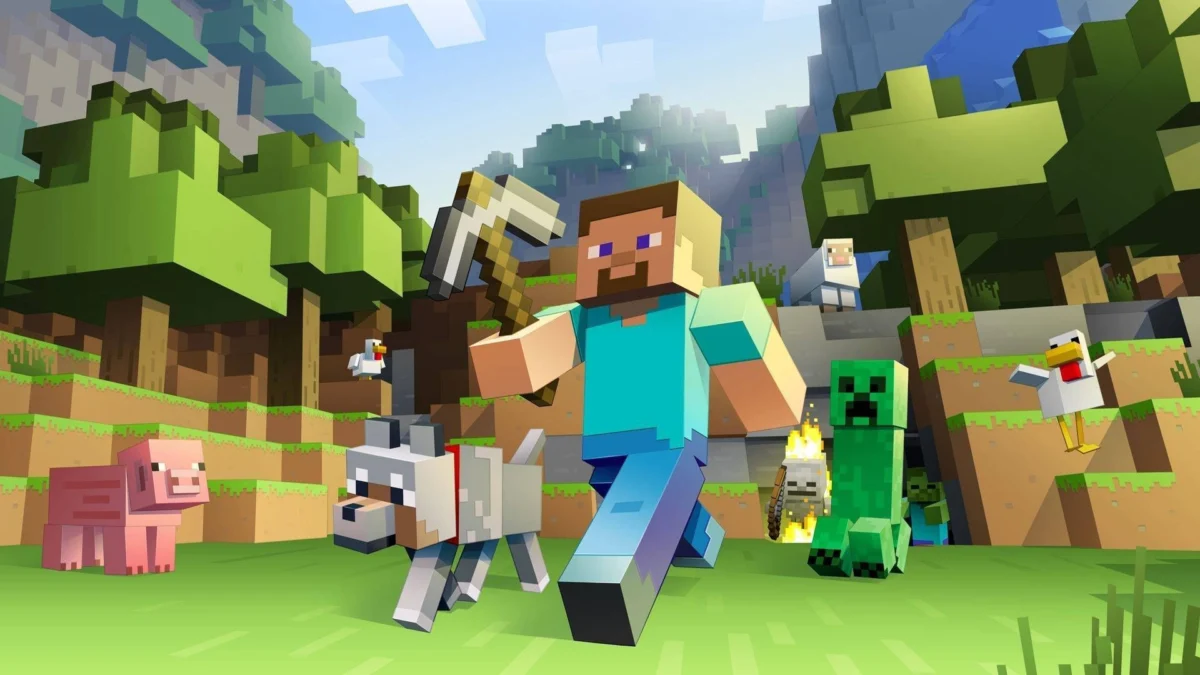
More than a decade and a half after first reshaping the digital landscape, Minecraft continues to defy the traditional lifecycles of the video game industry. During the highly anticipated Minecraft Live event, developers and executives pulled back the curtain on a wave of monumental updates, staggering new sales milestones, and a historic addition to the game’s planar universe.
With lifetime sales now crossing an astronomical 425 million copies, the sandbox phenomenon is showing no signs of slowing down. Mojang and Microsoft used the showcase to prove that, even after nearly seventeen years on the market, the creative titan is still capable of surprising both greenhorn adventurers and veteran builders alike.
Main Facts: A Landmark Reveal and Staggering Growth
The headline-grabbing announcement of Minecraft Live was the introduction of The Sift, an ethereal, soul-teeming new dimension that marks the first entirely new plane added to the franchise in nearly fifteen years. Joining the Overworld, the Nether, and the End, this vibrant realm represents a massive expansion of the game’s core universe.
Players won’t have to wait long to experience it, either. The Sift will make its debut in next week’s release of Minecraft Dungeons 2, serving as an interconnected bridge before migrating to the flagship Java and Bedrock editions of Minecraft next year.
In addition to the dimension reveal, Mojang detailed an upcoming base-game content drop focused on freezing, subterranean exploration—introducing ice caves, a dedicated ice biome, calcite blocks, luminous ice crystals, and naturally spawning icicles. Furthermore, Nintendo fans received confirmation that Minecraft will officially launch on the upcoming Nintendo Switch 2 on October 27.
Chronology of an Immortal Franchise
To understand the magnitude of Minecraft’s current trajectory, it helps to look at the timeline of steady, calculated evolution that has sustained its unmatched cultural relevance:
- 2009–2011 (The Genesis): Created by Markus "Notch" Persson and later refined by Jens "Jeb" Bergensten, Minecraft launches in alpha and beta before its official full release in late 2011, instantly capturing the imagination of millions with its limitless block-building potential.
- 2012–2014 (Platform Expansion & Acquisition): The game transitions from PC to consoles and mobile devices. In 2014, Microsoft acquires Mojang for $2.5 billion, cementing the title as a multi-platform powerhouse.
- 2015–2020 (The Dimensional Era & Spinoffs): Major updates continuously overhaul survival mechanics, while spinoffs like Minecraft Story Mode and the original Minecraft Dungeons expand the intellectual property into new genres.
- 2021–2025 (The Half-Billion Horizon): The game sails past previous sales records, turning community-led events like Minecraft Live into global industry spectacles.
- September 2026 (The Current Milestone): Minecraft Live shatters expectations by announcing The Sift, confirming total sales of over 425 million copies, and setting the stage for the Nintendo Switch 2 release.
Supporting Data: By the Numbers
The scale of Minecraft’s ongoing dominance can be difficult to comprehend without looking at the raw data provided by Microsoft and industry analysts:

- 425,000,000+: The official lifetime copy sales across all platforms, maintaining its undisputed crown as the best-selling video game of all time.
- 300,000: The average number of individuals who play Minecraft for the very first time on any given day, according to recent statements from Xbox leadership.
- 14+ Years: The time elapsed since Mojang last introduced a brand-new dimension to the core game (with the End having debuted in late 2011).
- October 27: The official launch date for Minecraft on Nintendo’s next-generation hardware, the Nintendo Switch 2.
Official Responses and Executive Insights
The sheer longevity of the franchise has frequently baffled industry observers, but Mojang and Microsoft executives attribute the game’s staying power to its unique blend of accessibility, continuous content delivery, and an endlessly supportive community.
Speaking on the health and momentum of the brand, Xbox CEO Asha Sharma took to social media to share staggering player acquisition metrics.
"More than 300,000 people play Minecraft for the first time on an average day," Sharma tweeted following the Minecraft Live showcase. "After 17+ years and 425M+ copies sold, I love that Minecraft is still finding new players and giving longtime ones new things to discover."
Mojang’s development team echoed this sentiment when detailing the aesthetic and atmospheric goals behind the game’s newest realm. In an official post recapping the event, the studio described the philosophy driving the new update:
"The Sift is beautiful, vibrant, and teeming with souls," the blog post reads. "It’s also the first dimension to be added in over fourteen years. No wonder it looks so good! And it features areas like the Meadow and the Carapace."
According to the developers, players will encounter The Sift organically within Minecraft Dungeons 2’s newly interconnected world design, stumbling across mysterious rifts that tear open across various landscapes.
Meanwhile, the frosty subterranean update focuses on verticality and environmental immersion. The studio highlighted the technical implementation of cold-weather mechanics: "Icicles grow naturally on the ceiling, and the ice crystals grow on the ground and emit a soft light." These minor atmospheric details continue Mojang’s tradition of turning procedural generation into breathtaking visual storytelling.

Implications for the Gaming Industry
The announcements coming out of Minecraft Live 2026 carry several profound implications for both Mojang and the broader gaming landscape:
1. Breaking the Dimensional Taboo
For over a decade, the Overworld, Nether, and End formed an immutable trinity of exploration. By introducing The Sift—and deliberately seeding it first in an ARPG spinoff (Minecraft Dungeons 2) before bringing it to the main sandbox games—Mojang is signaling a more interconnected multimedia universe. This strategy encourages players to cross over between different titles in the franchise to experience the full breadth of the lore and world-building.
2. Next-Gen Longevity
With the confirmation of a native Nintendo Switch 2 version arriving on October 27, Minecraft is aggressively positioning itself as a launch-window staple for generational hardware shifts. The ability to seamlessly transition hundreds of millions of existing players onto modern architectures ensures that the game’s multiplayer ecosystem will face zero fragmentation.
3. The Everlasting Acquisition Engine
In an era where AAA studios struggle with player retention and ballooning development cycles, Minecraft’s ability to attract 300,000 new players every single day is an outlier statistic. It proves that generational hand-offs—where parents who played the alpha in 2011 now introduce their children to the game—have created a self-sustaining ecosystem that requires no artificial live-service pressure to survive.
As Minecraft marches toward its second decade, the introduction of The Sift proves that the canvas is still expanding. For a game built entirely out of simple digital blocks, its future has never looked more expansive, colorful, or limitless.

