

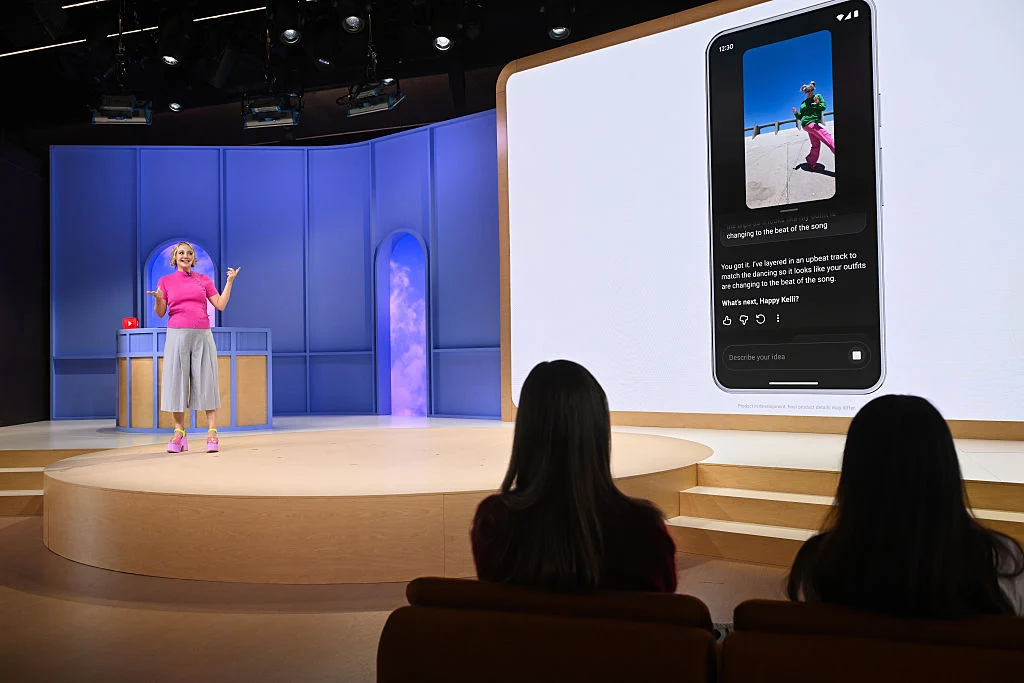
The landscape of digital entertainment is undergoing a seismic shift, and at the epicenter of this transformation is a format that demands very little time but commands immense influence: the microdrama. During its 2026 "Made on YouTube" event, the video giant revealed staggering data that suggests the platform is not just participating in the trend—it is weaponizing it to dismantle the traditional streaming hierarchy.
With 6.5 billion views recorded in the first half of 2026 alone—a 50% increase from the previous year—YouTube is proving that the future of television isn’t just "long-form." It is serialized, snackable, and increasingly consumed on the biggest screen in the house.
The Data Behind the Binge
The numbers tell a story of a platform successfully encroaching on territory once held exclusively by Netflix, Amazon Prime, and cable networks. While the 50% year-over-year growth in total microdrama views is impressive, the real headline is the migration of this content to the living room.
During the first half of 2026, microdrama viewership on TV screens skyrocketed by more than 90%. For two years, YouTube has already reigned as the dominant distributor of content on TV screens in the United States, outpacing every dedicated streaming service and traditional broadcast network in total watch hours. By integrating the high-octane, cliffhanger-heavy nature of microdramas into the living room experience, YouTube is effectively forcing a redesign of how advertisers and creators think about "prime time."
A Chronology of a Content Revolution
To understand how YouTube arrived at this juncture, one must look at the evolution of its user interface and content strategy.
- Early 2025: The rise of specialized apps like ReelShort and DramaBox begins to siphon significant mobile watch time away from legacy streamers. These apps proved that users were willing to pay, or watch heavy ad loads, for serialized stories that fit into three-minute windows.
- August 2025: YouTube responds by launching "Shows," a feature that allowed creators to organize long-form horizontal uploads into chronological, Netflix-style collections. This was the first step in "streaming-ifying" the creator economy.
- Mid-2026: Recognizing the explosive growth of short-form serialized content, YouTube announces "Shorts Series" at its annual summit. This allows creators to bundle Shorts into cohesive, episodic seasons.
- Present Day: YouTube has successfully bridged the gap between mobile-first "snackable" content and the communal, lean-back experience of television.
The Strategy: "Shorts Series" and the Netflix Makeover
The introduction of "Shorts Series" is a calculated tactical move. By offering creators a toolset to organize Shorts into TV-style seasons, YouTube is leaning into the psychology of "bingeability."
The user experience is designed to mirror the slick, high-production interfaces of major streaming platforms. It removes the friction of discovery; once a viewer finishes one episode, the next is immediately available, often playing automatically. When applied to microdramas—where episodes are frequently under three minutes—the "just one more" effect becomes exponentially more potent. It turns a fragmented viewing experience into a marathon, keeping users locked in the YouTube ecosystem for hours at a time.
Official Perspectives: The Communal Living Room
Kurt Wilms, YouTube’s Director of Product for the Living Room, offered a candid admission during the event. He noted that the company was initially skeptical about bringing Shorts—a format inherently designed for vertical, solo mobile viewing—to the big screen.
"The first thing everyone was telling me about Shorts on the TV is there was no good way to watch this content with friends or family," Wilms shared. "The TV unlocked communal viewing for Shorts in a way that just wasn’t possible before."
This shift in use-case is vital. It repositions the "Short" from a solitary distraction to a shared entertainment experience, legitimizing the format as a viable alternative to episodic television. Dina Berrada, Senior Director of Product for Shorts, echoed this sentiment, emphasizing that the platform’s success lies in personalization. "Whether it’s Shorts or microdramas, people see this as a place to spend breaks in their day, and they are doing that across a bunch of different screens," Berrada noted.
The Advertising Frontier: Why Brands are Betting Big
The implications for the advertising industry are profound. As traditional TV continues to fragment, brands are struggling to capture the attention of a distracted audience. Microdramas offer a unique solution: they are high-engagement, high-retention, and inherently "brand-safe" when produced with specific narratives.
According to data reported by Digiday, microdramas are currently experiencing higher ad density than almost any other category of digital content. But for savvy brands, it is no longer just about the pre-roll ad. It is about total immersion.
Companies like Bob’s Discount Furniture have become poster children for this movement. Their foray into original programming with Till Decor Do Us Part in 2025 generated 152 million views and, more importantly, $9 million in attributable sales. This success proved that microdramas can function as a powerful top-of-funnel marketing tool.
Geneva Wasserman, EVP at dentsu, highlights a critical shift in how ROI is measured in this new era. "Traditional metrics are misleading," Wasserman argues. "The real north star is: Does the content create cultural credibility that extends beyond the watch?" For brands, a series that generates organic social chatter—even with fewer views—is significantly more valuable than a high-view count video that is forgotten the moment the screen goes dark.
Implications for the Future of Media
The convergence of microdramas and the YouTube living room experience signals the end of the "Quibi era"—the failed experiment that attempted to force short-form content into a standalone, premium-only box. YouTube is succeeding where others failed because it didn’t create a new silo; it integrated the format into a platform that already owned the audience’s attention.
The implications for the broader entertainment industry are three-fold:
- The Death of the "Standard" Episode: As microdramas become the industry standard for engagement, traditional 45-minute formats will face increasing pressure to adopt more rapid pacing and serialized, cliffhanger-heavy structures.
- Creators as Producers: The "Shorts Series" toolset effectively gives individual creators the infrastructure of a major studio. We are moving toward a world where a lone creator can build a brand as potent and loyal as a legacy television production house.
- The Attention Economy: The ultimate battle is no longer for "views," but for "undivided attention." In an era where a user can scroll away in a heartbeat, the microdrama’s ability to sustain interest through rapid-fire storytelling is the most valuable commodity in the digital economy.
As YouTube continues to refine its "Shows" and "Shorts Series" features, the line between social media content and premium television will continue to blur. For creators, the challenge will be to maintain quality while satisfying the insatiable appetite of an audience that has been trained to binge. For advertisers, the challenge will be to weave their message into the narrative rather than interrupting it.
One thing is certain: the era of the micro-empire has arrived. With billions of views fueling its growth and the living room TV as its new battleground, YouTube is not just changing the channel—it is changing the very fabric of how we consume stories. Whether this leads to a new golden age of short-form storytelling or a race to the bottom of the attention-span barrel remains to be seen, but the numbers suggest that for now, the audience is hooked.

