

By Gaming Desk
Published: September 2026
Main Facts: The Return of a 3D Fighting Pioneer
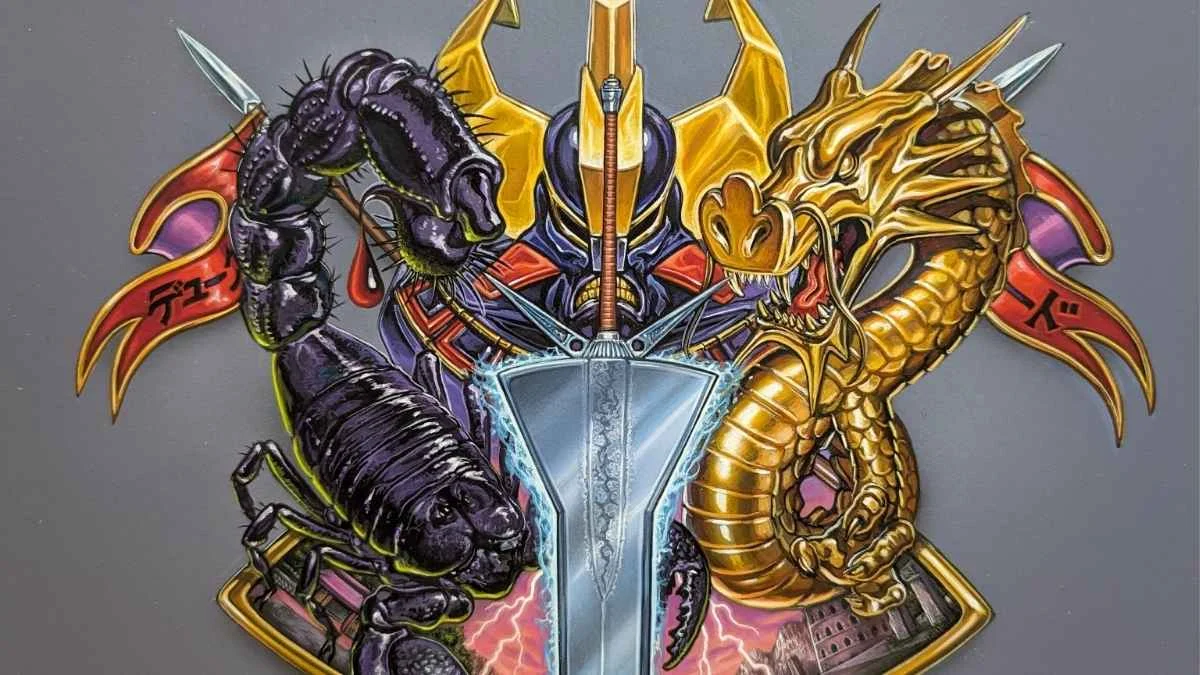
In a move destined to thrill nostalgic gamers and retro enthusiasts alike, publisher Edia has officially announced the upcoming release of the Toshinden Collection. Bringing one of the most historically significant franchises of the 32-bit era into the modern gaming landscape, the compilation is slated for a 2027 launch. Fans of classic hardware and historical fighting titles will be able to experience the trilogy on the PlayStation 5, PC via Steam, and—in a notable early nod to upcoming hardware cycles—Nintendo’s anticipated successor, widely referred to in the industry as the Nintendo Switch 2.
The Toshinden Collection bundles the first three mainline entries of Takara’s iconic 3D fighting series: Battle Arena Toshinden (1995), Battle Arena Toshinden 2 (1996), and Battle Arena Toshinden 3 (1997). While these titles helped define the nascent era of polygon-based fighting games on the original PlayStation, the collection will omit later franchise entries, such as the PlayStation-exclusive Toshinden Subaru (often referred to as Toshinden 4), alongside various other spin-offs.
According to official promotional descriptions released alongside the announcement, the compilation aims to bridge a decades-long generational gap. Featuring local, same-screen multiplayer support, the collection is tailored to let veteran players relive couch-co-op duels from their youth while introducing a foundational pillar of 3D fighting game history to entirely new audiences.
Edia has promised that the trilogy will receive modern quality-of-life enhancements to complement its classic arcade mechanics, though specific details regarding display options, netcode, training modes, and gallery features remain under wraps pending a future announcement. An exact calendar release date has also not yet been provided by the developers.
Chronology: The Rise, Peak, and Fall of Battle Arena Toshinden
To understand the cultural and historical weight of the Toshinden Collection, one must look back at the frantic, experimental landscape of mid-1990s video game development. The trajectory of the Battle Arena Toshinden franchise is a fascinating case study in rapid industry evolution, technological leaps, and eventual commercial eclipse.
1995: The Genesis of 3D Weapons Fighting
When Takara released Battle Arena Toshinden for the original Sony PlayStation in 1995 (following a brief arcade run via Sega’s Titan Video hardware), the video game industry was undergoing a seismic shift. 2D sprite-based fighters like Street Fighter II and Mortal Kombat still ruled the arcades and living rooms, but hardware manufacturers were racing to conquer 3D polygon graphics.
While Sega’s Virtua Fighter (1993) is widely credited as the grandfather of 3D fighting games, Battle Arena Toshinden carved out a crucial niche of its own. It was the first 3D fighting game to feature weapons, allowing fighters like the iconic hero Eiji Shinjo, the mysterious assassin Gaia, and the whip-wielding Sofia to clash with swords, staffs, and energy blades. Furthermore, Toshinden introduced mechanics that feel standard today but were revolutionary at the time, such as the ability to roll sideways around opponents in a 3D space, alongside a dedicated guard button.
The original PlayStation port was a monumental system-seller. For early adopters of Sony’s debut console, Toshinden was the game you bought alongside Ridge Racer to prove to your friends—who might still be clinging to 16-bit SNES or Genesis consoles—that the future of gaming had arrived. Its sleek, anime-inspired character designs and texture-mapped polygons captured the imaginations of players worldwide.
1996–1997: Rapid Iteration and Peak Popularity
Riding high on the massive commercial success of the debut title, Takara quickly greenlit sequels to capitalize on the PlayStation’s rapidly expanding market share. Battle Arena Toshinden 2 landed in 1996, boasting a expanded roster, refined engine mechanics, and even more polished pre-rendered cutscenes. It expanded the lore surrounding the mysterious "Secret Society" tournament and refined the balance of weapon-based combat.
Just a year later, in 1997, Battle Arena Toshinden 3 hit the market. By this time, the PlayStation library was maturing rapidly, and competition in the 3D fighting space had intensified dramatically with the arrival of Namco’s Tekken series and Sega’s Virtua Fighter 2. Toshinden 3 attempted to respond to this pressure by drastically expanding the character roster, introducing tag-team elements, and speeding up the gameplay tempo. However, by the late 1990s, the market was beginning to suffer from fatigue, and the franchise’s momentum had started to peak.
Late 1990s and Beyond: Spin-Offs and Obscurity
As the century drew to a close, Takara attempted to reinvent the brand. Toshinden Subaru (released as Toshinden 4 in some regions) shifted the narrative focus to a new generation of fighters, but it was met with a lukewarm critical and commercial reception. Clunky mechanics, a bizarre art style shift, and stiff competition from heavyweights like Tekken 3 and Soulcalibur effectively sidelined the franchise.
Aside from a few obscure portable and Japanese-exclusive spin-offs, the series went entirely dormant for decades, leaving Toshinden as a beloved yet increasingly inaccessible relic of the 90s console wars—until Edia’s surprising 2026 announcement brought the original trilogy back into the spotlight.
Supporting Data: Technical Evolution and Platform Strategy
The decision to bring the Toshinden Collection to the PlayStation 5, PC, and Nintendo Switch 2 reflects modern multiplatform publishing strategies for retro compilations. Analyzing the technical parameters of the original releases versus what modern hardware can achieve highlights the significance of this revival.
Original Hardware Specifications vs. Modern Capabilities
| Feature | Original PS1 Releases (1995–1997) | Modern Collection (2027) |
|---|---|---|
| Resolution | 240p / 480i (Standard Definition) | Up to 4K Ultra HD (Platform Dependent) |
| Framerate | 30 FPS (Variable dips) / 60 FPS targets | Rock-solid 60 FPS / High refresh rates on PC |
| Multiplayer | Local split-screen / 2-player offline | Local couch co-op + Potential online features (TBD) |
| Storage Medium | CD-ROM (Approx. 650 MB max capacity) | Digital download / Solid-state storage |
| Control Interfaces | Original PlayStation Digital Pad (No analog sticks initially) | DualSense, Nintendo Joy-Con / Pro Controller, PC Gamepads, Keyboards |
The Hardware Ecosystem in 2027
The inclusion of the Nintendo Switch 2 in the platform lineup is particularly noteworthy. While Nintendo has yet to fully detail its next-generation console publicly as of late 2026, third-party publisher roadmaps frequently leak hardware transition windows. By targeting Sony’s current-gen flagship (PS5), the PC market via Steam, and Nintendo’s successor system, Edia is ensuring maximum market penetration across both traditional console spaces and the burgeoning portable PC/next-gen hybrid market.
Furthermore, releasing the trilogy on Steam ensures that the game’s code is preserved for PC enthusiasts, who can leverage emulation-adjacent wrappers, custom configurations, and community-driven modifications to keep the game playable across future operating system updates long after console generations cycle out.
Official Responses and Industry Reception
The retro gaming community reacted with an overwhelming mix of nostalgia and cautious optimism following Edia’s announcement. Industry analysts have pointed out that while Battle Arena Toshinden is often overshadowed in historical retrospectives by contemporaries like Tekken and Soul Edge, its cultural footprint during the 1995 console launch window remains indisputable.
In statements accompanying the game’s initial reveal, Edia emphasized its commitment to honoring the legacy of Takara’s pioneering work. Representatives noted that the decision to focus strictly on the original trilogy (Toshinden 1, 2, and 3) was deliberate, designed to preserve the core narrative and arcade identity that fans fell in love with during the mid-90s, while bypassing the more divisive later entries.
Prominent figures within the retro-preservation space have also chimed in, praising publishers like Edia for rescuing mid-tier classics from the licensing limbo that often plagues 90s intellectual properties. While major corporations frequently focus their remaster efforts exclusively blockbuster hits, the resurgence of titles like Battle Arena Toshinden proves that there is a viable, passionate market for historical deep dives into gaming’s developmental stepping stones.
However, consumers remain watchful. In an era where digital retro collections have occasionally launched with bare-bones emulation wrappers, screen-tearing issues, or a lack of robust online netcode, fans are eager to see what specific "modern features" Edia ultimately implements before the 2027 release window approaches.
Implications: Preservation, Retro Revival, and the Fighting Game Community
The arrival of the Toshinden Collection carries profound implications for the broader video game industry, touching upon game preservation, the economics of retro publishing, and the evolving identity of the Fighting Game Community (FGC).
1. The Fight Against Digital Oblivion
Video game preservation remains a critical crisis point for the industry. Physical discs from the CD-ROM era are increasingly prone to "disc rot," laser decay, and hardware failure. By licensing and re-releasing foundational 32-bit titles on modern digital storefronts (PlayStation Network, Steam, and Nintendo’s eShop ecosystem), publishers like Edia are performing a vital archival service. Even if individual games are imperfectly ported, authorized re-releases ensure that legal avenues exist for studying and experiencing gaming history without relying entirely on gray-market secondary pricing or unverified emulation.
2. Broadening the Scope of Retro Remasters
For years, the retro remaster market has been dominated by a predictable rotation of arcade classics, 8-bit NES/Master System ports, and 16-bit SNES/Genesis RPGs. The early 3D era—specifically the awkward, charming, polygon-heavy years of the mid-to-late 1990s—has often been ignored due to the complex nature of updating early 3D engines to modern resolutions. The success or failure of the Toshinden Collection could serve as a bellwether for other publishers holding dormant 32-bit libraries, potentially opening the floodgates for the revival of other classic PlayStation 1 and Sega Saturn franchises that have languished in copyright purgatory.
3. Impact on the Fighting Game Community
While Battle Arena Toshinden is unlikely to unseat modern juggernauts like Street Fighter 6, Tekken 8, or Guilty Gear Strive at competitive esports tournaments like EVO, its return offers a fascinating anthropological playground for modern fighting game players. Understanding how early developers conceptualized spacing, hitboxes, frame data, and movement mechanics in a three-dimensional plane provides vital context for how the genre evolved. Furthermore, the inclusion of same-screen local multiplayer guarantees that a new generation of players can experience the specific joy—and friendly rivalry—of executing a desperation super-move against a friend sitting right beside them on the couch.
Conclusion
As the gaming industry looks ahead to the 2027 launch window, the Toshinden Collection stands as a testament to the enduring appeal of video game nostalgia. By dusting off the polygonal armor, magic swords, and classic arenas of Battle Arena Toshinden, Edia is giving a pioneering franchise a second lease on life. Whether players are returning to master Eiji’s blade once more or discovering the roots of 3D weapons combat for the very first time on PlayStation 5, PC, and Nintendo Switch 2, the return of Toshinden promises to be one of the most uniquely nostalgic trips down memory lane of the decade.

