

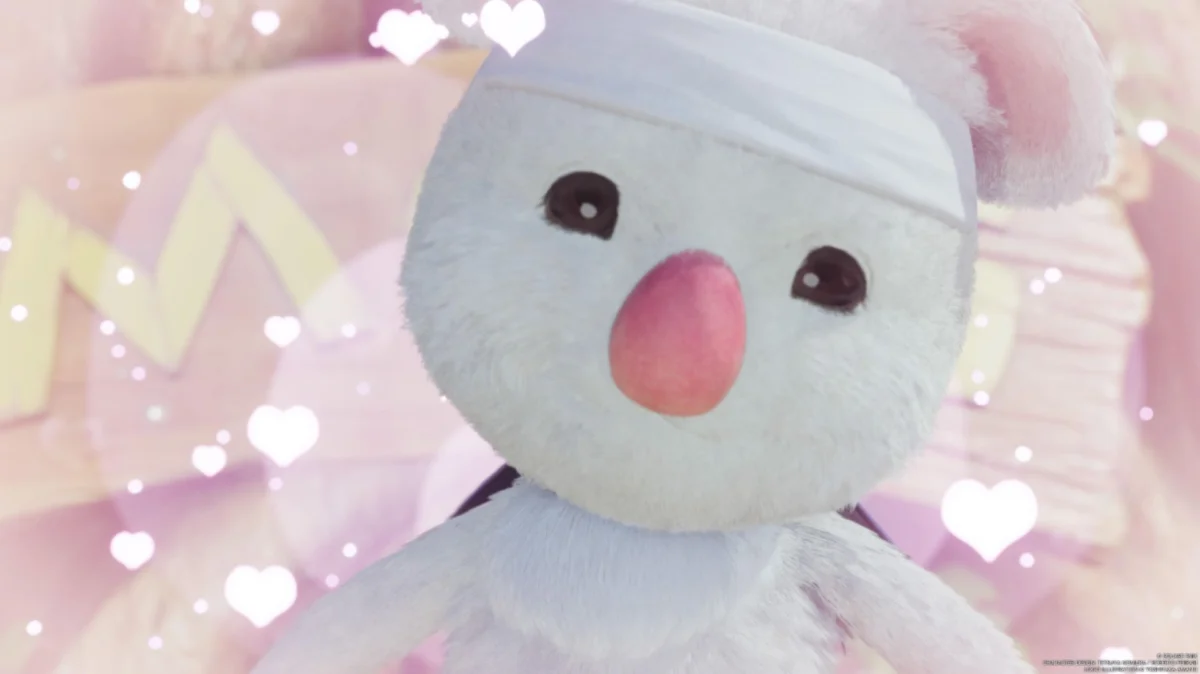
Main Facts: The Return of the Moogle House in the Trilogy’s Finale
As Square Enix marches toward the thrilling conclusion of its sprawling remake project, details regarding the third and final installment—provisionally titled Final Fantasy 7 Revelation—are beginning to surface. Among the most anticipated, and perhaps most contentious, pieces of news is the confirmed return of one of Final Fantasy 7 Rebirth’s most polarizing features: the Moogle House mini-game.
Director Naoki Hamaguchi recently revealed in an interview with Anime News Network that the franchise’s iconic, yet notoriously divisive, winged creatures will once again play a prominent role in the upcoming title. However, shedding their previous roles as chaotic woodland merchants who forced Cloud Strife into surreal, obstacle-ridden rounding-up exercises, these divisive mascots are undergoing a radical career pivot. In Revelation, the Moogle family has officially retired from commerce to pursue a career in the entertainment industry, trading in their merchant ledgers for the bright lights of the stage as a newly minted pop idol group.
While the prospect of a K-pop-inspired Moogle ensemble sounds whimsical on paper, it arrives with a wave of apprehension from the player base. The modern redesigns of the Moogles—infamous for their uncanny, elongated humanoid proportions rather than the adorably plump, fluffy aesthetics of classic titles like Final Fantasy IX—already sparked widespread internet memes and playful horror during Rebirth. The thought of these unsettling creatures performing synchronized choreography brings a whole new meaning to theatrical spectacle.
Fortunately, developer feedback has directly influenced the design philosophy behind Revelation. Acknowledging that the rhythm and pacing of the Moogle House mini-games clashed heavily with the desires of players who wanted to remain immersed in fast-paced action, Hamaguchi assures fans that the mechanics have been comprehensively revamped to be far more accessible. Alongside this revelation, developers have also teased that other divisive elements—such as the ever-present, tech-obsessed wunderkind Chadley—will return with integral narrative roles, ensuring the final chapter tackles fan critiques head-on.
Chronology: From Classic Mascots to Modern Pop Stars
To understand the gravity of the Moogles’ upcoming musical debut in Final Fantasy 7 Revelation, it is essential to trace how these beloved series staples evolved from background lore into interactive headaches over the course of the remake project.
The Golden Age of Fluff (Pre-Remake Era)
For decades, Moogles served as safe, universally beloved mascots throughout the Final Fantasy franchise. Whether dispensing helpful tutorials in Final Fantasy VII, acting as loyal companions and save-points in Final Fantasy IX, or managing Mognet delivery services in Final Fantasy III, their design was reliably consistent: small, bat-winged, bear-like creatures with a pom-pom on their heads, defined by their trademark "Kupo!" catchphrase. Even when their physical forms shifted slightly across entries, they retained an undeniable cuteness.
The Remake Shock: Final Fantasy VII Rebirth (2024)
When Square Enix launched Final Fantasy VII Rebirth, the studio unveiled a dramatic visual overhaul for the creatures inhabiting the open world. Placed inside the surreal "Moogle Houses," these new Moogles featured strikingly humanoid limbs, unsettling facial features, and distinct body proportions that instantly divided the community.
Players engaging with the content were forced to guide Cloud through whimsical, slow-paced herding mini-games, tracking down mischievous little sprites while avoiding bizarre traps. While some appreciated the colorful diversion from the high-stakes narrative of Sephiroth’s pursuit, a vocal segment of the fanbase found the mini-games jarringly slow, pulling them out of the game’s gripping action-combat loop.
The Road to Revelation (Present Day)
During the Tokyo Game Show promotional circuit and subsequent media interviews, director Naoki Hamaguchi addressed the widespread feedback regarding Rebirth’s pacing and side content. Recognizing that the Moogle House activities were a frequent point of friction for action-focused players, the development team made a conscious decision to re-engineer the concept. Rather than scrubbing the characters entirely, Square Enix opted for a narrative justification: the Moogles have closed their shops.
Transitioning from merchants to pop idols, the characters are poised to take center stage in Final Fantasy 7 Revelation. This pivot represents a unique blending of self-aware meta-commentary by the developers—who are clearly in on the joke regarding the community’s mixed feelings toward the creatures—and an earnest attempt to refine gameplay accessibility.
Supporting Data: Mini-Game Fatigue and Player Reception in Modern RPGs
The friction surrounding the Moogle House mini-game in Final Fantasy 7 Rebirth is symptomatic of a broader design challenge facing contemporary massive-scale role-playing games: balancing dense narrative momentum with varied optional content.
The Mini-Game Conundrum
Final Fantasy 7 Rebirth was celebrated for its immense scope, featuring dozens of distinct mini-games ranging from Queen’s Blood card matches to chocobo racing and piano performances. While these distractions offered substantial replay value, user engagement data and community sentiment highlighted a stark divide:
- The Pacing Paradox: RPG players often experience narrative dissonance when forced to pivot from high-octane, emotionally charged combat encounters into low-stakes, cartoonish diversion tasks.
- The "Friction Factor": Activities that alter the fundamental movement mechanics or camera controls of the core party—such as the Moogle herding sequences—tend to generate the highest rate of player drop-off or frustration.
- Aesthetic Disconnect: Data harvested from social media engagement metrics following the launch of Rebirth revealed that visual redesigns of classic mascots heavily influence player sentiment. Characters deemed "uncanny valley" or overly stylized relative to their nostalgic counterparts receive disproportionate online scrutiny, turning them into viral memes that can overshadow minor gameplay improvements.
Development Adaptation Metrics
In response to community feedback loops monitored across platforms like Reddit, ResetEra, and official feedback portals, Hamaguchi and his team at Square Enix have explicitly prioritized accessibility and optional pacing for Revelation. By streamlining how players interact with world activities like the newly minted Moogle idol group, the developers hope to mitigate the fatigue that hindered exploration for action purists in the previous entry.
Official Responses: Director Naoki Hamaguchi on Fan Critique and Creative Freedom
Navigating the expectations of a global fanbase raised on the original 1997 PlayStation classic is no small feat. Naoki Hamaguchi has consistently demonstrated a transparent, humorous, and adaptive approach to addressing player grievances during the press cycles surrounding the final chapter of the trilogy.
Speaking candidly with Anime News Network, Hamaguchi reflected on the diverse player preferences that complicate RPG design:
"There are a lot of mini-games – and many different styles of mini-games – and I think every player has their own personal preference. It’s an RPG, so the characters are moving around the environment in a really specific way – they’re not walking around in action-combaty ways. For example, there was the Moogle House mini-game, but people who wanted to focus on the action didn’t really want to step away from the action elements and do that."
This self-awareness extends beyond mechanical pacing to the very identity of the characters themselves. Recognizing that the aesthetic choices of the Moogle family caused both amusement and alarm, Hamaguchi embraced the narrative absurdity of their new direction:
"As for the Moogles, they have since quit their jobs as Moogle merchants and they’re now trying their hand at being on stage – making a little idol group."
Furthermore, addressing the adjustments made for the upcoming title, Hamaguchi emphasized that player comfort remains paramount without sacrificing the creative whimsy that defines the Final Fantasy brand:
"Anyway, since a lot of people didn’t really like that Moogle mini-game, that was definitely one thing we wanted to change and so we’ve made it more accessible – and hopefully more people like the Moogles."
This philosophy is not limited to the Moogles. The development team has openly acknowledged similar community stances regarding other divisive fixtures, such as the socially inept technological prodigy Chadley. Rather than sidelining characters because a vocal contingent of players finds them annoying, the team has integrated these reactions directly into the overarching design pipeline, promising that Chadley will hold an integral narrative anchor in Revelation despite his polarizing reputation.
Implications: What the Moogle Evolution Means for the Trilogy’s Conclusion
As Square Enix prepares to close the book on the Final Fantasy VII remake trilogy with Revelation, the handling of polarizing elements like the Moogle pop idol group carries several broader implications for the studio and the industry at large.
1. Embracing Meta-Narrative and Community Culture
By leaning directly into the memes generated by the fanbase—such as the uncanny nature of the Rebirth Moogles and the universal exhaustion surrounding certain mini-games—Square Enix is fostering a collaborative relationship with its community. Transforming the creatures into a stage idol group feels less like a random creative whim and more like an affectionate wink to players who spent hours laughing at or struggling through the Moogle Houses.
2. Striking the Balance Between Nostalgia and Innovation
Remaking a beloved classic requires walking a tightrope. Change too little, and the game feels stagnant; change too much, and alienate purists. The evolution of the Moogles from simple tutorial icons to bizarre merchants, and now to theatrical performers, highlights Square Enix’s willingness to experiment wildly with lore. Even if the visual designs remain a point of friendly contention, the commitment to refining the underlying mechanics ensures that gameplay friction is minimized.
3. Setting the Stage for Revelation’s Tone
While the overarching narrative of Final Fantasy VII deals with heavy themes of loss, corporate greed, ecological collapse, and existential doom, the franchise has always maintained a healthy dose of whimsical absurdity—from cross-dressing segments in Wall Market to comedic dolphin rides. The Moogle pop group serves as a reminder that even as the trilogy builds toward its apocalyptic climax against Sephiroth, Square Enix refuses to abandon the eccentric charm that has defined the series for decades.
Whether players will ultimately embrace the Moogles’ musical aspirations or run screaming back to the safety of Cloud’s Buster Sword remains to be seen. One thing, however, is certain: Final Fantasy 7 Revelation is guaranteed to keep its audience talking, laughing, and shaking their heads all the way to the final curtain call.

