

Main Facts
Blizzard Entertainment’s critically acclaimed dark fantasy action-RPG, Diablo IV, has officially made its way to the Nintendo Switch 2, following its high-profile reveal at BlizzCon and subsequent global launch. Running across multiple platforms with seamless cross-progression and cross-play, the Switch 2 iteration of Diablo IV has surprised industry analysts and players alike by avoiding the pitfalls that plagued other high-end ports on Nintendo hardware, such as Elden Ring.
While compromises were inevitable to fit Sanctuary onto Nintendo’s next-generation hybrid hardware, the port boasts impressive features, including touch-supported menus, HD rumble, system-level invite integration, and both docked and handheld performance modes. Offering a targeted 40fps performance mode and a 1440p 30fps quality mode, the game successfully retains its gothic visual identity. However, early adopters have noted minor stability issues, UI scaling quirks in handheld mode, and fragmented currency transfers across platforms. Despite these growing pains, the consensus among hardware and software reviewers is clear: Diablo IV on the Nintendo Switch 2 is a triumph of engineering and a remarkably viable way to experience the end-game grind on the move.
Chronology of the Port
The journey of Diablo IV to Nintendo hardware has been a long-awaited prospect for fans of the franchise. Following the massive success of Diablo III on the original Nintendo Switch—a port widely praised for its technological wizardry and fluid 60fps performance—community expectations were high for a sequel port should newer hardware permit.
- 2023: Diablo IV launches globally to strong commercial success on PC, PlayStation 4, PlayStation 5, and Xbox Series X/S, later expanding to Steam and introducing its first major post-launch expansions.
- BlizzCon Reveal: Blizzard officially announces the Diablo IV: Age of Hatred collection for the Nintendo Switch 2, generating cautious optimism given the hardware demands of the open-world ARPG.
- Launch Week: The game officially deploys on the Switch 2, bringing modern upscaling tech, customized visual modes, and full cross-play integration with existing platforms.
- Post-Launch Analysis: Early technical evaluations reveal that while the 30fps mode suffers from severe pacing issues, the newly highlighted 40fps performance mode provides the ideal baseline for handheld hunting, outperforming the Steam Deck in raw initial loading speeds while trailing slightly in complex foliage rendering.
Supporting Data: Performance, Visuals, and Load Times
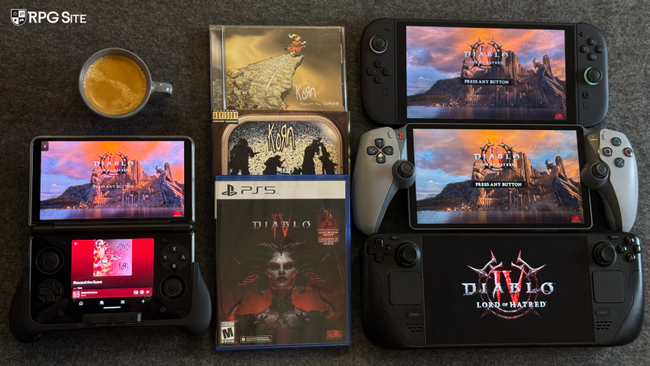
A rigorous comparative technical analysis pitting the Nintendo Switch 2 version against the PlayStation 5, PlayStation 4 Pro, and Steam Deck highlights how Blizzard scaled its proprietary engine.
Visual Scalpel Work
To achieve playable framerates on portable silicon, Blizzard implemented noticeable cutbacks compared to the current-gen console editions. Geometry density, shadow filtering, grass and foliage density, and overall texture filtering are scaled back. Most jarringly, the user interface (UI) and menu resolutions appear noticeably softer than the rest of the presentation, even when running the docked Quality Mode. Nevertheless, utilizing modern temporal upscaling keeps the overarching dark fantasy aesthetic intact, preserving the grim ambiance that defines the franchise.
Frame Rate Targets and Modes
- Quality Mode (Docked): Targets 1440p at 30fps. Reviewers advise bypassing this mode due to noticeable input latency and frame-pacing hitches.
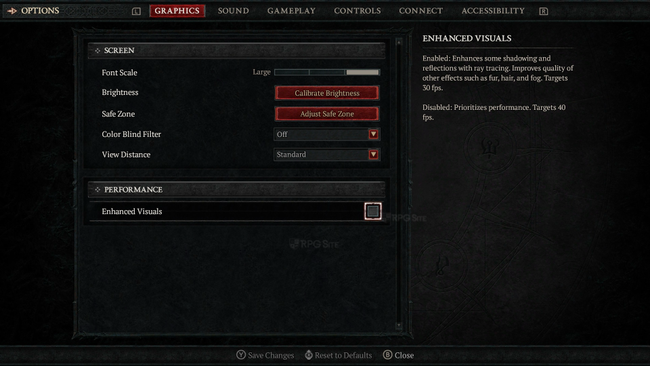
- Performance Mode (Docked & Handheld): Targets 40fps with "Enhanced Visuals" disabled. This mode proves to be the definitive way to play, providing a fluid middle ground that handles intensive scenarios—such as Helltide events—remarkably well without tanking overall visual clarity.
- Handheld Clarity vs. Steam Deck: While the Steam Deck (running at 45–50fps on OLED models) wins out slightly in maximum foliage density and texture filtering depending on custom user configurations, the Switch 2 version maintains a sharper, cleaner overall image pipeline.
Load Time Benchmarks (in seconds)
Tested under identical local network conditions from internal solid-state storage across platforms, the results illustrate how well the Switch 2’s custom storage subsystem performs against specialized PC and console architectures:
| Platform | Dashboard to Character Selection | In-Game Load Time |
|---|---|---|
| Switch 2 | 35 – 36s | 16 – 17s |
| Steam Deck (OLED) | 38 – 39s | 14 – 15s |
| PlayStation 5 | 33 – 34s | 13 – 14s |
| PlayStation 5 Pro | 30 – 31s | 11 – 12s |
| PS4 Version (on PS5) | 48 – 50s | 29 – 30s |
Remarkably, the Switch 2 outpaces the Steam Deck in booting from the dashboard straight to the character selection screen, though in-game asset streaming remains tightly contested. Compared to legacy hardware like the base PlayStation 4, the Switch 2 port is leagues ahead, offering vastly superior load times and stable frame pacing.
Official Responses and Community Feedback
While Blizzard has yet to issue a comprehensive patch log addressing the launch window bugs for the Nintendo Switch 2, developer communications emphasize a continued commitment to cross-platform parity and ecosystem stability.
Player reception has been overwhelmingly positive regarding the core gameplay loop, though two primary friction points dominate community forums:
- Multiplayer Stability: Early reports indicate isolated crashing instances—specifically hard freezes occurring during party teleports within the Lord of Hatred content regions. These anomalies appear isolated primarily to the Switch 2 ecosystem, suggesting a memory management or networking handoff bug that will likely require a hotfix.
- The Currency Quagmire: Cross-progression handles character levels, gear, and shared stashes smoothly, but real-money in-game currency (Platinum) purchased on separate storefronts (such as Battle.net or PlayStation Network) fails to completely sync over to the Nintendo eShop ecosystem. This mirrors similar frustrations seen in other multi-platform MMOs and live-service titles transitioning to the platform, drawing light criticism from consumers who frequently swap between hardware ecosystems.
Implications for the Industry and Hybrid Gaming
The successful deployment of Diablo IV on the Nintendo Switch 2 signals a paradigm shift for AAA third-party multiplatform releases. For years, major live-service open-world titles were considered off-limits for Nintendo’s portable ecosystem unless heavily compromised or relegated entirely to cloud-streaming solutions.
By utilizing intelligent scaling, modern temporal upscaling algorithms, and optimized target framerates (such as the increasingly popular 40fps standard), Blizzard has proven that current-generation AAA experiences can scale down successfully to mobile hardware without losing their soul. For portable gaming enthusiasts, the ability to effortlessly transition a high-level Necromancer or Sorcerer from a high-end PlayStation 5 Pro setup down to a handheld Switch 2 device during a morning commute represents the ultimate realization of modern cross-platform convenience.
If Blizzard addresses the minor UI resolution quirks, implements Variable Refresh Rate (VRR) support for docked play, and irons out party-teleport crashes, Diablo IV on the Nintendo Switch 2 won’t just be a good port—it will stand as one of the definitive portable ARPG experiences on the market.

