

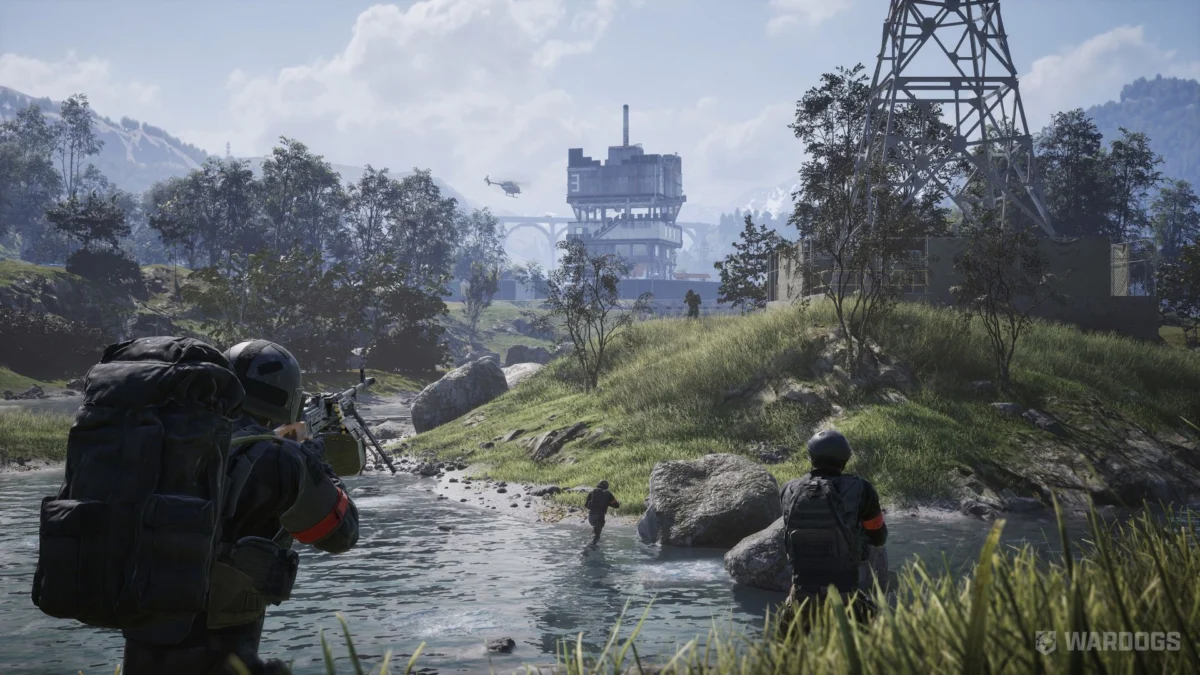
In the competitive landscape of modern first-person shooters, balance is usually a mathematical pursuit—a delicate equilibrium of weapon damage, movement speed, and spawn timers. Yet, in the tactical sandbox of Wardogs, the community has identified a variable that no patch note can easily address: a reputation so toxic that it has fundamentally altered how the game is played.
Lonestar, the blue-clad faction, has become the pariah of the Wardogs ecosystem. Across lobbies, players engage in a silent, stubborn standoff during the team selection phase, desperately spamming clicks to join the Green (Manticore) or Red (Valkyra) squads. Lonestar, meanwhile, sits with vacancies, a digital ghost town in an otherwise bustling server. This isn’t merely a preference; it is a full-blown, community-wide phenomenon that has developers and players alike scratching their heads.
The Anatomy of a Stalemate
The scenario is a familiar ritual for regular players. A match lobby fills, the countdown begins, and the friction starts. While Manticore and Valkyra hit their maximum capacity within seconds, the "Blue" slots remain stubbornly empty. It is a war of attrition played entirely within the menu screens—a "battle before the battle," as one popular Reddit thread aptly titled it.
Players are not just avoiding Blue; they are actively protesting it. Some veteran players have taken to calling the factions by their perceived difficulty settings: "Easy" for Green, "Normal" for Red, and "NIGHTMARE MODE" for Blue. This refusal to join the faction often leads to massive delays in server startup, with 80-player lobbies sometimes languishing for ten minutes or more because the minimum threshold for a match launch cannot be met due to a collective refusal to sign up for the Lonestar team.
A Chronology of Infamy
The stigma surrounding Lonestar did not manifest overnight. While the game’s official launch brought in a flood of new players, the roots of the "Blue Hate" trace back to the closed beta phases. During these early testing periods, early adopters began to notice a recurring trend: matches where the Blue team seemed perpetually disorganized, lacking in infrastructure, and prone to losing.
As the game transitioned to full release, this perception hardened into a cultural truth. The "Blue Curse" began to permeate the subreddit and Discord servers. Memes depicting Lonestar players as incompetent or doomed became the lingua franca of the community. What started as an ironic joke—a way to rib friends who were auto-assigned to Blue—gradually evolved into a pervasive belief system. By mid-2026, the sentiment had become so entrenched that it became a self-fulfilling prophecy: because the "skilled" players consistently avoided Blue, those who ended up there were often newer, less experienced, or simply unlucky, further cementing the team’s reputation for failure.
The Theory of Strategic Disadvantage
Is there merit to the madness, or is this merely a collective psychological delusion? When examining the mechanics of Wardogs, two primary theories emerge among the player base to explain why Lonestar consistently seems to struggle.
The Visibility Factor
The most cited theory is the aesthetic design of the Lonestar uniforms. Critics point to the blue denim and darker patches as a distinct tactical disadvantage, particularly in the game’s lush, forested combat zones. While all factions in Wardogs have high-visibility profiles—an intentional design choice to prevent "pixel-hunting" and promote fair gunplay—players argue that the blue hue stands out more aggressively against the green terrain than the earthy tones of Manticore or the muted reds of Valkyra.
The Geography of War
A more structural argument focuses on map geometry. Some players have posited that Lonestar’s default starting position in the southern corner of the map places them in an inherently weaker tactical position. If the map design doesn’t provide a perfect 120-degree symmetry between the three factions, Lonestar may find itself susceptible to a "two-front war." If Manticore and Valkyra are positioned to easily funnel resources toward the center, while Lonestar is forced to defend an awkward, elongated front, the logistical strain could explain the lack of "Super FOBs"—the fortified bases that characterize winning teams.
The Evidence of the Anecdote
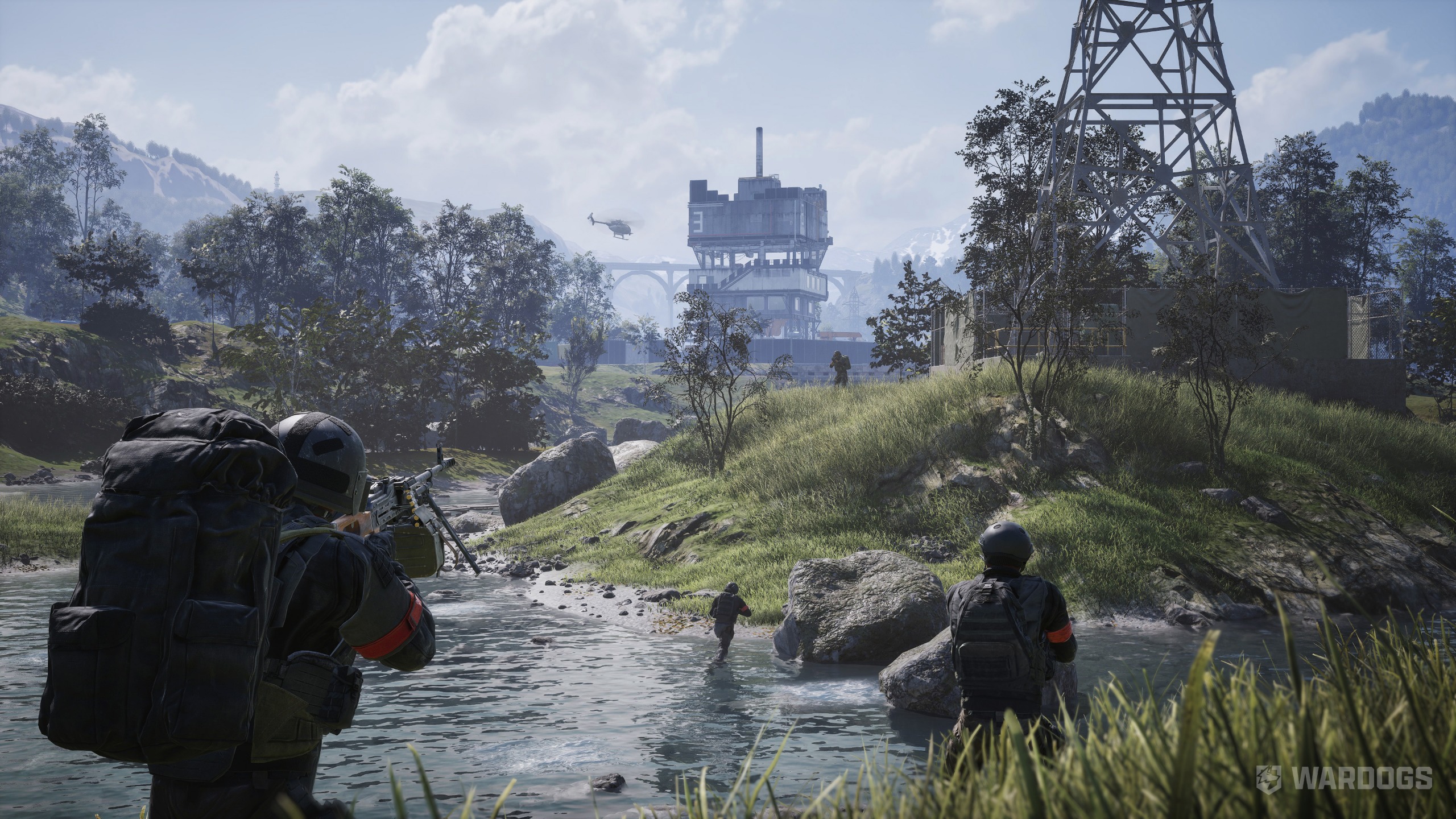
The difference in playstyle between the factions is often visible within the first 15 minutes of a match. In successful matches, players coordinate to build "Super FOBs"—complex defensive networks featuring reinforced walls, barbed wire moats, enclosed sniper towers, and intricate mortar emplacements.
On teams like Red or Green, these fortifications are often the result of dedicated building specialists working in tandem. Conversely, reports from Blue-side matches frequently describe a chaotic environment. One aggrieved player noted, "I’ve seen players use the respawn vehicle to drive circles in the Forward Operating Base, not realizing they’re preventing their entire team from spawning." Such instances of "Blue-side incompetence" are frequently screenshotted and shared on social media, reinforcing the narrative that joining Lonestar is an exercise in futility.
Developer Acknowledgment and the "Data Gap"
The developers at Bulkhead have not remained silent on the issue. In fact, they appear to be leaning into the meta-narrative. Howard Phillpott, co-founder of Bulkhead, recently addressed the situation on social media, posting a tongue-in-cheek comment in response to a rare Lonestar victory screen: "Lonestar actually did it."
This acknowledgment suggests that the developers are well aware of the phenomenon. However, they have yet to release a comprehensive data breakdown regarding faction win rates. If the win rates are indeed skewed, it would confirm that there is a balance issue. If the win rates are equal, it would prove that the "Blue Curse" is entirely a psychological construct. For now, the developer silence on the raw data keeps the mystery—and the controversy—alive.
The Psychological Implication: A Self-Fulfilling Prophecy
The most compelling explanation for the Blue curse is the "self-fulfilling prophecy" loop. Because high-level, experienced players actively dodge the blue team, the average skill level of a Lonestar squad is systematically lower than that of its counterparts. A team that starts with less experience, less coordination, and a defeatist attitude is statistically more likely to lose, regardless of the map balance or uniform color.
This presents a unique challenge for Wardogs. In a standard two-team game, balancing is binary. In a three-team format, if one team is branded as the "loser" team, the game’s population density is constantly under threat. When experienced players refuse to play Blue, they create a vacuum of skill that guarantees the team’s failure, which in turn convinces more players to avoid the team in the future.
Conclusion: Will the Curse Lift?
The fate of Lonestar rests on the shoulders of the community. As of now, the "Blue Hate" is a badge of honor for some and a source of genuine frustration for others. Whether it is a product of map geometry, poor uniform aesthetics, or simply a community meme gone too far, the result is the same: one-third of the game’s content is being shunned.
If Bulkhead intends to normalize the experience, they may need to intervene—perhaps through subtle balancing tweaks, map rotations, or even an intentional "rebranding" of the Lonestar aesthetic. Until then, the empty slots on the Blue team remain a testament to the power of community perception in the age of online gaming. For those brave enough to pick blue, there is always an open seat, though you might want to bring your own tactics, as you’ll likely be fighting against both the enemy and the weight of your own team’s reputation.

