

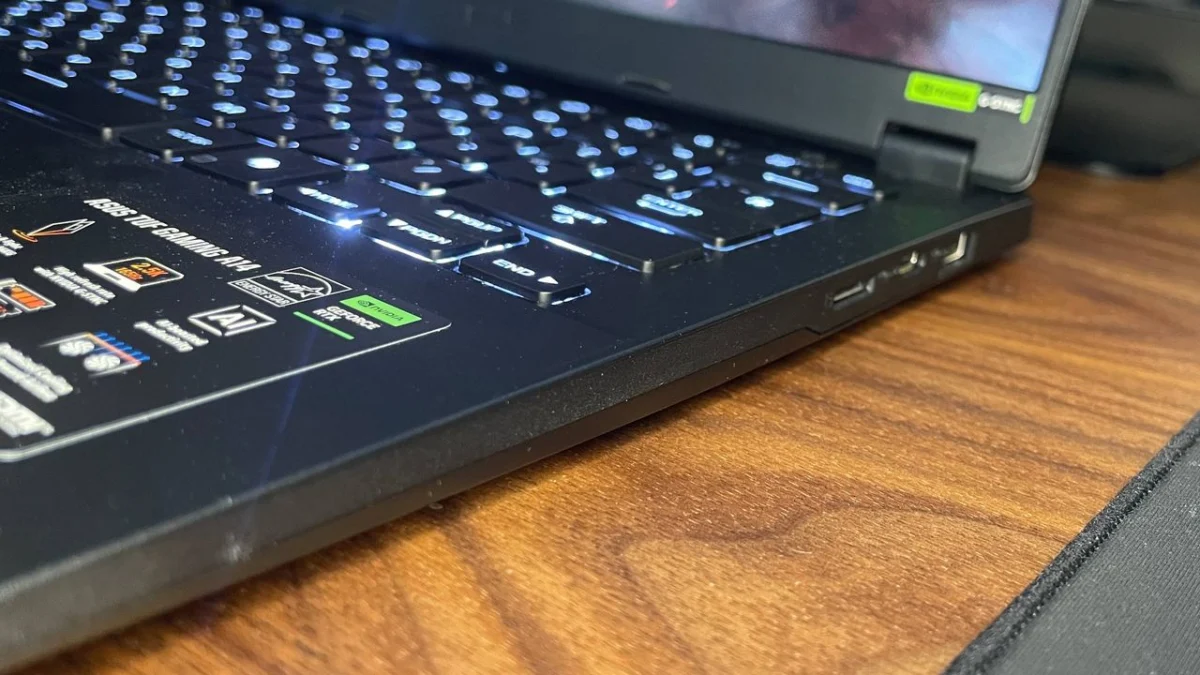
In the hyper-connected landscape of modern social media, aesthetic desk setups and minimalist workspaces command millions of views. Platforms like Instagram Reels and TikTok have transformed PC hardware from utilitarian tools into high-style design accessories. Yet, in the relentless pursuit of online clout, a concerning new phenomenon has emerged—users mimicking bizarre, unverified hardware configurations purely for the sake of aesthetics.
The latest casualty of this social media-driven experimentation comes from the r/Asustuf subreddit, where a user learned a hard, expensive lesson about physics and hardware engineering. By attempting to replicate a viral "upside-down laptop" setup—resting the machine inverted on the top edge of its screen—the user managed to completely snap the device’s hinge. To compound the disaster, the ruined machine did not even belong to them.
This incident serves as a stark reminder of the widening chasm between social media illusion and structural reality, highlighting the very real financial and functional risks of prioritizing internet trends over basic engineering commonality.
Main Facts
The core incident revolves around a viral social media design trend that encourages users to invert their laptops, resting them upside down to achieve a sleek, streamlined profile on camera.
- The Incident: A Redditor posting to the r/Asustuf community shared photographic evidence of a severely damaged Asus TUF gaming laptop. The hinge mechanism on the device completely failed after the laptop was stood upside down, mirroring setups popularized on Instagram.
- The Cause of Failure: Laptops are fundamentally engineered to distribute weight across their base, keyboard deck, and standard upright hinge mechanisms. Flipping a machine upside down places unnatural shearing and compressive forces on the top edge of the display lid and the delicate torque-generating hinges, components never designed to support the full gravitational load of the computer’s chassis.
- The Stakes: The catastrophic hardware failure was made worse by the revelation that the damaged device did not belong to the user who attempted the trend, escalating a foolish internet experiment into a major interpersonal and financial liability.
- The Warning Ignored: The unfortunate owner admitted that peer warnings on previous Reddit threads explicitly stated that balancing laptops in such a manner risked structural failure. These warnings were summarily dismissed—until the physical reality of material fatigue set in with a definitive snap.
Chronology of a Viral Hardware Disaster
To understand how a routine piece of consumer electronics can be reduced to a broken shell in the name of content creation, it is helpful to trace the trajectory of how these trends develop and execute their damage.
Phase 1: The Rise of the "Aesthetic" Workspace Trend
Over the past several years, minimalist tech culture has exploded. Content creators compete to showcase the cleanest, most futuristic desk setups imaginable. Often, this involves hiding wires, mounting peripherals in unconventional ways, and arranging laptops vertically or inverted to create clean geometric lines. These videos are designed for maximum visual impact, prioritizing fleeting aesthetic appeal over long-term device health or ergonomic functionality.
Phase 2: Copycat Execution and Ignoring Warnings
Enticed by the sleek look of inverted layouts, everyday users attempt to recreate these setups using their own—or borrowed—hardware. In the case of the Asus TUF incident, community members on Reddit actively cautioned the user against adopting the inverted configuration, pointing out the severe stress it would place on the display housing and hinges. These warnings were ignored under the assumption that the hardware could withstand the configuration, a common pitfall of consumer invincibility bias.
Phase 3: The Point of Structural Failure
Laptop hinges are marvels of micro-engineering. They must balance enough resistance to keep a screen upright during vigorous typing with enough smoothness to allow one-handed opening. To achieve this, they are anchored securely into the reinforced chassis and the display assembly via specialized mounting brackets.
When placed upside down, the entire weight of the laptop body pushes downward against the display bezel. As the user noted, the first hinge gave way initially before momentarily "snapping back in," providing a deceptive illusion of resilience. Encouraged or oblivious, the setup was maintained until the secondary, fatal fracture occurred. One hinge held on, but the other snapped permanently, leaving the display floppy, misaligned, and structurally compromised.
Phase 4: The Aftermath and Public Admission
Faced with a fractured machine, the user took to the Asus TUF subreddit to document the aftermath. The post quickly gained traction as a cautionary tale within the PC hardware community. The admission that the laptop "ain’t even mine" transformed a standard tech support post into a cautionary parable about the dangers of chasing social media trends without understanding the physical limitations of consumer goods.
Supporting Data: Understanding Laptop Hinge Engineering
To appreciate why the upside-down laptop trend is an engineering catastrophe, one must examine how modern laptops are constructed and where structural vulnerabilities lie.
Weight Distribution Mechanics
- The Base: The bottom chassis of a gaming laptop houses the heaviest components: the discrete graphics processing unit (GPU), the central processing unit (CPU), cooling fans, massive copper heat pipes, the battery, and the motherboards. In an Asus TUF machine, this assembly is dense and heavy, often tipping the scales at over two kilograms.
- The Lid: The display assembly, by contrast, is designed to be as light and thin as possible to prevent excessive sagging during normal use. It houses an LCD or OLED panel, a webcam, and Wi-Fi antennas.
When a laptop is placed right-side up, gravity pulls the base securely onto the desk while the hinges smoothly articulate the lightweight lid. When inverted, the heavy base is suspended above, forcing the lightweight, plastic- or aluminum-clad display lid to bear the brunt of the chassis’s dead weight.
Material Fatigue and Torque Stress
Laptop hinges rely on precise torque tolerances. They are secured to internal chassis mounting bosses—often made of brass inserts molded into plastic structural ribs.

- Shear Stress: Inverting the laptop subjects these screw mounts to continuous shear stress.
- Housing Flex: The plastic bezel surrounding the screen is not designed to act as a load-bearing foundation. Pressure applied to the top edge causes the housing to flex, cracking the plastic frame, separating the bezel clips, and ultimately stripping or snapping the metal anchor points that hold the hinges in place.
Once a hinge housing cracks or an internal anchor breaks, repairing it typically requires replacing the entire display back cover, the bezel, and the hinge assembly itself—a repair that can cost hundreds of dollars in parts and labor, often approaching a significant fraction of the laptop’s total residual value.
Official Responses and Industry Context
While Asus has not issued a formal safety bulletin specifically targeting the "upside-down laptop trend"—largely because such behavior falls well outside standard, reasonable use cases—manufacturers consistently outline strict operational guidelines within their user manuals.
The Limits of Warranty Coverage
Consumer electronics warranties, including those provided by Asus for the TUF Gaming lineup, universally exclude damage caused by misuse, abuse, unauthorized modifications, or operation outside of environmental and structural parameters specified by the manufacturer.
Industry analysts and repair technicians note that physical damage resulting from experimental positioning—such as standing a laptop on its screen edge—is routinely classified as user-induced accidental damage. Consequently, claims filed under standard warranties for such structural failures are almost universally denied, leaving consumers to shoulder the full cost of out-of-warranty repairs.
The Creator Responsibility Debate
The incident has reignited an ongoing conversation within the tech media ecosystem regarding the responsibility of content creators. When influencers showcase stylized desk setups that involve physically hazardous or impractical device placements, they rarely include disclaimers warning viewers of the potential mechanical consequences.
Hardware enthusiasts and reviewers have increasingly called upon the creator community to exercise greater transparency, ensuring that artistic license does not translate into widespread hardware destruction by impressionable followers seeking to replicate aesthetic perfection.
Implications for Consumers and the PC Community
The broken Asus TUF hinge is more than just an isolated anecdote of user error; it highlights broader cultural and practical implications for the modern consumer electronics landscape.
1. Form Over Functionism Reaches a Tipping Point
As technology becomes increasingly integrated with personal identity and interior design, the pressure to maintain an immaculate aesthetic has never been higher. However, physical laws remain indifferent to Instagram aesthetics. Consumers must recognize that high-performance hardware—especially gaming laptops packed with heavy cooling systems and dense internal components—are precision instruments, not decorative sculptures.
2. The Dangers of Peer-Driven Tech Practices
Social media algorithms reward novelty, shock value, and visual flair. This incentive structure frequently promotes unorthodox or impractical usage methods that generate high engagement at the expense of device longevity. The willingness of users to ignore explicit warnings from informed peers—as demonstrated in this case—underscores a growing vulnerability to viral misinformation within tech spaces.
3. Financial and Environmental Ramifications
In an era prioritizing right-to-repair initiatives and environmental sustainability, destroying functional hardware for the sake of social media content represents an unnecessary waste of resources. Manufacturing a gaming laptop consumes vast amounts of energy, rare earth metals, and shipping logistics. Discarding or crippling a high-value machine for a temporary visual trend runs counter to the growing imperative to maximize the lifecycle of consumer electronics.
Conclusion
The viral trend of using laptops upside down serves as a costly cautionary tale for the digital age. While the allure of crafting the ultimate aesthetic desk setup is understandable, bridging the gap between social media fantasy and physical reality requires a healthy respect for engineering constraints.
For the unfortunate Redditor who ruined a borrowed Asus TUF laptop, the lesson was learned the hard way: gravity always wins, and internet clout is a poor substitute for a functioning machine. As the tech community moves forward, this incident stands as a definitive reminder to think twice before putting your expensive hardware through the ringer simply for the sake of a photograph.

