

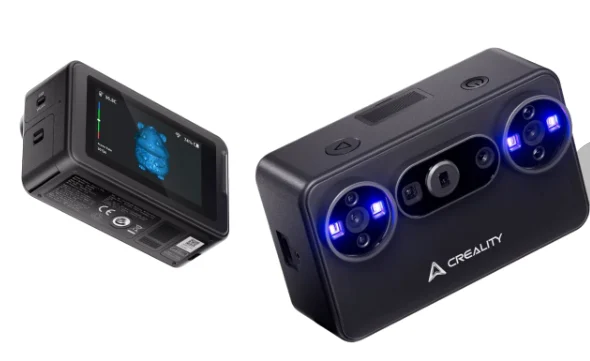
SHENZHEN, CHINA – [Insert Date, e.g., October 26, 2023] – Creality, a global leader in 3D printing technology, has announced the pre-purchase availability of its latest innovation, the Creality Pika 3D Scanner. Positioned as a game-changer for both amateur enthusiasts and seasoned professionals, the Pika aims to bridge the gap between physical objects and digital models with unparalleled portability, precision, and ease of use. This compact device, now offered at an introductory price of $629 for a limited period, promises to redefine how creators capture the world around them for 3D printing and design.
The advent of 3D printing has democratized manufacturing, empowering individuals to transform digital designs into tangible realities. However, the initial hurdle often lies in the creation of these digital models, particularly when aspiring to replicate existing physical objects with high fidelity. Traditional 3D scanning solutions have often been cumbersome, expensive, or lacked the necessary accuracy for intricate details, leaving many creators reliant on CAD software or pre-made models. The Creality Pika seeks to dismantle these barriers, offering a highly advanced, pocket-sized scanner that brings professional-grade capabilities to the masses. Its ability to capture complex geometries and even challenging surfaces like black and metallic objects, coupled with advanced data processing via Gaussian Splatting, positions it as a significant leap forward in accessible 3D capture technology.
The pre-purchase offer, which includes a 10% discount totaling $70 off the regular price, is available for a limited window of just 19 days, signaling Creality’s strategy to incentivize early adoption among its extensive user base and the broader 3D printing community. This strategic launch underscores the company’s commitment to pushing the boundaries of what’s possible in the consumer and prosumer 3D technology space.
The Evolution of 3D Scanning and Creality’s Place
From Industrial Behemoths to Pocket-Sized Powerhouses
The journey of 3D scanning technology has been marked by a relentless pursuit of accuracy, speed, and accessibility. Early 3D scanners, emerging in the mid-20th century, were primarily large, stationary, and prohibitively expensive machines confined to industrial settings for quality control, reverse engineering, and specialized manufacturing. These devices often relied on complex laser triangulation or structured light projection systems, requiring expert operators and controlled environments to achieve their results. Their applications were largely limited to high-value sectors such as aerospace, automotive, and medical industries, where the cost could be justified by the precise replication or analysis of complex components.
Over the decades, technological advancements, particularly in optics, sensor technology, and computational processing, began to shrink the footprint and cost of 3D scanners. The late 2000s and early 2010s saw a gradual entry of professional-grade handheld scanners into the market, offering greater flexibility but still carrying substantial price tags. The real shift towards consumer accessibility began with the popularization of 3D printing, which created a symbiotic demand for easier 3D model generation. Companies started developing more affordable structured light scanners and photogrammetry solutions, attempting to cater to a burgeoning hobbyist market. However, these often came with compromises in terms of accuracy, speed, or the ability to scan diverse material types without extensive preparation.
Creality, a name synonymous with accessible and high-performance 3D printers, has played a pivotal role in democratizing additive manufacturing. Since its inception, the company has consistently introduced innovative products that offer exceptional value without sacrificing quality, making 3D printing a viable hobby and tool for millions worldwide. Their Ender series, in particular, became a benchmark for entry-level FDM printers, fostering a massive community of makers. Building on this foundation, Creality has naturally expanded its ecosystem to include complementary technologies, recognizing that the ability to easily create or replicate 3D models is just as crucial as the ability to print them.
The Genesis of Pika: Addressing User Needs
The development of the Creality Pika scanner is a direct response to a persistent need within the 3D printing community and beyond: a truly portable, highly accurate, and user-friendly 3D scanner that can perform reliably in diverse environments. Many existing "portable" scanners still require connection to a powerful computer, rely on specific lighting conditions, or struggle with challenging surfaces like dark, reflective, or transparent materials, often necessitating the application of matte scanning sprays. This adds steps, cost, and complexity to the scanning process, deterring many potential users.
Creality identified a significant gap for a device that could offer professional-level detail capture in a form factor akin to a smartphone, liberating users from the confines of a workshop or studio. The Pika is designed for creators who want to capture objects in situ—whether it’s a unique artifact in a museum, a natural formation outdoors, a specific component in a factory, or a treasured item at home. By integrating advanced optical systems, sophisticated processing algorithms, and robust power management into a compact design, Creality aims to empower users to translate their ideas and inspirations directly from the physical world into digital assets with unprecedented ease. The Pika’s release fits perfectly within Creality’s overarching mission: to make advanced manufacturing and creative tools accessible to everyone, fostering innovation and boundless creativity.
Unpacking the Pika’s Capabilities: A Deep Dive into Innovation
Precision in the Palm of Your Hand
The most striking aspect of the Creality Pika is its remarkable compactness and lightweight design. Measuring a mere 100 × 60 × 35 mm and weighing only 260 grams, the Pika truly lives up to its "pocket-sized" description. This ergonomic design significantly enhances its usability in the field, allowing users to carry it effortlessly alongside other equipment, or even just in a pocket, ready for spontaneous capture moments. This level of portability is a critical differentiator, freeing creators from the logistical constraints associated with larger, heavier scanning equipment.
At the heart of the Pika’s formidable capabilities lies its dual-optical 7-line blue laser system. Blue laser technology is highly favored in professional 3D scanning due to its short wavelength, which allows for significantly higher precision and resolution compared to red or white light systems. The "7-line" configuration indicates that the scanner projects multiple laser lines simultaneously. This multi-line approach dramatically increases the data acquisition rate, allowing the Pika to capture a broader area and more complex geometries in a single pass, thereby speeding up the scanning process and reducing the likelihood of missed details. This advanced optical setup contributes directly to its advertised 0.03 mm accuracy, a figure that places it firmly in the realm of professional-grade scanners. For intricate models, miniature objects, or parts requiring tight tolerances, this level of precision is indispensable, ensuring that the digital replica faithfully represents the physical original. Furthermore, the Pika’s minimum scan volume of 10 × 10 × 10 mm highlights its exceptional ability to capture extremely small and finely detailed objects, a common challenge for many consumer-grade scanners that struggle with tiny features.
Revolutionary Scanning for Challenging Surfaces
One of the most persistent challenges in 3D scanning has been the accurate capture of black and metallic surfaces. Traditional optical scanners often struggle with these materials due to their light-absorbing or highly reflective properties. Black surfaces tend to absorb laser light, making it difficult for the scanner’s sensors to detect reflections and construct a coherent point cloud. Conversely, highly reflective metallic surfaces cause laser light to scatter unpredictably, leading to noisy data, artifacts, or complete data gaps. To overcome these issues, users typically resort to applying a matte, temporary scanning spray to the object, which creates a uniform, non-reflective surface. While effective, this step adds time, cost, and potential mess to the workflow, and can be impractical for delicate, valuable, or easily damaged objects.
The Creality Pika explicitly addresses this pain point by enabling the direct scanning of black and metallic surfaces without the need for spray. This breakthrough is likely attributed to a combination of highly sensitive sensors, advanced laser modulation techniques, and sophisticated real-time data processing algorithms that can intelligently filter noise and reconstruct surfaces even from weak or complex reflections. This capability significantly streamlines the workflow, making the Pika an incredibly versatile tool for a wider range of applications, from reverse engineering automotive parts to digitizing jewelry or intricate electronic components.
Visual Feedback and Advanced Data Processing
The inclusion of a 3-inch touchscreen on the device itself is a thoughtful addition that enhances user experience. This integrated display allows users to view their scans in real-time, offering immediate feedback on coverage, alignment, and data quality. This "scan-as-you-go" functionality is crucial for identifying and correcting scanning errors on the spot, rather than discovering them later during post-processing. It also enables adjustments to scanning parameters, ensuring optimal data capture without the need to constantly connect to an external device.
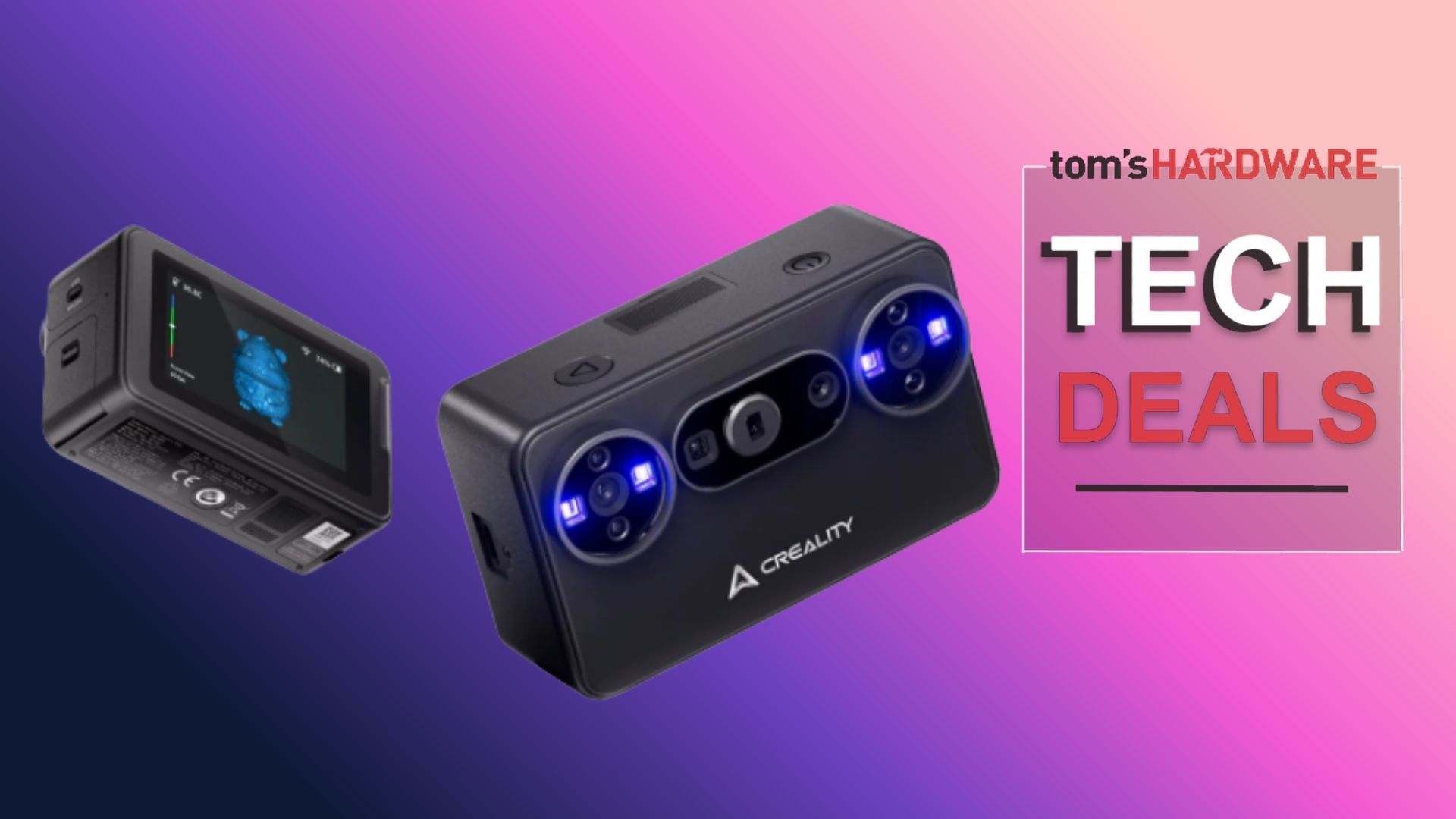
Beyond raw data capture, the Pika leverages an advanced technique known as Gaussian Splatting for reproducing scans. Gaussian Splatting is a relatively novel 3D representation method that has gained prominence in fields like neural radiance fields (NeRFs) for its ability to create highly realistic and detailed 3D scenes. Unlike older texture mapping methods that project 2D images onto simplified 3D meshes, Gaussian Splatting represents a 3D scene as a collection of anisotropic 3D Gaussians (ellipsoids). Each Gaussian contains information about its position, scale, rotation, color, and opacity. When rendered, these Gaussians are projected onto the image plane, creating incredibly detailed and photorealistic views, particularly effective at capturing fine textures, subtle color variations, and intricate spatial details that traditional methods might smooth over or distort. For 3D printing and modeling, this means that the exported models retain a much higher degree of visual fidelity and textural richness, making the final printed object or digital render significantly more realistic and accurate to the original.
Seamless Workflow and Power Management
Once an object has been scanned, the Pika ensures maximum compatibility with industry-standard software by supporting export to STL, OBJ, PLY, and ASC formats. STL (Stereolithography) and OBJ (Object) are ubiquitous formats for 3D printing and general 3D modeling, respectively. PLY (Polygon File Format) and ASC (ASCII Point Cloud) offer flexibility for various other applications, including scientific visualization and advanced mesh processing. This broad compatibility ensures that users can seamlessly integrate their Pika scans into their existing 3D printing slicers, CAD programs, and animation software.
Understanding the need for uninterrupted operation, especially when working remotely or in the field, Creality has equipped the Pika with two hot-swappable 3,350 mAh batteries. This dual-battery system allows users to continue scanning without pause by simply swapping out a depleted battery for a fresh one, eliminating downtime associated with recharging. This feature is invaluable for extended scanning sessions or when capturing multiple objects away from a mains power source.
For data transfer, the Pika offers both USB 3.0 and Wi-Fi 6 connectivity. USB 3.0 provides a reliable, high-speed wired connection for transferring large scan files directly to a computer. Wi-Fi 6, the latest generation of Wi-Fi technology, offers significantly faster speeds, lower latency, and greater network efficiency compared to previous standards. This means quicker wireless transfer of scan data, improved reliability in crowded wireless environments, and potentially seamless integration with cloud-based platforms or other network-connected devices in the future, further enhancing the Pika’s utility in a modern digital workflow.
Creality’s Vision: Democratizing Advanced 3D Technology
Bridging the Gap Between Idea and Reality
Creality’s philosophy has always revolved around making advanced manufacturing tools accessible to a broader audience. The Pika 3D Scanner is a profound embodiment of this vision, directly addressing the often-cited limitation in 3D printing: the difficulty of translating complex physical objects into digital models. By providing a portable, highly accurate, and user-friendly scanning solution, Creality aims to empower a new wave of creators to bypass traditional design hurdles.
The Pika effectively bridges the gap between imagination and tangible reality. Instead of being constrained by existing digital libraries or the steep learning curve of advanced CAD software for replicating intricate shapes, users can now simply scan an object they admire, a broken part needing replacement, or a unique natural form, and immediately have a high-fidelity digital model ready for modification or 3D printing. This capability democratizes reverse engineering and object replication, opening up immense creative possibilities for hobbyists, artists, designers, engineers, and educators alike. It allows for faster prototyping cycles, easier customization of existing designs, and a more intuitive approach to generating 3D content.
The Limited-Time Pre-Purchase Offer
To mark the launch of the Creality Pika, the company has initiated a compelling pre-purchase offer. Early adopters can acquire the Pika for just $629, which includes a 10% discount, representing a saving of $70 off the retail price. This offer is, however, strictly time-sensitive, with only 19 days remaining from the announcement date. Such strategic launch offers are common in the tech industry, designed to generate initial excitement, reward early supporters, and drive rapid market penetration. For Creality, it’s an opportunity to get the Pika into the hands of its most enthusiastic users, who often serve as influential evangelists within the community. The urgency created by the limited timeframe encourages quick decision-making, ensuring a strong initial sales performance and valuable early feedback that can inform future product development. It reinforces Creality’s commitment to providing cutting-edge technology at competitive prices, making advanced 3D scanning more attainable than ever before.
The Broader Impact: Reshaping the 3D Printing Landscape
Empowering a New Generation of Creators
The introduction of the Creality Pika is set to have a profound impact on the 3D printing landscape, particularly for hobbyists and small businesses. By removing the complexity and cost barriers associated with high-quality 3D scanning, the Pika will empower a new generation of creators to explore possibilities previously reserved for industrial applications. Users will be able to:
- Accelerate Prototyping: Rapidly scan existing parts or handmade prototypes to quickly iterate on designs.
- Simplify Replication: Easily reproduce broken or obsolete parts, fostering a culture of repair and sustainability.
- Enhance Customization: Scan physical objects and then modify them digitally to create personalized accessories, enclosures, or artistic pieces.
- Preserve Heritage: Digitally archive historical artifacts, natural specimens, or personal mementos with high accuracy, creating virtual replicas that can be studied, shared, or even physically reproduced.
- Boost Education: Provide students with hands-on experience in 3D data capture, making STEM education more engaging and practical.
- Facilitate Gaming and VR/AR Content Creation: Quickly generate 3D assets from real-world objects for use in virtual environments, enriching digital experiences.
The ability to seamlessly transition from physical object to digital model to physical print offers an unparalleled workflow efficiency, sparking creativity and enabling projects that might have been too daunting or time-consuming before.
The Future of Portable 3D Scanning
The Creality Pika represents a significant milestone in the ongoing miniaturization and enhancement of 3D scanning technology. Its capabilities hint at a future where powerful 3D capture is integrated into everyday devices or becomes as ubiquitous as mobile photography. We can anticipate further advancements building on the Pika’s foundation:
- Increased Autonomy and Intelligence: Future portable scanners might incorporate more advanced AI for on-device processing, automatic object recognition, and intelligent scan path planning, further simplifying the user experience.
- Enhanced Multi-Sensor Fusion: Integration of additional sensor types (e.g., thermal, hyperspectral) to capture even richer data about objects.
- Cloud Integration and Collaborative Workflows: Seamless uploading of scan data to cloud platforms for collaborative design, remote access, and AI-powered optimization.
- Broader Material Compatibility: Continuous improvements in optical systems and algorithms to handle an even wider range of challenging materials without any preparation.
- Augmented Reality Overlays: Real-time AR feedback during scanning, showing coverage and potential errors directly on the object through a connected smartphone or AR glasses.
Beyond hobbyists, the Pika’s portability and precision have implications for various professional fields. Field engineers could scan components for maintenance, architects could capture existing structures for renovation planning, and even small businesses could use it for quality control or creating product catalogs. The trend is clear: advanced technology is becoming more democratic, more portable, and more intuitive, empowering individuals and small organizations with tools once exclusive to large enterprises.
Conclusion: A Leap Forward for 3D Enthusiasts
The Creality Pika 3D Scanner is more than just a new product; it’s a testament to the relentless innovation driving the 3D technology sector. By combining professional-grade accuracy with unprecedented portability and user-friendliness, Creality has delivered a tool that promises to unlock new creative potential for countless individuals. Its ability to capture intricate details, handle challenging surfaces, and integrate seamlessly into existing 3D workflows makes it an invaluable asset for anyone involved in 3D printing, design, or digital content creation. As the limited-time pre-purchase offer underscores, now is the opportune moment for enthusiasts to embrace this leap forward and transform their creative process. The Pika is poised not just to simplify 3D scanning but to truly reshape how we interact with and replicate the physical world in the digital realm.

