

Eindhoven, Netherlands – The intricate and increasingly vital global semiconductor supply chain is bracing for potential tremors as ASML, the Netherlands-based technological linchpin and sole supplier of extreme ultraviolet (EUV) lithography equipment, is reportedly considering significant price increases for its existing Low-NA EUV tools. This strategic move, which could fundamentally alter the cost structures for leading chip manufacturers, has already drawn considerable ire from TSMC, the Taiwanese foundry giant and ASML’s largest client, according to a report by The Information.
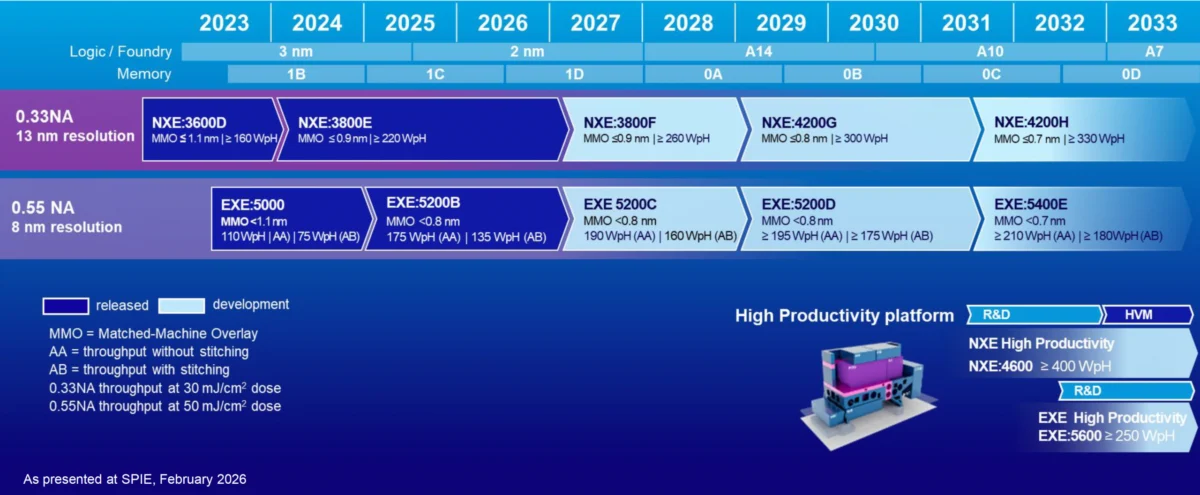
The prospect of higher equipment costs from ASML, whose machines are indispensable for producing the most advanced chips, carries profound implications. Any such adjustment would not merely affect the balance sheets of a few industry titans but is poised to ripple through the entire semiconductor ecosystem, potentially impacting everything from smartphone processors and AI accelerators to high-performance computing components and eventually, consumer prices for a vast array of electronic devices. While ASML’s Chief Financial Officer, Roger Dassen, has indicated that any price adjustments would not materialize overnight, he also affirmed the company’s "pretty strong runway for potential price improvements" linked to the continuous enhancement of its Low-NA tools’ productivity.
The Main Facts: A Monopoly’s Leverage in a Critical Market
At the heart of this unfolding narrative is ASML’s unparalleled position in the semiconductor manufacturing landscape. The company holds a near-monopoly on EUV lithography technology, a critical process required to etch the minuscule patterns on silicon wafers that form the basis of advanced microchips. Low-NA EUV machines are the workhorses enabling current-generation leading-edge nodes (like 5nm, 4nm, and 3nm) for companies such such as TSMC, Samsung, and increasingly, Intel.
The report from The Information suggests that ASML is actively planning these price increases, a move that has predictably met with resistance from key customers, most notably TSMC. TSMC, as the world’s largest contract chipmaker, is profoundly reliant on ASML’s technology to maintain its technological lead and satisfy the insatiable global demand for advanced semiconductors. Any hike in the cost of these foundational tools directly translates into higher capital expenditure for TSMC, which could then be passed down to its own clients like Apple, Qualcomm, and Nvidia.
ASML CFO Roger Dassen, speaking during the company’s recent quarterly earnings call, acknowledged the potential for price adjustments, stating, "When it comes to Low-NA [EUV tools] pricing, of course, you know that we keep on increasing the productivity of the Low-NA tool, [which] gives us a pretty strong runway for potential price improvements going forward." This statement confirms the company’s internal assessment of its pricing power, driven by the continuous technological advancements and efficiency gains it brings to its existing EUV platforms. However, Dassen also tempered expectations for immediate changes, noting, "Given the long order lead times that we have, that does not translate into pricing effects tomorrow." This suggests a gradual implementation, likely affecting new orders or future contractual agreements rather than existing ones.
The crux of the matter is ASML’s unique leverage. With no viable competitor for EUV lithography, ASML dictates terms in a market segment essential for technological progress. This proposed price increase is a clear demonstration of that market power, asserting ASML’s ability to command premium pricing for its highly specialized and high-demand equipment.
Chronology: From Monopoly Formation to Market Resistance
The journey to this current standoff is rooted in decades of technological innovation and strategic market consolidation by ASML.
Early 2000s – 2010s: The Genesis of EUV: ASML embarked on the arduous and astronomically expensive journey of developing EUV lithography technology. This involved overcoming immense technical challenges, collaborating with a global ecosystem of suppliers, and securing significant investments, including from its major customers like Intel, Samsung, and TSMC, who recognized the imperative of this technology for future chip scaling.
Mid-2010s: First Commercial Deployments: After years of R&D and prototype development, ASML began shipping its first commercial EUV systems, albeit initially for research and development purposes. The machines were complex, costly (hundreds of millions of dollars each), and required extensive infrastructure.
Late 2010s – Early 2020s: EUV Becomes Indispensable: ASML’s EUV technology matured rapidly, becoming commercially viable for high-volume manufacturing (HVM) of advanced nodes. TSMC was an early and aggressive adopter, leveraging EUV to establish its lead in 7nm, 5nm, and subsequently 3nm processes. Samsung Foundry and, more recently, Intel Foundry Services followed suit, making EUV a non-negotiable component of their manufacturing roadmaps. This period solidified ASML’s monopoly.
2020-2023: Unprecedented Demand and Geopolitical Focus: The COVID-19 pandemic, coupled with burgeoning demand for digital technologies and a surge in AI development, ignited an unprecedented demand for semiconductors. This period also saw an intensified geopolitical focus on chip manufacturing capabilities, particularly between the U.S. and China, further highlighting the strategic importance of ASML’s technology. Supply chain disruptions and the inherent complexity of EUV tool production led to extended lead times, creating a seller’s market for ASML.
Recent Months: The Price Hike Discussion Emerges: Against this backdrop of high demand, technological leadership, and a unique market position, reports began to surface regarding ASML’s consideration of price increases for its Low-NA EUV systems. This culminated in The Information‘s report detailing TSMC’s discontent, followed by CFO Roger Dassen’s clarifying remarks during the Q3 earnings call, which confirmed the strategic intent behind potential "price improvements." The timing aligns with ASML’s continued investment in High-NA EUV, its next-generation technology, which will be even more expensive and complex, potentially seeking to capitalize on current generation tools before the next iteration fully takes hold.
Supporting Data: The Unassailable Position of ASML
To understand ASML’s capability to implement such price increases, one must delve into the fundamental economics and technological realities of the semiconductor industry.
Monopoly and R&D Investment: ASML is the world’s only company capable of manufacturing EUV lithography machines. This isn’t due to a lack of effort from competitors but rather the astronomical cost, immense technical complexity, and sheer intellectual property involved in developing and perfecting the technology. ASML has invested tens of billions of dollars and decades into EUV R&D, creating a moat that is virtually impossible for any new entrant to cross in the foreseeable future. This sole-source status gives ASML immense pricing power.
The Cost of Entry: A single Low-NA EUV machine already costs upwards of $150 million, with some estimates placing them closer to $200 million depending on configuration and customization. These are not off-the-shelf items but highly complex, bespoke instruments comprising over 100,000 components, requiring specialized infrastructure and a dedicated global supply chain. For chipmakers, these machines represent the largest single capital expenditure item in their advanced fabs, often costing more than entire smaller foundries.
Productivity Gains and Value-Based Pricing: CFO Dassen’s remarks about increasing the "productivity of the Low-NA tool" are key. ASML continually refines its existing platforms, improving throughput (wafers per hour), uptime, and yield. For a chipmaker, higher productivity means more chips produced per machine in the same amount of time, directly translating into increased revenue and faster time-to-market. If ASML can demonstrate that its newer Low-NA tools (or upgraded versions of existing ones) offer significant improvements in these metrics, it can justify a higher price based on the added value delivered to its customers. This is a classic example of value-based pricing, where the price is set primarily on the perceived value to the customer rather than the cost of production.
Insatiable Demand for Advanced Nodes: The demand for advanced semiconductors, particularly those manufactured at 5nm, 4nm, and 3nm nodes, remains exceptionally high. Driven by AI, 5G, high-performance computing, automotive electronics, and a myriad of IoT devices, chipmakers are operating at or near full capacity. To meet this demand and stay competitive, they must acquire ASML’s EUV tools, regardless of the price. The long lead times for new EUV orders – often stretching beyond 12-18 months – further underscore the supply-demand imbalance in ASML’s favor.
The High-NA EUV Factor: ASML is also on the cusp of introducing its next-generation High-NA EUV systems, which promise even finer resolution for future nodes (2nm and beyond). These machines are expected to cost upwards of $300-400 million each. While Low-NA will remain critical for several more generations, the development of High-NA represents ASML’s continued R&D investment and its commitment to pushing the boundaries of lithography. The company may view price adjustments on Low-NA tools as a way to recoup some R&D costs or optimize revenue streams as it transitions to an even more expensive future technology.
Official Responses: ASML’s Measured Confirmation and Customer Disquiet
The official responses to the proposed price hikes have been illuminating, providing a glimpse into the delicate power dynamics at play.
ASML’s Position: Roger Dassen’s statements during the quarterly earnings call are the closest ASML has come to officially acknowledging the reports. His carefully worded comments confirm the strategic intent behind potential price increases, framing them as a natural consequence of the continuous value ASML adds through productivity improvements. By emphasizing that these "price improvements" are linked to enhanced tool capabilities, ASML is signaling that it is not merely raising prices arbitrarily but is tying them to increased performance and economic benefits for its customers. The caveat about "long order lead times" preventing immediate effects also buys the company time, suggesting a phased approach rather than an abrupt imposition. This nuanced communication strategy aims to manage market expectations while asserting ASML’s strong position.
TSMC’s Discontent: While TSMC has not issued a direct public statement regarding The Information‘s report, the fact that its "upset" status was reported underscores the immediate and significant impact such a move would have on its operations. As ASML’s largest customer, TSMC has invested massively in EUV technology and infrastructure. Higher prices for EUV tools would directly increase its capital expenditure (CapEx) budget, which already runs into tens of billions of dollars annually. For a company that operates on razor-thin margins at scale, even a percentage point increase in equipment costs can translate into hundreds of millions of dollars. TSMC’s resistance is not just about cost; it’s also about maintaining its competitive edge. If equipment costs rise significantly, it could potentially erode some of its profitability or force it to pass on higher costs to its customers, which could then impact its own competitiveness against rivals like Samsung Foundry.
Industry Silence (and Internal Calculations): Other major ASML customers, such as Samsung Foundry and Intel Foundry Services, have remained publicly silent on the matter. However, it is highly probable that similar internal discussions and calculations are underway within these companies. Like TSMC, they are critically dependent on ASML’s EUV technology for their advanced process nodes and would face similar financial pressures from price increases. Their silence likely reflects the strategic importance of their relationship with ASML and the desire to negotiate terms privately, rather than publicly air grievances.
Implications: A Ripple Effect Across the Semiconductor Ecosystem and Beyond
The potential price increases for ASML’s Low-NA EUV tools carry far-reaching implications that extend beyond the immediate financial concerns of chipmakers.
1. Financial Burden on Chipmakers:
- Increased Capital Expenditure: TSMC, Samsung, and Intel will face higher CapEx budgets. This could strain their financial resources, especially as they simultaneously invest in next-generation High-NA EUV and expand global manufacturing footprints.
- Erosion of Profit Margins: If chipmakers cannot fully pass on the increased costs to their customers, their profit margins for advanced nodes could be squeezed.
- Pricing Pressure on Foundry Services: Higher costs for foundational equipment might necessitate an increase in wafer fabrication prices from foundries. This would directly affect fabless chip designers like Apple, Qualcomm, Nvidia, and AMD, who rely on these foundries.
2. Impact on Chip Design and Innovation:
- Cost of Advanced Chips: Ultimately, the higher cost of manufacturing advanced chips could trickle down to the final product. Smartphones, laptops, servers, and AI accelerators featuring cutting-edge processors could see their prices rise, affecting consumer affordability and enterprise IT budgets.
- Slower Adoption of New Technologies: If the cost barrier to producing advanced chips becomes too high, it could potentially slow down the adoption rate of new technologies that rely on these chips, such as next-generation AI, autonomous vehicles, and advanced computing.
- Design Trade-offs: Chip designers might be forced to make more cost-conscious design decisions, potentially limiting innovation or encouraging the use of slightly older, cheaper nodes where possible.
3. Competitive Landscape Shifts:
- Widening Gap for Smaller Players: The already high barrier to entry for advanced chip manufacturing will become even higher. This could further solidify the dominance of the existing "big three" foundries (TSMC, Samsung, Intel) and make it virtually impossible for smaller players to compete at the leading edge.
- Strategic Advantage for ASML: ASML’s ability to command higher prices reinforces its unassailable strategic position, making it an even more powerful and influential player in the global technology landscape.
- High-NA EUV Transition: The price hike on Low-NA tools might also subtly influence the transition timeline to High-NA EUV. If Low-NA becomes more expensive, it might make the leap to High-NA (despite its higher initial cost) seem more justifiable sooner for some applications.
4. Geopolitical and Supply Chain Security:
- Reinforced Dependence: The price hike underscores the world’s profound dependence on a single company in a single country (the Netherlands) for critical chip manufacturing technology. This could intensify calls for diversification or domestic development of such capabilities, though the feasibility remains extremely low.
- National Security Implications: Given the critical role of advanced semiconductors in defense, AI, and national infrastructure, the pricing decisions of ASML have implicit national security implications for major global powers.
- Inflationary Pressure: In an era of global inflation, rising costs for essential manufacturing equipment could contribute to broader inflationary pressures across the technology sector.
5. ASML’s Future Strategy:
- Funding R&D: Increased revenue from Low-NA tools could provide ASML with even greater resources to fund its extensive R&D efforts for future lithography generations, including High-NA EUV and beyond.
- Shareholder Value: For ASML shareholders, this move signals robust pricing power and a strong outlook for profitability, cementing its status as one of Europe’s most valuable technology companies.
In conclusion, ASML’s reported contemplation of price increases for its Low-NA EUV lithography tools is more than just a business decision; it is a strategic maneuver by a critical technological monopolist that will reverberate throughout the entire semiconductor industry. While tempered by gradual implementation and tied to productivity gains, the move signals ASML’s firm control over the technology backbone of the modern digital world. Chipmakers, consumers, and even national governments will be watching closely as the ultimate financial and technological implications of this development unfold. The era of cheap, ever-shrinking chips may be facing its most formidable economic challenge yet.

