

The landscape of modern console gaming is often defined by the "next-gen upgrade" paradigm—a cycle of patches, save-transfers, and performance enhancements designed to bring aging titles into the new era. However, with the surprise release of Star Ocean The Second Story R for the Nintendo Switch 2, Square Enix has once again bypassed this expectation. Much like the recent ports of Octopath Traveler I and II, this iteration of the beloved JRPG remake arrives as a standalone purchase, lacking any path for existing owners to upgrade or migrate their progress.
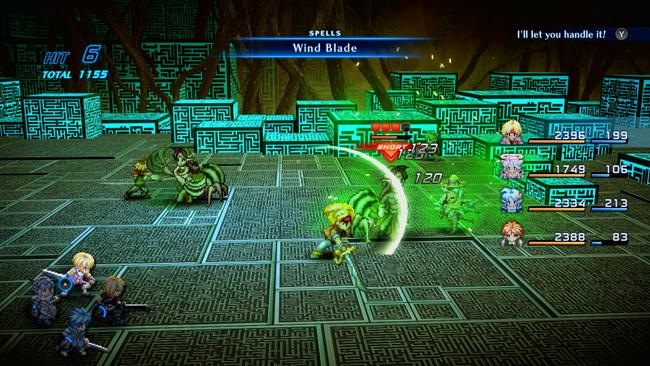
Despite the friction caused by this business model, the technical execution of the port by Gemdrops is nothing short of impressive. By targeting a consistent 60 frames per second (fps) at 1080p—both docked and handheld—the studio has delivered arguably the most "complete" portable version of the game to date.
The Evolution of a Remake: A Chronology of Releases
Star Ocean The Second Story R first launched in late 2023, breathing new life into the classic 1998 title with a stunning 2.5D "HD-2D" aesthetic. Its release was met with critical acclaim across PlayStation 5, PlayStation 4, Nintendo Switch, and PC.
The original release presented a diverse performance spectrum. While the PC version offered the most flexibility, allowing users to tweak graphical settings for lower-end hardware, console users were locked into specific presets. The PlayStation 5 version provided a stable 60fps experience, though even there, players noted persistent issues with foliage shimmering and aggressive object loading. The original Nintendo Switch (Switch 1) version, while functional, struggled to maintain its 30fps target, often dipping below its 864p resolution ceiling.
The arrival of the Switch 2 version, announced and released today, marks a significant turning point. It acts as a bridge between the compromised performance of the original Switch and the high-fidelity expectations of modern hardware, effectively settling the debate on whether the game could run optimally in a portable format.
Comparative Analysis: Visual Fidelity and Performance
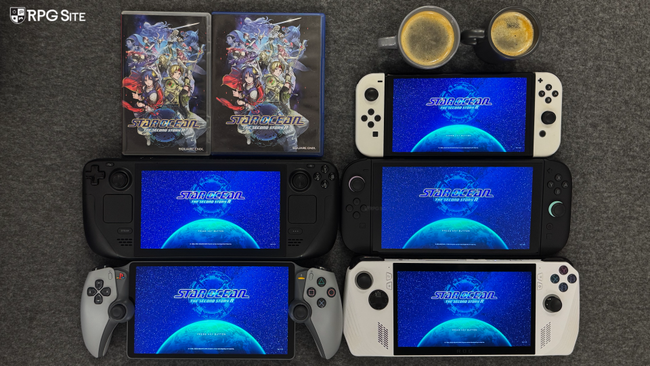
To determine how the Switch 2 version stacks up, we conducted an extensive series of tests across multiple platforms, including the PS5, original Switch, Steam Deck, and ROG Ally.
Visual Clarity and Resolution
One of the primary concerns for any Switch 2 port is the resolution scaling. On the original Switch, players often contended with a sub-1080p output that resulted in a softer, less defined image. Our pixel counts indicate that the Switch 2 version maintains a native 1080p output in both handheld and docked modes. When compared side-by-side with the PC version running at identical settings, the parity is striking. While the draw distance does not quite reach the elevated heights of the PC master-race configurations, it remains far superior to the original Switch release and sits comfortably alongside the console-standard 1080p experience.
Frame Rate Stability
The most significant win for the Switch 2 version is its commitment to 60fps. The original Switch was hampered by a 30fps cap, which, given the fast-paced nature of Star Ocean’s real-time combat, often felt sluggish. The Switch 2 manages to lock in 60fps throughout the opening hours of gameplay. While the PS5 version could arguably handle 120fps—a capability it currently lacks—the Switch 2 version hitting 60fps consistently in a portable form factor is a technical achievement that cannot be understated.
The Handheld Experience
Portable play is where the Switch 2 version truly distinguishes itself. Compared to the Steam Deck, the Switch 2 offers a more consistent frame pacing and a cleaner image. While the ROG Ally, bolstered by more aggressive hardware, maintains a slight edge in draw distance and advanced anti-aliasing, the Switch 2 provides a more "optimized" feel that requires zero tinkering from the user. It is, for all intents and purposes, a "plug and play" experience that significantly outclasses the original Switch handheld mode.
Data Breakdown: Load Time Benchmarks
Load times are often the silent killer of immersion in RPGs. To gauge the efficacy of the Switch 2’s storage architecture, we tested the title across a variety of hardware configurations.
| Platform | Dashboard to Title (sec) | Loading a Save (sec) |
|---|---|---|
| PS5 | 9 | Instant |
| PS4 (via PS5) | 14 | 1.5 |
| Switch 1 | 28-30 | 4-5 |
| Switch 1 (via S2) | 18 | 2 |
| Switch 2 (Native) | 16-18 | 2 |
| Steam Deck | 20 | 2 |
| ROG Ally | 12 | 2 |
The data confirms that the Switch 2’s internal storage significantly outperforms the original Switch hardware. By cutting the title screen load time nearly in half and reducing save-load times to a snappy two seconds, the Switch 2 version aligns itself with the performance metrics of high-end PC handhelds.
Official Stance and Industry Implications
Square Enix has remained largely silent regarding the lack of upgrade paths, but their recent string of releases—including the aforementioned Octopath Traveler ports—suggests a policy of treating Switch 2 releases as distinct product SKUs rather than iterative updates.
This strategy carries significant implications for the gaming industry. For newcomers, the Switch 2 version is an easy, high-quality recommendation. However, for the existing player base, the lack of a "Smart Delivery" style system is a point of contention. When a consumer has already invested in the title on the original Switch, the expectation for a seamless transition to a more powerful console is high. By refusing to offer save transfers or cross-buy incentives, Square Enix risks alienating its most loyal fans, even if the quality of the port itself is beyond reproach.
Final Verdict: Is It Worth the Upgrade?
The decision to purchase Star Ocean The Second Story R on the Switch 2 ultimately hinges on your relationship with the game.
If you are a newcomer looking to experience one of the finest JRPGs of the modern era, the Switch 2 version is arguably the definitive way to play it on the go. Its stable 60fps performance, crisp 1080p resolution, and fast load times make it a triumph of porting.
Conversely, for those who have already completed their journey on the original Switch or PlayStation, the barrier to entry is high. Without save transfers or a discounted upgrade path, the $60 price point for a game you likely already own is a difficult pill to swallow. While it is a "lovely" port that belongs on a collector’s shelf—ideally in physical cartridge form—it serves as a stark reminder that as hardware becomes more powerful, the need for consumer-friendly upgrade policies becomes more critical.
Gemdrops has done their job with excellence; now, the ball is in the publisher’s court to treat their audience with the same level of consideration.

