

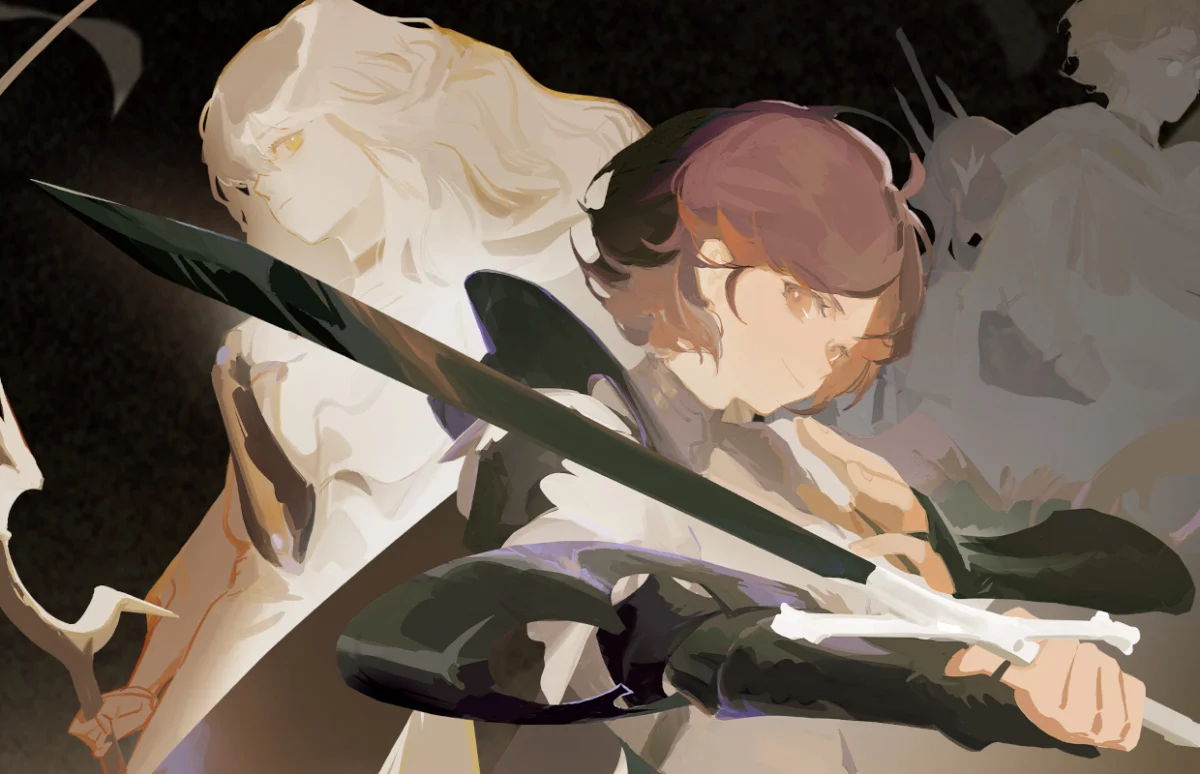
The landscape of indie action RPGs is set to receive a striking new addition. Publisher Imperfect Games and developer Lunarium Game Studio have officially confirmed that their highly anticipated title, Lunarium, will launch worldwide on PC via Steam on July 29, 2026. This announcement marks a significant milestone for the Chinese-based development team, signaling their transition from a promising project in development to a globally accessible title.
With a unique hand-drawn aesthetic, a dual-protagonist narrative, and a combat system that prioritizes rhythmic precision, Lunarium aims to carve out a distinct space in an already crowded genre. As the industry prepares for the late-summer release, here is an in-depth look at what players can expect from this atmospheric journey into a crumbling world.
Main Facts: A Dual-Protagonist Epic
At the heart of Lunarium lies the partnership between two distinct protagonists: Ave, a skilled swordmaster, and Lune, a mysterious sorceress. The narrative follows these two young women as they traverse a world on the brink of total collapse, seeking to restore peace to their fractured homeland.
The game is framed as an isometric action RPG, a perspective often used to emphasize environmental storytelling and tactical positioning. The core gameplay loop hinges on the synergy between Ave’s melee combat and Lune’s magical prowess. Players are encouraged to cultivate "Resonance Points" during encounters—a mechanic that rewards the player for fluidly switching between characters or timing their attacks to create devastating, combined onslaughts.
The release is confirmed for July 29, 2026, with a price point of $17.99 (€17.99 / £15.99). The title will support English, Japanese, and both Simplified and Traditional Chinese, underscoring the studio’s ambition for broad regional appeal.
The Chronology of Development
The road to the release of Lunarium has been one of focused, meticulous craftsmanship. While independent development can often be subject to the whims of shifting design philosophies, Lunarium Game Studio has maintained a steady trajectory since the project’s inception.
Early internal builds focused on establishing the "hand-drawn" aesthetic that defines the game’s identity. Unlike titles that lean heavily into 3D realism or pixel art, Lunarium opted for a painterly, illustrative look. This artistic choice required significant time for asset creation, ensuring that locations like the forgotten Forest, the ruined Castle, and the dreamlike Archipelago felt distinct and immersive.
Following the initial reveal, the team focused on refining the "reaction-rewarded" combat system. By shifting away from simple "button-mashing" and toward a system that demands perfectly-timed parries and dodges, the developers spent the latter half of their production cycle balancing the skill trees and boss encounters. The move from the prototype stage to the current polished state was marked by a commitment to iterative design, with the team testing the "Resonance" mechanics to ensure that the interplay between Ave and Lune felt intuitive rather than cumbersome.
Supporting Data and Gameplay Mechanics
Beyond the core narrative, Lunarium incorporates several systems designed to provide depth for players who enjoy min-maxing and character progression.
The Embroidery System
A standout feature of the game is the "Embroideries" system. Players can equip these magical charms to gain passive advantages, effectively acting as the game’s gear modification layer. These charms allow for a degree of build customization, letting players tailor Ave and Lune’s performance to suit their specific playstyles.
The Temple: A Sanctuary of Progress
In a departure from the "constant action" trend, Lunarium provides a "Temple"—a blessed sanctuary where players can gather materials and enhance their equipment. This space acts as a narrative and mechanical hub, offering a moment of quiet reflection amidst the "dark and oppressive chaos" of the world outside. This contrast is vital to the game’s pacing, ensuring that the intensity of boss battles is punctuated by periods of preparation and story progression.
Combat and Skill Progression
The combat difficulty is designed to scale alongside the player. By defeating ancient golems and mutated creatures, players earn experience that can be funneled into expansive skill trees. These trees do not simply offer numerical upgrades but unlock advanced abilities, allowing players to manipulate the battlefield in increasingly complex ways as they progress toward the game’s two distinct endings.
Official Responses and Creative Vision
The announcement was accompanied by a statement from Jixiang, the director of Lunarium Game Studio. His comments reflect a deep commitment to the balance between narrative weight and mechanical satisfaction.
"Lunarium beautifully balances narrative depth with challenging and dynamic combat encounters, appealing to action and RPG fans alike," said Jixiang. "Players will finally be able to embark on this memorable journey and unfold the intertwined fates of Ave and Lune on July 29."
This statement highlights the studio’s dual focus. In an industry where developers often have to sacrifice either story or gameplay, Jixiang’s team is positioning Lunarium as a "best of both worlds" experience. The mention of "intertwined fates" and "two memorable endings" suggests that the game’s narrative is highly reactive to the player’s choices, providing high replay value and a strong emotional incentive to uncover the mysteries behind the characters’ origins.
Implications for the Indie Action RPG Market
The release of Lunarium arrives at a pivotal moment for independent game development in China. Over the past few years, there has been a notable surge in high-quality, mid-budget titles emerging from the region that are bypassing traditional mobile-centric markets in favor of the global PC gaming audience.
Lunarium serves as a case study for this trend. By choosing to focus on a niche but highly engaged audience—the isometric ARPG community—and opting for a distinct visual identity, the developers have successfully bypassed the "clutter" that often traps new indie titles.
The Importance of Art Direction
The game’s reliance on "gorgeously hand-drawn landscapes" is a deliberate marketing and design strategy. In a sea of procedurally generated games and hyper-realistic graphics, Lunarium stands out by offering a cohesive, curated aesthetic. This artistic direction is likely to resonate with players who prioritize atmospheric storytelling—a demographic that has historically championed titles like Hades or Bastion.
Global Accessibility
The inclusion of language support for English, Japanese, and Chinese is a professional-grade approach to a global launch. By providing these options from day one, Lunarium Game Studio is signaling that they are not just a local developer, but a global player. This level of preparation is essential for a game that relies on its story; if the nuances of the "sorrow and resolute determination" mentioned in the press kit are lost in translation, the game’s primary appeal could suffer. The commitment to high-quality localization is therefore a core pillar of the game’s potential success.
Final Thoughts: A Journey into the Unknown
As we look toward the July 29 release date, the anticipation surrounding Lunarium continues to grow. It is a title that promises to marry the mechanical rigor of high-action RPGs with the evocative, melancholic beauty of an indie passion project.
The success of Lunarium will likely hinge on the implementation of its "Resonance" combat mechanics. If the interplay between Ave and Lune feels as seamless as the developers claim, the game could easily become a sleeper hit of the 2026 summer season. For now, the stage is set for a poignant exploration of memory, identity, and the struggle to save a world that may already be beyond repair. Whether the journey ends in salvation or further collapse is entirely up to the player.
For those interested in following the game’s progress, the official Steam page is currently live, providing a gateway into the grim, beautiful world of Lunarium ahead of its mid-summer debut.

