

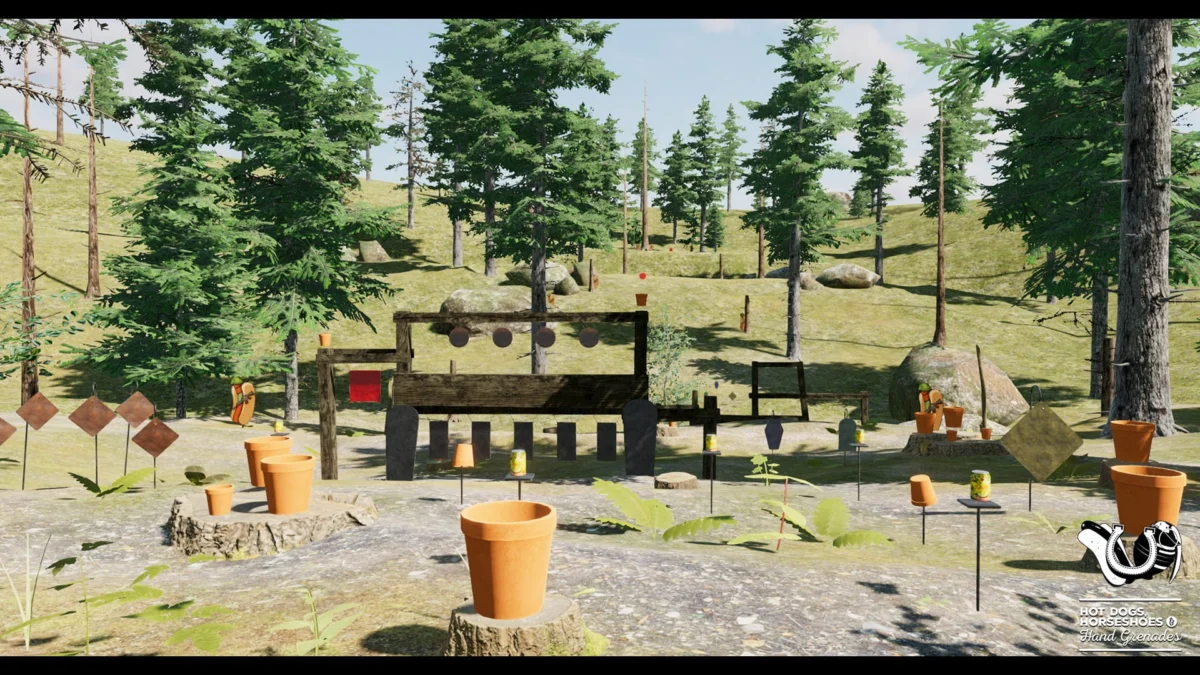
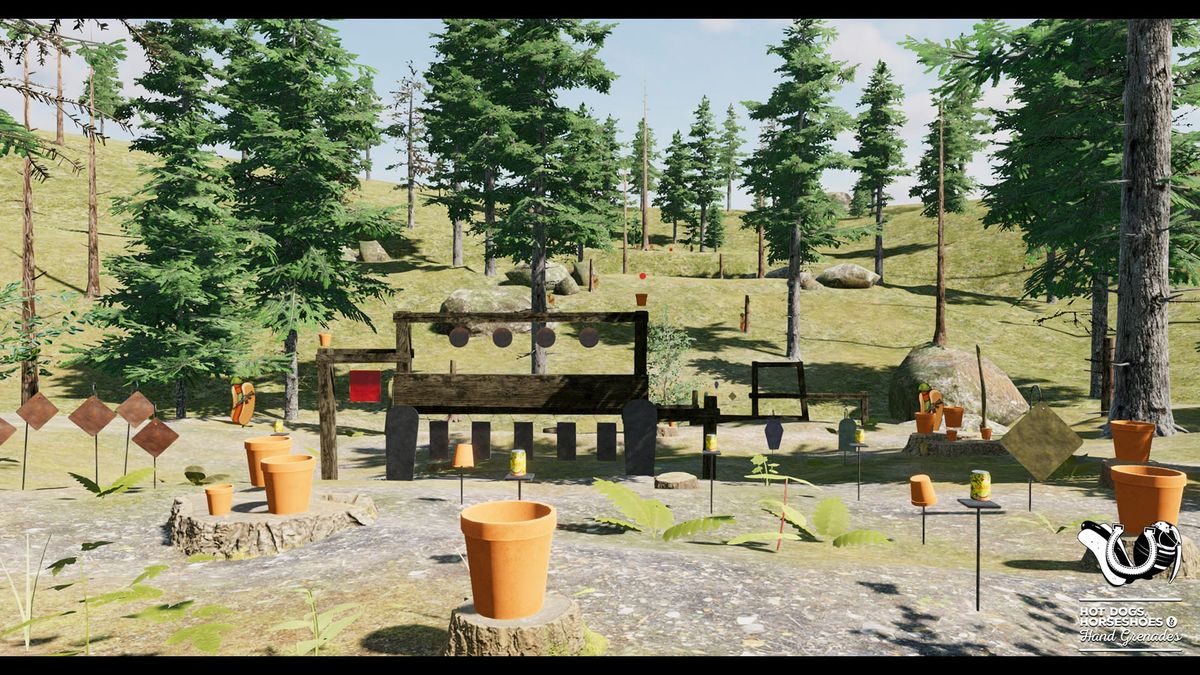
After ten years of relentless iteration, community-driven development, and the meticulous refinement of virtual reality physics, the seminal sandbox shooter Hot Dogs, Horseshoes & Hand Grenades (H3VR) has officially exited Early Access. Developer Rust Ltd. marked this monumental occasion with the release of Update 120, a "version 1.0" milestone that serves as both a culmination of a decade of work and a bridge toward the franchise’s future.
For a generation of VR enthusiasts, H3VR has been more than a game; it has been the gold standard for weapon handling, ballistic simulation, and sandbox freedom. As the title graduates to full release, we examine the journey of this cult classic and what the transition to 1.0 signifies for the future of virtual reality.
The Main Facts: Closing the Early Access Chapter
On a quiet Saturday, Rust Ltd. officially transitioned Hot Dogs, Horseshoes & Hand Grenades from Early Access to a full 1.0 release. The move, centered around the massive "Update 120," is a symbolic gesture for a project that has effectively been a "live service" experiment since its inception in 2016.
Lead developer Anton Hand announced the milestone via a heartfelt and expansive developer log on Steam. In the post, Hand expressed deep gratitude toward the H3VR community—a fanbase known for its technical literacy and dedication to the game’s hyper-realistic mechanics. While the game has been playable and feature-rich for years, the 1.0 tag represents a final "polishing" of the experience, ensuring that the foundational systems are stable and finalized as the team shifts its focus toward the announced sequel.
The update itself is a culmination of nearly a year of testing within the game’s "experimental" branch. By the time it reached the public, the community had already stress-tested twenty-three different iterations of the build, many of which included seasonal content—such as the widely praised April Easter Egg hunt—that had become a hallmark of the H3VR development cycle.
A Chronology of Innovation: Ten Years in the Making
To understand the weight of the 1.0 release, one must look at the timeline of H3VR’s development. Launched during the nascent days of consumer-grade VR, the game was originally intended as a showcase for what was possible with motion controllers and room-scale tracking.
The Experimental Era (2016–2020)
In its earliest days, H3VR focused on the fundamentals: how does it feel to load a magazine? How should a slide rack? Rust Ltd. treated these questions with the rigor of an engineering firm. As the hardware evolved from the original HTC Vive to newer headsets, the game remained a constant, providing a platform where developers could test physics interactions that were not yet standard in the gaming industry.
The Expansion and Polishing Phase (2021–2024)
As the game matured, the scope expanded exponentially. Rust Ltd. introduced sophisticated AI, complex game modes like Take & Hold, and an exhaustive library of historically accurate firearms. The development cycle became a masterclass in transparency, with "Devlogs" released with clockwork consistency, detailing every minute change to recoil patterns, sound design, and projectile physics.
The Road to 1.0 (2025–Present)
The final year of development was defined by the "Experimental Branch." Beginning in October 2025, the team began pushing incremental updates at a rapid pace. This strategy allowed the community to serve as de facto QA testers, ensuring that the 1.0 release wasn’t just a marketing milestone, but a technically superior version of the software.
Supporting Data: Why H3VR Matters
H3VR occupies a unique space in the VR landscape. It is not merely a shooter; it is a "ballistics sandbox." Its success can be quantified by several key pillars that have kept it at the top of the Steam charts for a decade:
- Weapon Fidelity: The game features hundreds of firearms, each modeled with individual moving parts. Unlike traditional shooters that use "press X to reload," H3VR requires players to physically manipulate magazines, bolts, and safety switches.
- Physics Interaction: The game’s engine is built to handle the chaotic nature of VR physics. Objects have weight, surfaces have friction, and items react to the environment in ways that reward player curiosity.
- Community Retention: Despite its age, H3VR maintains an incredibly high "Very Positive" rating on Steam. This is largely due to the developer’s philosophy of "radical transparency," where every bug fix and feature addition is documented in detail.
- Technical Resilience: The transition to 1.0 includes major optimizations that ensure the game runs smoothly on modern high-resolution headsets, a testament to the code’s longevity and the efficiency of the underlying engine.
Official Responses: A Developer’s Perspective
In his farewell to the Early Access era, Anton Hand reflected on the unique nature of the development process. "The journey of H3VR was never about reaching a finish line," Hand noted in his Steam post. "It was about building a playground that grew alongside the technology of virtual reality itself."
Hand acknowledged that the 1.0 designation is somewhat abstract for a game that has been functionally complete for some time. However, he emphasized that the release represents a "locking in" of the core vision. By finalizing the codebase, the studio can now pivot toward the future without the overhead of maintaining a decade-old project’s experimental testing cycle.
The response from the community has been largely celebratory. For many long-term players, the 1.0 tag is a validation of the time they invested in the game during its early, buggy, and formative years. The community forums are currently filled with tributes to the game’s evolution, with many users noting that the game’s complexity has yet to be surpassed by more modern, AAA-funded VR titles.
Implications: Looking Toward the Sequel
The release of 1.0 is not an ending, but a pivot point. In May of this year, Rust Ltd. officially announced the development of Hot Dogs, Horseshoes, and Hand Grenades 2. This sequel is slated for release on both SteamVR and the Meta Quest 3, a significant leap that signals the studio’s intent to bring their simulation philosophy to the standalone VR market.

Technical Hurdles and Opportunities
The primary implication of the sequel is the transition to a modern, optimized architecture. While the original H3VR is a masterpiece of simulation, it is built upon the foundational constraints of mid-2010s hardware. A sequel allows the developers to implement advanced features—such as more robust environmental destruction, improved lighting, and perhaps more sophisticated multiplayer interactions—that were previously restricted by the legacy code of the original title.
Expanding the Market
The move to the Meta Quest 3 is perhaps the most significant business decision for Rust Ltd. The original H3VR is notoriously hardware-intensive, requiring a high-end PC to run comfortably. By targeting the Quest 3, the studio is opening its doors to a much broader audience, bringing the "H3VR experience" to users who have previously been excluded from the PC VR ecosystem.
The Legacy of 1.0
As the industry watches, the transition to 1.0 serves as a blueprint for long-term development. It proves that a small, dedicated team can sustain a project for a decade if they maintain an honest dialogue with their users and a commitment to technical excellence. The "H3VR model"—consistent updates, deep simulation, and community-driven testing—has become the gold standard for independent VR developers.
Conclusion: The End of an Era, The Start of a New One
The transition of Hot Dogs, Horseshoes & Hand Grenades to version 1.0 is a poignant moment in gaming history. It closes the book on a project that essentially taught the VR industry how to handle weapons in a virtual space.
While the 1.0 label may seem like a formal formality for a game that has been a staple of the VR scene for ten years, it serves as a necessary conclusion to an experimental process that defined the careers of its developers and the expectations of its players. As Rust Ltd. turns its gaze toward the sequel, the original H3VR stands as a testament to the power of patience, precision, and the enduring appeal of a well-simulated sandbox.
For new players jumping into the 1.0 release, the experience is more polished and accessible than ever. For the veterans who have been there since the early days, it is a moment to look back at the chaotic, fun, and technically groundbreaking journey that brought us here. One thing is certain: the world of virtual reality shooting games remains indebted to the "Hot Dogs" that paved the way.

