

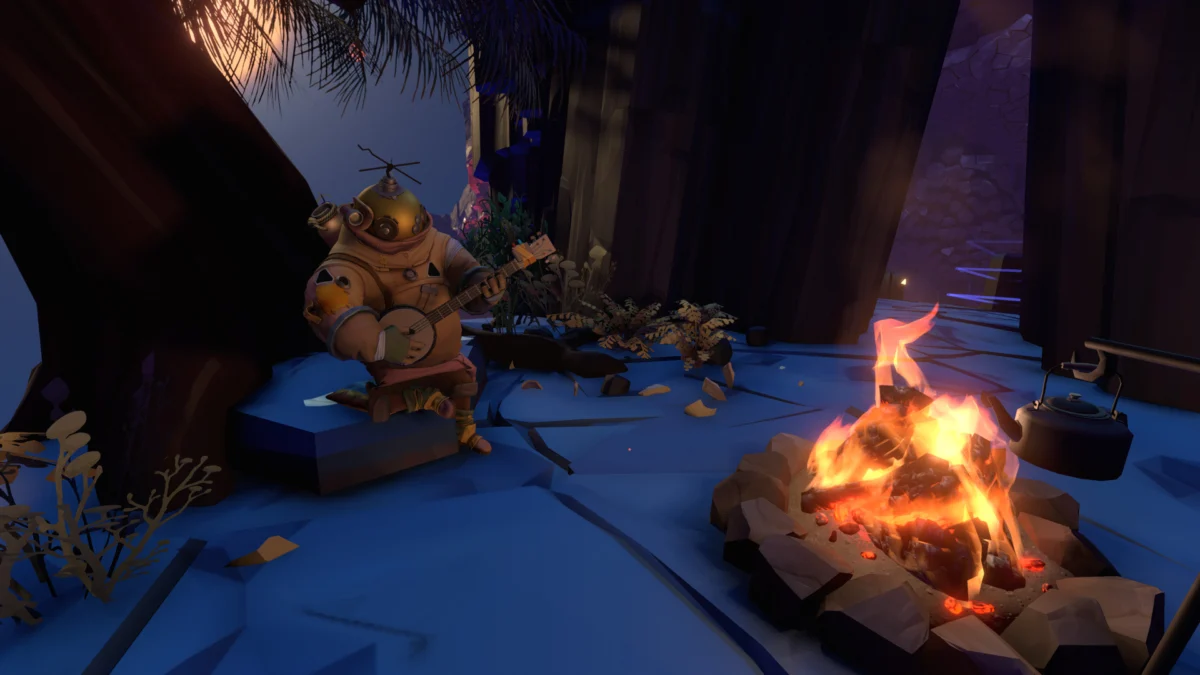
Since its initial release in 2019, Mobius Digital’s Outer Wilds has transcended the typical lifecycle of an indie title. While many games enjoy a brief spike in popularity upon launch, Outer Wilds has instead become a permanent fixture in the cultural zeitgeist—a perennial topic of discussion among critics, podcasters, and players alike. It is a rare example of a game that challenges the player’s intellect as much as their reflexes, demanding patience, curiosity, and a willingness to embrace failure as a fundamental component of discovery.
As the industry reflects on the most influential titles of the last several years, Outer Wilds stands as an essential, if unconventional, masterpiece. It is a game that defies simple genre classification, weaving together exploration, physics-based puzzles, and a hauntingly beautiful narrative into a cohesive experience that is arguably peerless.
Main Facts: The Architecture of a Cosmic Mystery
At its core, Outer Wilds is a first-person open-world mystery game set in a hand-crafted solar system trapped in a perpetual time loop. Players assume the role of the newest recruit of "Outer Wilds Ventures," a fledgling space program tasked with exploring a miniature solar system filled with strange, ancient relics and evolving planetary hazards.
The primary mechanical hook is the 22-minute time loop. Every 22 minutes, the star at the center of the system goes supernova, obliterating everything in its path. The player, tethered to a mysterious alien statue, is reset to the beginning of their journey upon death, retaining only the knowledge they have gained.
The Pillars of Gameplay:
- Knowledge-Based Progression: Unlike traditional RPGs, the player does not level up their character. Instead, the "progression" is entirely locked behind the player’s personal understanding of the game’s world. You do not gain better gear; you gain better insights.
- Physics-Driven Exploration: The game utilizes a sophisticated, realistic physics engine. Whether you are navigating the crumbling crust of Brittle Hollow or braving the crushing depths of Giant’s Deep, the world behaves according to its own consistent, if sometimes surreal, laws.
- The Narrative Web: The story is told entirely through non-linear environmental storytelling. Players must piece together the history of the "Nomai"—an ancient race of explorers—to understand why the universe is ending and what role they play in its final moments.
Chronology: A Trajectory of Success
The journey of Outer Wilds is as compelling as its in-game narrative. It began as an ambitious student project by Alex Beachum at the University of Southern California, eventually evolving into a full-scale commercial production under the banner of Mobius Digital.
- 2012–2015: Early Concepts: The prototype won the Grand Prize and Excellence in Design awards at the 2015 Independent Games Festival, signaling early on that the concept was something special.
- May 2019: Initial Launch: The game was released on Windows and Xbox One. It was immediately met with critical acclaim, though its "slow burn" nature meant it initially appealed to a smaller, dedicated niche of players.
- 2020–2021: Sustained Growth: Through word-of-mouth and the rise of digital discovery, the game’s reputation exploded. It became a staple for content creators who realized that watching someone experience the game’s "Aha!" moments for the first time was just as rewarding as playing it.
- December 2021: The "Echoes of the Eye" Expansion: By the end of 2021, Mobius Digital solidified the game’s legacy by releasing a substantial expansion, Echoes of the Eye, which added an entirely new layer of mystery to an already dense narrative.
Supporting Data: Why It Resonates
The longevity of Outer Wilds can be quantified by its persistent high ratings and the sheer volume of discourse it generates on platforms like Steam and Metacritic. With "Overwhelmingly Positive" reviews on Steam, the game maintains a level of engagement that most AAA titles lose within weeks of launch.
The Psychology of Failure
The game’s design philosophy relies on what psychologists call "intrinsic motivation." Most modern games use "extrinsic" rewards—experience points, loot, and skill trees—to keep players moving. Outer Wilds abandons these entirely. It relies on the player’s innate human drive to solve a puzzle.
When a player dies in Outer Wilds—which will happen frequently—the game does not punish them with a "Game Over" screen that strips away their progress. Instead, it treats death as a reset, a moment of reflection. This shifts the player’s perspective from frustration to a state of calm, analytical curiosity. This specific design choice is why the game is so often cited as "unforgettable."
Official Responses and Industry Recognition
The industry response to Outer Wilds has been near-universal praise. It secured numerous "Game of the Year" awards, including the prestigious BAFTA Games Award for Best Game in 2020.

In official interviews, Creative Director Alex Beachum has often noted that the goal was to create a game that respected the player’s intelligence. "We wanted to make a game where the world is the puzzle," Beachum remarked in an industry panel. "If you know how the world works, you can go anywhere from the first minute of the game."
This ethos—that the player is capable and the game is a sandbox for inquiry rather than a series of corridors—has influenced a new wave of "detective" games. Developers frequently cite Outer Wilds as a gold standard for how to handle narrative pacing in an open-world environment without relying on quest markers or intrusive tutorials.
Implications: A New Benchmark for Game Design
The success of Outer Wilds carries significant implications for the future of interactive entertainment. It serves as a rebuttal to the industry-wide assumption that players need constant hand-holding or rapid-fire dopamine hits to remain engaged.
1. The Death of the Quest Marker
By forcing players to look at the environment, read ancient text, and physically navigate dangerous terrain to find answers, Outer Wilds proves that modern gamers are eager for deeper, more contemplative experiences. It has paved the way for "exploration-first" design to become a viable market segment.
2. The Value of "Ephemeral" Gaming
Most games are designed to be played for hundreds of hours through "live service" models. Outer Wilds is a finite, contained experience. Its success suggests that there is a massive, underserved audience for "one-and-done" masterpieces—games that respect the player’s time by offering a dense, high-quality narrative that concludes in a satisfying, meaningful way.
3. The Power of "Aha!" Moments
The "Aha!" moment—the instant when a player realizes the solution to a complex mystery—is the most potent form of reward in gaming. Outer Wilds is built entirely around these moments. It teaches developers that the most powerful tool in a designer’s kit isn’t a better weapon or a bigger map, but the ability to structure information so that the player feels like a genius when they put the pieces together.
Conclusion: An Essential Experience
If you have yet to embark on the journey of Outer Wilds, you are depriving yourself of one of the most singular achievements in the history of the medium. It is not a game that prioritizes player comfort; it is a game that prioritizes player growth.
It is, at times, a frustrating experience. You will fly your ship into the sun, you will be crushed by falling debris, and you will find yourself lost in the dark depths of space. Yet, every failure is merely a stepping stone toward a greater truth. As you begin to unravel the mystery of the Nomai and the dying star, you realize that the game isn’t just about saving the solar system—it’s about appreciating the fleeting beauty of existence.
Whether you are a seasoned veteran of complex puzzle games or a casual player looking for something that will genuinely stick with you long after the credits roll, Outer Wilds is a mandatory experience. It is a testament to the fact that when developers trust their players, the results can be nothing short of transcendent. Do yourself a favor: step into your ship, look at the stars, and prepare to be changed.

