

When discussing the titans of the Steam ecosystem, there has long been a tacit agreement among analysts and players alike: every conversation about popularity must be prefaced with the caveat, "after Counter-Strike, of course." Counter-Strike 2 (CS2) currently stands as Valve’s undisputed flagship, regularly boasting over a million concurrent users. Yet, in a surprising twist of digital history, the game that CS2 was designed to replace—Counter-Strike: Global Offensive (CS:GO)—has staged an improbable and remarkably resilient comeback.
Recent data from SteamDB reveals that the legacy version of CS:GO hit an all-time concurrent player peak for its "post-re-release" era just days ago, drawing in over 68,000 simultaneous players. In a landscape dominated by cutting-edge graphics and live-service evolution, the enduring appeal of this 14-year-old tactical shooter offers a fascinating case study in community loyalty, software preservation, and the evolving habits of the modern PC gamer.
The Chronology of a Displaced Titan
To understand the current resurgence, one must look back at the seismic shift that occurred in late 2023. When Valve officially transitioned from CS:GO to Counter-Strike 2, the move was framed as an evolution. CS:GO wasn’t just being updated; it was being absorbed. For millions of players, the iconic shooter—the bedrock of modern esports—effectively ceased to exist, replaced by the Source 2 engine-powered successor.
However, the transition was not universally embraced. For a segment of the competitive community, the mechanical nuances, the specific "feel" of movement, and the legacy map aesthetics of CS:GO were irreplaceable. Recognizing this, Valve took the unusual step of making the legacy version of CS:GO available again as a standalone, albeit hidden, entity on Steam.
What began as a niche option for purists has steadily morphed into a thriving ecosystem. While the player counts were initially modest, the growth curve has been consistent throughout 2024. The game, which cannot be found through standard Steam store searches, has utilized community-driven discovery to climb the charts, effectively proving that a "deprecated" game can still find a vibrant life of its own if the foundation is strong enough.
Supporting Data: By the Numbers
The metrics surrounding CS:GO’s current state are nothing short of impressive for a title that is essentially a "legacy build."
- Concurrent Peaks: Surpassing 68,000 concurrent players, the title now sits comfortably within the top 30 most-played games on the Steam platform.
- Competitive Standing: To put this into perspective, CS:GO is currently drawing larger daily audiences than heavy hitters such as Baldur’s Gate 3, Rainbow Six Siege, and even the highly anticipated Valve project Deadlock.
- Longevity: Considering the game launched in 2012—and was built on foundations laid as far back as 1999—the fact that it maintains such a massive audience in the face of its own superior-tech successor is a testament to the "stickiness" of the Counter-Strike formula.
This growth is not merely a momentary spike. It represents a steady climb that has outpaced the initial curiosity-driven numbers seen when the standalone version was first restored. The data suggests a shift in player behavior: users are no longer just "visiting" the past; they are actively choosing to settle there.
The Landscape of Tactical FPS: A Diverse Ecosystem
The revival of CS:GO highlights a broader truth about the modern tactical shooter genre. For years, industry analysts feared that market saturation would inevitably cannibalize smaller titles. Instead, we are witnessing a "balkanization" of the genre, where players have found their preferred niche.
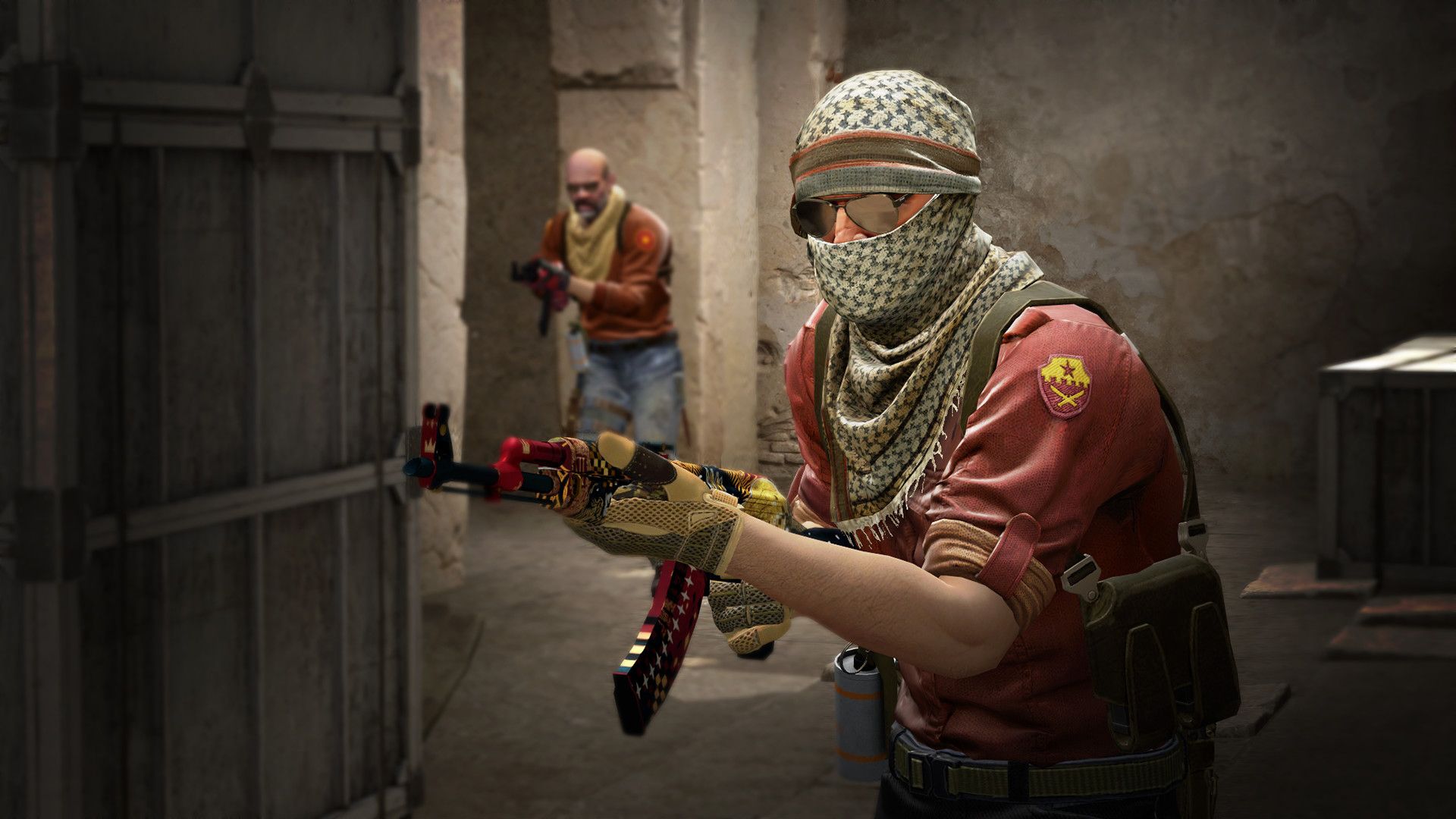
The original Counter-Strike (1.6) and Counter-Strike: Source remain populated by dedicated communities, proving that the Counter-Strike brand has become a multi-generational franchise. When you add the success of titles like Valorant—which operates outside the Steam ecosystem but shares the same competitive DNA—the tactical FPS market is more diverse and robust than it has been in two decades.
This diversity is essential for the health of the industry. It suggests that player preference is not dictated solely by the newest engine or the latest graphical fidelity, but by mechanical integrity and the social networks that form around specific game builds. The "town," as it turns out, is indeed big enough for multiple versions of the same game.
Official Responses and Valve’s Philosophy
Valve has remained characteristically quiet regarding the "unofficial" success of CS:GO. By keeping the legacy client accessible via a specific branch in the Steam properties menu, the company has effectively allowed the community to self-regulate.
This approach aligns with Valve’s long-standing philosophy of platform-as-a-service. By treating their back catalog not as dead code, but as a living library, they have avoided the backlash that often accompanies the "sunset" of online-only games. In doing so, they have unintentionally created a playground for experimentation, where players can oscillate between the refined, modern experience of CS2 and the familiar, rigid, and nostalgic confines of CS:GO.
Implications for the Industry
The success of CS:GO in 2024 has several profound implications for developers and publishers:
- The Value of Preservation: The most obvious lesson is that players value the ability to access older versions of games. When developers force updates that change the fundamental "feel" of a game, they risk alienating their most dedicated fans. Offering a legacy branch is a low-cost, high-reward strategy for maintaining player sentiment.
- Community-Driven Longevity: Games that foster competitive communities often outlive their technical shelf-life. The Counter-Strike community is not just playing a game; they are participating in a culture. This culture is indifferent to corporate roadmaps and release cycles, focusing instead on the continuity of their competitive experience.
- Fragmented Markets as a Strength: The fact that CS:GO and CS2 can coexist successfully challenges the "winner-take-all" mentality of live-service gaming. It suggests that there is room for "legacy-tech" games to exist alongside modern blockbusters, provided the core gameplay loop remains timeless.
Conclusion: The Infinite Game
As we look toward the future of the tactical shooter genre, the case of CS:GO serves as a poignant reminder that software is rarely ever truly "finished." Whether it is through the lens of nostalgia or the pursuit of a specific competitive standard, players are finding ways to keep the past alive.
The resurgence of Global Offensive is not an indictment of Counter-Strike 2; rather, it is a celebration of the series’ immense depth. The tactical shooter landscape has expanded to accommodate not just new titles, but the very history of the genre itself. In this new era, players are no longer confined to the "next big thing." They are empowered to curate their own competitive experiences, choosing the version of the game that best aligns with their skills and memories.
Ultimately, if a 14-year-old game can maintain a player base larger than many of the year’s most hyped releases, it suggests that for the truly great games, the "end of support" is merely the beginning of a different kind of life. Counter-Strike remains, as it has always been, the king of the mountain—but now, it is a mountain with multiple summits, all of them crowded with players who have no intention of leaving.

