

Tom’s Hardware Verdict
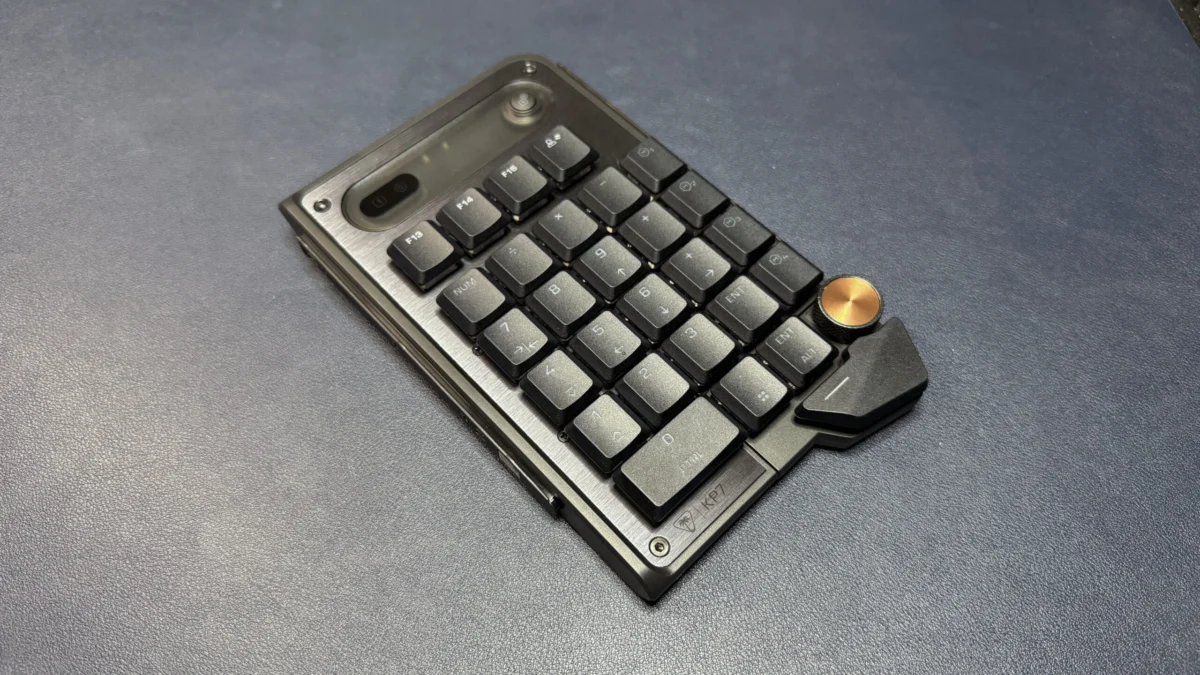
The Turtle Beach Command Series KP7 stands out as a remarkably versatile peripheral, seamlessly transforming between a dedicated 10-key numberpad and a sophisticated gaming mini-keypad. While engineered as a modular extension to the Command Series KB7 keyboard, our extensive testing reveals its true potential is unlocked when operating as a standalone device. For gamers who appreciate the utility of a numberpad and demand high-performance input, the KP7 offers a compelling, albeit premium, solution. Its innovative magnetic Hall Effect switches and robust customization options make it a powerful addition to any desk, particularly for those seeking to augment a tenkeyless (TKL) setup without compromising on speed or functionality.
Pros
- Seamless, intuitive switching between numberpad and gaming keypad modes.
- Cutting-edge magnetic Hall Effect switches with adjustable actuation, Rapid Trigger, and multi-input.
- Blazing 8,000 Hz polling rate for ultra-low latency.
- Exceptional performance and stability as a standalone peripheral.
- Premium build quality featuring a brushed aluminum top plate and durable double-shot PBT keycaps.
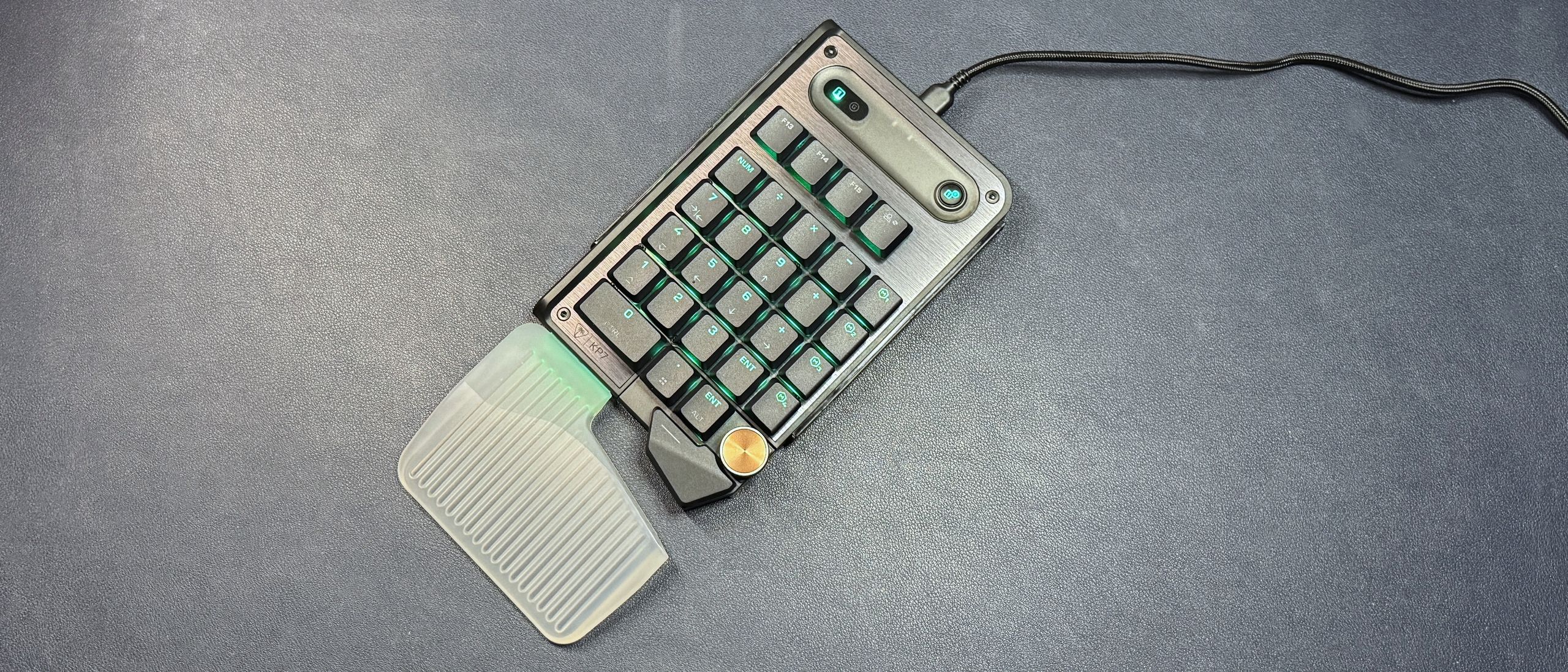
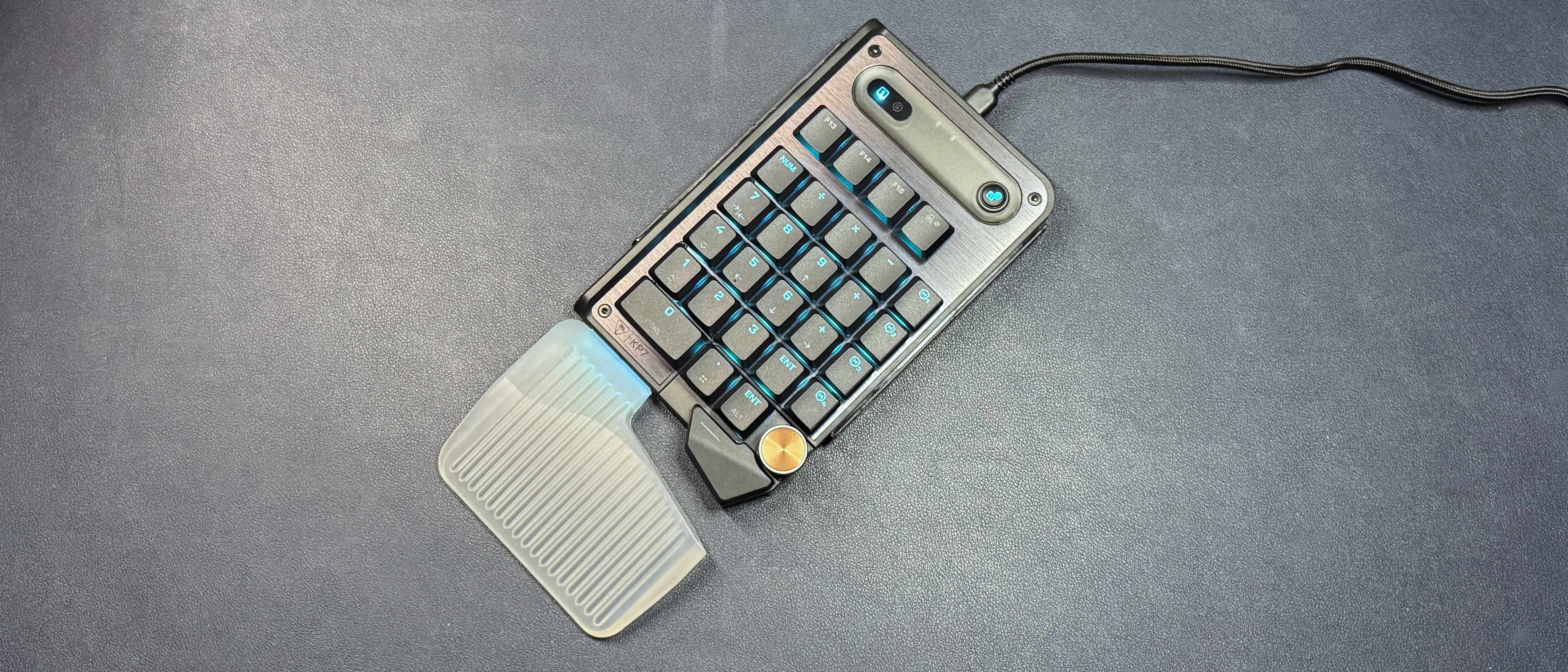
- Vibrant, per-key RGB backlighting beautifully diffused through its integrated silicon wrist rest.
- Ergonomic design with an extendable thumb bar for enhanced gaming comfort.
- Extensive customization capabilities through the Swarm II software.
Cons
- Significant connectivity and lighting inconsistencies when connected to the companion KB7 keyboard.
- Frequent, disruptive firmware update prompts when used in its intended modular configuration.
- Programmable knob is positioned closely to other keys, making accidental presses possible.
- Non-standard numberpad layout may require a brief adjustment period for some users.
- High price point for a dedicated keypad, especially when considering its optimal standalone use.
- Modular setup with KB7 can consume a disproportionate number of USB ports.
Why you can trust Tom’s Hardware
Our expert reviewers dedicate countless hours to rigorously testing and comparing products and services, ensuring you receive the most accurate and reliable information to make informed purchasing decisions. Learn more about our comprehensive testing methodologies.
Introduction: The Quest for the Perfect Numberpad and Beyond
In the evolving landscape of PC peripherals, the traditional full-size keyboard with its integrated 10-key numberpad often faces competition from more compact designs like tenkeyless (TKL) or 60% layouts. While many users prioritize desk space and minimalist aesthetics, a vocal minority, including this reviewer, staunchly defends the indispensable utility of the numberpad for everything from data entry to quick calculations and macro assignments. The market for standalone numberpads, however, has historically presented a dichotomy: either budget-bin options under $15, often sacrificing quality and features, or high-end, custom-built solutions demanding a triple-digit investment that can be difficult to justify. This persistent gap leaves many users searching for a premium, versatile solution that bridges functionality with performance.
Enter the Turtle Beach Command Series KP7, a modular gaming keypad priced at $99.99. Part of Turtle Beach’s ambitious new Command Series – a lineup of modular, multi-input peripherals including keyboards and mice – the KP7 is designed to integrate seamlessly with the flagship Turtle Beach Command Series KB7 keyboard. The KB7, a premium TKL board with an integrated touchscreen, retails for $199.99, bringing the combined cost of the full setup close to $300. This review, however, delves into a fascinating discovery: the KP7, while conceived as a companion, often performs with greater reliability and user satisfaction when employed as a standalone device. Its unique dual-mode functionality, shifting effortlessly between a conventional numberpad and a gaming-optimized mini-keypad, positions it as an intriguing and potent contender in a niche market.
Main Facts: A Dual-Purpose Powerhouse
The Turtle Beach KP7 emerges as a compelling solution for enthusiasts seeking to augment their setup with advanced input capabilities. At its core, the KP7 is a 28-key modular keypad, distinguished by its ability to fluidly switch between a standard 10-key numberpad and a specialized gaming mini-keypad. This transformation is facilitated by a dedicated, non-programmable mode switch button, offering immediate utility for diverse tasks.
Central to its high-performance credentials are its magnetic Hall Effect linear switches, mirroring the advanced technology found in its companion KB7 keyboard. These switches boast individually adjustable actuation points, ranging from an ultra-sensitive 0.1mm to a more deliberate 3.2mm, coupled with advanced features like Rapid Trigger, multi-input, and ReacTap (SOCD). This suite of features delivers unparalleled responsiveness and precision, critical for competitive gaming scenarios. Furthermore, the KP7 supports an 8,000 Hz polling rate, ensuring that every input is registered with near-instantaneous latency, minimizing any delay between physical action and on-screen response.
Visually, the KP7 exudes a premium feel, featuring a brushed aluminum top plate and a durable plastic chassis. It comes equipped with bright, per-key RGB backlighting, which extends to its translucent silicon wrist rest, creating an immersive aesthetic. The keypad’s ergonomic design is further enhanced by an extendable thumb bar, specifically tailored for comfort and accessibility during intense gaming sessions. While designed to magnetically attach to either side of the KB7 keyboard, our testing revealed that the KP7’s optimal performance and consistent user experience are achieved when it operates independently, connected via its own USB-C cable. This standalone capability, combined with its robust feature set and adaptable design, positions the KP7 as a highly versatile and valuable peripheral, especially for those who prioritize performance and modularity.
Chronology: From Concept to Standalone Star
The journey of the Turtle Beach Command Series KP7 begins with a clear vision from Turtle Beach: to introduce a suite of modular, high-performance peripherals under the new "Command Series" banner. This initiative, launched with considerable anticipation, aimed to provide gamers with unprecedented flexibility, allowing them to customize their input devices to suit specific needs and preferences. The flagship of this series, the KB7 keyboard, a premium TKL offering with an innovative built-in touchscreen, was designed to be the central hub, around which other peripherals like the KP7 could seamlessly integrate.
The KP7 was thus conceived as a crucial component of this ecosystem. Its modular design, featuring magnetic connectors, intended to allow users to transform their KB7 from a compact TKL layout into a full-size keyboard with a numberpad on the right, or a specialized gaming keypad with an extendable thumb bar on the left. This "build-your-own-keyboard" philosophy promised a dynamic and adaptable desktop experience, catering to users who might switch between productivity and gaming, or even different game genres, requiring distinct key layouts.
Upon its release, the KP7 was positioned as an essential add-on, enhancing the KB7’s functionality. However, real-world testing quickly illuminated an unexpected narrative. While the concept of modularity was strong, the execution of the KP7’s integration with the KB7 presented a series of inconsistencies. Issues such as flickering RGB lighting, frequent self-resets, and repetitive firmware update prompts marred the experience when the KP7 was tethered to its intended companion. These challenges, observed even when the KP7 was separately powered, suggested underlying software or connectivity complexities in the modular design.
Paradoxically, these very issues highlighted the KP7’s inherent strength as a standalone device. When connected independently via its own USB-C cable, the keypad performed flawlessly. The lighting remained consistent, the firmware prompts ceased, and its advanced features, from adjustable actuation to Rapid Trigger, functioned without interruption. This chronological progression, from an ambitious modular concept to a highly effective standalone peripheral, underscores the KP7’s robust individual engineering, even if its intended symbiotic relationship faced initial hurdles. This evolution transforms the KP7 from merely an accessory into a compelling primary option for users seeking a dedicated, high-performance numberpad or gaming keypad without the complexities of its larger ecosystem.
Supporting Data: Deep Dive into Design, Performance, and Software
The KP7’s compelling narrative is underpinned by a meticulous design, advanced performance metrics, and a comprehensive software suite, all contributing to its standout capabilities.
Design and Ergonomics
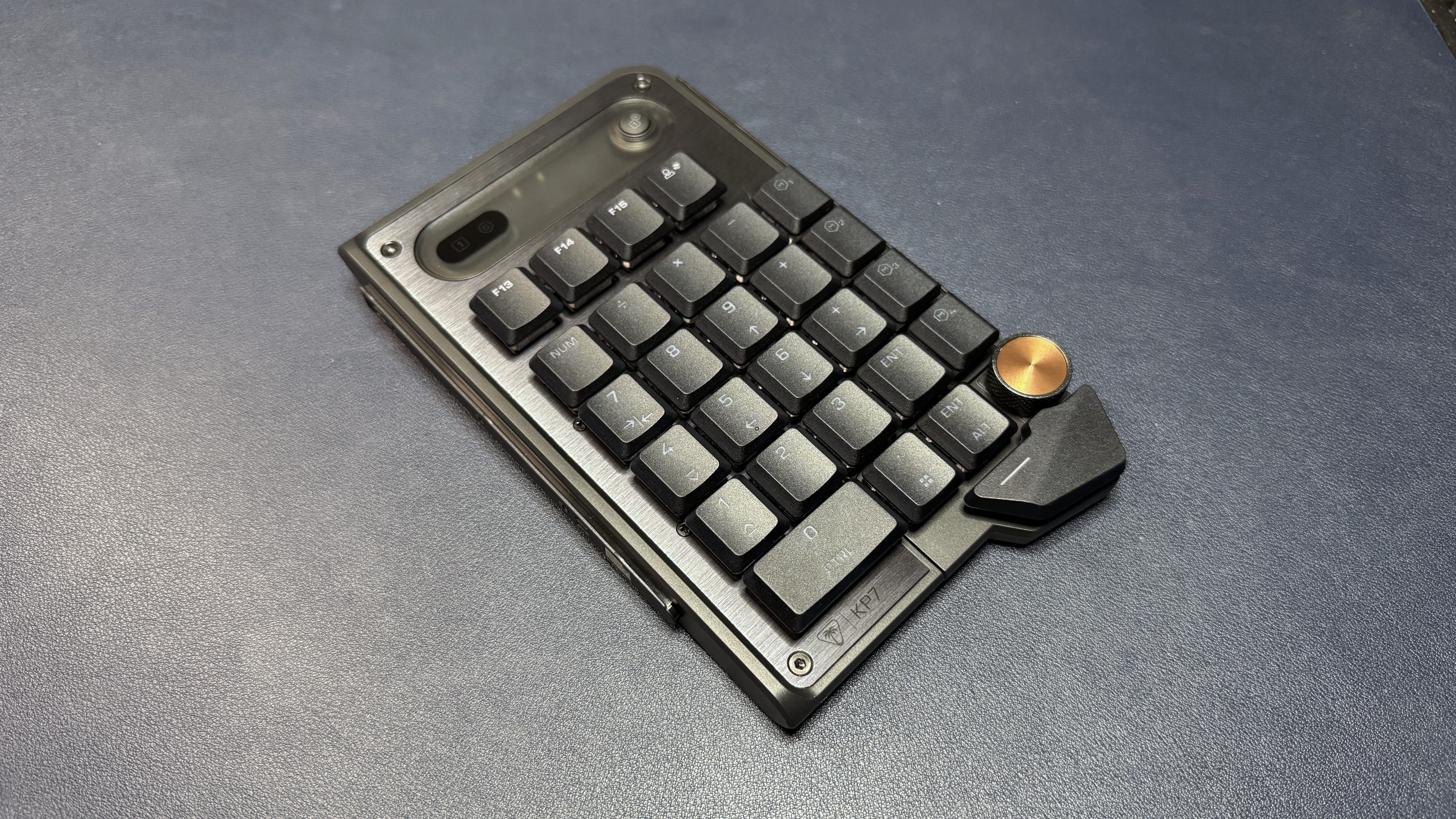
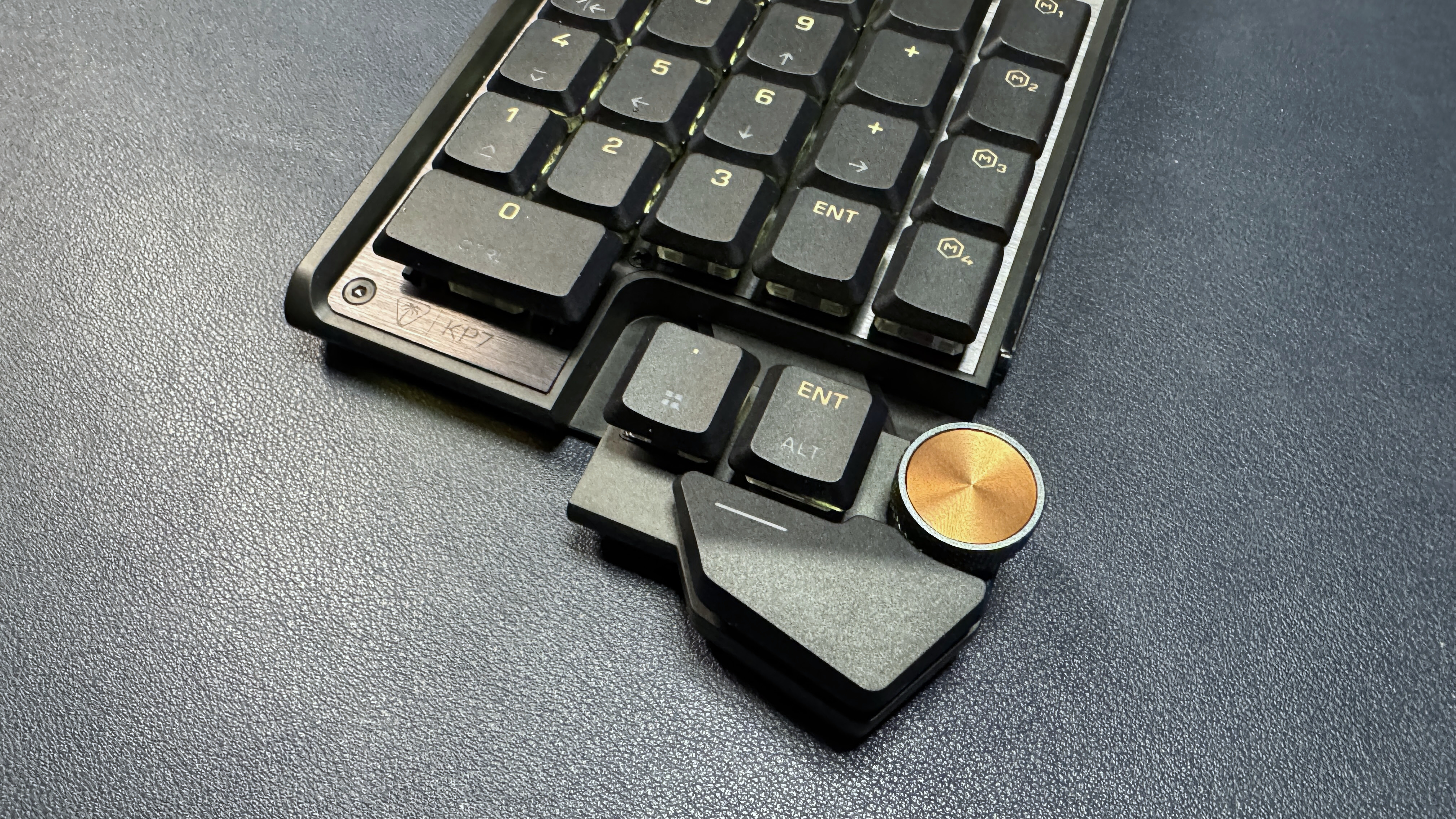
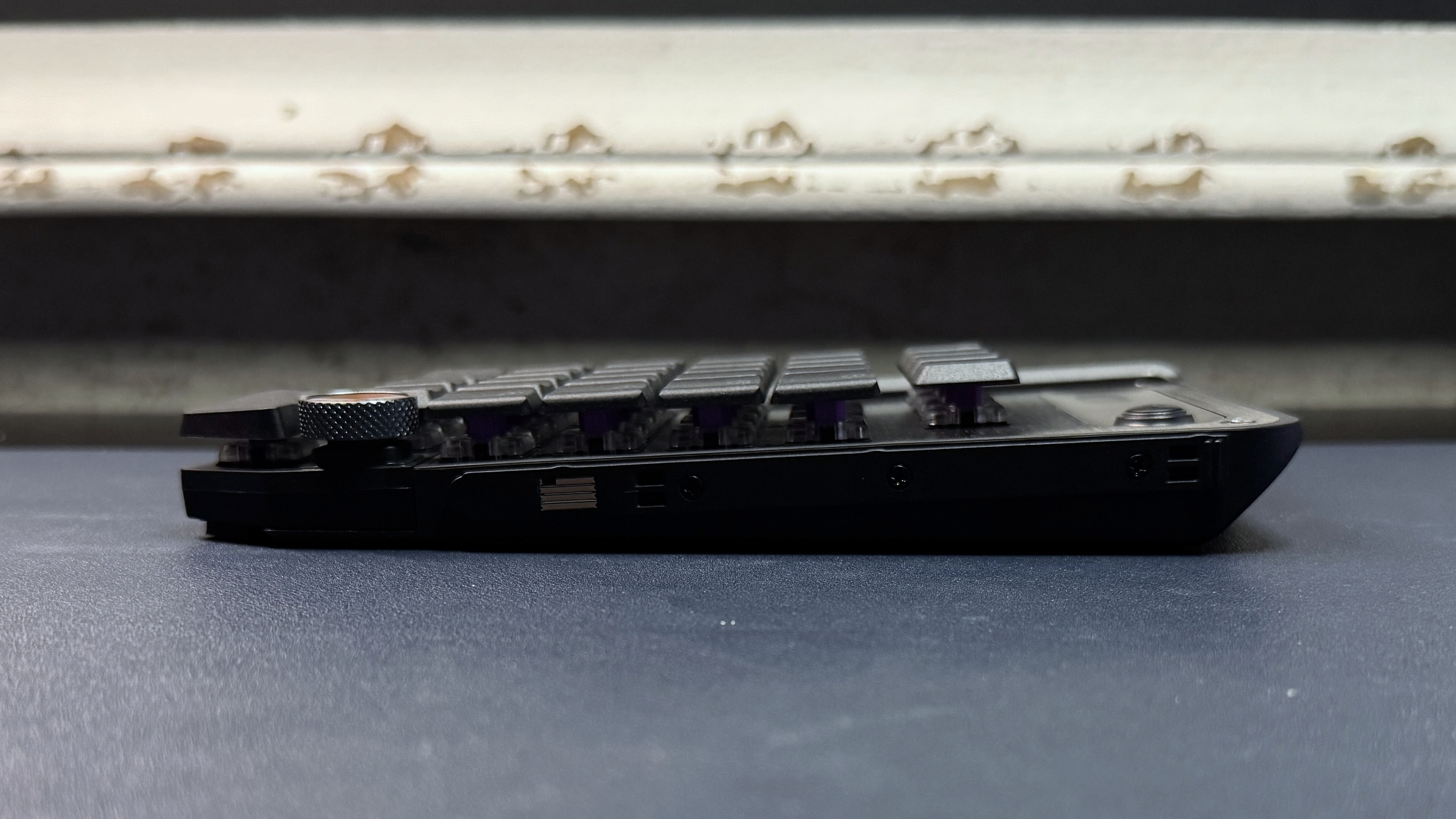
The KP7 is a testament to thoughtful peripheral design. Its aesthetic is clean and modern, featuring a brushed aluminum top plate that not only lends a premium feel but also enhances durability. The underlying chassis is constructed from high-quality plastic, providing a lightweight yet sturdy foundation. The keypad’s compact footprint, measuring 256 x 113 x 29 mm and weighing a mere 254g, makes it an ideal addition to any desk without consuming excessive space.
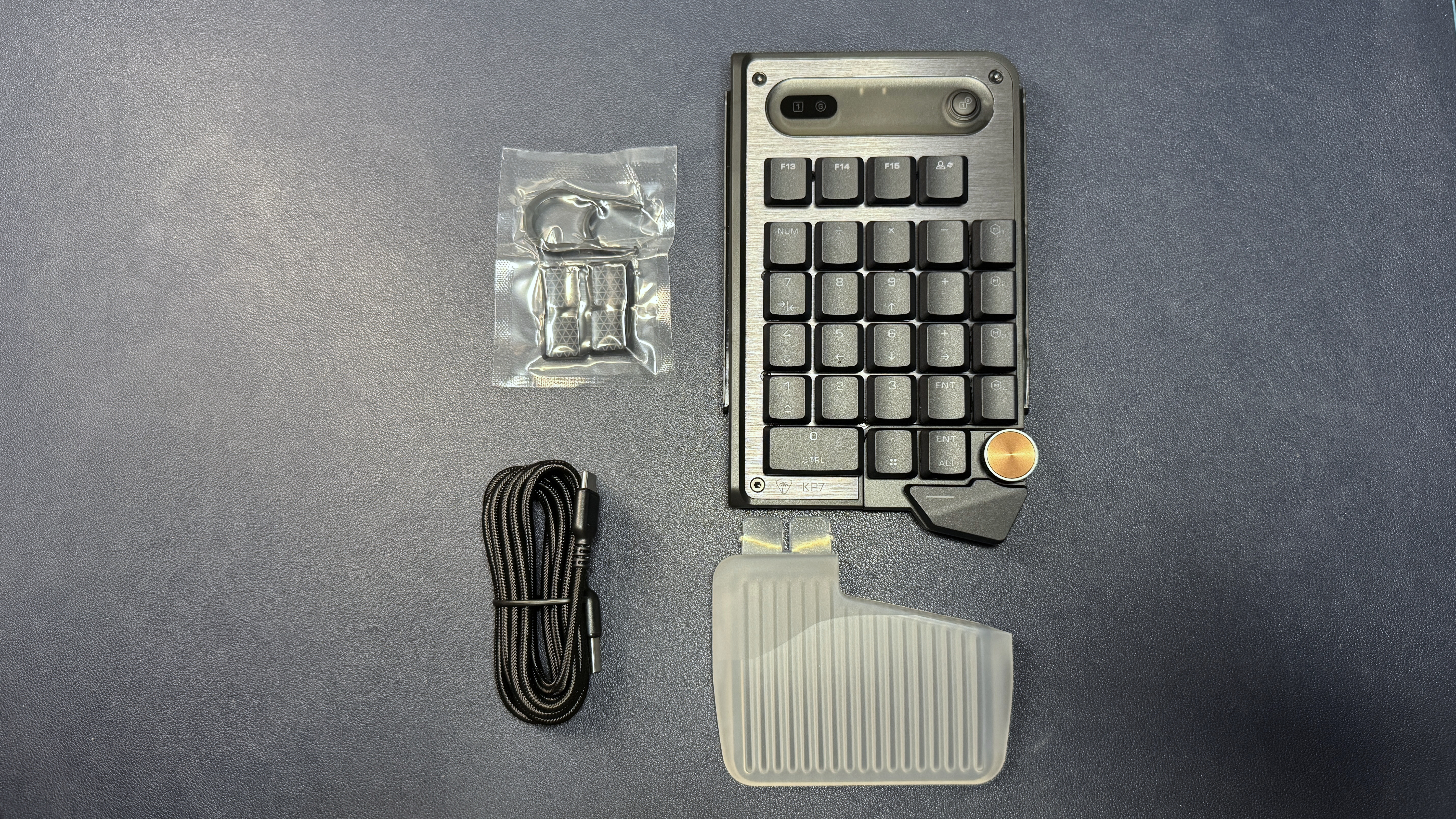
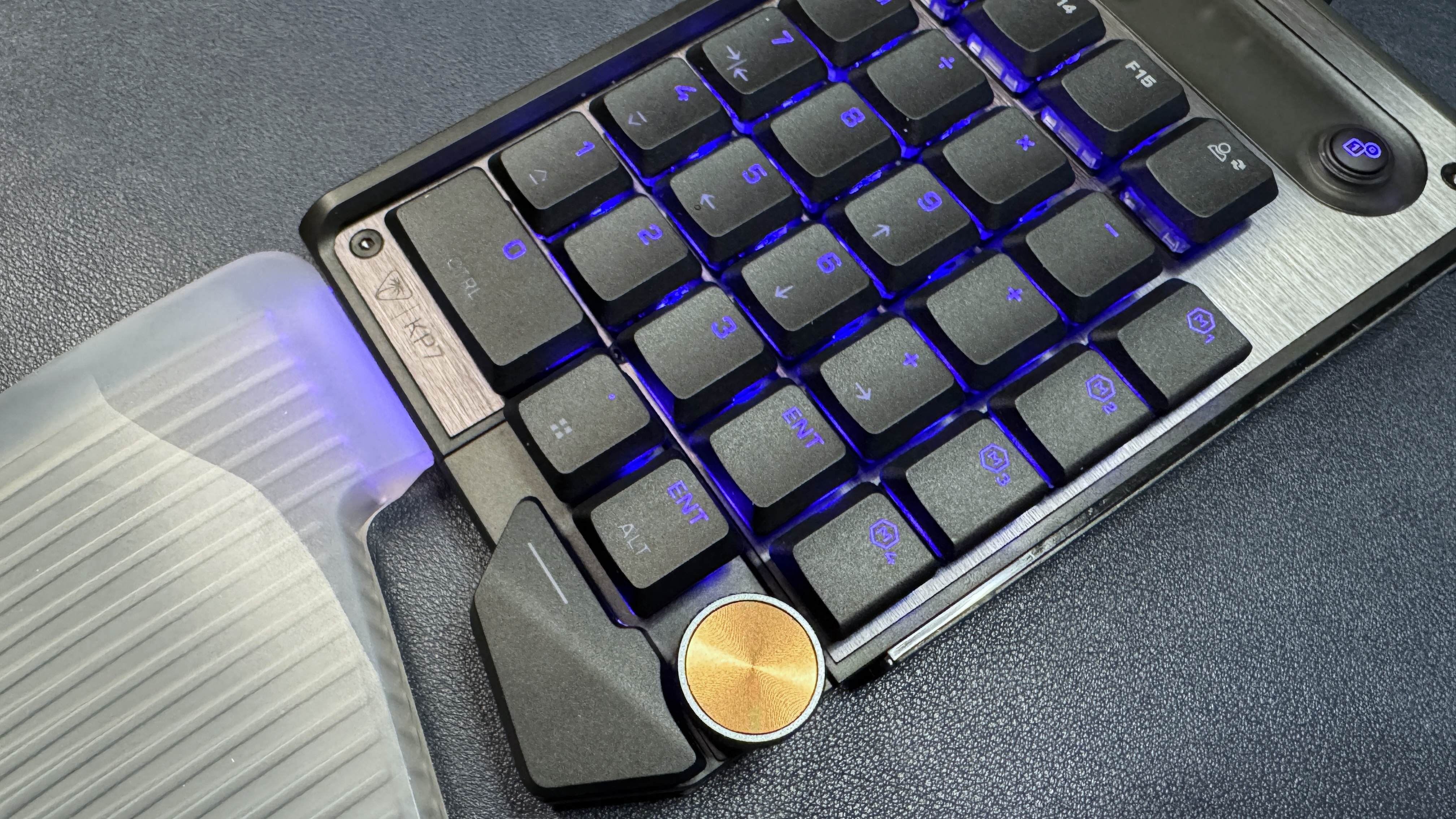
The 28-key layout is intelligently designed for dual functionality. In its primary numberpad configuration, it features the standard 10-key block, complemented by three additional Fn keys and a dedicated profile switch key at the top. To the right of the numberpad, two columns house essential math function keys and four dedicated macro keys, providing ample customization opportunities. A notable ergonomic innovation is the extendable thumb bar located in the bottom right corner, which, along with a programmable knob and an additional thumb button, slides out to provide intuitive access during gaming sessions. The accompanying silicon wrist rest, a miniature version of the one found with the KB7 (and previously, Roccat’s Vulcan II Max), seamlessly slots into the bottom. Its misty, translucent material with a grooved pattern acts as a conduit for the keypad’s vibrant per-key RGB lighting, offering both comfort and a captivating visual experience. Two sets of flip-out feet on the back allow users to adjust the typing angle from flat to 5-7 degrees, matching the KB7 for a cohesive setup when desired.
Advanced Switch Technology and Performance
At the heart of the KP7’s exceptional performance are its magnetic Hall Effect linear switches. These low-profile switches offer a silky-smooth, consistent keypress devoid of any tactile bump or audible click, catering to users who prefer a quiet and fluid typing or gaming experience. What sets these switches apart is their unparalleled programmability:
- Adjustable Actuation Point: Users can precisely dial in the actuation point from a hair-trigger 0.1mm to a more resistant 3.2mm. This flexibility allows for personalized responsiveness, whether for competitive gaming that demands instant input or for more deliberate typing tasks.
- Rapid Trigger: This revolutionary feature allows a key to re-actuate instantly upon release, even before reaching its physical reset point. This translates to incredibly fast, precise inputs in games, giving players a significant competitive edge in titles requiring rapid successive key presses.
- Multi-Input (or DKS – Dynamic Key Strokes): Each key can register up to four different actions based on how far it is pressed. This enables complex macro execution or nuanced control within games, assigning light presses to one action and full presses to another.
- ReacTap (SOCD): This refers to Simultaneous Opposite Cardinal Direction cleaning, preventing conflicting inputs when pressing opposing direction keys simultaneously (e.g., W and S). It ensures precise movement control, especially vital in fighting games or movement-intensive FPS titles.
Complementing these advanced switches is an 8,000 Hz polling rate. This means the keypad reports its status to the PC 8,000 times per second, drastically reducing input lag to a mere 0.125 milliseconds. For competitive gamers, this ultra-low latency can be the difference between victory and defeat.
In numberpad mode, despite a slight deviation from standard layouts (e.g., the Enter and Plus keys being split into two 1U keys instead of vertical 2U keys), the layout remains highly functional for data entry. The transition to game mode, where the center keys become W/A/S/D and surrounding keys adapt, effectively transforms the KP7 into a specialized gaming half-keyboard, akin to Nordic Game Supply’s The Shrimp, but with the added benefit of advanced magnetic switches. The extendable thumb bar proves comfortable and practical, though the programmable knob, being flush with adjacent keys, can be somewhat tricky to manipulate without accidental presses.
Swarm II Software Integration
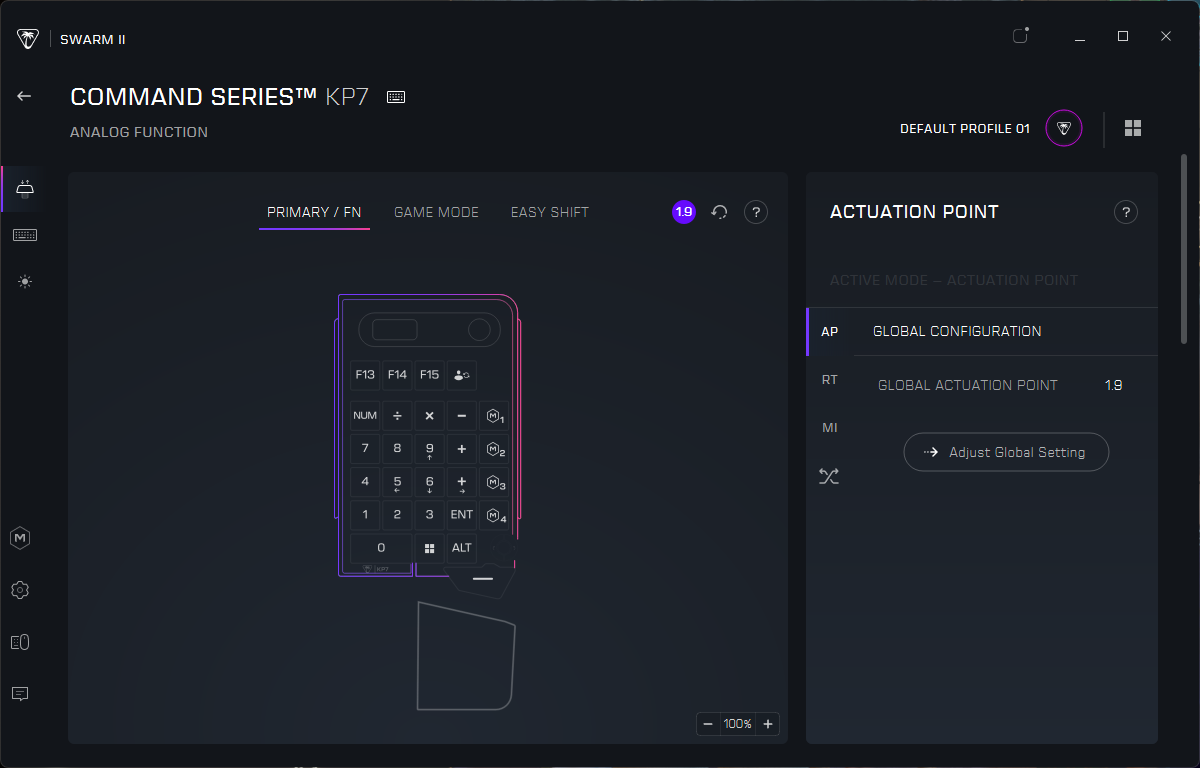
The KP7 is fully programmable via Turtle Beach’s Swarm II software, a platform inherited from Roccat. While designed to work in conjunction with the KB7, the software offers complete standalone customization for the KP7, granting users granular control over its functions.
Within Swarm II, users can:
- Adjust Actuation: Fine-tune the actuation point for each individual key.
- Toggle and Customize Rapid Trigger: Set the sensitivity and behavior of the Rapid Trigger function.
- Configure ReacTap and Multi-Input: Define specific actions for different press depths and manage SOCD settings.
- Key Remapping: Remap any of the 28 keys across four distinct layers: a standard layer, an Fn layer, a dedicated Game Mode layer, and an Easy Shift layer, significantly expanding the available macro and command options.
- RGB Lighting Customization: Personalize the vibrant per-key RGB backlighting with a vast array of colors and effects.
While the software provides extensive control for the KP7 as a standalone unit, integration issues with the KB7 also manifested within Swarm II. The lighting often fell out of sync, and the KP7 seemed prone to entering a hibernation state when connected to the KB7, even when separately powered. Furthermore, an inconvenient recurring prompt for firmware updates appeared every time the KP7 was connected to the KB7, a nuisance not encountered when used independently. These software-related challenges underscore the current friction in the modular ecosystem, despite the robust functionality offered to the standalone KP7.
Official Responses: Addressing Modular Challenges
While the provided article does not include direct "official responses" from Turtle Beach regarding the observed issues with the KP7’s modular integration, the review highlights critical areas where the intended design vision clashes with practical user experience. The persistent connectivity issues, flickering RGB lighting, frequent self-resets, and repetitive firmware update prompts when the KP7 is connected to the KB7 point towards challenges in the software synchronization and hardware handshake between the two devices.
From a journalistic perspective, these findings suggest that while Turtle Beach’s Command Series concept of modularity is innovative and ambitious, its implementation requires further refinement. The expectation for a premium peripheral ecosystem is seamless plug-and-play functionality, especially when components are designed to work in tandem and carry a combined price tag approaching $300. The observed inconsistencies detract from this premium promise.
Potential Areas for Manufacturer Response/Refinement:
- Software Optimization: The primary culprit appears to be the Swarm II software’s handling of the KP7 when it’s integrated with the KB7. Future firmware and software updates should prioritize resolving lighting synchronization issues, preventing unwanted resets, and eliminating the recurring firmware update prompts. A unified profile management system that ensures stable, consistent performance across both devices is crucial.
- Hardware Handshake Stability: The intermittent power and connectivity issues suggest potential instabilities in the magnetic or electrical connectors between the KB7 and KP7. Turtle Beach might need to investigate whether this is a manufacturing variability issue or a fundamental design challenge that requires a revised connector or power delivery mechanism for the modular setup.
- Communication and Support: Clear communication from Turtle Beach to its user base regarding these known issues, along with a roadmap for their resolution, would be beneficial. Providing detailed troubleshooting guides or dedicated support channels for modular setup issues could also improve user satisfaction.
The reviewer’s strong preference for the KP7 as a standalone device, precisely because it bypasses these integration complexities, implicitly serves as feedback to the manufacturer. It indicates that the KP7’s individual engineering is sound and high-performing, but its potential is currently hampered by the modular framework it was designed to complement. Addressing these points effectively would not only enhance the value proposition of the entire Command Series but also reinforce Turtle Beach’s commitment to delivering a truly premium and integrated gaming experience.
Implications: Market Impact and Value Proposition
The Turtle Beach KP7 arrives at a fascinating juncture in the PC peripheral market, offering a unique blend of functionality that could carve out a distinct niche. Its implications extend to several key areas:
Redefining the Standalone Keypad Segment
Traditionally, standalone keypads have been relegated to either budget-oriented data entry devices or highly specialized, often expensive, gaming macropads. The KP7 blurs these lines by offering seamless switching between a full-featured numberpad and a sophisticated gaming mini-keypad. This dual-purpose design, combined with high-performance magnetic Hall Effect switches and an 8,000 Hz polling rate, positions it as a premium, versatile option that stands head and shoulders above most competitors in its class. For users who have adopted TKL or smaller keyboards but still crave numberpad functionality for productivity, or who desire a dedicated, highly customizable gaming input without a full second keyboard, the KP7 offers a compelling argument. It challenges the notion that versatility must come with compromise.
Impact on the Modular Peripheral Ecosystem
The KP7’s primary design as a modular extension of the KB7 keyboard initially seemed to signal a bold new direction for Turtle Beach’s Command Series. The vision of a fully customizable, interconnected peripheral system is undeniably appealing. However, the observed difficulties in its modular integration – the lighting inconsistencies, firmware prompts, and connectivity issues – raise questions about the immediate viability and user-friendliness of this ecosystem. While the concept is strong, the current execution suggests that the software and hardware synchronization for truly seamless modularity requires further development.
This situation implies that, for now, the Command Series might be more successful selling its components as strong standalone devices rather than a tightly integrated system. It also highlights a broader challenge for manufacturers attempting to innovate in modular peripherals: ensuring that the added complexity doesn’t detract from the core user experience. If Turtle Beach can iron out these integration kinks with future updates, the long-term implications for modular peripherals could be significant, potentially inspiring other brands to explore similar customizable ecosystems.
Value Proposition for Gamers and Professionals
At $99.99, the KP7 is a significant investment for a keypad. However, its value proposition is strong, particularly for its target audience:
- Competitive Gamers: The magnetic Hall Effect switches with adjustable actuation, Rapid Trigger, multi-input, and 8,000 Hz polling rate offer a genuine competitive advantage. These features are usually found in top-tier gaming keyboards, and having them in a compact, dedicated gaming keypad is a major draw. The extendable thumb bar and customizable macro keys further enhance in-game control.
- Productivity Users with TKL Keyboards: For professionals or students who prefer the compact nature of a TKL keyboard but frequently need a numberpad for data entry, spreadsheets, or calculations, the KP7 provides a high-quality, ergonomic solution. Its solid build and smooth typing experience make it a far superior choice than generic, flimsy numberpads.
- Streamers and Content Creators: The extensive macro capabilities across multiple layers, combined with a programmable knob, make the KP7 an excellent tool for managing streaming software, media controls, or complex production workflows.
Compared to alternatives like Nordic Game Supply’s The Shrimp, which was primarily a gaming keypad with limited numberpad utility, the KP7 truly offers a balanced, high-performance solution for both use cases. Its versatility means users are investing in two distinct, high-quality peripherals for the price of one, making the $99.99 justifiable for those who will leverage both its gaming prowess and productivity benefits.
In conclusion, the Turtle Beach KP7 is an intriguing and highly capable peripheral. While its ambition for seamless modular integration faces current challenges, its strength as a standalone, dual-function keypad is undeniable. For gamers and professionals who prioritize performance, customization, and the indispensable utility of a numberpad, the KP7 offers a compelling, albeit premium, solution that is well worth considering. Its unique feature set and robust build quality position it as a leader in the evolving landscape of specialized input devices.

