

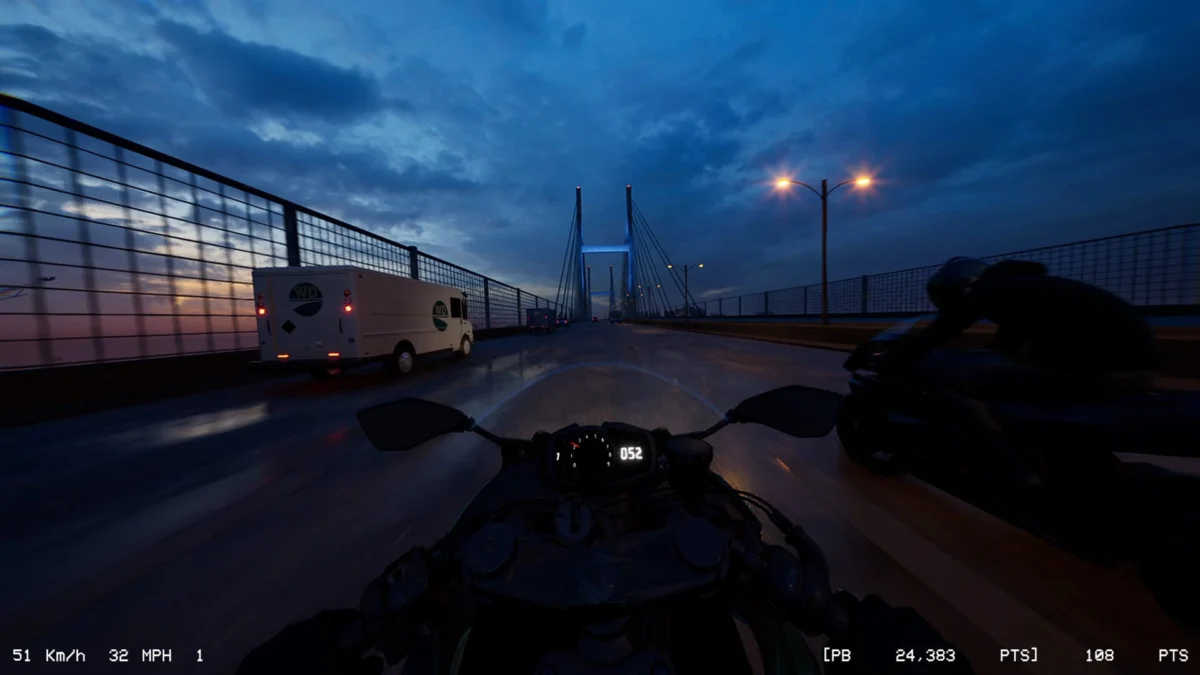
The marriage of flatscreen gaming and Virtual Reality (VR) is rarely a simple affair. When developers attempt to retroactively graft VR support onto an existing title—a practice common in the industry—they face a precarious balancing act. They must satisfy the immersive demands of the VR community without compromising the stability of the core, often more profitable, flatscreen experience.
Lanesplit, the urban motorcycle racing game developed by FunkyMouse, is the latest title to attempt this transition. Following a June 23 update, the game officially added support for VR headsets, promising to bring the high-octane thrill of street racing into a 360-degree environment. Unfortunately, after extensive testing, it is clear that Lanesplit is currently suffering from a series of baffling design choices and technical shortcomings that effectively strip away the very immersion it seeks to provide.
The Facts: At a Glance
- Game Lanesplit
- Developer: FunkyMouse
- Platform: Steam (PC VR)
- Release Date: January 28, 2026 (VR Support Added: June 23, 2026)
- Genre: Urban Motorcycle Endless Runner
- Price: $17.99 USD
- Key Issues: Lack of motion controller support, severe performance stuttering, poor UI implementation, and artificial pacing issues.
A Chronology of Disappointment
Lanesplit launched in January 2026 as a standard arcade-style endless runner. As a title designed for monitors, its mechanics were simple: accelerate, weave through traffic, and chase high scores. The announcement of a June 2026 update to include VR support was met with cautious optimism by the niche community of motorcycle enthusiasts looking for their next virtual fix.
However, the experience of transitioning from the flatscreen version to the VR environment is jarring. Players who have become accustomed to the game’s mechanics on a monitor find that the VR implementation feels less like a new perspective and more like a separate, poorly optimized app.
When booting the game in VR, the first warning sign appears immediately: the main menu is confined to a "theater mode" projection rather than a fully realized 3D environment. While this is a common compromise for some titles, it sets a tone of detachment that persists throughout the entire gameplay session. As soon as the race begins, the disconnect between the player’s expectations and the game’s reality becomes painfully apparent.
Supporting Data: Technical Performance and Design Flaws
To understand the scope of the failure, we tested Lanesplit using a high-end rig featuring an RTX 5070 Ti, a Ryzen 7 9850X3D, and 32GB of DDR5 RAM. Despite this significant hardware overhead, the game struggled to maintain a playable frame rate.
The Missing Immersion
The most egregious design choice is the complete lack of motion controller support for steering. In a first-person motorcycle game, the player expects to physically grip handlebars or at least use the controllers to simulate leaning into a turn. Lanesplit ignores this entirely, forcing the player to use a traditional gamepad to steer, while strangely allowing the use of triggers for acceleration and braking.
This creates a cognitive dissonance. Why utilize the triggers for physical inputs if the primary act of riding—steering—remains tethered to a digital stick? By failing to implement basic hand-tracking or even simple controller-based steering, the developers have bypassed the core appeal of VR: physical agency.
The Illusion of Speed
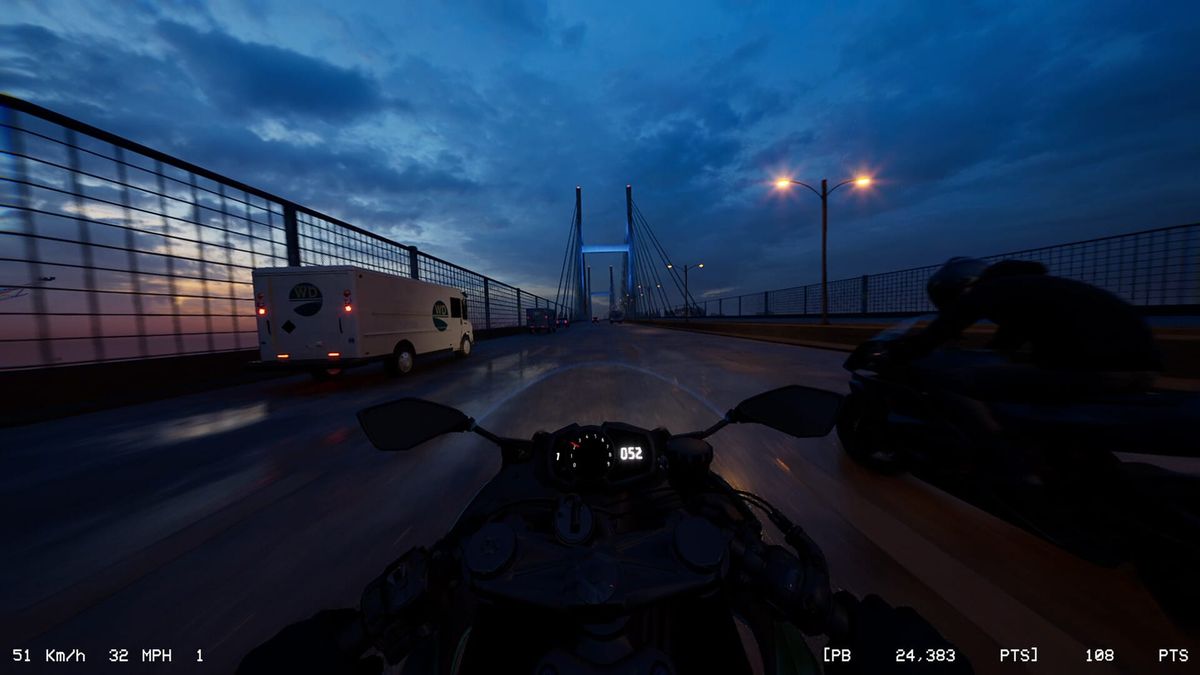
The second major issue is the game’s fundamental design as an "endless runner." The traffic in Lanesplit moves at a comically slow speed. While this may be a design choice intended to give players more time to react, it kills the sensation of being a motorcycle rider. During testing, it was common to find both lanes occupied by slow-moving trucks, forcing the player to decelerate to a crawl—roughly 20 miles per hour—to avoid a collision. This lack of momentum makes the game feel like a tedious traffic simulator rather than a high-speed racing experience.
Technical Stuttering
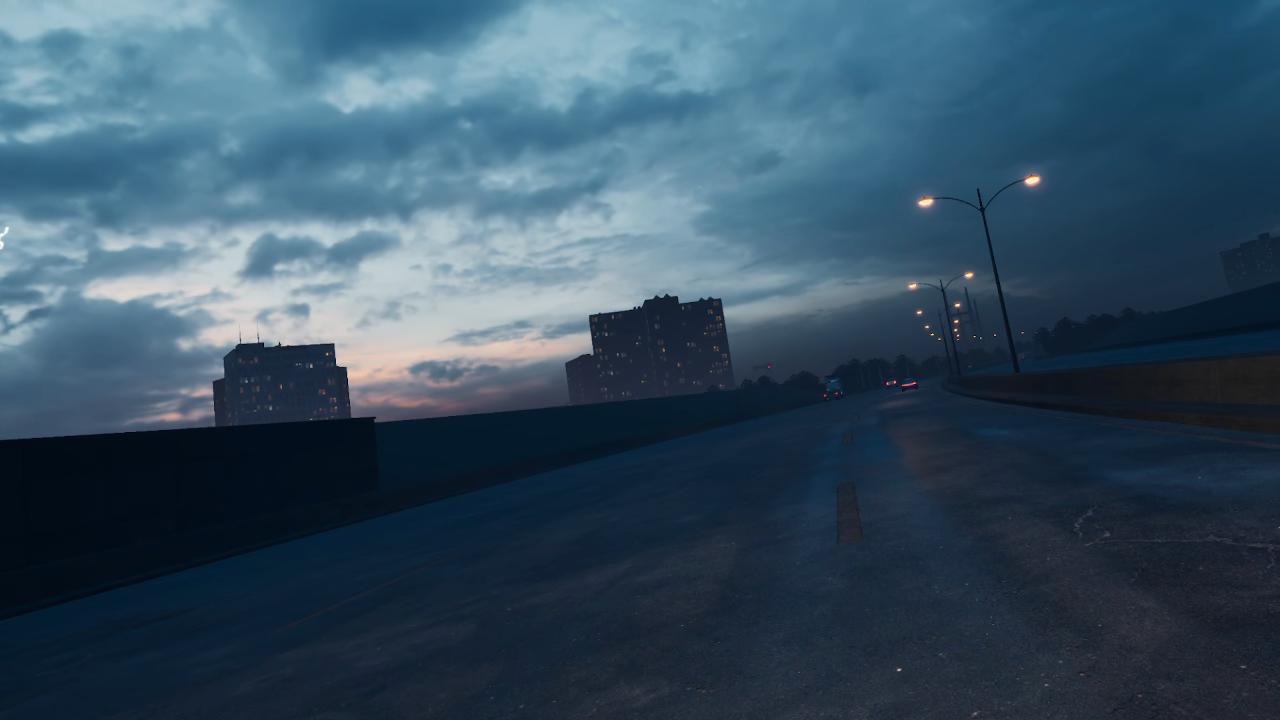
Performance metrics reveal that the game never exceeded 36 frames per second during the VR sessions, requiring heavy reliance on reprojection. This low frame rate, combined with the slow-moving traffic, creates a visual stutter that is not only immersion-breaking but physically uncomfortable. When panning the camera to look at the cityscapes—which are, to the developer’s credit, well-modeled—the stuttering becomes particularly noticeable, leading to rapid onset of motion sickness.
Official Responses and Developer Stance
As of this writing, FunkyMouse has not issued a formal statement regarding the specific feedback concerning the VR update. The Steam community boards, however, are filled with users reporting similar issues regarding the "theater mode" menus and the lack of motion controls.
The most concerning aspect for the developers is the in-game menu system. When a player needs to pause the game or access settings during a run, the menu does not appear in the VR headset; instead, it renders on the primary PC monitor. This forces the player to physically remove their headset to interact with the game, a catastrophic failure in user interface design that breaks the loop of gameplay entirely. Whether this is an oversight or a technical limitation of their engine, it remains one of the most frustrating aspects of the user experience.
The Broader Implications for VR Racing Games
The failure of Lanesplit to provide a compelling VR experience serves as a case study in what not to do when porting games to Virtual Reality.
- The "Theater Mode" Trap: Forcing players into 2D menus within a 3D space is acceptable as a fallback, but it should never be the primary method of interaction during active gameplay.
- The Necessity of Physicality: VR is about presence. If a game features a vehicle, the player must be able to interact with the steering mechanism in a way that feels tactile. If a developer cannot commit to motion controls, they must at least ensure that the controller-based steering is responsive enough to be forgotten—which is not the case here.
- Optimization is Non-Negotiable: A flatscreen game running at 60 FPS is standard; a VR game running at 36 FPS is a nauseating experience. Developers must prioritize a locked, high frame rate above graphical fidelity to prevent user discomfort.
Recommendations for Players
If you are a fan of motorcycle racing in VR, Lanesplit is not the title you are looking for. The current build requires significant patching before it can be considered a viable entry in the genre. For those seeking a superior, more immersive experience, titles such as VRacer Hoverbike offer a much more refined approach to speed, control, and VR comfort.
Conclusion
Lanesplit arrived with the potential to fill a gap in the VR racing market, but it has stumbled out of the gate. By failing to leverage the strengths of the VR medium and ignoring the technical requirements for a smooth virtual experience, FunkyMouse has delivered a product that feels unfinished and frustrating. Until major updates address the lack of motion support, the performance issues, and the broken UI, it is difficult to recommend this title to any VR enthusiast. We will continue to monitor the situation and provide updates if the developers address these glaring flaws.

