

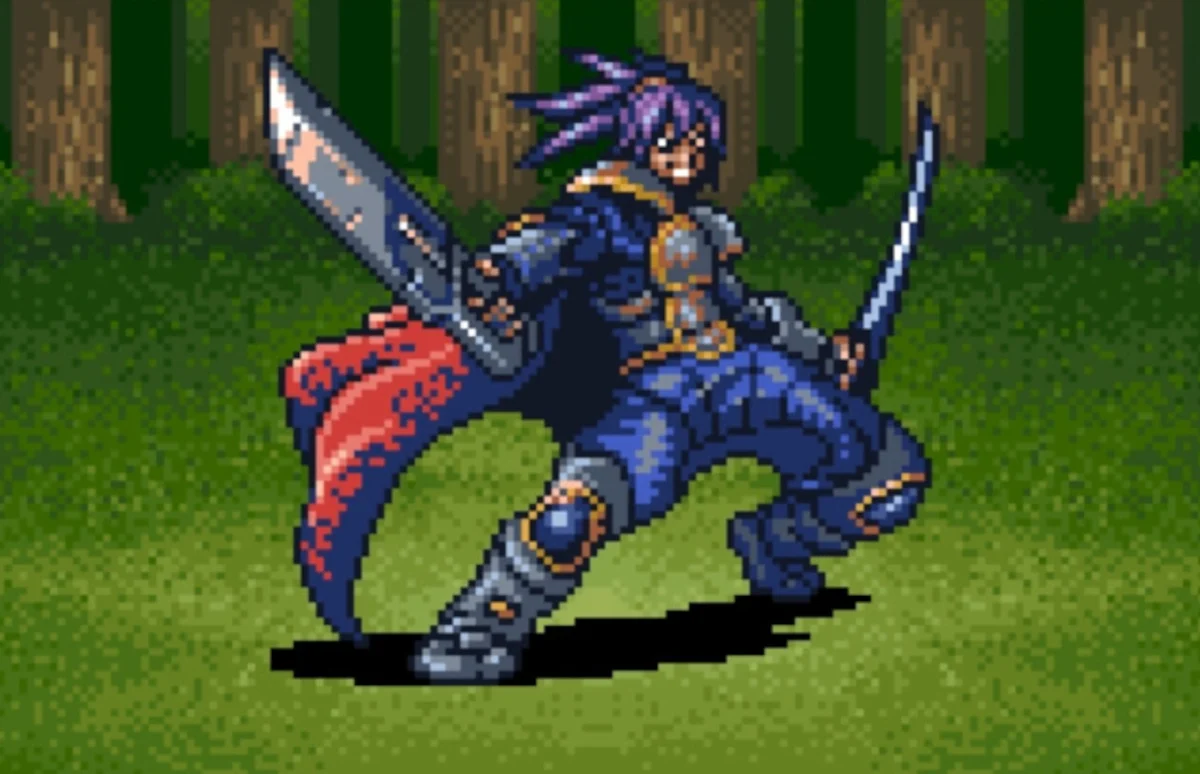
The landscape of video game preservation is often focused on high-profile console classics, but a quieter, arguably more significant revolution is occurring in the niche corners of the digital storefronts. Developer nazenaninadesico has recently expanded their ongoing crusade to save Japan’s "lost" mobile gaming history, releasing a faithful PC port of the 2006 i-mode flip phone RPG Bravest! on Steam. This release marks another milestone in the developer’s commitment to archiving titles that were once trapped behind the proprietary hardware and shuttered networks of the early 2000s Japanese telecommunications era.
The Archival Mission: A Continued Legacy
The arrival of Bravest! on Steam is not an isolated incident; rather, it is the latest chapter in a dedicated preservation project. Nazenaninadesico has previously garnered attention for bringing the Revenger series to a modern audience. Following the successful port of the original Revenger, the developer pushed forward with the second and third entries, ensuring that these distinct pieces of Japanese mobile software were not permanently deleted from existence as the flip phones they were built for aged into obsolescence.
The methodology behind these ports is noteworthy. Rather than performing a full engine remake—which would inevitably strip away the "soul" and technical idiosyncrasies of the original experience—nazenaninadesico utilizes a proprietary i-mode compatible layer. This approach ensures that the 12-dot retro font, the MIDI-inspired audio, and the specific pacing of the 2006 originals remain intact. It is an act of digital archaeology that prioritizes historical accuracy over modern graphical overhauls.
A Pioneer of the Isekai Trope
Long before "isekai"—the subgenre of fantasy where a protagonist is transported from their mundane reality to a magical world—became a saturated staple of modern anime and light novels, Bravest! was already exploring the premise with humor and heart.
The story follows Yusuke Ogiwara, a self-described "NEET" (Not in Education, Employment, or Training) who finds himself unceremoniously ripped from his comfortable, stagnant life and deposited into a world teetering on the brink of destruction. The realm is plagued by a Demon King, and the local populace clings to an ancient prophecy: "When the Demon King appears, a hero from another world will save the realm."
Summoned by a desperate wizard, Yusuke is thrust into the role of a "sort-of" hero. The narrative’s charm lies in this juxtaposition; the protagonist is not a legendary warrior but an ordinary, contemporary young man forced to navigate a high-fantasy landscape. In 2006, this was a fresh, tongue-in-cheek take on the hero’s journey. Today, it serves as a nostalgic look at the origins of a genre that has since taken the world by storm.
Technical Fidelity and Modern Refinements
While the developer has gone to great lengths to preserve the "retro feel," the PC version of Bravest! is far from a clumsy emulator dump. Recognizing that the constraints of a physical flip phone keypad differ significantly from a PC keyboard or an Xbox/PlayStation controller, nazenaninadesico has implemented several quality-of-life improvements.
Key Upgrades:
- Performance: The game has been upgraded to run at a smooth 60fps, providing a fluid experience that the original hardware could not sustain.
- UI Adjustments: The user interface has been overhauled for modern screens, ensuring that text remains legible and menus are intuitive.
- Expanded Utility: Save slots have been tripled, moving from the original three to nine, allowing for more flexible save-state management.
- Convenience Features: The addition of a convenience menu, including full HP restoration and navigational shortcuts, helps mitigate the potential frustration of early-2000s game design, where backtracking was often tedious.
- Controller Support: By mapping the D-pad and various face buttons to the classic Soft Key inputs (A/S keys, L1/R1 buttons), the developer has successfully bridged the gap between the tactile buttons of a flip phone and the standard modern gamepad.
Strategic Depth: The Front and Rear Formation System
Despite its humble origins, Bravest! features a surprisingly robust combat system that encourages tactical thinking. The game utilizes a front-view perspective where players manage a four-person party. Central to this is the "front and rear" formation mechanic.
In the game’s logic, characters placed in the back row are significantly less likely to be targeted by enemy AI. This creates a risk-reward dynamic: the player must decide whether to place high-damage, low-defense glass cannons in the back row to ensure their survival, or push them to the front to maximize their utility at the cost of being vulnerable. Area-of-effect spells are particularly vital when utilized from the safety of the rear, allowing players to clear encounters quickly if they manage their formation correctly. It is a system that is easy to understand but offers enough depth to keep the mid-game engagement levels high.
The Question of AI and Transparency
A point of ongoing discussion regarding nazenaninadesico’s recent catalog is the developer’s inclusion of AI disclaimers. In previous releases, the developer has noted the use of artificial intelligence to generate the "flip phone frames" that appear on the port screens—decorative borders designed to mimic the physical device.
For the Bravest! release, the inclusion of such assets remains somewhat ambiguous. In the provided promotional screenshots, there is no overtly stylized frame surrounding the gameplay window. Whether this is because the developer opted for a minimalist aesthetic this time, or because the emulator’s own input overlay is serving as the visual boundary, is unclear. However, the developer’s history of transparency regarding their use of generative tools remains a positive standard in an industry often opaque about the technical origins of its assets.
The Broader Implications for Gaming History
The release of Bravest! is a vital case study in the importance of software preservation. The i-mode service was a unique cultural phenomenon in Japan, serving as the gateway to the internet for millions before the smartphone era. Because the games were built for proprietary hardware, they were effectively "lost" once the infrastructure supporting those phones was decommissioned.
By porting these titles to Steam, nazenaninadesico is performing a service that major publishers rarely undertake. Most triple-A studios view games as disposable content; once a service shuts down, the game is frequently relegated to the "abandonware" pile. Nazenaninadesico, by contrast, is proving that even small, seemingly insignificant mobile titles have a dedicated audience and historical value.
This project also highlights the power of Steam as a platform. While it is often criticized for its volume of indie "shovelware," it has also become the world’s largest archive of playable history. The ability for a lone developer to take a piece of 2006 Japanese mobile software and make it playable for a global audience in 2024 is a testament to the democratization of game distribution.
Final Thoughts: Should You Play It?
For those interested in the history of the RPG genre, or for those who simply crave a "cozy," low-stakes adventure with a sense of humor, Bravest! is a compelling purchase. It offers a window into a specific, vibrant era of Japanese gaming that is otherwise inaccessible.
The game does not pretend to be a modern blockbuster; it is a direct, honest, and lovingly maintained version of a 2006 hit. Its humor—rooted in the "isekai NEET" trope—is surprisingly prescient, and its strategic combat provides enough of a challenge to feel rewarding. By supporting projects like Bravest!, players aren’t just buying a game; they are contributing to a movement that ensures our digital past is not erased by the march of progress.
Bravest! is available now on Steam. For those who enjoy their retro RPGs with a side of historical context, it is a journey well worth taking. Whether Yusuke Ogiwara can transition from a social recluse to a legendary hero is a question you will have to answer yourself—but the journey to find out is as charming as it is historically significant.

