

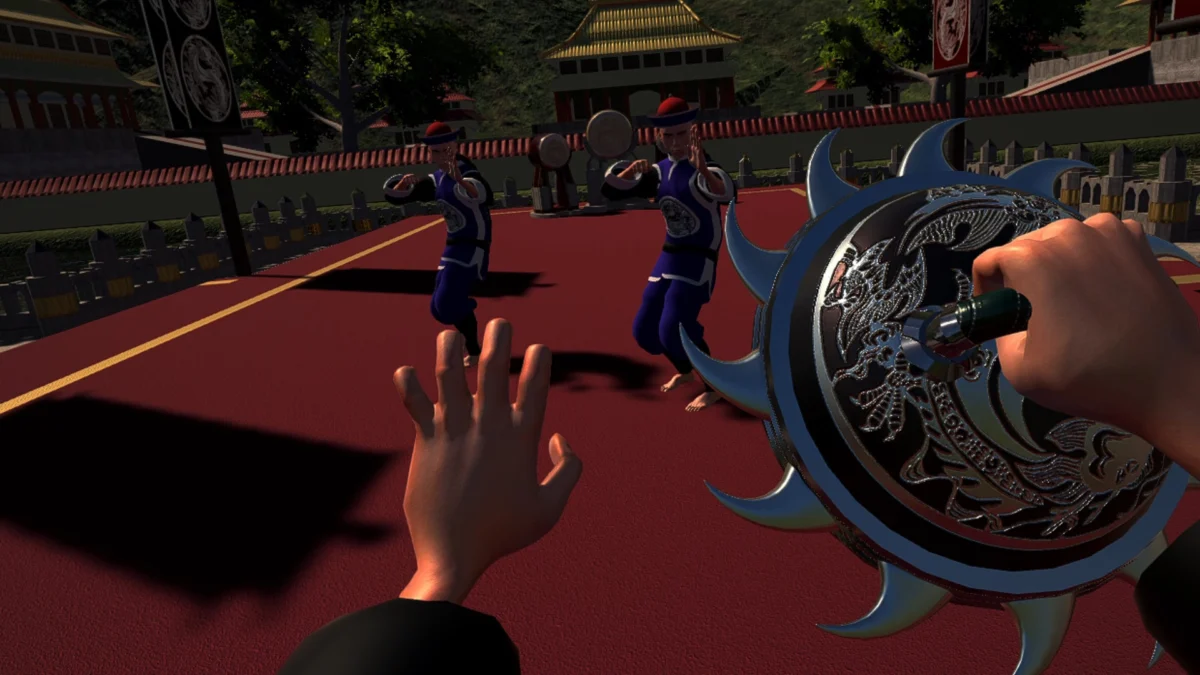
As the virtual reality (VR) landscape continues its transition from a niche, hardware-heavy luxury to a more accessible medium, indie developers are pushing the boundaries of what home-based immersion can achieve. While industry giants focus on high-fidelity visual spectacles, titles like Dragon Fist: VR Kung Fu are proving that the future of the medium lies in physics-based gameplay, tactical depth, and the realization of the "active gaming" movement.
Main Facts: The Anatomy of a Virtual Dojo
Dragon Fist: VR Kung Fu, developed for PC-based VR platforms, serves as a masterclass in how to translate traditional martial arts into a first-person virtual environment. Unlike arcade-style fighters that rely on button mashing, Dragon Fist demands physical exertion and spatial awareness.
The core gameplay loop involves selecting a fighter from a diverse roster and navigating a gauntlet of opponents, each increasing in complexity and difficulty. The title distinguishes itself through its physics-driven combat engine, which prioritizes hit-box precision over simple collision detection. Players engage in a variety of strikes—palm strikes, finger jabs, and traditional punches—each of which interacts uniquely with the enemy’s AI model.
The strategic layer of the game is surprisingly robust. It is not enough to simply flail at an opponent; the game rewards precision. A finger jab to the eyes temporarily blinds an opponent, creating a tactical opening. Similarly, a well-placed strike to the lower ribs disrupts an opponent’s stamina regeneration, leaving them vulnerable to a follow-up flurry. This system transforms the game from a chaotic workout into a cerebral, high-stakes duel.
Chronology: The Rise of Accessible VR
To understand the significance of Dragon Fist, one must look at the timeline of VR accessibility.
- 2016–2018 (The Tethered Era): VR was largely defined by high-cost hardware requiring complex room-scale sensors and cumbersome cables. This barrier to entry limited the market to enthusiasts, stifling the growth of niche genre titles like combat simulators.
- 2020 (The Wireless Shift): The release of the Oculus Quest 2 fundamentally changed the market. By providing a standalone headset capable of wireless PC streaming via AirLink or Virtual Desktop, the "friction" of VR was significantly reduced.
- Late 2021 (The Emergence of Niche Hits): As the install base grew, titles like Dragon Fist found their audience. Released in a period where users were seeking more "active" experiences, the game capitalized on the demand for fitness-integrated gaming.
- Post-2021 Development: The game has continued to iterate, with developers focusing on refining the tracking algorithms that allow for faster, more fluid combat motions, addressing the perennial challenges of VR input latency.
Supporting Data: The Physics of the Fight
The effectiveness of Dragon Fist lies in its ability to mimic the physiological demands of real-world Kung Fu. In a controlled test environment, players of the title reported heart rate increases consistent with moderate-to-intense aerobic exercise, often reaching 130–150 beats per minute during boss encounters.
The game’s internal mechanics utilize a complex stamina and debuff system. Data points include:
- Vision Impairment: A specific strike to the optical zone reduces the opponent’s targeting accuracy by 40% for three seconds.
- Stamina Depletion: Strikes to the torso (ribs/solar plexus) induce a "slow" state, preventing the AI from initiating high-damage combos.
- Roster Variance: The game features a wide array of characters, each governed by different "Weight" and "Reach" variables. A light, agile character relies on speed and precision strikes, while a heavy character can absorb more damage but requires deliberate, slower movements.
These variables create a "rock-paper-scissors" dynamic that ensures players must cycle through the roster to find a fighting style that complements their physical reach and reaction time.
Official Responses and Developer Philosophy
While developer comments have been sparse, the consensus among the community and the developer’s patch notes highlight a commitment to "Authentic Feel over Flashy Effects."

In response to player feedback regarding tracking issues—a common hurdle in current-gen VR—the development team has prioritized optimization. They have acknowledged that while hardware limitations (such as the refresh rate and sensor range of consumer-grade headsets) can occasionally cause a disconnect between the player’s hand movement and the in-game avatar, the focus remains on "intent-based combat."
The design philosophy is clear: rather than creating a game that "auto-corrects" the player’s bad form, the developers want to encourage the player to learn the correct timing and angles of a martial arts strike. This has led to a dedicated, if somewhat hardcore, fan base that views the game as much as a training tool as an entertainment product.
Implications: The Future of VR Fitness and Gaming
The success of Dragon Fist has significant implications for the future of the industry.
The "Fitness-Gaming" Hybrid
The convergence of gaming and physical exercise is no longer a gimmick. Titles like Dragon Fist prove that games can serve as a primary vehicle for cardio, potentially replacing the monotony of stationary equipment with the engagement of competitive play. This creates a new market segment: the "Gamer-Athlete."
Addressing the Latency Gap
The "issue" noted by players—that the game cannot always keep up with high-speed movements—is a diagnostic of where VR hardware stands today. As headset manufacturers push for higher refresh rates (120Hz+) and better controller tracking, the software will have more overhead to implement more complex hit-detection models. Dragon Fist sits at the frontier of this technological push; it is a game that is essentially "waiting" for the hardware to catch up to its potential.
Accessibility and the Indie Advantage
Perhaps the most profound implication is the power of the indie developer in the VR space. While major studios grapple with the high costs of AAA VR production, smaller teams are proving that gameplay mechanics—the "feel" of a punch, the weight of a sword, the flow of a match—are far more important to user retention than high-fidelity textures or cinematic cutscenes.
Conclusion: A Must-Play for the Virtual Martial Artist
Dragon Fist: VR Kung Fu is not just a game; it is a manifestation of the potential for home-based virtual reality. While it suffers from the minor, universal gripes of current-gen tracking, its core mechanics are arguably the most polished in the genre.
For the casual player, it offers a fun, sweat-inducing romp through a variety of martial arts archetypes. For the serious VR enthusiast, it offers a deep, rewarding tactical system that rewards discipline and practice. As hardware continues to evolve, the gap between the player’s intention and the game’s execution will only narrow, likely cementing Dragon Fist as a foundational title in the history of virtual combat. Whether you are looking to refine your palm strikes or simply break a sweat after a long day at the desk, the virtual dojo is open, and it is more demanding—and more rewarding—than you might expect.

