

Introduction
The landscape of PC component pricing has been notably turbulent in recent years, with memory (RAM) emerging as one of the most significant cost drivers for new system builds. Persistent global DRAM shortages have fueled elevated prices, forcing consumers and system integrators alike to seek innovative strategies for acquiring essential components without incurring exorbitant expenses. While strategies such as exploring combo bundles or navigating the secondary market for pre-owned parts can offer relief, the demand for brand-new, reliable components remains robust. In this challenging environment, a recent development on Amazon has caught the attention of budget-conscious PC builders: the PNY Performance 32GB DDR5 kit has seen a substantial price reduction, making it one of the most accessible 32GB DDR5 options currently available.
This article delves into the specifics of this compelling deal, examining its technical merits, market context, and broader implications for consumers grappling with high component costs. We will explore the characteristics of the PNY kit, its position within the competitive DDR5 ecosystem, and how it addresses the pressing need for cost-effective memory solutions in an era defined by supply chain complexities.
Main Facts: A Beacon of Value in a Pricey Market
The core of this market development centers on the PNY Performance 32GB DDR5 memory kit, which has recently experienced a significant price drop on Amazon. Originally listed at $449.99, the kit is now available for $379.99, representing a substantial saving of $70. This reduction positions the PNY offering as one of the most competitive options for acquiring 32GB of brand-new DDR5 memory today, particularly appealing to those prioritizing capacity and cost-efficiency over bleeding-edge performance or elaborate aesthetics.
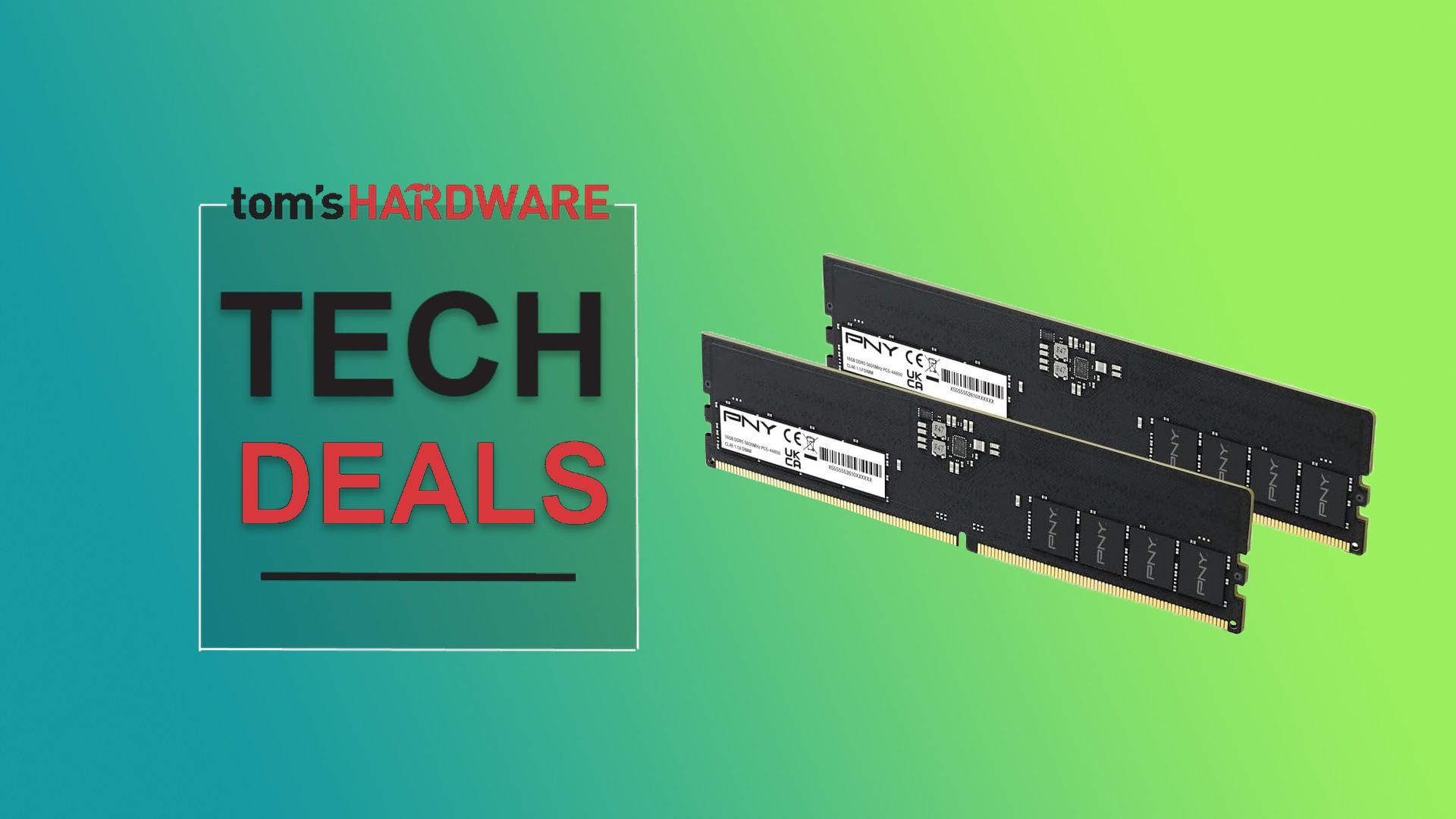
The kit comprises two 16GB DDR5 modules, delivering a total capacity of 32GB, which has become the de facto standard for modern gaming, demanding productivity tasks, and robust home office setups. These modules operate at a speed of 5600 MT/s (megatransfers per second) with a CAS Latency (CL) of 46. While a CL46 timing is considered looser compared to the sub-CL40 latencies found on premium, higher-end DDR5 kits, its impact on real-world performance is often negligible, especially in scenarios where the graphics processing unit (GPU) acts as the primary bottleneck, such as gaming at higher resolutions.
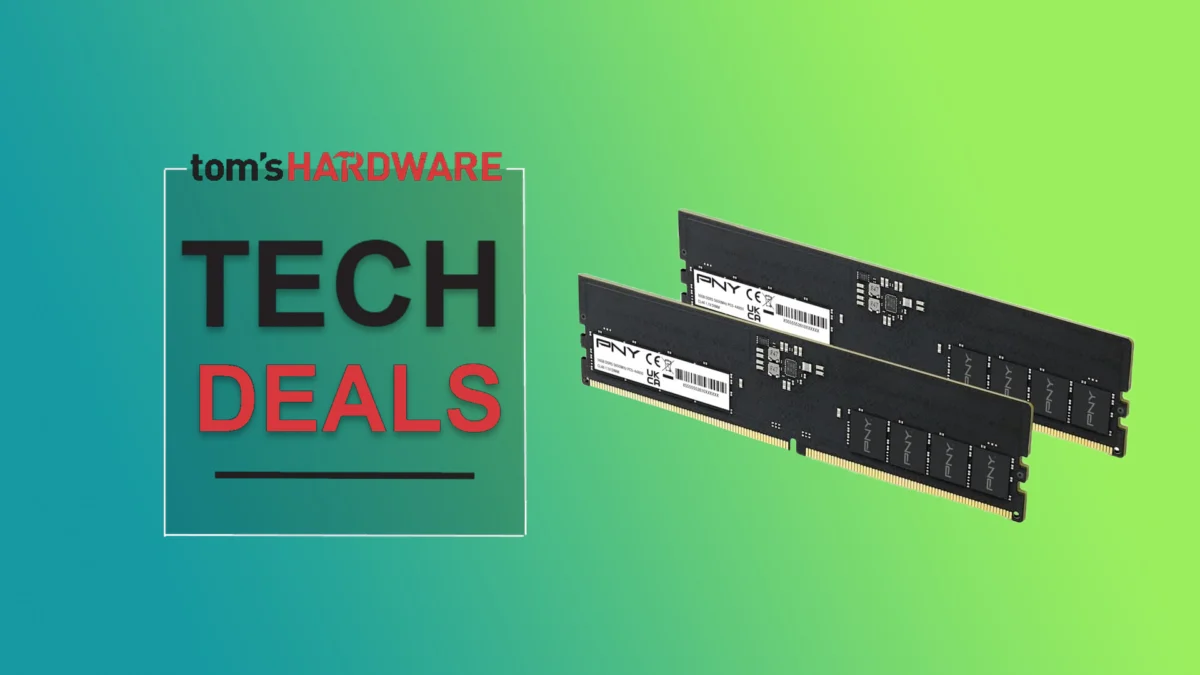
From a design perspective, the PNY Performance kit adopts a minimalist approach. It eschews features like elaborate heatspreaders and customizable RGB lighting, which are common in more expensive memory modules. However, the modules feature a black PCB (printed circuit board), which offers a clean, understated aesthetic that can seamlessly integrate into most dark-themed motherboard and PC builds without drawing undue attention. This lack of aesthetic frills contributes to its lower manufacturing cost, directly translating into a more attractive retail price point for consumers.
In essence, this PNY kit is tailored for a specific segment of the market: individuals who require ample memory capacity for their desktop PCs but are operating within a strict budget and are willing to forgo maximal performance gains and visual extravagance. It represents a practical and financially prudent choice for building or upgrading systems intended for budget-conscious gaming, general office work, content consumption, and productivity applications where 32GB of RAM capacity is more critical than minute latency differences or flashy design elements.
Chronology: The Evolution of DDR5 and Market Volatility
The journey of DDR5 memory to mainstream adoption has been marked by both technological innovation and significant market volatility. Introduced in late 2021, DDR5 represented a substantial leap forward from its predecessor, DDR4, promising higher speeds, increased bandwidth, and improved power efficiency. However, its initial rollout was met with several challenges that directly impacted consumer accessibility and pricing.
Upon its debut, DDR5 memory modules commanded premium prices, largely due to novelty, limited production capacities, and the inherent costs associated with new technology. Early adopters faced not only elevated RAM prices but also the necessity of investing in new motherboards and CPUs (initially Intel’s 12th Gen Alder Lake processors) that supported the new standard, adding to the overall cost of upgrading. The first kits were often expensive, with modest speeds and relatively high latencies, making them a difficult proposition for many users who found DDR4 to still offer superior price-to-performance ratios.
Throughout 2022 and into 2023, the global semiconductor shortage, exacerbated by pandemic-related supply chain disruptions and geopolitical tensions, profoundly impacted the production of DRAM chips. This shortage meant that manufacturing facilities struggled to keep pace with demand, leading to constrained supply and, consequently, sustained high prices for both DDR4 and, more acutely, DDR5 memory. While industry analysts initially predicted a gradual easing of these shortages, the market has remained unpredictable, with prices fluctuating based on supply adjustments and shifts in consumer demand.
PNY, a long-standing player in the memory and storage market, typically positions itself as a provider of reliable, performance-oriented components that offer strong value. Their "Performance" line, as seen with this 32GB DDR5 kit, aims to deliver essential functionality and capacity at an accessible price point, often by optimizing specifications and foregoing non-essential aesthetic features. The current deal on the PNY Performance kit can be viewed as a strategic response to ongoing market conditions, potentially aiming to capture a larger share of the budget-conscious segment during a period when many consumers are actively seeking ways to mitigate the high costs of PC building.
The appearance of such aggressive deals is often cyclical within the tech market. Manufacturers and retailers periodically adjust pricing to stimulate demand, clear inventory, or gain a competitive edge. For DDR5, these price adjustments are particularly significant because they represent steps towards broader market accessibility, signaling a potential, albeit slow, maturation of the technology’s pricing structure. While not indicative of a complete collapse in DDR5 prices, it highlights an opportunistic window for consumers to acquire a fundamental component at a more palatable cost than has been typical since its introduction.
Supporting Data: Deconstructing Performance, Capacity, and Market Dynamics
To fully appreciate the value proposition of the PNY Performance 32GB DDR5 kit, it is crucial to delve into the technical specifications and broader market context that define modern memory modules.
DDR5 vs. DDR4: A Generational Leap
DDR5 memory fundamentally improves upon DDR4 by offering double the bandwidth, higher theoretical speeds (starting typically at 4800 MT/s and scaling upwards), and improved power efficiency through integrated power management ICs (PMICs) directly on the DIMM. This means that DDR5 can process more data per clock cycle, leading to faster application loading, smoother multitasking, and improved performance in data-intensive workloads. For professional applications like video editing, 3D rendering, and large data analysis, the increased bandwidth of DDR5 can translate into tangible productivity gains. For gaming, while the benefits are often more pronounced at lower resolutions and with high refresh rates, the overall system responsiveness improves.
Speed and Latency: The Performance Equation
The PNY kit operates at 5600 MT/s with a CL46 latency. To put this into perspective, many premium DDR5 kits aim for speeds of 6000 MT/s or higher, often paired with tighter latencies like CL30 or CL32.
- Speed (MT/s): Higher megatransfers per second generally mean faster data throughput. For platforms like AMD’s Ryzen 7000 series, a "sweet spot" often exists around 6000 MT/s, where the CPU’s internal infinity fabric operates at a 1:1 ratio with the memory controller, optimizing performance. Intel’s platforms are typically less sensitive to extremely high speeds but still benefit from faster memory. At 5600 MT/s, the PNY kit offers a respectable speed that is a significant upgrade over entry-level DDR5 (4800 MT/s) and most DDR4 kits.
- Latency (CL): CAS Latency measures the delay between when the memory controller requests data and when the data is available. Lower CL numbers indicate faster access times. While CL46 is on the looser side for DDR5, it’s essential to consider the overall effective latency (which factors in both speed and CL). For most users, especially gamers at 1440p or 4K resolutions where the GPU is the primary bottleneck, the difference between CL46 and CL30 is often marginal, translating to only a few frames per second in games. However, for competitive esports players chasing every frame, or professionals engaged in highly latency-sensitive tasks (e.g., scientific simulations, specific financial modeling), tighter timings might be a worthwhile investment. The TeamGroup T-Force Vulcan DDR5-6000 CL38 kit, mentioned as a slightly pricier alternative, exemplifies a step up in both speed and latency, offering a better performance profile for an additional $20.
Capacity: The 32GB Standard
32GB (2x16GB) has rapidly become the recommended capacity for modern high-performance PCs.
- Gaming: While 16GB might suffice for many current games, newer titles are increasingly demanding more RAM, and 32GB provides ample headroom for multitasking (e.g., gaming while streaming, browsing, or running communication apps).
- Productivity: For content creators, developers, engineers, and anyone working with large datasets or multiple applications simultaneously, 32GB significantly enhances system responsiveness and prevents bottlenecks that can occur when RAM capacity is insufficient, forcing the system to rely on slower storage for virtual memory.
- Future-proofing: Investing in 32GB now ensures that the system remains capable of handling future software and game requirements for a longer period.
Aesthetics and Thermal Considerations
The PNY Performance kit’s lack of heatspreaders and RGB lighting is a key factor in its lower price.
- Heatspreaders: While aesthetically pleasing and often associated with high-performance RAM, heatspreaders primarily serve to dissipate heat, especially during overclocking or under sustained heavy loads. For a 5600 MT/s kit running at standard voltages, the necessity of elaborate heatspreaders for thermal management is often minimal. The modules are unlikely to generate excessive heat that would compromise stability or longevity in typical usage scenarios.
- RGB Lighting: This feature is purely cosmetic, adding cost without enhancing performance. For builders focused on pure functionality and value, its absence is a non-issue, and for those preferring a stealthy or minimalist build, the black PCB is an advantage.
The Global DRAM Shortage: A Lingering Shadow
The ongoing global DRAM shortage continues to exert upward pressure on memory prices. This shortage is a complex issue driven by several factors:
- Increased Demand: The proliferation of data centers, AI applications, and the continued growth of consumer electronics (smartphones, PCs) means a constant, escalating demand for memory chips.
- Production Constraints: Semiconductor fabrication plants (fabs) are incredibly complex and expensive to build and operate. Expanding capacity takes years and billions of dollars.
- Raw Material and Equipment Issues: Shortages of specialized raw materials, manufacturing equipment, and even skilled labor can disrupt production cycles.
- Market Dynamics: Price speculation and inventory management by manufacturers and distributors can also influence market pricing.
Against this backdrop, any significant price reduction on a brand-new DDR5 kit, especially one offering 32GB capacity, is noteworthy. It suggests either a strategic pricing decision by PNY/Amazon to move units, or a localized easing of supply for this specific product line, rather than a broad market correction. For consumers, it translates into a tangible opportunity to bypass some of the inflated pricing seen elsewhere.
Official Responses: Industry Perspectives and Strategic Positioning
While specific "official responses" regarding this particular PNY deal are unlikely to be issued by the manufacturer or Amazon beyond standard promotional statements, we can infer perspectives from general industry trends and company strategies.
PNY’s Stance (Inferred): PNY, as a reputable memory manufacturer, typically emphasizes reliability, compatibility, and value across its product lines. For a "Performance" series kit, their implicit message would be that this product delivers a robust foundation for a modern PC without unnecessary extravagance. In a market plagued by shortages and high prices, PNY’s strategy with such a deal would likely revolve around providing an accessible entry point to DDR5 technology. They aim to cater to the significant demographic of users who need functional, dependable memory for everyday tasks, productivity, and mainstream gaming, rather than solely focusing on the niche high-end enthusiast market. By offering a solid 32GB kit at a competitive price, PNY reinforces its image as a brand that understands and responds to the practical needs of a broad consumer base, especially when budget constraints are a primary concern.
Retailer’s Role (Amazon): Amazon, as a major e-commerce platform, frequently hosts deals and discounts as part of its competitive retail strategy. These price drops can be driven by various factors:
- Inventory Management: Clearing existing stock to make way for newer models or to reduce holding costs.
- Promotional Events: Participating in seasonal sales or special discount periods.
- Competitive Pricing: Responding to pricing from other retailers or seeking to undercut competitors.
- Manufacturer Rebates/Partnerships: Working with manufacturers like PNY to offer temporary price reductions to boost sales volume.
In this instance, Amazon’s role is to facilitate the availability of this value-oriented product to a vast customer base, leveraging its logistical capabilities to deliver an attractive deal. The presence of such a deal on a platform as ubiquitous as Amazon amplifies its market impact, making it easily discoverable for millions of potential buyers.
Industry Analyst Commentary (General): Industry analysts consistently highlight the challenge of balancing innovation with affordability in the memory market. While DDR5 technology continues to evolve with higher speeds and lower latencies, the overarching sentiment is that mainstream adoption hinges on price parity or near-parity with DDR4. Deals like the PNY kit’s price reduction are often viewed as positive indicators for consumers, suggesting that manufacturers are increasingly finding ways to optimize production costs or are strategically adjusting prices to stimulate demand during periods of fluctuating supply. Analysts would likely commend such moves for making cutting-edge technology more accessible, thereby accelerating the transition from older memory standards. However, they would also caution that isolated deals do not necessarily signify a complete market shift, and overall DDR5 pricing trends remain susceptible to the global supply chain and economic conditions.
Implications: Impact on Consumers, Market Dynamics, and Future Trends
The availability of the PNY Performance 32GB DDR5 kit at a significantly reduced price carries several important implications for consumers, the broader PC hardware market, and the trajectory of DDR5 adoption.
Immediate Impact on PC Builders:
For individuals currently planning a new PC build or looking to upgrade an existing DDR5-compatible system, this deal offers a tangible financial advantage. Given that 32GB is increasingly becoming the recommended minimum for a robust computing experience, acquiring this capacity at a price point that undercuts many competitors, especially during a DRAM shortage, is highly beneficial. It allows budget-conscious builders to allocate more funds to other critical components, such as a more powerful graphics card or a larger SSD, without compromising on essential memory capacity. This deal effectively lowers the barrier to entry for modern DDR5 platforms, making the upgrade path more viable for a wider audience.
Market Dynamics and Competition:
While this specific deal is noteworthy, it also highlights the intense competition within the memory market. The presence of a slightly more expensive but faster and lower-latency alternative, such as the TeamGroup T-Force Vulcan DDR5-6000 CL38 kit for around $399, demonstrates that consumers have choices even within a relatively narrow price band. Such competition is ultimately beneficial for consumers, as manufacturers are compelled to offer better value or superior performance to differentiate their products. Should PNY’s deal prove highly successful, it might pressure other manufacturers to adjust their pricing strategies, potentially leading to a broader downward trend in entry-level DDR5 pricing.
Long-Term Value and Future-Proofing:
Investing in 32GB of DDR5 at 5600 MT/s provides a solid foundation for future computing needs. While enthusiasts may always chase the absolute highest speeds and lowest latencies, the performance differential for most users will be minimal. The 32GB capacity ensures ample headroom for future software, operating system updates, and increasingly demanding applications. As DDR5 technology matures, further speed improvements and latency reductions are inevitable, but a 5600 MT/s kit will remain perfectly capable for many years, especially in systems where the CPU and GPU are the primary performance drivers. This kit represents a pragmatic investment in long-term system viability.
Broader Economic Context:
The existence of such deals, even amidst a global DRAM shortage, underscores the complex interplay of supply, demand, manufacturing efficiency, and retail strategy. While the overarching trend of high component prices persists, targeted sales demonstrate that opportunities for value still arise. This also reflects the dynamic nature of the semiconductor industry, where supply chain improvements, even minor ones, or strategic inventory management can lead to temporary price adjustments. Consumers should remain vigilant and utilize resources like RAM price tracking lists to identify these transient opportunities.
Recommendations:
This PNY Performance 32GB DDR5 kit is an excellent choice for:
- Budget-oriented PC builders: Those who need 32GB of DDR5 but want to minimize costs.
- Productivity users: Individuals working with memory-intensive applications, virtual machines, or extensive multitasking.
- Mainstream gamers: Players who prioritize stable performance and high capacity over marginal FPS gains from ultra-low latency memory, especially at higher resolutions.
- Home office and general use PCs: Systems where responsiveness and the ability to handle multiple tasks are key, without the need for enthusiast-grade components.
Conversely, it may not be the ideal choice for:
- Extreme overclockers: Those pushing memory frequencies and timings to their absolute limits.
- Competitive esports professionals: Gamers where every single frame and millisecond of latency can make a difference.
- Aesthetic-focused builders: Individuals who desire RGB lighting or elaborate heatspreaders for visual appeal.
In conclusion, the PNY Performance 32GB DDR5 kit’s price drop to $379.99 is more than just a fleeting deal; it is a significant market event that provides a compelling solution for consumers navigating the challenging waters of high PC component prices. It reaffirms that even in a supply-constrained environment, value propositions can emerge, offering a practical pathway for many to embrace the latest memory technology without breaking the bank. As the industry continues its transition to DDR5, such strategic pricing will be crucial in accelerating mainstream adoption and ensuring that advanced computing remains accessible to a broad spectrum of users.

