

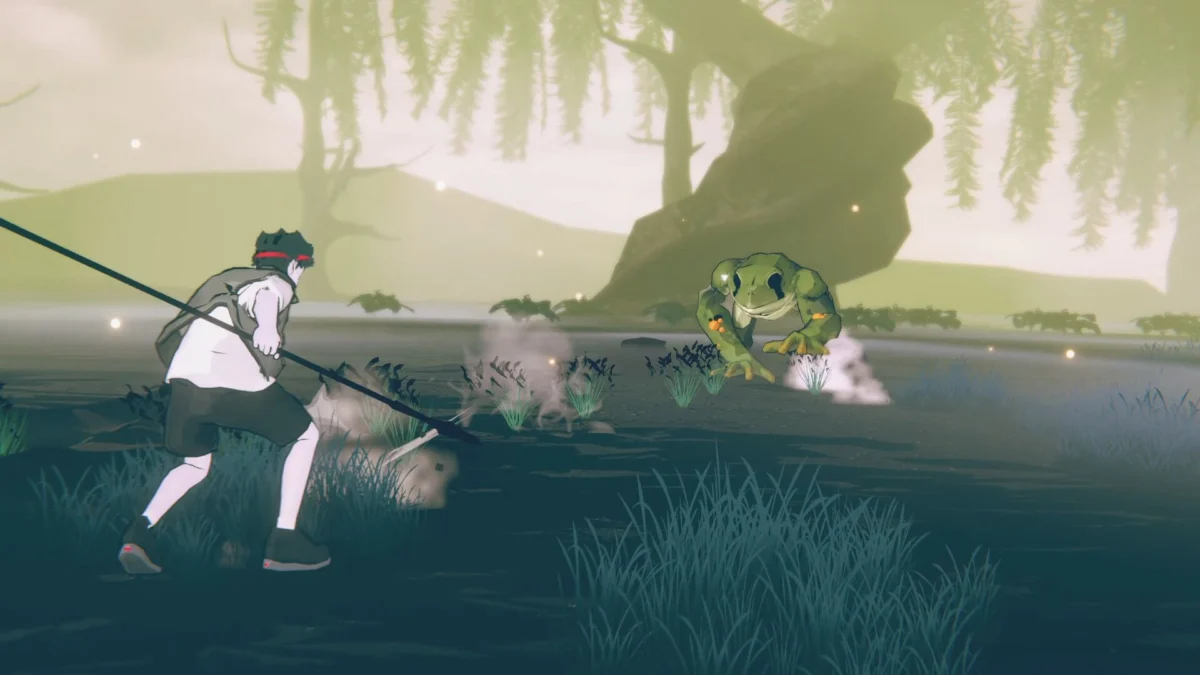
The indie gaming landscape is frequently defined by its ability to subvert expectations, blending disparate genres into cohesive, often eccentric, experiences. However, few titles in recent memory have generated as much immediate intrigue and mechanical debate as BREKEKEKEX. Developed by the independent creator known as "nohost," this third-person anime fighting game has recently released a demo that has left the player base both enthralled and significantly challenged. Featuring a cast of hyper-agile, giant frogs and a combat system that rewards precision over button-mashing, BREKEKEKEX is positioning itself as a potential cult classic, even as its steep difficulty curve forces the developer to provide emergency guidance to a struggling audience.
Main Facts: A New Paradigm in Anime Combat
At its core, BREKEKEKEX is a single-player, third-person action-fighting game that draws heavy inspiration from two titans of the genre: Super Smash Bros. and the Naruto: Ultimate Ninja Storm series. While the title itself—an onomatopoeic reference to the croaking of frogs popularized in Aristophanes’ ancient Greek comedy The Frogs—might suggest a whimsical experience, the gameplay is anything but lighthearted.
The game distinguishes itself through its "directional input" system. Unlike traditional fighting games like Street Fighter or Tekken, which often rely on complex "quarter-circle" or "Z-motion" button combinations, BREKEKEKEX ties its special moves and variations to the direction the player is holding at the moment of the attack. This is the "Smash Bros. DNA" that nohost refers to, translated into a fully 3D, high-speed environment.
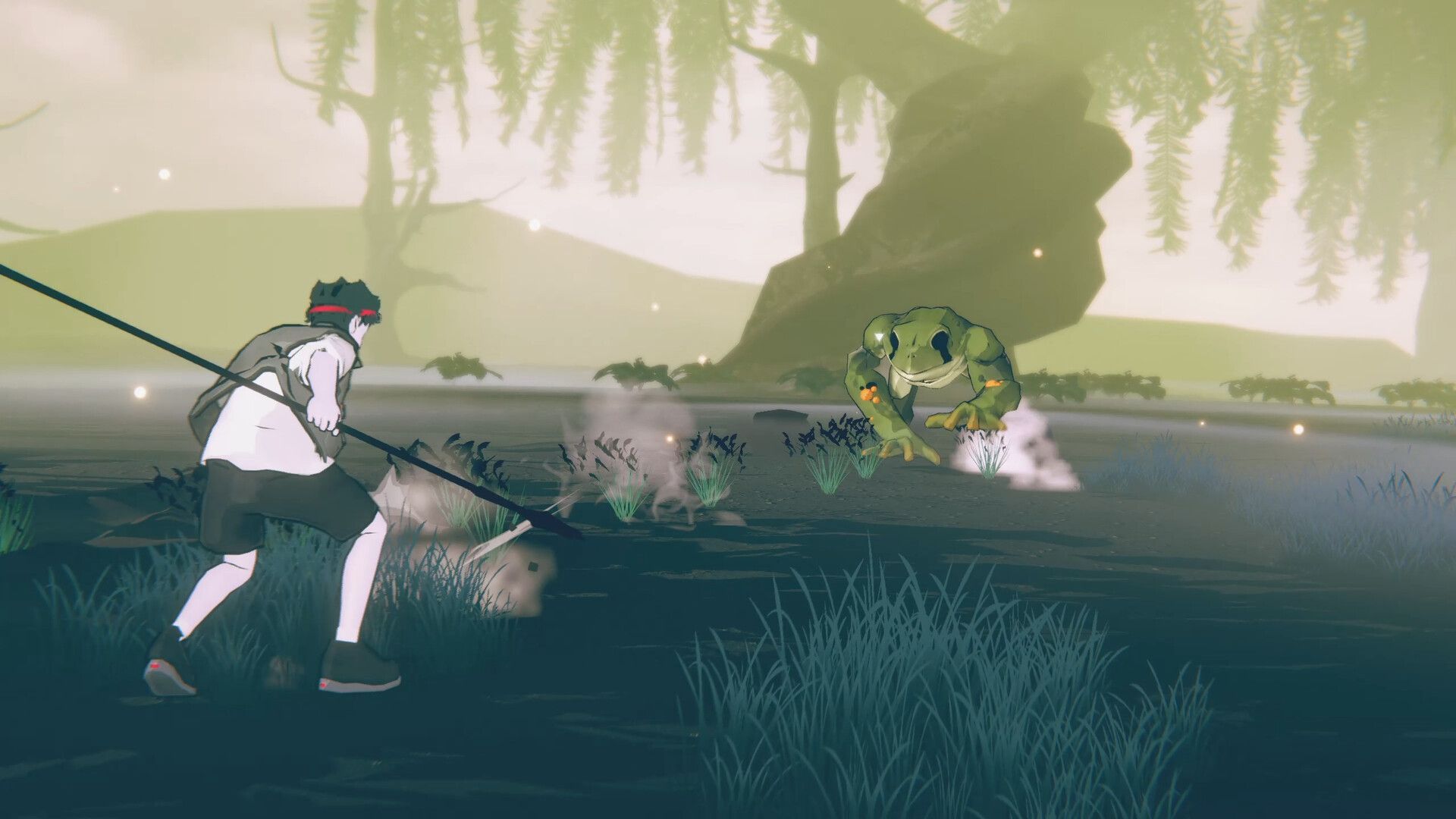
The demo introduces players to a protagonist wielding a spear, characterized by long-range pokes and agile evasive maneuvers. However, the true stars—and primary antagonists—of the demo are the giant frogs. These creatures are not the slow, lumbering beasts one might expect. Instead, they are scarily quick, utilizing tongue-slaps that cover half the arena and massive belly flops that demand frame-perfect dodging. The visual fidelity of these encounters, bolstered by a swaying, cinematic third-person camera, has led many to compare the game’s "vibe" to the high-octane spectacle of CyberConnect2’s Naruto titles.
Chronology: From Announcement to Viral Difficulty
The journey of BREKEKEKEX from a niche project to a viral Steam demo has been swift. The developer, nohost, initially teased the project on social media, showcasing the fluid animations and the unique aesthetic of "anime warriors vs. giant amphibians." The announcement trailer immediately resonated with fans of the "arena fighter" subgenre, a category of games that often suffers from a lack of innovation.
In June 2026, coinciding with the broader community interest surrounding Steam Next Fest, nohost released a playable demo. The initial reception was overwhelmingly positive regarding the game’s art style and the "weight" of the combat. However, within 24 hours of release, a narrative began to emerge across social media platforms and Steam forums: the game was "brutally difficult."
The difficulty spike was specifically localized in a mid-demo encounter where the player character shifts. After mastering the spear-wielding human, players are suddenly thrust into the webbed feet of a frog to engage in a mirror-match or a fight against a formidable opponent named Clem. This transition stripped players of their familiar reach and forced them to engage with the game’s deeper systems—systems that, by the developer’s own admission, were not adequately explained in the demo’s "last-minute" tutorial. By the second day of the demo’s release, "how to beat the frog" became a trending topic among the game’s growing community.
Supporting Data: The Mechanics of the "Frog-Like" Challenge
To understand why BREKEKEKEX has proven so difficult for the average player, one must look at the data governing its combat. In most modern action games, "difficulty" is often a matter of stat-checking—having high enough health or damage to survive an encounter. BREKEKEKEX explicitly rejects this. As the developer noted, "This isn’t an RPG. There are no skill trees to grind and no stats to pad."
The Directional Input Ceiling
In a 2D fighter, directional inputs are binary (left or right). In the 3D space of BREKEKEKEX, the interaction between the camera angle and the directional input creates a high skill ceiling. A "Forward + Attack" move changes based on the player’s orientation relative to the enemy. Players accustomed to the "lock-on and mash" style of some arena fighters found themselves whiffing attacks or triggering the wrong special moves because their positioning was slightly off.
The Anatomy of the Frog
The enemy AI in the demo utilizes a "reactionary" logic. The giant frogs are programmed to punish "whiffs" (missed attacks) with near-instantaneous tongue grabs. Data gathered from player feedback suggests that the "Clem" fight has a win rate significantly lower than the introductory spear levels. This is largely due to the "weight" of the frog character; while the human protagonist is a "glass cannon" (high mobility, low health), the frog characters operate on a momentum-based system where every move has a significant "startup" and "recovery" period.
Visual Cues and the "Naruto" Camera
The "swaying camera" that gives the game its cinematic flair also adds a layer of difficulty. By mimicking the Naruto Ultimate Ninja Storm style, the camera often shifts to the most dramatic angle. While this looks "absolutely sick in motion," it can occasionally obscure the exact "hitboxes" of incoming attacks, requiring players to learn the timing of the frogs’ croaks and physical tells rather than relying solely on visual confirmation.
Official Responses: Developer "nohost" Addresses the Chaos
As the discourse surrounding the demo’s difficulty intensified, the developer, nohost, took to X (formerly Twitter) to address the community’s struggles. The response was a mix of professional transparency and "indie dev" humility.
"The difficulty curve is for sure too steep," nohost admitted in a post that quickly gained traction. "The ‘tutorial’ in the demo was admittedly kinda last minute." This admission highlighted a common hurdle for solo developers: the "curse of knowledge." Having spent hundreds of hours building the systems, the developer found the mechanics intuitive, while the general public found them opaque.
To mitigate the frustration, nohost released a clandestine tutorial video specifically for the "Clem" fight. In the video, the developer demonstrated that the fight isn’t meant to be "brute-forced." Instead, it requires the player to utilize the frog’s unique physics—using belly flops not just for damage, but for repositioning and utilizing the "weight" of the character to interrupt enemy animations.
Furthermore, nohost clarified the game’s design philosophy, emphasizing that the final version will be a "pure" skill-based experience. The developer’s commitment to a "no-grind" philosophy is a bold stance in an era where most games utilize "Live Service" elements or RPG mechanics to keep players engaged. For BREKEKEKEX, the engagement comes from the mastery of the "croak."
Implications: The Future of Skill-Based Indie Fighters
The saga of the BREKEKEKEX demo carries several implications for the indie development scene and the fighting game community (FGC) at large.
The "Demo as QA" Strategy
Nohost’s experience underscores the evolving role of the public demo. No longer just a marketing tool, the demo for BREKEKEKEX served as a massive, unplanned stress test for the game’s onboarding process. The developer has already pledged to "tweak" the game before its full launch, likely smoothing out the difficulty curve and implementing a more robust tutorial. This iterative process, fueled by viral feedback, is becoming the standard for successful indie launches.
The Appeal of the "Niche and Weird"
The success of the demo—despite its difficulty—proves that there is a significant appetite for fighting games that step outside the traditional "humanoid martial artist" trope. The "giant frog" aesthetic is memetic, but the underlying mechanical depth is what keeps players from quitting. It suggests that indie developers can find success by taking high-fidelity concepts (like the Naruto camera) and applying them to idiosyncratic, physics-based combat.
The Path to Full Release
As the demo remains available on Steam (though perhaps not for long, according to the developer), the anticipation for the full version of BREKEKEKEX continues to build. The game promises multiple playable characters, each with distinct movesets that move beyond the spear-man and the frog. The challenge for nohost will be maintaining the "weight" and "skill" of the combat while ensuring that the "directional input" system is accessible enough for players to learn without needing to consult a viral tweet.
In conclusion, BREKEKEKEX is more than just a "frog fighting game." It is a testament to the power of unique mechanical identity and the importance of developer-player communication. Whether players are getting slapped by a tongue or crushed by a belly flop, they are participating in a revival of the "pure" action game—one where the only thing that matters is the player’s skill and, of course, the weight of their croak.

