

The gaming landscape is a delicate ecosystem of release dates, where the scheduling of a single major title can trigger a domino effect across the entire industry. CI Games, the developer behind the Lords of the Fallen franchise, has officially joined the ranks of studios adjusting their sails to avoid the gravitational pull of Rockstar Games’ Grand Theft Auto 6.
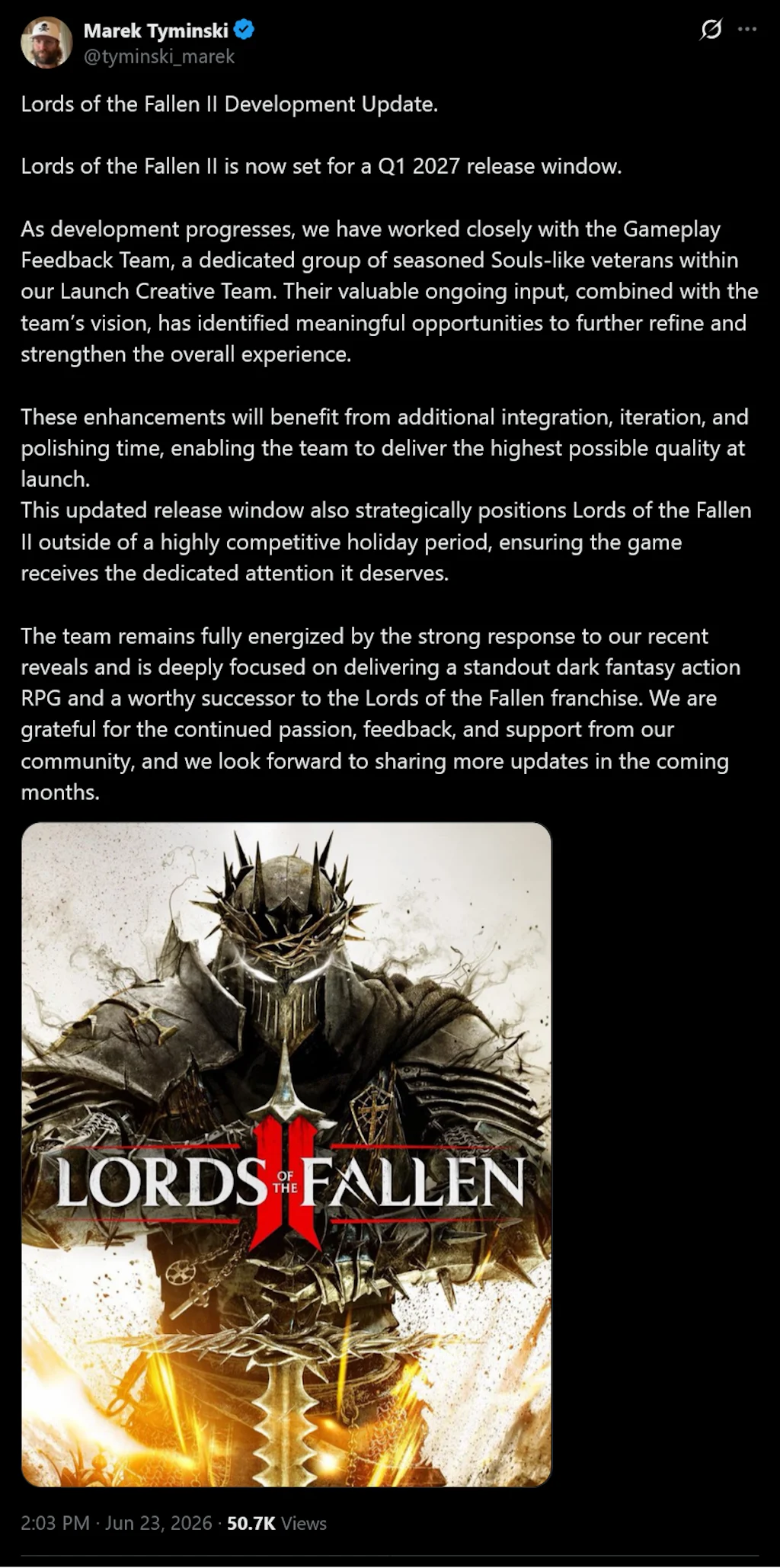
In a significant update for fans of the dark fantasy action RPG series, CI Games announced that the sequel to the well-received 2023 reboot has been officially delayed. Originally slated for a release later this year, the title is now expected to arrive in the first quarter of 2027. This move, while disappointing for those eager to jump back into the series’ unique dual-world mechanics, is being framed by the studio as a strategic decision designed to prioritize quality and market visibility.
The Official Stance: Quality Over Convenience
The announcement came directly from CI Games CEO Marek Tyminski, who utilized social media platform X to communicate with the community. According to Tyminski, the delay is not merely about market positioning but is deeply rooted in the ongoing development process.
"As development progresses, we have worked closely with the Gameplay Feedback Team, a dedicated group of seasoned souls-like veterans within our Launch Creative Team," Tyminski stated. "Their valuable ongoing input, combined with the team’s vision, has identified meaningful opportunities to further refine and strengthen the overall experience."
The studio is clearly aiming to avoid the pitfalls of a "rushed" launch—a narrative that has plagued many high-profile releases in recent years. By granting the development team additional time for integration, iteration, and final polishing, CI Games is banking on the idea that a high-quality product in early 2027 will leave a more lasting impact than a potentially compromised version released during a crowded holiday season.
The "GTA 6 Effect": A Industry-Wide Shift
While the desire for further polish is a standard refrain in development updates, the subtext of this delay is impossible to ignore. Grand Theft Auto 6, currently set for a November release, has become the primary point of gravity for the gaming industry. Its presence is so monolithic that publishers across the spectrum are scrambling to clear their calendars.
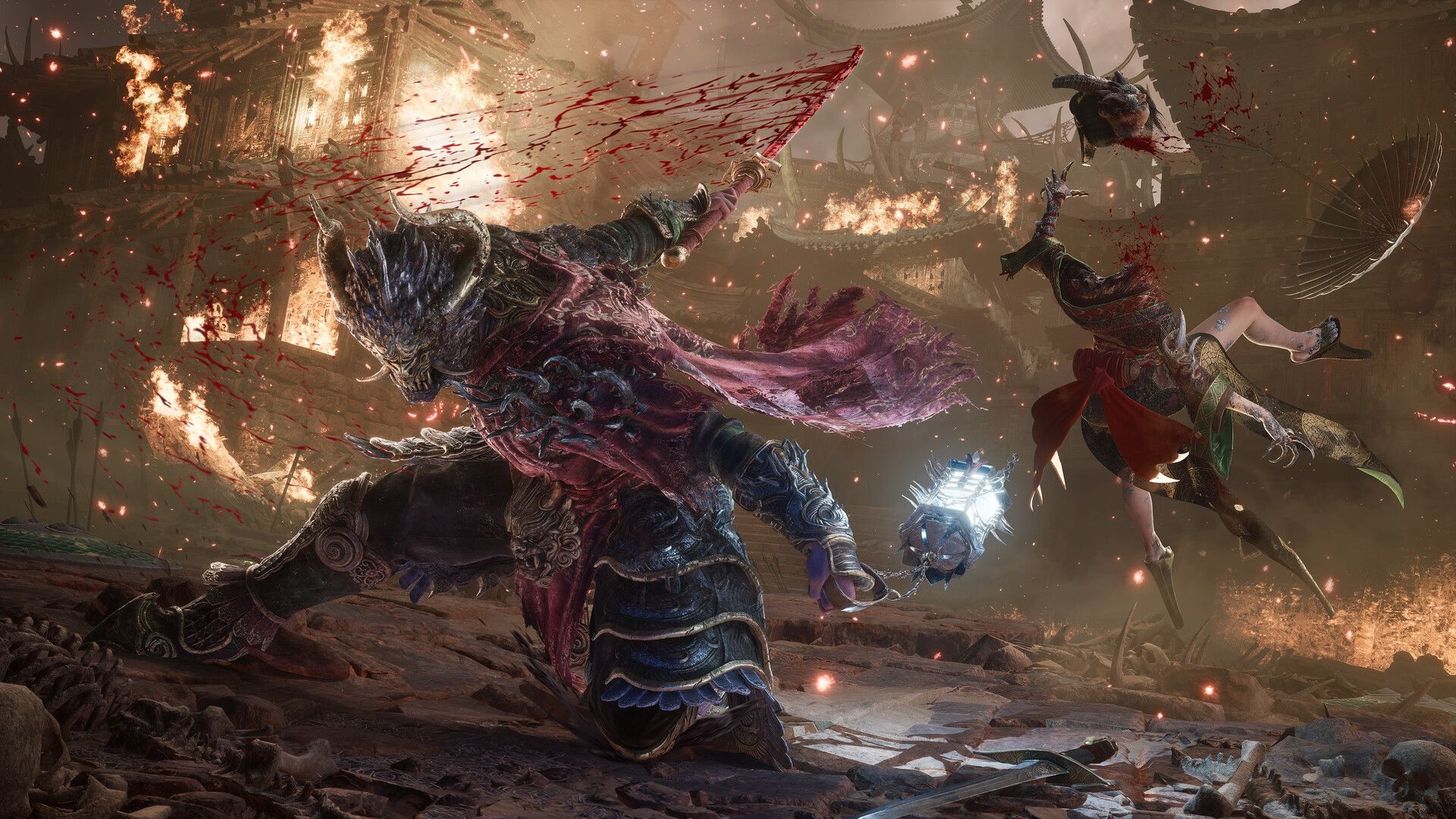
The delay of Lords of the Fallen 2 serves as a stark reminder of the "GTA 6 Effect." When a game of such immense cultural and commercial magnitude enters the release calendar, it risks suffocating the sales potential of any other title that attempts to compete for consumer attention, media coverage, and retail shelf space. By moving to Q1 2027, CI Games is effectively carving out a "safe zone" for its title, ensuring that when the game finally hits the market, it will be the primary focus for its target audience rather than a footnote in the shadow of Rockstar’s latest epic.
A History of Strategic Shuffle
This is far from the first time the industry has seen such maneuvers. The calendar is a battleground, and developers have historically used the "evasion" strategy to protect their intellectual properties.
- The Silksong Shuffle: Last year, the anticipation surrounding the release of Hollow Knight: Silksong forced several indie developers to rethink their launch windows. The mere threat of a shadow-drop from Team Cherry caused a ripple effect, as smaller studios feared their projects would be buried by the massive community engagement surrounding the sequel.
- The Starfield Gambit: Perhaps one of the most famous recent examples occurred in 2023, when Larian Studios made the bold decision to move the release of Baldur’s Gate 3 forward by a month. While it seemed counterintuitive to move toward a major release, the studio successfully carved out space to build momentum before the launch of Bethesda’s Starfield. In retrospect, the gamble paid off, with Baldur’s Gate 3 becoming a generational touchstone.
- The 2020 Holiday Crunch: Going back to the 2020 holiday season, the release of Cyberpunk 2077 created a similar phenomenon. Despite the game’s rocky launch, the sheer marketing spend and hype cycle surrounding it forced other developers to move their titles to avoid the direct blast radius of what was arguably the most anticipated game of that year.
Implications for the Soulslike Genre
The "Soulslike" genre, characterized by its punishing difficulty, interconnected world design, and cryptic storytelling, has become increasingly crowded. With FromSoftware’s Elden Ring: Shadow of the Erdtree dominating the discourse and other titles like Lies of P proving that there is a massive appetite for the genre outside of the Dark Souls franchise, the pressure on CI Games to deliver is higher than ever.
By taking an extra year of development time, CI Games is signaling that they are not interested in merely replicating the formula; they are looking to iterate on it. The feedback loop mentioned by Tyminski—involving "seasoned souls-like veterans"—suggests that the team is deeply analyzing the criticism and praise leveled at the 2023 Lords of the Fallen.
Fans can expect this extra time to result in deeper combat mechanics, more nuanced boss encounters, and, hopefully, a more stable technical performance at launch. In an era where "day one" patches have become the norm, a proactive delay is a rare act of confidence.
What to Expect in 2027
While a Q1 2027 window is broad, it provides a clearer picture of what the remainder of the decade looks like for the franchise. The team remains "fully energized" by the response to recent reveals, suggesting that the core identity of the sequel is locked in. The next few months will likely be characterized by a "quiet period" as the developers go dark to focus on the heavy lifting of production.
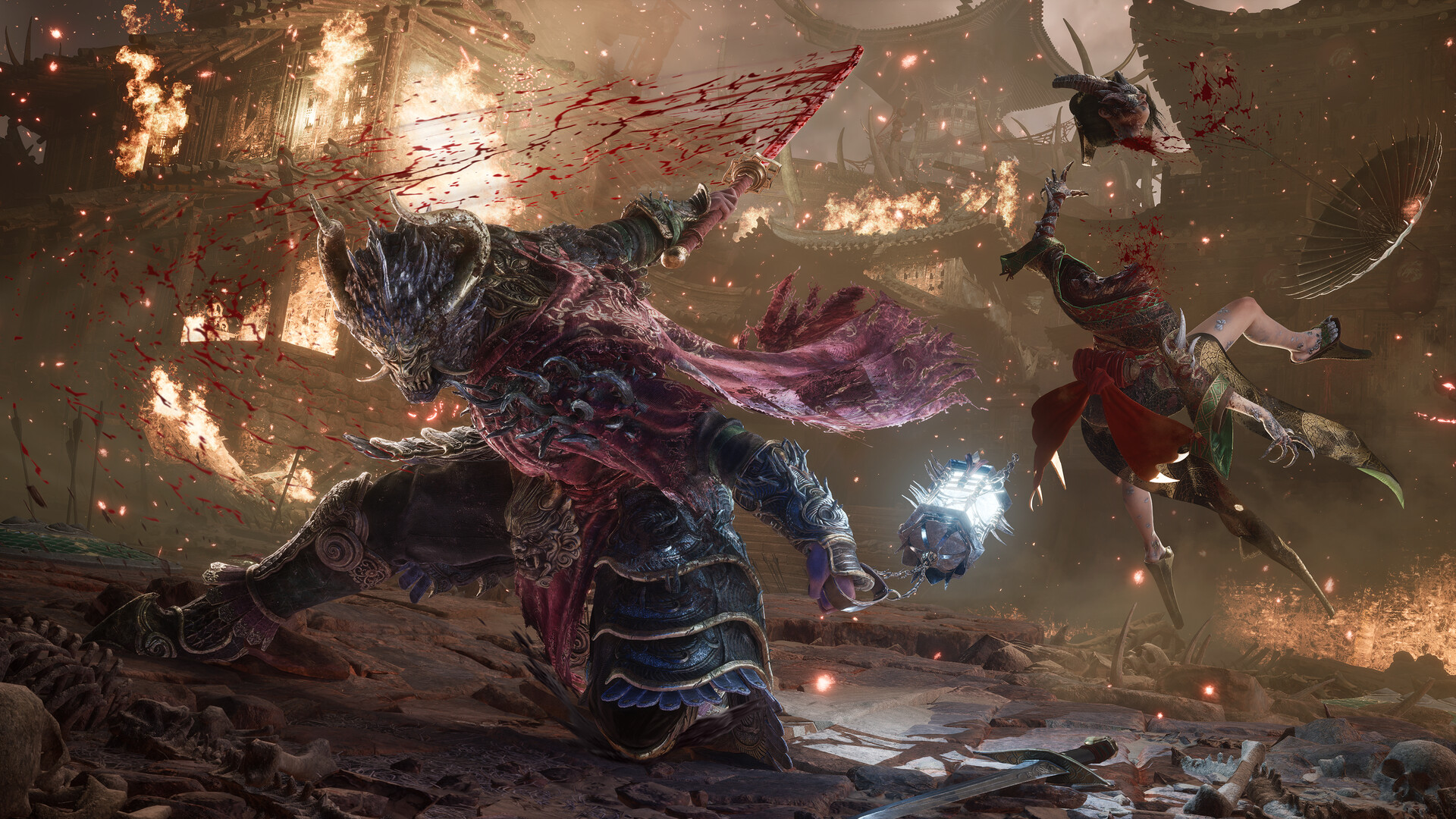
For the community, the wait will be difficult, but the alternative—a buggy, undercooked experience that gets swallowed by the holiday season—is a far worse outcome. The lessons learned from the failures of other titles that launched in a broken state serve as a constant reminder that "delayed" is eventually good, while "bad" is bad forever.
Conclusion: The Long Game
The decision to delay Lords of the Fallen 2 is a pragmatic, mature approach to game development in an increasingly volatile market. By acknowledging the presence of the Grand Theft Auto 6 juggernaut and refusing to sacrifice the game’s long-term success for a short-term holiday release, CI Games is playing the long game.
As we look toward 2027, the success of this title will hinge on whether that extra time in the oven truly results in the "standout dark fantasy action RPG" that the developers have promised. If they can successfully refine their mechanics and deliver a polished, cohesive experience, they will have proven that patience is not just a virtue—it is a competitive advantage.
Until then, the industry will continue to shift around the immovable object that is the GTA release schedule, and players will be left waiting, hoping that the extra time spent in development results in a title worthy of the wait. For now, the "souls-like" community must turn its gaze to the future, keeping a watchful eye on any upcoming technical reveals that might emerge from the shadows of the studio’s development cycle as they aim for that 2027 window.

