

[Editor’s Note: Tubefilter Charts is a weekly rankings column from Tubefilter with data provided by GospelStats. It is a top-number ranking of YouTube channels based on statistics collected within a given time frame. Check out all of our Tubefilter Charts with new installments every week right here.]
The King of YouTube Meets the King of Sports
For the better part of the last two years, Jimmy “MrBeast” Donaldson has sat comfortably atop the YouTube hierarchy, serving as the undisputed titan of subscriber acquisition. Last week, the creator surpassed a staggering 500 million subscribers—a feat that once seemed mathematically impossible. Yet, for the week ending June 21, even the juggernaut that is MrBeast had to settle for second place.
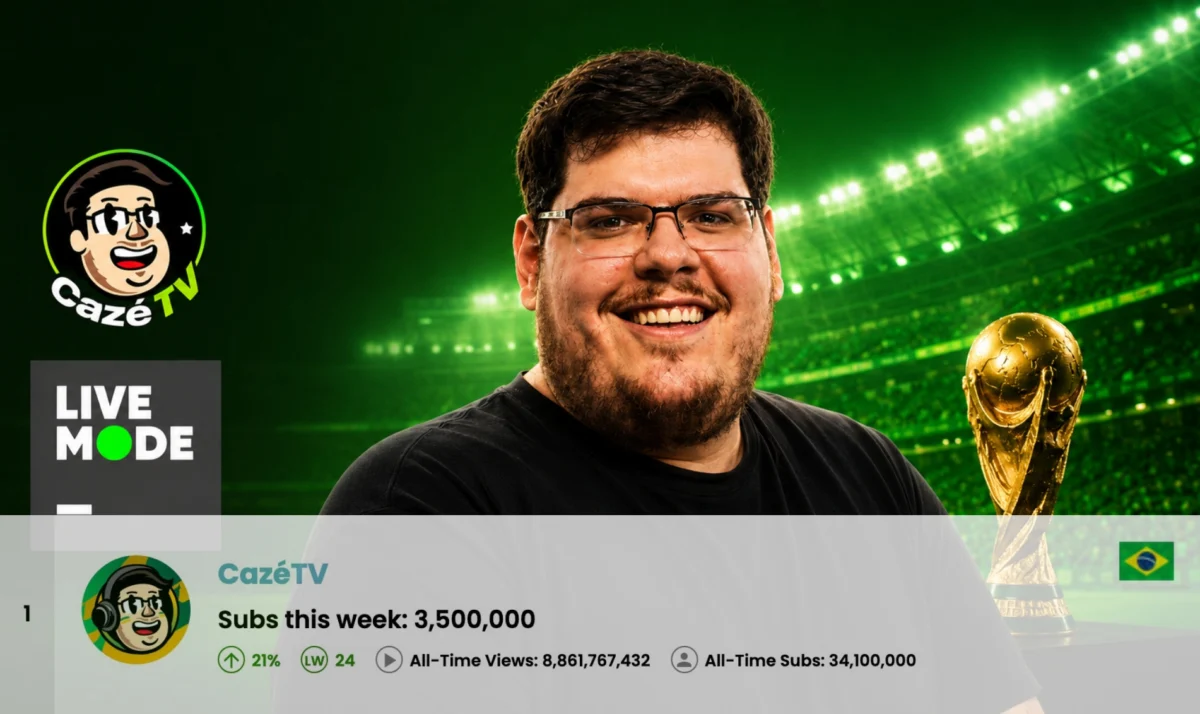
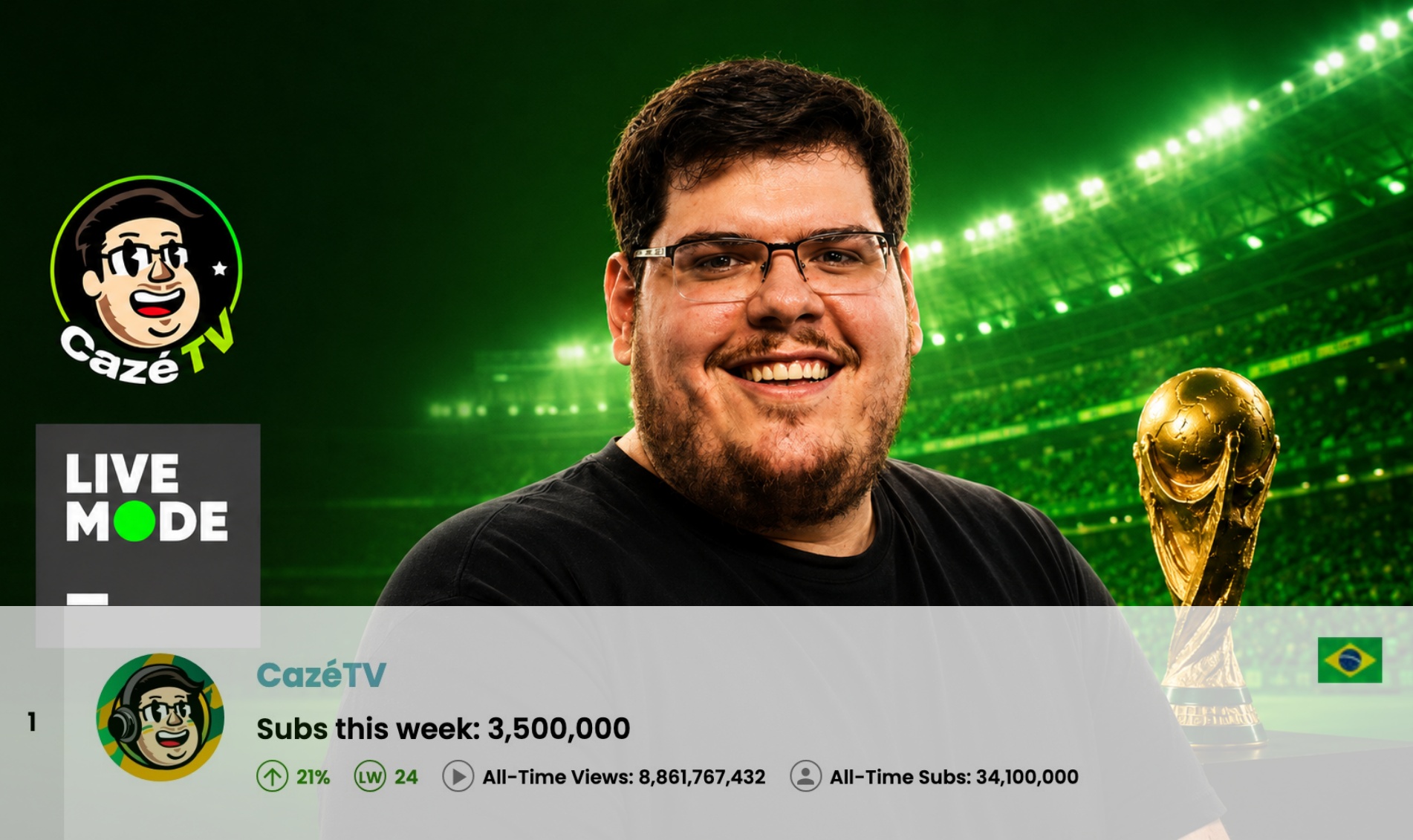
While Donaldson added a formidable two million new subscribers to his empire, the top spot on the Global Sub Top 50 was claimed by an unexpected force: the 2026 FIFA World Cup. Specifically, it was captured by the Brazilian streaming powerhouse CazéTV, which leveraged the quadrennial tournament to secure an astonishing 3.5 million new subscribers in a single week.
This shift signals a broader evolution in the digital landscape. As the 2026 World Cup progresses, it has become increasingly clear that the “creator economy” is no longer just about individual personality-driven content; it is about the intersection of live tentpole events, official broadcast rights, and the massive, built-in audience of international sports.
Chronology of a Soccer Surge
The current edition of the World Cup has proven to be the most creator-centric tournament in history. As we find ourselves deep in the Group Stage, the digital footprint of the event has evolved into a multi-layered ecosystem.
- Early June: As the tournament kicked off, viewership metrics began to deviate from standard historical patterns. Unlike previous years, where mainstream media networks held a near-monopoly on engagement, the 2026 iteration saw a deliberate pivot toward platform-native creators.
- Mid-June: By the second week of competition, the “World Cup Effect” was in full swing. Channels that integrated soccer into their content strategy began to see exponential growth. The official FIFA channel, for instance, experienced a massive influx of traffic, proving that even legacy institutions are finding new life through YouTube’s algorithm.
- June 21 Reporting Period: The week concluded with a seismic shift in the rankings. CazéTV’s 3.5 million subscriber gain, combined with high-performance metrics from influencers like Celine Dept and the official FIFA portal, underscored that the World Cup has become the single most influential driver of YouTube growth in the current calendar year.
Supporting Data: The Anatomy of the Global Top 50
The data provided by GospelStats highlights a clear trend: the Global Sub Top 50 is currently dominated by content that bridges the gap between traditional sports broadcasting and influencer-led commentary.
The Big Three of World Cup Growth
- CazéTV (3.5 Million Weekly Subs): By securing rights to broadcast creator-led streams of all matches, the Brazilian channel has effectively become the “home” of the tournament for millions. Their strategy of inviting high-profile athletes—such as Vinicius Junior—onto their streams has created a “must-watch” culture that transcends standard match reporting.
- FIFA Official Channel (1.7 Million Weekly Subs): FIFA’s digital strategy has matured significantly. By providing high-quality match summaries and exclusive “behind-the-scenes” highlights, the organization has captured the casual viewer who may not have time for a full 90-minute match but still wants to stay updated.
- Celine Dept (1.3 Million Weekly Subs): Representing the influencer-athlete archetype, Dept has capitalized on the “skill challenge” format. Her ability to blend high-production soccer content with celebrity interactions—most notably her viral meeting with Cristiano Ronaldo—has solidified her place as a top-tier digital ambassador for the sport.
The Strategy of the New Sports Broadcaster
The success of these channels is not accidental. It represents three distinct, foolproof strategies for dominating the digital space during major tentpole events.
1. Become a Digital Broadcaster
CazéTV has rewritten the rulebook. By moving beyond mere commentary and into the realm of live, authorized broadcasting, they have become a primary destination rather than a secondary one. This creates a high barrier to entry for other creators but offers a reward that is currently unmatched in the YouTube ecosystem.
2. The Platform-Wide Push
Major tech conglomerates, including YouTube, TikTok, and Meta, have spent months incentivizing brands and creators to lean into the World Cup. This has created a symbiotic environment where advertisers are eager to fund creators who are “at the center of the action.” This institutional support provides the necessary infrastructure for creators to scale their content production during short, high-intensity windows like the World Cup.
3. Institutional Reliability
Even as individual creators rise, the official FIFA channel remains a constant. The lesson here is that content curation—providing definitive, reliable, and high-quality highlights—is a business model that scales regardless of the “personality” factor. For brands looking to enter the space, the official channel remains the most stable anchor.
Official Responses and Industry Implications
The success of these channels has not gone unnoticed by industry analysts or the platform itself. In recent briefings, YouTube executives emphasized their “Creator Lineup” strategy for the 2026 World Cup, designed to capture the sport from every conceivable angle.
“We are seeing a democratization of sports broadcasting,” notes one industry observer. “It is no longer enough to have a television contract. You need a voice, a community, and a strategy that fits the vertical, mobile-first viewing habits of the modern fan.”
The implications for the broader creator economy are significant:
- Diversification of Revenue: Creators who successfully navigate events like the World Cup are seeing an increase in long-term sponsorships that extend far beyond the tournament itself.
- The Rise of “Creator-Led” Sports: We are witnessing the birth of a new category. The success of the Kings League and other independent football ventures suggests that the future of sports media is increasingly leaning toward leagues that are purpose-built for the internet.
- Algorithm Shifts: YouTube’s algorithm has demonstrated a clear preference for “tentpole-relevant” content. Channels that successfully ride the wave of global conversations are being rewarded with visibility that was previously reserved for evergreen content producers.
Beyond the Pitch: The Sustainability of the Soccer Boom
A common concern for creators entering this space is the “cliff effect”—what happens when the trophy is lifted and the stadiums go quiet?
The data suggests that the soccer mania currently gripping YouTube will not evaporate. Many of the channels currently dominating the Top 50 were already successful before the World Cup began. The tournament has simply acted as an accelerant, bringing millions of new subscribers into their orbits.
CazéTV and Celine Dept are expected to maintain a significant portion of their audience gains. By providing a steady stream of “Kings League” highlights and high-quality football lifestyle content, they are transitioning their new, massive audiences into long-term subscribers.
Conclusion: The New Rules of Engagement
For the aspiring creator, the message is clear: the era of the isolated, siloed channel is fading. The most successful channels of 2026 are those that act as hubs for community and event-driven excitement. Whether through official partnerships, creative broadcasting, or high-octane skill challenges, the future belongs to those who can frame the global conversation.
As we continue to track the charts, one thing remains certain: the World Cup has proven that YouTube is now the world’s stadium. With 36 of the Top 50 channels currently focusing on YouTube Shorts, the speed at which this content is consumed is faster than ever. For those willing to adapt to this high-velocity, sports-focused landscape, the opportunities for growth are truly boundless.
Keep up to speed with the latest Tubefilter Charts and all our news by subscribing to our newsletter. You’re going to love it. Newsletter.Tubefilter.com.

