

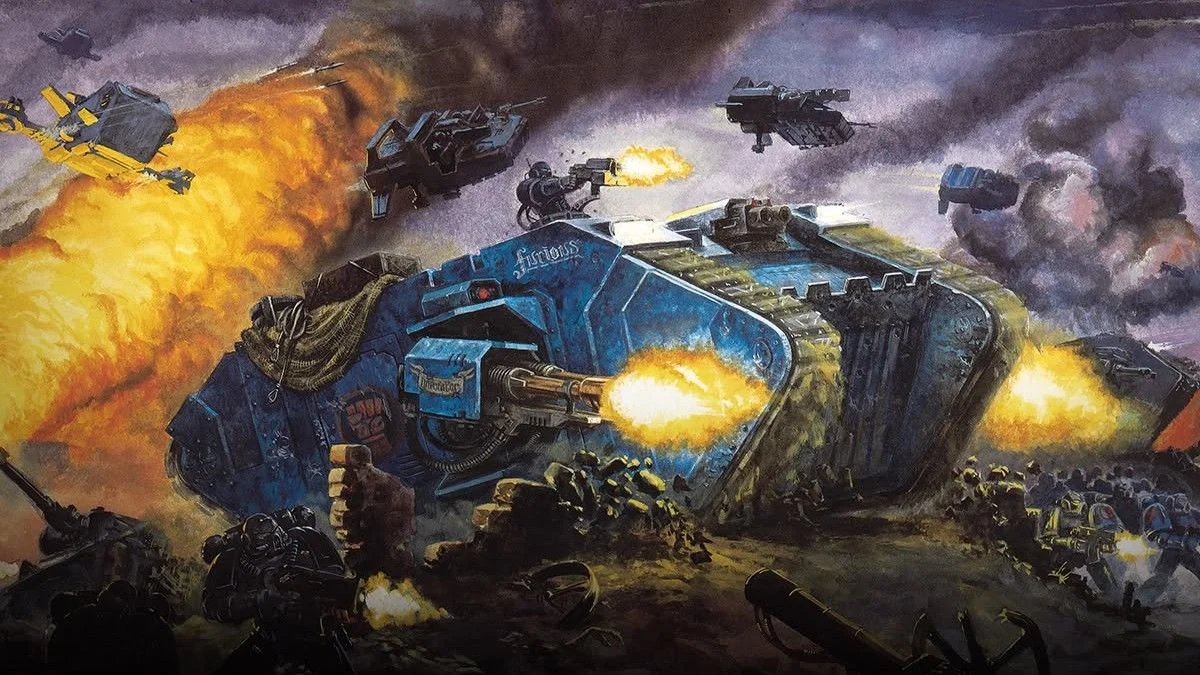
The universe of Warhammer 40,000 is widely regarded as one of the most oppressive, grimdark settings in all of fiction. It is a galaxy defined by perpetual war, existential dread, and the crushing weight of a decaying empire. Yet, beneath the layers of gothic architecture, flowing incense, and the blood-soaked reality of the frontline, the lore of the Imperium of Man hides a surprising penchant for the mundane—and at times, the downright ridiculous.
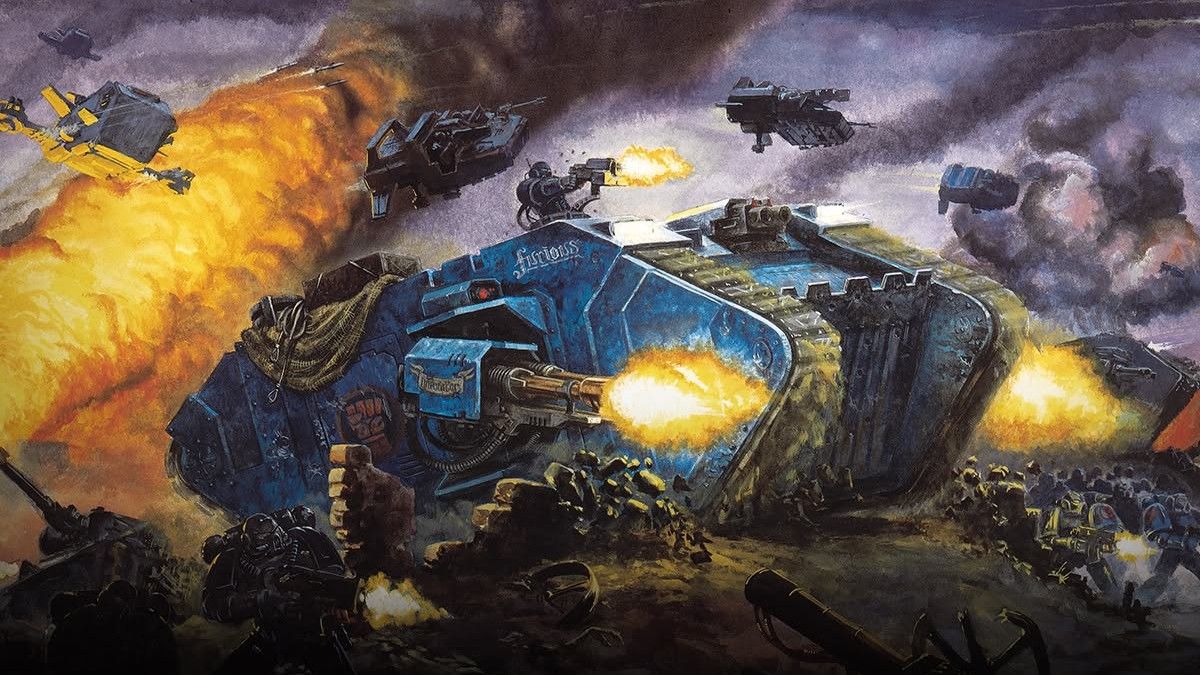
For decades, fans have analyzed the technical specifications of the Space Marines’ most iconic war machines. Among these, the Land Raider and the Land Speeder stand as symbols of Astartes might. However, a recurring piece of trivia often catches newcomers off guard: these machines are not named for their tactical utility or their capacity to "raid" or "speed" across the land. They are named after a singular, irascible Tech-Priest named Arkhan Land.
The Man Behind the Machine: Arkhan Land
The revelation that "Land Raider" is essentially a possessive noun—as in, "Land’s Raider"—is a classic example of how Games Workshop injects a sense of human ego into the distant, hyper-technological future of the 41st Millennium.
Arkhan Land is a Technoarchaeologist of the Adeptus Mechanicus, introduced prominently in the Horus Heresy series, most notably in Aaron Dembski-Bowden’s The Master of Mankind. Far from the stoic, machine-worshipping drones often depicted in the lore, Land is portrayed as an arrogant, brilliant, and somewhat petulant scholar. He is rarely seen without his "psyber-monkey," a cybernetic simian companion that reflects his eccentric personality.
According to lore established in the Horus Heresy novels, Land was responsible for leading expeditions into the ancient, forbidden data-crypts buried deep within the crust of Mars. During these perilous ventures, he recovered the archeotech blueprints for anti-grav technology—the very foundation upon which the Imperium’s mobile armor would be built. Because he was the one who unearthed and deciphered these schematics, the resulting tanks and skimmers were branded with his name.
A Chronology of Naming Conventions
While many modern fans view this as a tongue-in-cheek "retcon" or a modern development in the lore, the reality is that the joke has been baked into the foundation of the hobby for nearly as long as the game has existed.
The 1990 Revelation
The association between Arkhan Land and his eponymous vehicles traces back to White Dwarf issue 129, published in 1990. At that time, the Warhammer 40,000 universe was still in its infancy, having only debuted in 1987 with the Rogue Trader rulebook. It is a testament to the idiosyncratic humor of the original designers that, just three years into the game’s lifespan, they decided to name the most powerful tank in the game after a quirky scientist rather than a grand, militaristic concept.
The Horus Heresy Expansion
For many years, the mention of "Land" remained a niche piece of trivia. It wasn’t until the explosive expansion of the Horus Heresy narrative series that Arkhan Land was fully fleshed out as a character. By moving him from a footnote in an old magazine to a featured character in the novels, Black Library authors elevated the absurdity to a central pillar of the setting’s history. It effectively transformed a potential "lore-error" into a beloved, self-aware quirk of the Imperium’s bureaucratic and historical record-keeping.
Supporting Data: The "Jimmy Space" Phenomenon
The "Land" naming convention has become a lightning rod for community discourse, eventually spawning one of the most pervasive memes in the hobby: "Jimmy Space."
The logic follows a simple, albeit hilarious, syllogism:
- If the Land Raider is named after Arkhan Land…
- And the Space Marines are the Adeptus Astartes (or "Space Marines")…
- Then surely, the Emperor of Mankind—the creator of the Space Marines—must be named "Jimmy Space."
While clearly a parody, the "Jimmy Space" meme highlights a broader truth about the Warhammer universe: the names of legendary figures often become synonymous with the tools they create. This community-driven joke serves as a reflection of how the lore treats its history—where the truth is often buried under layers of myth, acronyms, and, occasionally, the sheer hubris of the individuals involved.
The Pattern of Human Naming: The Astarte Case
The "Land" precedent isn’t the only instance of nomenclature-based world-building that has shifted fan perceptions. The term "Adeptus Astartes" was long thought to be derived from an ancient deity of war, fitting for the pseudo-religious, mythic tone of the Warhammer universe. However, the novel Valdor: Birth of the Imperium clarified that the term is named after Amar Astarte, a human geneticist and scientist who worked alongside the Emperor during the unification of Terra.
This revelation, much like the Arkhan Land backstory, strips away some of the "divine" mystery of the setting, replacing it with the very human (and sometimes mundane) reality of the Emperor’s inner circle. It suggests that the Imperium, for all its grandiosity, is built upon the contributions of specific, flawed individuals whose names were simply attached to their projects.
Implications for the Setting
What does this mean for the future of Warhammer 40,000? The revelation that the most "epic" titles are actually just surnames of scientists has several implications for how we interpret the lore.
Unreliable Narration
The setting of 41st Millennium is defined by "unreliable narration." Because the history of the Imperium is ten thousand years removed from the current timeline, names, dates, and origins are often obscured. When we learn that a Land Raider is named after a guy with a robot monkey, it serves as a reminder that the Imperium’s history is not a collection of objective truths, but a series of stories told by survivors.
The "Goofy" Undercurrent
There is a distinct tension between the "Grimdark" aesthetic and the "goofy" origins of the lore. By grounding the technology in the personal vanity of characters like Arkhan Land, the writers successfully humanize a setting that could otherwise feel too cold or abstract. It provides a necessary release valve for the tension. Players can enjoy the tactical intensity of a tabletop game while simultaneously acknowledging that they are commanding "Land’s Raiders" across the board.
Speculation: Who’s Next?
The community has embraced this naming convention with open arms, leading to endless, humorous speculation about the rest of the setting. If the Primarchs were created by the Emperor, is there a "John Primarch" in the annals of history? Is the Warp actually just a manifestation of "Frank Chaos"? While these remain jokes, the fact that fans feel comfortable speculating in this direction proves that the "Arkhan Land" precedent has successfully shaped the way the community interacts with the setting’s mythology.
Conclusion: Embracing the Absurdity
The Warhammer 40,000 universe is vast, spanning thousands of planets and millions of stories. It is a world of gods, monsters, and intergalactic empires. Yet, at its core, it remains a product of human creativity—creative minds that aren’t afraid to let a little bit of personality, and a little bit of humor, bleed through the dark armor of the Space Marines.
Whether or not Games Workshop intends to continue this trend of "naming things after scientists," the legacy of Arkhan Land remains secure. It serves as a permanent, humorous reminder that even in the grim darkness of the far future, there is always room for the name of an irascible Tech-Priest to be etched into the side of a tank. It is a detail that keeps the hobby grounded, reminding players that while the galaxy may be a terrible place to live, it is a fascinating place to visit.

