


In the annals of gaming history, few titles carry the weight of "the one that got away" quite like Spore. When Will Wright, the legendary mind behind The Sims and SimCity, announced his next project, the gaming industry held its collective breath. The pitch was intoxicating: a grand, singular simulation that would allow players to shepherd life from a microscopic amoeba through the complexities of tribal development and, eventually, into the cold, infinite reach of space.
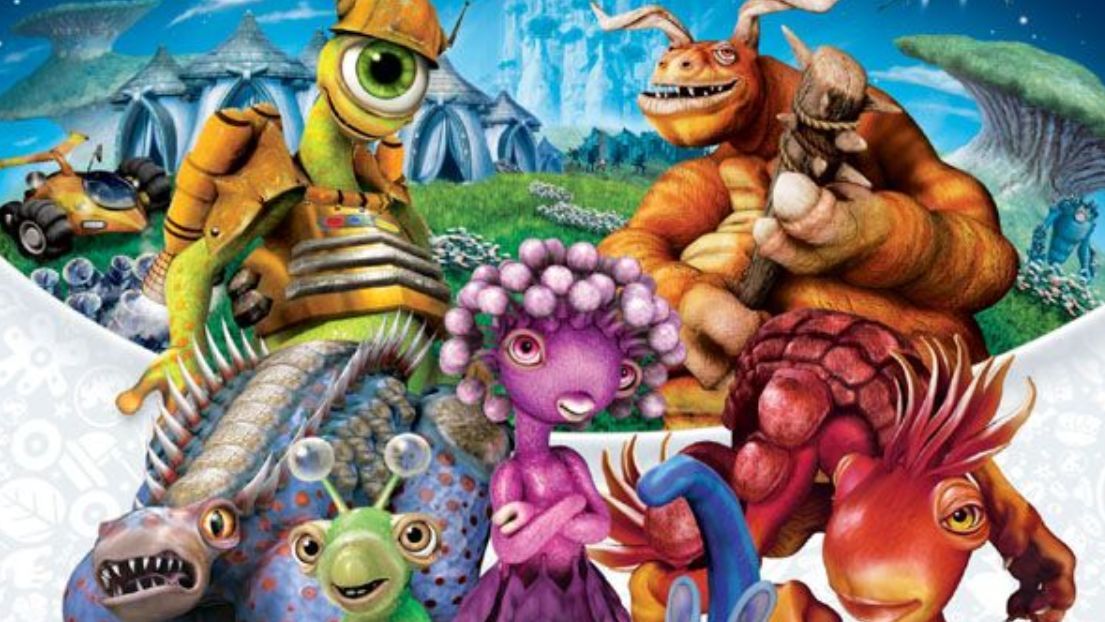
For many, Spore represented the pinnacle of what procedural generation could achieve—a digital primordial soup where the player was the architect of evolution itself. Yet, when the game finally hit shelves in 2008, the reality was a stark departure from the promised simulation. Instead of a seamless, deep, interconnected ecosystem, players were presented with a series of distinct, somewhat shallow minigames tied together by an undeniably impressive, albeit aesthetic-focused, creature creator.
The Genesis of an Ambition
To understand why Spore remains a point of contention, one must look back to the fervor of the mid-2000s. Will Wright was at the height of his creative powers. Having turned the mundane act of managing a household into a global phenomenon with The Sims, Wright’s move toward the biological and cosmic was seen as the logical, ambitious next step.
The "mythology" of Spore was cemented during a landmark presentation at the 2005 Game Developers Conference (GDC). Titled "The Future of Content," Wright’s talk showcased a game that felt truly alive. The visuals were grittier, the mechanics appeared more scientific, and the scope seemed to bridge the gap between hard simulation and emergent gameplay. Features like an aquatic stage—a bridge between cellular life and land-dwelling creatures—were prominently displayed, suggesting a level of evolutionary fidelity that would eventually be stripped from the final build.
A Chronology of Expectation vs. Reality
The gap between the 2005 presentation and the 2008 retail release is a masterclass in the perils of "over-selling" a vision.
- 2000–2004: Early prototyping. Wright and the team at Maxis begin exploring the concept of "procedural verbs" and evolutionary mechanics.
- 2005: The GDC "Future of Content" talk. The public receives their first, transformative look at the game. The "myth" begins to grow, fueled by Wright’s charisma and the technical novelty of the creature creator.
- 2006–2007: Development continues behind closed doors. Internally, the team struggles to reconcile the disparate "minigames" into a cohesive whole, while the marketing machine continues to emphasize the depth of the initial pitch.
- 2008: Spore is released. The critical reception is mixed; while the creature editor is hailed as revolutionary, the gameplay loop is criticized for its lack of depth and the "slog" of its latter stages.
- Post-2008: The community begins the slow process of deconstructing what happened, leading to the creation of extensive "removed features" wikis and a persistent, lingering resentment among early adopters.
Behind the Curtain: The Oral History
Recent insights, specifically from an exhaustive oral history conducted by Design Room, have provided much-needed context to this timeline. According to gameplay designer Jenna Chalmers, the perception of Spore as a singular, deep simulation was largely a case of fans hearing what they wanted to hear.
"Will said from the jump that this was going to be a lot of little minigames," Chalmers noted. "Just nobody listened."
This creates a fascinating dichotomy. While the fans were projecting their desires for a "God-game" onto Wright’s work, the development team was struggling with the practical realities of making a game that spanned five distinct genres. From the cellular stage’s arcade-like action to the space stage’s 4X-lite strategy, the team had to build mechanics that functioned individually, often sacrificing the "seamlessness" that players so desperately craved.
The Role of "Bold Chicanery"
The gap between vision and reality was not lost on the developers. Art director Ocean Quigley candidly remarked that the GDC presentation was an act of "bold chicanery."
Will Wright himself admitted that the preview might have been a bit much. "We were definitely overrepresenting what it eventually became there," he acknowledged. This admission is significant. It reveals that the "myth" of Spore wasn’t just a fan fabrication; it was a byproduct of a designer who, caught up in the excitement of technical possibility, presented a "vertical slice" that implied a depth that hadn’t been fully engineered yet.
Lead gameplay designer Alex Hutchinson echoed this sentiment, noting that the demo "built a fantasy in people’s minds that was unachievable." In the context of game development, this is a recurring tragedy: the moment a developer shows a "perfect" version of a game, they create an anchor that the final product, bound by the realities of hardware, time, and budget, can never reach.
The Paradox of EA’s Involvement
A common narrative in gaming is that a title’s failure is the direct result of "publisher interference." However, the case of Spore defies this trope. Contrary to the industry standard of crunch and forced feature cuts, the team at Maxis enjoyed a remarkable degree of freedom.
The project spanned nearly nine years—an eternity in the fast-paced world of 2000s game development. Developers like Chris Hecker have noted that EA’s support was, if anything, too generous. The lack of a "sense of crisis"—a driving force that often forces teams to kill their darlings and focus on core mechanics—may have actually been the game’s undoing.
With no external pressure to tighten the scope, Wright was given the license to explore, to be "self-indulgent," and to chase ideas that didn’t always coalesce. While EA deserves criticism for many of its business practices, the Spore story suggests that sometimes, too much creative liberty without a firm guiding hand can lead to a project losing its center.
The Lasting Implications: Why We Still Talk About Spore
Despite the disappointment that followed its release, Spore remains a touchstone of PC gaming. It is a testament to the fact that ambition, even when flawed, leaves a mark.
- Technical Innovation: The procedural animation and the sheer ease of the creature creator remain unmatched. Modern games, such as the roguelike Everything Is Crab, continue to draw inspiration from the Spore template.
- The "Myth" as a Metric: Spore serves as a cautionary tale for both developers and consumers. It highlights the dangers of marketing games based on a "vision" rather than a concrete gameplay loop.
- Cultural Resilience: The fact that fans are still debating the game, maintaining wikis of cut content, and mourning the "game that could have been" speaks to how deeply Spore resonated. It wasn’t just a game; it was a promise.
In the end, Spore represents the inevitable friction between the artist’s dream and the player’s expectation. It was never the "greatest game that never was," but it was perhaps the most honest attempt at building a digital universe. Even if the result was a collection of minigames, the effort to bridge the gap between the microscopic and the infinite remains one of the most daring chapters in the history of interactive entertainment.
As we look toward the future of procedural generation and AI-driven design, the lessons of Spore remain vital: ambition is the engine of innovation, but it requires the ballast of clarity to reach its destination.

