

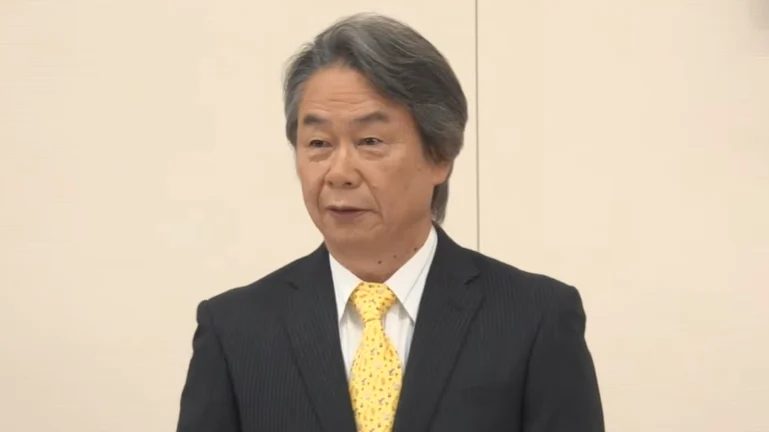
In a landmark decision that signifies the definitive arrival of video games as a pillar of global artistic expression, the Japanese government has named Nintendo’s Shigeru Miyamoto as a recipient of the prestigious Order of Culture (Bunka Kunshō). This historic announcement marks the first time in the award’s 89-year history that a video game developer has been bestowed with Japan’s highest cultural honor.
The accolade, which recognizes individuals who have made extraordinary contributions to the advancement of Japanese culture, places Miyamoto among a select group of scientists, artists, and literary figures who have shaped the nation’s identity. The ceremony, scheduled for Culture Day on November 3, 2026, will see the Emperor of Japan personally present the award to the man often referred to as the "father of modern gaming."
The Architect of Interactive Worlds: Main Facts
Shigeru Miyamoto’s career at Nintendo spans over four decades, during which he has fundamentally redefined the relationship between technology and play. From the coin-operated arcades of the early 1980s to the global phenomenon of the Nintendo Switch, Miyamoto’s creative fingerprints are visible on the most iconic franchises in gaming history.
The Order of Culture, established in 1937, is rarely conferred, making this recognition particularly significant. By selecting Miyamoto in the Media Arts (Gaming) category, the Japanese government has officially acknowledged that interactive entertainment is a sophisticated medium capable of profound cultural impact. This decision serves as a bridge between the traditional arts—such as kabuki, calligraphy, and painting—and the digital medium of the 21st century.
A Life in Play: The Chronology of a Visionary
To understand the gravity of this award, one must look at the trajectory of Miyamoto’s career, which has consistently pushed the boundaries of what is possible in interactive media.
- 1977: Miyamoto joins Nintendo as an industrial designer, marking the beginning of a legendary partnership with the company that would define his life’s work.
- 1981: The release of Donkey Kong catapults Miyamoto to international fame. The game’s revolutionary "narrative-through-gameplay" approach shifts the industry away from simple high-score chasing toward character-driven experiences.
- 1985: Super Mario Bros. is released, setting the gold standard for platforming games and arguably single-handedly reviving the home console market following the North American video game crash of 1983.
- 1986: Miyamoto introduces The Legend of Zelda, pioneering the non-linear adventure format and creating a blueprint for open-world game design that developers still study today.
- 1996: With Super Mario 64, Miyamoto navigates the transition from 2D to 3D gaming, solving complex problems regarding camera control and spatial navigation that had stumped his peers.
- 2019: Miyamoto receives the Person of Cultural Merit award, a high honor that serves as a precursor to his current recognition.
- 2026: Miyamoto is named a recipient of the Order of Culture, cementing his status as a national treasure.
The Collective Spirit: Official Responses
True to his humble nature, Miyamoto’s reaction to the news was not one of solitary celebration, but one of collective acknowledgment. Upon the announcement, he issued a statement emphasizing that the accolades he receives are merely reflections of the team effort that defines Nintendo’s creative philosophy.
"I am truly honoured to receive such a prestigious award," Miyamoto stated. "As I have often said, these achievements were not the work of one person, but the result of collaboration with many others. I accept this honour on their behalf."
This sentiment echoes his long-standing management style, which emphasizes "co-creation." Throughout his tenure, Miyamoto has nurtured generations of designers, producers, and engineers, fostering an environment where curiosity and experimentation are prioritized over rigid corporate structures. His peers and collaborators across the industry have lauded the government’s decision, noting that Miyamoto’s influence extends far beyond Nintendo, having inspired virtually every major developer working today.
Building the Industry: Supporting Data and Cultural Context
The path to this honor was paved by the increasing recognition of gaming as a legitimate art form. In November 2025, Dragon Quest creator Yuji Horii was awarded the Order of the Rising Sun, Gold Rays with Rosette. At the time, Horii remarked on his journey, stating, "I’ve been making games for a long time, about 40 years now, but it’s not just my own efforts; it’s all thanks to the staff who helped me make it, and the users who have always supported me. I’ve levelled up in many ways, done many things, and all my hard work has paid off."
These back-to-back honors for Horii and Miyamoto signal a tectonic shift in how the Japanese government perceives the "Cool Japan" export strategy. For years, Japan’s cultural diplomacy has leaned heavily on anime and manga. Now, the government is explicitly prioritizing video games as a vital component of the country’s soft power.
Statistical data from the Japanese Ministry of Economy, Trade and Industry (METI) highlights the sheer economic weight of the sector, which now rivals traditional media industries in both domestic revenue and global brand reach. However, the Order of Culture looks past the revenue figures; it looks at the cultural legacy. Miyamoto’s characters—Mario, Link, Donkey Kong, and Kirby—are now as culturally significant to the global population as the works of classical Japanese literature were in previous centuries.
The Implications: What This Means for the Future of Gaming
The conferment of the Order of Culture upon Shigeru Miyamoto carries several profound implications for the future of the video game industry:
1. The Institutionalization of Gaming
By elevating a game developer to the same status as an award-winning novelist or a breakthrough chemist, the Japanese government has effectively ended the debate regarding the artistic validity of games. This will likely lead to increased state funding for game development research, university-level programs dedicated to game design as a serious discipline, and a greater emphasis on preserving gaming history within national archives.
2. A Shift in Global Perception
Japan’s high-level recognition of Miyamoto forces the rest of the world to re-evaluate how it treats game developers. We are likely to see a ripple effect in other nations, where creative directors who have spent decades defining interactive entertainment may receive similar state honors. It moves the conversation away from "gaming as a hobby" to "gaming as a pillar of human culture."
3. Mentorship and the Next Generation
Miyamoto’s acknowledgment of his team serves as a lesson for the next generation of developers. As the industry faces challenges regarding corporate consolidation and the pressures of "crunch" culture, Miyamoto’s leadership style—which prioritizes the well-being of the product and the creative spirit of the team—becomes a standard-bearer for how modern studios should operate.
4. Cultural Preservation
With this award, the Japanese government is signaling that games are part of the national heritage. We can expect to see more initiatives aimed at protecting the digital heritage of early game development, ensuring that the code, the art, and the history of the 8-bit and 16-bit eras are treated with the same care as traditional Japanese artifacts.
Conclusion: A Legacy Beyond the Screen
As we look toward the ceremony on November 3, 2026, it is clear that Shigeru Miyamoto’s contributions have transcended the hardware they run on. He did not merely build games; he built worlds that have shaped the childhoods and imaginations of billions.
From the simple, elegant jump of a plumber in a pixelated world to the expansive, breathtaking vistas of Hyrule, Miyamoto has taught the world how to play. His reception of the Order of Culture is a testament to the fact that when we interact with a game, we are not just pushing buttons—we are participating in an artistic process. As Miyamoto steps up to receive his medal from the Emperor, he does so not just as an employee of Nintendo, but as a cultural icon who turned the screen into a window to human joy.
In a world that often feels fractured, the universal language of play that Miyamoto has championed for over 40 years serves as a vital reminder of our shared human capacity for wonder. The Order of Culture is a fitting tribute to a man who, in the process of leveling up himself and his colleagues, elevated the entire medium of gaming to the highest heights of human achievement.

