

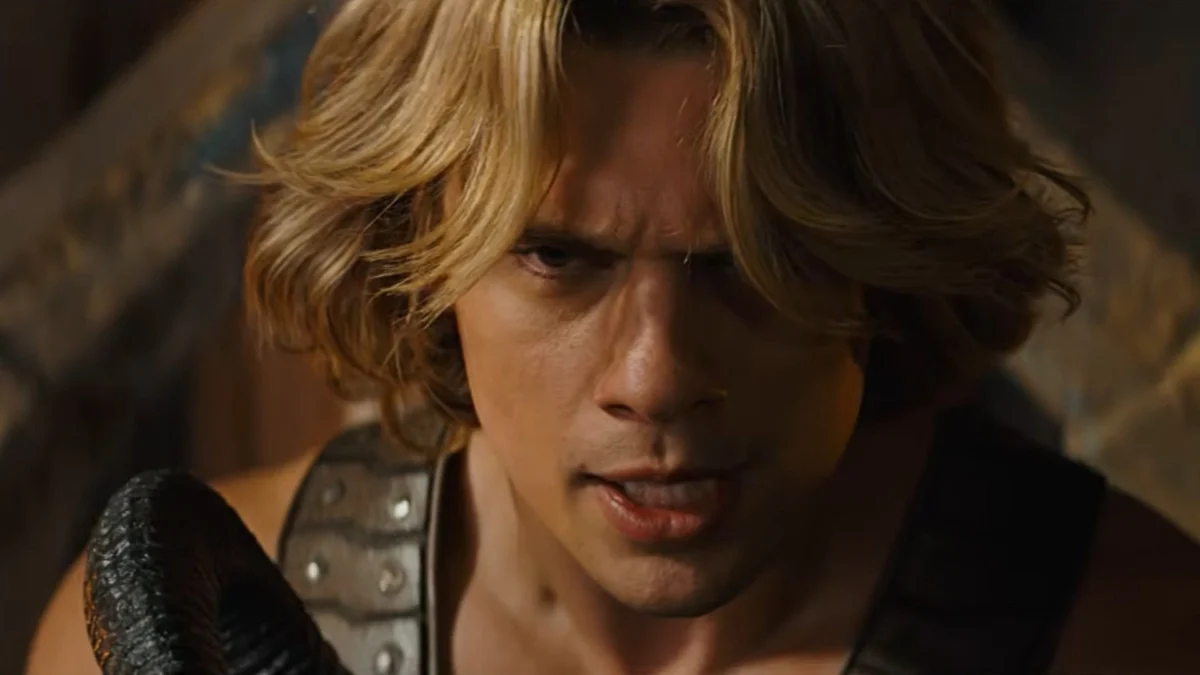
Main Facts: Box Office Struggles Meet Streaming Triumph
In the modern landscape of Hollywood filmmaking, a movie’s life cycle rarely ends when the final credits roll in a darkened theater. For director Travis Knight and his ambitious live-action adaptation of Masters of the Universe, the journey from theatrical disappointment to streaming redemption highlights the strange and shifting economics of contemporary entertainment.
Despite boasting a star-studded cast—led by Nicholas Galitzine as the heroic Prince Adam/He-Man and Jared Leto as the iconic, malevolent Skeletor—the film stumbled upon its theatrical release. Facing a hefty production budget estimated between $170 million and $200 million, the movie managed to gross a modest $140 million globally at the box office. By traditional metrics, these figures would typically spell doom for any prospective franchise, signaling a costly misfire that studios are quick to sweep under the rug.
However, the story did not end at the box office. When Masters of the Universe transitioned to Amazon’s Prime Video, it experienced a monumental resurgence. The film dominated the platform, locking down the number one spot as the most-watched movie for five consecutive weeks. Months after its initial digital release, it remains anchored as one of the streamer’s most popular and enduring titles.
Yet, despite this massive streaming success and a tantalizing post-credits sequence designed explicitly to launch a sprawling cinematic universe, director Travis Knight remains entirely in the dark regarding Amazon’s official plans for a sequel.
Chronology: From Development Hell to Streaming Redemption
To understand the precarious position in which Masters of the Universe currently finds itself, it is necessary to examine the arduous timeline that brought the beloved 1980s Mattel property back to the big screen.
Decades in Development
The path to bringing He-Man back to live-action has been famously torturous. Following the cult-classic yet critically maligned 1987 Cannon Films adaptation starring Dolph Lundgren, various studios spent nearly four decades trying to crack a modern Masters of the Universe movie. Directors, writers, and studios—including Warner Bros. and Sony—came and went, cycling through drafts that ranged from gritty, post-apocalyptic re-imaginings to high-fantasy epics.
The Travis Knight Era
Momentum finally shifted when filmmaker Travis Knight—celebrated for his work on Kubo and the Two Strings and the critically acclaimed Transformers prequel Bumblebee—stepped into the director’s chair. Knight brought a unique blend of visual artistry, emotional depth, and deep reverence for nostalgia to the project.
Casting was finalized with rising star Nicholas Galitzine taking on the dual role of the unassuming Earth-bound Prince Adam and the muscular champion He-Man. Academy Award-winner Jared Leto was tapped to embody the skeletal villain Skeletor, while Camila Mendes signed on to play the fierce warrior-goddess Teela.
The Theatrical Release and Digital Pivot
The film premiered in theaters worldwide with high expectations. Unfortunately, ticket sales failed to match the studio’s financial ambitions. Stuck with a box office gross of $140 million against its steep budget, the film was initially labeled a commercial disappointment by industry analysts.
However, the narrative shifted rapidly upon its arrival on Prime Video. Finding its true home among fans streaming from the comfort of their living rooms, the film captured the cultural zeitgeist, turning negative theatrical momentum into a digital triumph and sparking intense fan demand for a continuation.
Supporting Data: Breaking Down the Numbers and Creative Choices
To fully grasp the dichotomy of Masters of the Universe, analysts look closely at the financial variables, creative decisions, and easter eggs embedded within the film.
The Budget vs. Box Office Reality
- Production Budget: $170 million – $200 million
- Global Theatrical Box Office: $140 million
- Streaming Performance: 5 consecutive weeks at #1 on Prime Video
In the pre-streaming era, a $30 million to $60 million theatrical deficit would guarantee the cancellation of any sequel plans. However, the calculus of streaming platforms changes how success is measured. Subscription acquisition, platform engagement, and retention metrics now weigh heavily alongside traditional ticket sales. For Amazon MGM Studios, the high viewership hours logged by Masters of the Universe represent significant value, even if the initial theatrical run did not break even.
The Plot and Nostalgia Factor
The narrative grounds the fantastical lore of Eternia in an unexpected way. Prince Adam is initially introduced living a seemingly normal life on Earth before he is summoned back to his mystical home planet of Eternia to confront Skeletor with Teela’s assistance.
To bridge the generations of fandom, the production included a memorable cameo from Dolph Lundgren, the star of the 1987 original film, providing a passing of the torch that delighted longtime enthusiasts.
Setting Up the Future: The Post-Credits Scene
Most crucially for fans hoping for a follow-up, the film features a post-credits sequence explicitly designed to expand the sandbox. Without spoiling the specifics, the scene introduces a legendary character from the wider franchise lore into the live-action fold—bringing a heavy-hitter to the screen who has never before been realized in live-action cinema (save for a memorable, nostalgic Saturday Night Live sketch featuring Ariana Grande years prior).
Official Responses: What Travis Knight and the Cast Are Saying
Speaking candidly in a recent interview with ScreenRant, director Travis Knight addressed the elephant in the room: the uncertainty surrounding a potential greenlight for Masters of the Universe 2.
"In the end, these sorts of decisions are out of our control," Knight acknowledged. "You always imagine where these people’s lives go after the end of the movie, and if the universe, in its wisdom, asks us to make more of these things, we would be delighted to give them more."
Knight’s comments reflect the standard, measured stance of a director whose creative ambitions stretch far beyond a single film, yet who remains at the mercy of corporate decision-makers.
Meanwhile, members of the broader franchise ecosystem have chimed in on the film’s bumpy financial ride. Original star Dolph Lundgren expressed surprise and disappointment regarding the film’s initial theatrical struggles, noting in interviews that he found it "strange that [the movie] didn’t do better" given the enduring global footprint of the He-Man brand.
As of now, Amazon executives have remained publicly tight-lipped regarding exact metrics or official greenlights for a sequel, leaving Knight, the cast, and millions of fans waiting in limbo.
Implications: What This Means for the Future of IP Adaptations on Streaming
The case of Masters of the Universe serves as a fascinating case study for the modern entertainment industry, carrying several broad implications for how major intellectual properties (IPs) are handled moving forward.
1. The Erosion of Traditional Box Office Metrics
For decades, Hollywood relied on a simple formula: opening weekend and global box office gross dictate the future of a franchise. Masters of the Universe proves that this rulebook is being rewritten. When a film underperforms theatrically but becomes a juggernaut on a subscription streaming service, studios face a complex dilemma. Do they write off the theatrical loss, or do they capitalize on the proven, massive engaged audience waiting at home for a sequel?
2. The Power and Risk of High-Budget Streaming Blockbusters
As studios continue to pour massive budgets (approaching $200 million) into films intended to anchor streaming services or hybrid release models, the financial risks are magnified. If Amazon decides to move forward with Masters of the Universe 2, it will validate the strategy of using streaming platforms to rescue and redeem high-profile properties that stumble in theaters. Conversely, a quiet cancellation would reinforce conservative budgeting habits among studio executives.
3. Fan Mobilization and the Fate of Unfinished Stories
With a clear post-credits setup teasing major expansions—including iconic characters like She-Ra or other Eternian legends—the ball is firmly in Amazon’s court. Fan communities, galvanized by the film’s streaming dominance, have taken to social media to campaign for a sequel. Whether corporate boardrooms will heed the call of the fans remains to be seen.
Until the "universe, in its wisdom" speaks, Travis Knight and the defenders of Eternia must wait to see if the power of Grayskull will grant them a second chapter.

