

Main Facts: Liminal VR Introduces "Fear Arena"
Liminal, a prominent virtual reality (VR) application renowned for its bite-sized, immersive experiences engineered to intentionally influence users’ emotional states, has officially launched its latest content category: Fear Arena. Designed to bridge the gap between heart-pounding terror and accessible entertainment, Fear Arena introduces what the company terms "recreational fear."
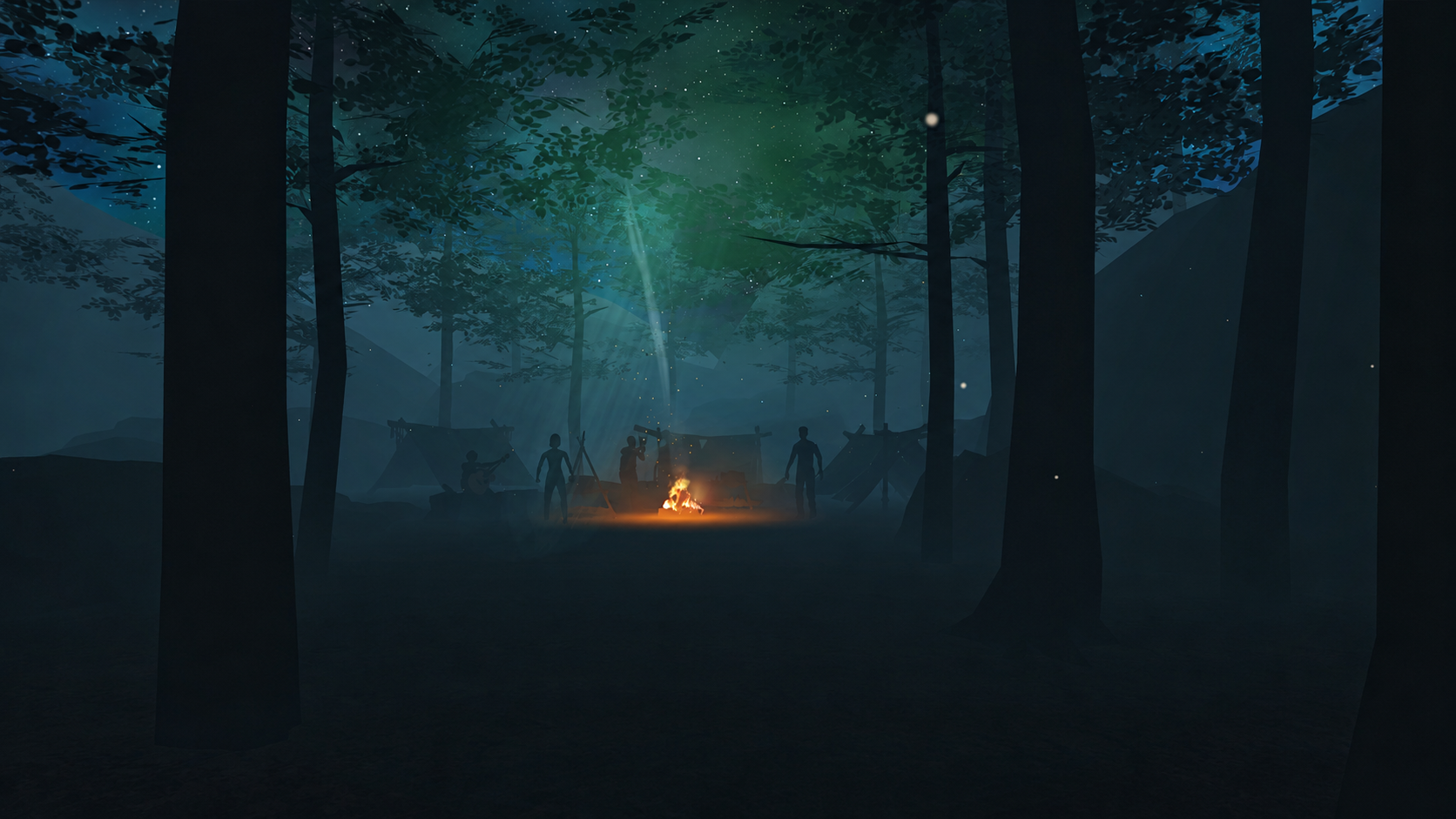
Rather than aiming to induce panic or post-traumatic stress—a common pitfall in hardcore virtual reality horror games—Liminal’s new series is crafted to mirror the safe, controlled adrenaline rush of riding a roller coaster or watching a classic PG-13 horror movie. The debut experience in this new lineup, titled Wander, places users directly into the chilling atmosphere of a dark, mysterious forest filled with eerie sights, unsettling ambient sounds, and carefully measured jump scares.
The launch represents a significant calculated pivot and expansion for Liminal. While the platform has historically rooted its library in psychological research and neuroscience-backed applications designed to help users relax, unwind, or focus, Fear Arena explores the outer boundaries of human arousal states—specifically anxiety, excitement, and ultimate psychological relief. Available now on the Meta Quest platform, Liminal operates on a tiered pricing structure, offering a free baseline selection alongside an annual subscription of $34.99 for unlimited access to its expansive library of emotional and psychological environments.
Chronology: From Psychological Roots to Recreational Thrills
- The Foundation of Liminal: Launched as an innovative experiment in using virtual reality as a tool for emotional regulation, Liminal built its reputation on curated, short-form experiences. Using principles derived from psychology and neuroscience, the app allowed users to transition between states of deep relaxation, energetic focus, and calm contemplation.
- The Development Phase: Recognizing that human emotion is a vast spectrum that includes the thrill of fear and suspense, Liminal’s development team began prototyping high-arousal concepts. During this phase, internal testing led to the abandonment of several hyper-scary prototypes that crossed the line from fun to genuinely distressing, shaping the core philosophy of Fear Arena.
- The Debut of Fear Arena: Liminal formally introduced the Fear Arena category with an introductory video detailing how fear transitions through distinct physiological and psychological phases—from anxiety to excitement to relief.
- The Release of Wander: Liminal deployed Wander as the flagship experience for Fear Arena, thrusting users into a dark forest environment. Early reviews and developer confirmation validated that the experience successfully struck the delicate balance between spooky and satisfying.
- Future Outlook (Fall and Beyond): Co-founder Nick Busietta confirmed that Liminal is actively developing additional content for Fear Arena, with new releases slated for the fall. Furthermore, the company is looking beyond its therapeutic and psychological roots, signaling plans to expand into a broader spectrum of pure entertainment experiences.
Supporting Data: Platform Accessibility, Pricing, and Ecosystem
To understand the commercial and technical footprint of Liminal’s Fear Arena, it is essential to examine the app’s availability and economic framework:
- Platform Availability: Liminal is natively accessible and optimized for the Meta Quest headset lineup. It can be downloaded directly from the Meta Quest Store.
- Monetization Model:
- Free Tier: Users can access a rotating or static selection of introductory experiences across Liminal’s various "Arenas" at no cost.
- Paid Tier: An annual subscription priced at $34.99 unlocks full, unlimited access to Liminal’s entire catalog of emotional, cognitive, and thrilling environments.
- Content Structure: Liminal categorizes its offerings into distinct "Arenas" (such as Relax, Unwind, Engage, Explore, and now, Fear Arena), ensuring that users can easily navigate to the psychological state they wish to induce.
- User Engagement Metrics: While raw player counts are proprietary, Liminal’s steady iteration and ongoing content expansions indicate a robust and growing user base on standalone VR hardware, where friction-free, short-form sessions are highly prized.
Official Responses: Inside Liminal’s Design Philosophy
Developing virtual reality horror is notoriously tricky. Many developers mistake sensory overload and relentless jump scares for good design, frequently resulting in players ripping their headsets off in frustration or fear (as seen in notoriously intense titles like Exorcism of the Legion). Liminal approached this genre constraint with strict ethical and psychological boundaries.
When discussing the reception of Wander with Liminal co-founder Nick Busietta, he emphasized that this precise calibration was the team’s primary objective from day one.
"We don’t want to terrorize people at the end of the day," Busietta explained.
Busietta elaborated on the company’s stringent safety and well-being guidelines, revealing that the development process involved heavy iteration and self-censorship. He recalled a specific prototype engineered for Fear Arena that was ultimately scrapped entirely. Even though the prototype successfully generated fear, it failed to cross the crucial threshold of providing a beneficial or cathartic user experience.
According to Busietta, manufacturing cheap scares is remarkably easy within the immersive canvas of virtual reality, but achieving harmony is exceptionally difficult:
"It’s easy to scare, but much more difficult to balance the appropriate level of thrill and fear with a satisfying resolution that leaves the user feeling better than they did coming in."
By focusing on the "sweet spot" where fear intertwines with fun, Liminal has positioned its design methodology as a masterclass in empathetic game design—ensuring that adrenaline-seeking players are rewarded with psychological closure rather than lingering trauma.
Implications: The Evolution of VR Entertainment and Emotional Regulation
The launch of Fear Arena carries several noteworthy implications for the broader virtual reality ecosystem and Liminal’s long-term corporate trajectory:

1. Broadening the Definition of Wellness
Traditionally, digital wellness apps in VR have leaned heavily into passive or low-energy states: guided meditations, serene beach walks, and ambient soundscapes. By introducing "recreational fear," Liminal is challenging the notion that wellness and emotional health must always be gentle. Psychological research frequently supports the idea that controlled exposure to anxiety or fear in safe environments can build emotional resilience, serve as a stress-release valve, and trigger powerful neurochemical rewards (such as dopamine and endorphin releases upon relief). Liminal is effectively branding fear as a tool for emotional release.
2. Shifting Beyond Therapeutic Roots
Nick Busietta’s remarks regarding the future of the platform point toward a major strategic pivot. While Liminal built its brand on neuroscience-backed psychological states, the integration of mainstream entertainment mechanics like Fear Arena signals an ambition to compete directly with traditional narrative and arcade-style VR content. By proving they can design compelling thrill rides without alienating sensitive users, Liminal opens the door to a much wider demographic of mainstream gamers and media consumers.
3. Shaping the Future of VR Horror
As standalone headsets like the Meta Quest continue to dominate the consumer market, developers are constantly seeking ways to make VR experiences accessible to the masses. Hardcore horror often suffers from high attrition rates—players buy the game, get too scared in the first ten minutes, and never play again. Liminal’s philosophy of "recreational fear" offers a blueprint for developers of horror and thriller titles: design experiences that respect the player’s emotional boundaries, provide a clear narrative or structural arc, and always deliver a satisfying resolution.
With more Fear Arena content slated for release this fall, Liminal is proving that virtual reality does not need to cross into psychological torture to be thrilling. Instead, by carefully engineering the journey from anxiety to relief, they are charting a new course for how humanity interacts with emotion inside the digital looking glass.

