

By Tech & Hardware News Desk
Published: May 2024
Main Facts
In a sweeping move that promises to breathe new life into millions of existing gaming systems worldwide, AMD has dramatically accelerated the rollout of its FidelityFX Super Resolution (FSR) 4.1 upscaling technology. Originally slated for a much later release, FSR 4.1 made its unexpected debut this week for owners of Radeon RX 6000-series graphics cards, significantly pulling forward a timeline that industry analysts previously expected to stretch into 2027.
AMD’s FSR technology serves as the company’s premier answer to NVIDIA’s DLSS (Deep Learning Super Sampling), utilizing advanced spatial and temporal algorithms to boost frame rates while preserving visual fidelity in demanding 3D games. With the latest Adrenalin driver updates, the technology is no longer exclusive to the bleeding-edge RX 7000- and 9000-series architectures. Instead, AMD is casting a remarkably wide net that encompasses past-generation desktop GPUs, upcoming high-performance mobile APUs, specialized handheld gaming PCs, and future console hardware.
Key highlights of the FSR 4.1 expansion include:
- Immediate GPU Integration: Radeon RX 6000-series graphics card owners can now access FSR 4.1 via current driver suites.
- Mobile and Mini-PC Dominance: Full support is locked in for all Gorgon Halo and Strix Halo chips targeted at mini desktops and mobile workstations, as well as high-end Ryzen 9 laptop processors.
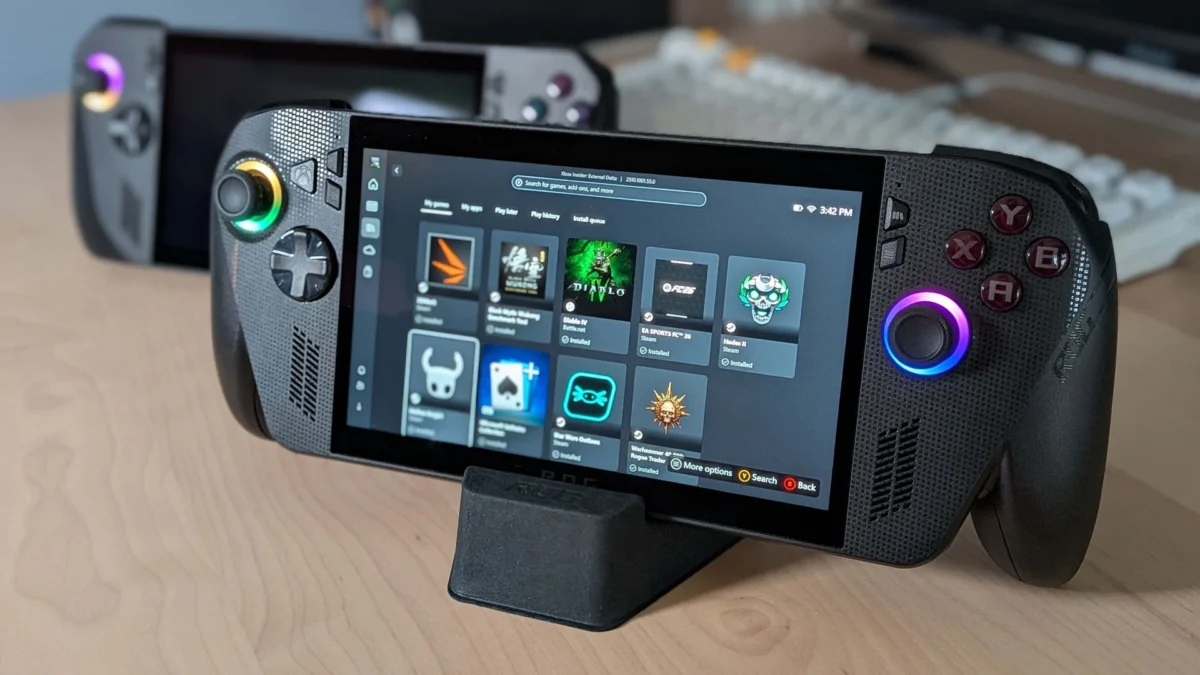
- Handheld Optimization: Handheld gaming PCs utilizing Z2 Extreme and Z2A chips—including upcoming iterations of devices like the Asus ROG Ally series—will feature deeply optimized FSR 4.1 integration.
- Console and Vulkan Horizons: AMD has confirmed FSR 4.1 optimization for upcoming Xbox platforms and announced critical native support for the Vulkan graphics API, vastly improving prospects for Linux and Steam Deck users.
Chronology of the FSR Evolution
To understand the magnitude of this week’s announcement, it is necessary to examine how AMD has methodically built out its upscaling ecosystem over the past several product generations.
The Foundation of Upscaling (FSR 1 through 3)
When AMD initially launched FidelityFX Super Resolution, it was positioned as an open-source, hardware-agnostic alternative to NVIDIA’s closed ecosystem. While FSR 1 and FSR 2 relied heavily on spatial upscaling and basic temporal accumulation, they successfully proved that gamers didn’t necessarily need dedicated AI hardware cores (like NVIDIA’s Tensor cores) to achieve substantial performance gains. However, critics frequently pointed out that FSR lagged behind DLSS in terms of fine-detail stability and ghosting reduction at lower rendering resolutions.

The Leap to FSR 4 and the RX 7000-Series Rollout
The paradigm shifted earlier this year when AMD introduced FSR 4 architecture, initially rolling out support exclusively to the high-end Radeon RX 7000-series card owners via selective driver updates. This iteration introduced vastly superior machine-learning-assisted reconstruction techniques, closing the gap with competitor solutions. At the time, standard roadmaps suggested that older architectures—such as the wildly popular RX 6000 series—would not see compatible iterations of the software until at least 2027, as AMD prioritized its current-generation silicon and enterprise hardware.
The 2024 Accelerator Shift
Breaking previous industry expectations, AMD leadership opted to upend the roadmap. By integrating FSR 4.1 into the RX 6000-series drivers this week, the company compressed a multi-year hardware legacy plan into a matter of months. Simultaneously, the company confirmed that upcoming silicon lines—including Strix Halo and Gorgon Halo mini-desktop and mobile workstation platforms, alongside Z2 Extreme and Z2A handheld processors—are being engineered with FSR 4.1 baked directly into their foundational architecture.
Supporting Data & Hardware Ecosystem
AMD’s aggressive push is underpinned by staggering scale. According to official statements from company executives, AMD silicon currently powers over a billion gaming devices around the world, ranging from custom semi-custom console chips to high-end enthusiast desktop rigs and ultra-portable handhelds.
Desktop and Laptop Graphics Matrix
- Radeon RX 9000-Series: Demonstrates the most mature implementation, with FSR Redstone now actively running across more than 400 titles. Ray Regeneration—AMD’s advanced denoiser equivalent to NVIDIA’s Ray Reconstruction—is also scaling into a larger library of games.
- Radeon RX 7000-Series: Received foundational FSR 4 support earlier this year, serving as the proving ground for machine-learning-driven upscaling features.
- Radeon RX 6000-Series: The surprise beneficiary of the week. Despite being part of the previous RDNA 2 generation, these cards will now extend their competitive lifespan significantly by leveraging FSR 4.1 algorithms to handle modern, ray-traced, and uncompromised rasterized workloads.
Handhelds and Consoles
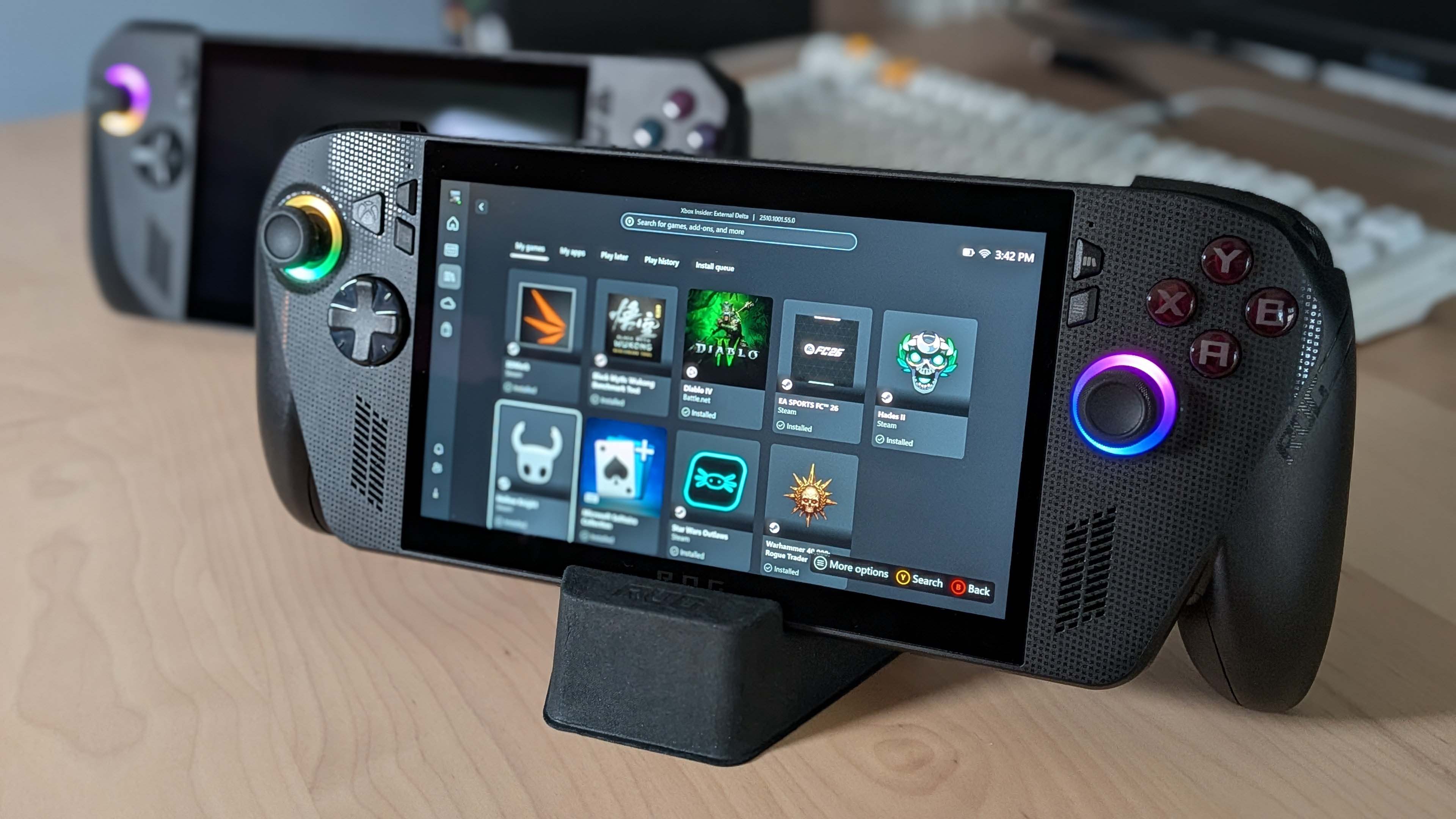
The handheld gaming PC market—sparked by the Valve Steam Deck and expanded aggressively by devices like the Asus ROG Ally—is uniquely dependent on intelligent upscaling. Running native high-resolution graphics on form-factor-constrained mobile chips is thermally and energetically inefficient. By bringing FSR 4.1 to Z2 Extreme and Z2A handheld chips, AMD is providing manufacturers with the exact tool needed to maintain stable 60+ FPS targets at 1080p without draining batteries in minutes.
Furthermore, confirmation that FSR 4.1 is optimized for Xbox ecosystems signals deep collaboration with console manufacturers, paving the way for next-generation home consoles to leverage advanced hardware-accelerated upscaling natively out of the box.
Official Responses and Leadership Insights
Jack Huynh, the Senior Vice President and General Manager of Computing & Graphics at AMD, took to social media platform X (formerly Twitter) to address the community and outline the strategic vision driving these updates.
"We power over a billion gaming devices around the world," Huynh stated on X, emphasizing the sheer footprint of AMD hardware in the global gaming market. Looking forward, he added a definitive message to consumers and developers alike: "We’re still building."
Huynh’s comments highlighted the continuous expansion of proprietary features, noting that FSR Redstone has successfully surpassed the 400-game threshold on Radeon 9000-series hardware. Furthermore, he confirmed that AMD is actively expanding the deployment of Ray Regeneration—a cutting-edge neural denoiser designed to dramatically clean up ray-traced reflections and lighting effects—to a broader roster of titles.
Crucially, AMD also addressed a long-standing request from the enthusiast community by announcing that FSR 4 will officially come to Vulkan.
Vulkan serves as a high-performance, non-proprietary cross-platform graphics API—often considered the open-source equivalent to Microsoft’s DirectX 12. Because Linux-based operating systems (including SteamOS on the Valve Steam Deck) rely heavily on Vulkan rather than DirectX, historical a lack of direct Vulkan integration has occasionally bottlenecked advanced upscaling features on non-Windows devices. By bringing FSR 4 to Vulkan, AMD is directly empowering the Linux gaming community and validating alternative operating systems as first-class gaming environments.
Broader Implications for the Gaming Industry
The rapid, cross-platform democratization of FSR 4.1 carries profound implications for gamers, developers, and hardware manufacturers alike.
1. Longevity for Budget and Mid-Range Builders
For everyday gamers who purchased a Radeon RX 6000-series card (such as the RX 6700 XT or RX 6800) during the previous generation, the retroactive addition of FSR 4.1 is a massive economic win. Instead of facing an imminent upgrade cycle to keep pace with increasingly unoptimized AAA game releases, players can rely on software intelligence to bridge the performance gap. This effectively stretches the useful lifecycle of mid-range hardware by several years.
2. Leveling the Handheld Playing Field
The portable PC gaming market is fiercely competitive. Handheld devices must balance thermal dissipation, battery life, and graphical fidelity. With FSR 4.1 optimized for Z2 Extreme and Z2A chips, consumers looking at upcoming Asus ROG hardware or competing mobile solutions can expect vastly superior visual clarity when running demanding titles at lower internal resolutions. This reduces the performance tax of mobile gaming significantly.
3. Strengthening the Open-Source and Linux Ecosystem
By committing to Vulkan support, AMD is signaling a healthy respect for platform diversity. As handheld ecosystems and alternative operating systems gain market share, developers can no longer afford to ignore non-Windows platforms. Native FSR 4 support under Vulkan ensures that Steam Deck users and Linux desktop enthusiasts will enjoy the same cutting-edge performance multipliers as Windows users.
4. Laying the Groundwork for Next-Gen Consoles
With industry rumors swirling around the hardware specifications of future PlayStation and Xbox consoles—both of which are widely expected to maintain their longstanding partnerships with AMD silicon—this week’s rollout serves as a clear infrastructural dress rehearsal. By refining FSR 4.1 across desktop GPUs, mobile APUs, and current console frameworks today, AMD is establishing a unified software standard that will likely power the next generation of console gaming tomorrow.
While exact deployment timelines for every individual device remain fluid, the trajectory is unmistakable. AMD is positioning its upscaling technology not as a luxury feature for elite purchasers, but as a ubiquitous, foundational layer of the modern gaming experience—ensuring that regardless of whether a player is sitting at a desktop, commuting with a handheld, or relaxing in front of a console, hardware performance is maximized.

