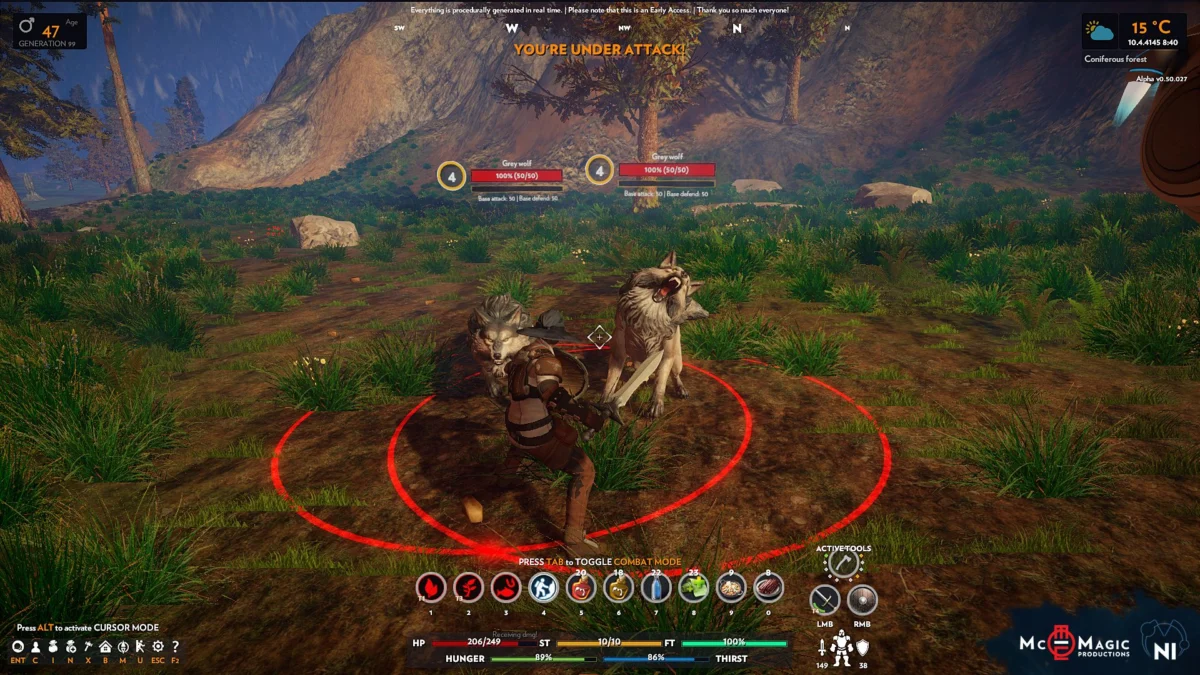
In the fast-paced, hyper-saturated landscape of modern PC gaming, forgotten projects litter the digital digital storefronts like ancient ruins. Among them, Novus Inceptio—an ambitious sci-fi survival title launched into Steam Early Access nearly a decade ago—seemed destined to remain a permanent casualty of development hell.
Originally released on October 5, 2015, the game was the brainchild of Martin Markus Mastný, operating under the solo banner of McMagic Productions. For years, the project languished in obscurity, receiving its last minor patch in 2018 before going entirely dark. To most of the few thousand players who purchased it during its initial hype cycle, Novus Inceptio was written off as another abandoned passion project.
That perception shattered abruptly when Mastný broke a nearly seven-year silence, deploying a major update to the game on October 5, 2024—the exact eleventh anniversary of the game’s conceptual rollout.
"Please give Novus one more chance," Mastný pleaded with his community in a candid Steam post. "Yes, Novus is back in development. Not full time, but the energy and the will to finish the project are back. For me, it’s also a way to take off a stone that has been weighing on me for years, even if it isn’t visible."
This unexpected resurrection has reignited discussions within the gaming community about the psychological weight of solo game development, the perils of early access, and what happens when an independent creator attempts to reconcile with their past.
Chronology: From 2013 Vision to 2024 Redemption
To understand the magnitude of Novus Inceptio’s return, one must trace the timeline of its development—a journey marked by immense ambition, structural hurdles, and ultimately, psychological collapse.
2013–2015: The Genesis
Martin Markus Mastný plunged headfirst into game development with no prior professional pedigree. He taught himself C# and mastered the Unity engine from scratch. His vision was grand: a sprawling, intricate MMORPG set in a post-apocalyptic world where players had to survive, rebuild, and evolve. To achieve this, Mastný painstakingly built the game’s foundational server layers, established complex databases, and integrated them natively into Unity.
October 2015: The Early Access Reality Check
On October 5, 2015, Novus Inceptio debuted on Steam Early Access. According to Mastný, the launch served as an immediate, jarring reality check.
"Steam slapped me in the face," Mastný recalled in an interview. "Suddenly I had to deal with a million other things: PR, sales, the community, bugs, people’s reactions."
2016–2019: The Grind and the Collapse
Driven by a fierce sense of obligation, Mastný entered a punishing cycle. Waking up every morning, he would immediately field community questions, manage bug reports, and code throughout the day—all while continuing to engage with players in real-time. Fearing negative reviews and eager to please his growing audience, he began making continuous design compromises. The game slowly mutated away from its original creative blueprint, bending to the demands of the vocal player base.
The relentless workload culminated in total burnout. By 2019, Mastný collapsed physically and mentally, halting development indefinitely and leaving Novus Inceptio frozen in an unfinished state.
2024: The Quiet Comeback
After more than half a decade of radio silence, Mastný cleared the psychological slate. Erasing the lost years from his mental timeline, he returned to the codebase in late 2024, releasing a surprise update designed to steer the survival game back toward its original, uncompromised vision.
Supporting Data: The Anatomy of a Solo Survival Project
The revival of Novus Inceptio highlights the harsh economic and technical realities facing solo developers in the survival game genre.
The Scaling Challenge: Developing an MMORPG-styled survival game as a solo developer requires an impossibly vast skill set—encompassing systems design, networking infrastructure, artificial intelligence, environmental art, and community relations.
The Community Burden: Early access models rely heavily on continuous player feedback. However, without a dedicated community management buffer, solo developers often absorb 100% of the emotional and communicative friction, leading to severe burnout rates.
Scope Creep: Mastný’s initial design aimed for a persistent MMORPG universe. Industry data consistently shows that multiplayer infrastructure demands exponentially more resources than single-player experiences—a factor that ultimately strained Novus Inceptio’s early commercial viability.
Official Responses: In His Own Words
In an exclusive correspondence, Martin Markus Mastný opened up about the emotional toll of his hiatus, his motivations for returning, and his pragmatic outlook on the project’s future.
On the Causes of Burnout
Reflecting on the grueling years between 2016 and 2019, Mastný did not mince words regarding the self-inflicted pressure to please everyone:
"My day looked like this: get up, deal with the community, work on the game all day and deal with the community while doing it. No time off at all… I kept making compromises to please people, to get good reviews, to give everyone what they asked for. The result was total collapse and burnout. It basically ruined the whole game, too. It turned into something it was never supposed to be."
On Why He Returned Now
For Mastný, returning to the project was less about commercial redemption and more about closure and emotional health:
"It’s about fulfilling a dream… This game is a big chapter of my life, and it changed my life for better and for worse. I have that commitment and I want to keep it: finish the game to a state where I’m happy with it. It’s like my child. When someone curses at it, it’s hard for me, because I put it together as well as I could."
On Managing Skeptical Players
Acknowledging that long-dormant early access games are frequently met with cynicism, Mastný offered no grand, sweeping promises:
"I can’t promise anything and I don’t want to. The only thing I can say is: be patient and watch whether I keep going the way I’d like to. Early access gives me the chance to still change things while it’s possible… So watch it if you want, and you’ll see whether you give me that trust back or not."
Advice for Aspiring Solo Developers
Drawing from a decade of hard-earned scars, Mastný offered a sobering warning to creators entering the modern survival genre:
"Make what you enjoy. Study other games and learn from their successes and their mistakes. But I wouldn’t want to be in your shoes right now. It was hard in 2015 and today it’s much harder… Sometimes you have to step back from your own vision when it’s the thing dragging the game down. You can’t see that at the time, only with distance."
Implications: A Milestone for Indie Development Ethos
The unexpected return of Novus Inceptio carries broad implications for the gaming industry at large:
Redefining Early Access Accountability: While abandonware is an accepted risk of the early access ecosystem, Mastný’s return challenges the normalization of ghosted projects. It proves that developers can, under the right mental conditions, step away to heal and later return to honor past commitments.
The Human Cost of Creation: The story serves as a cautionary tale regarding mental health in game development. It underscores the vital necessity of setting boundaries between developers and digital communities.
The Longevity of Passion Projects: Even with a player base that has largely moved on, independent worlds created with genuine artistic intent retain a magnetic pull over their creators. For Mastný, finishing Novus Inceptio is less about climbing the Steam charts and more about achieving personal peace.
Whether Novus Inceptio ultimately reaches a definitive, polished 1.0 release remains to be seen. But for now, its creator has stepped back into the digital wilderness, ready to finish what he started over a decade ago.