

By Editorial Retrospective Staff
Originally published in partnership with Edge Magazine
Main Facts: The Blueprint of an Open-World Empire
Ubisoft produces far more than just Assassin’s Creed, but the historical stealth-action franchise has fundamentally shaped the publisher’s corporate DNA. For nearly two decades, the hooded avatar leaping from a medieval steeple into a trusty stack of hay has served as both a cash-flow anchor and a master blueprint for virtually every open-world design document leaving Ubisoft’s Montreal studios and global network.
Whether crafting ancient Egypt, feudal Japan, or futuristic sci-fi shooters, Ubisoft’s development teams have consistently relied on the mechanics first codified by Altaïr and perfected by Ezio Auditore da Firenze: scaling viewpoints to clear maps, unearthing territory systematically, and blending cinematic historical tourism with fluid social stealth.
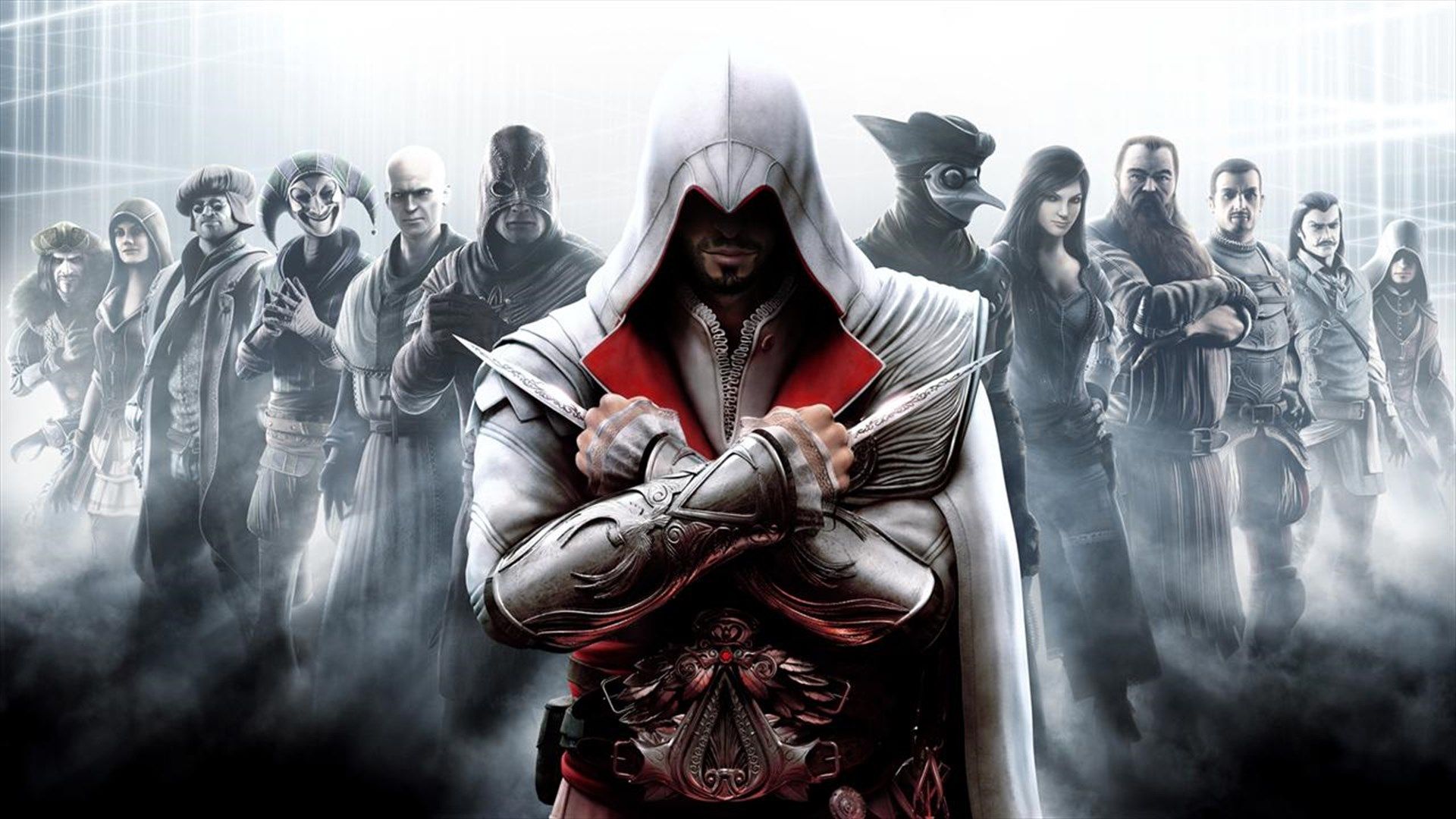
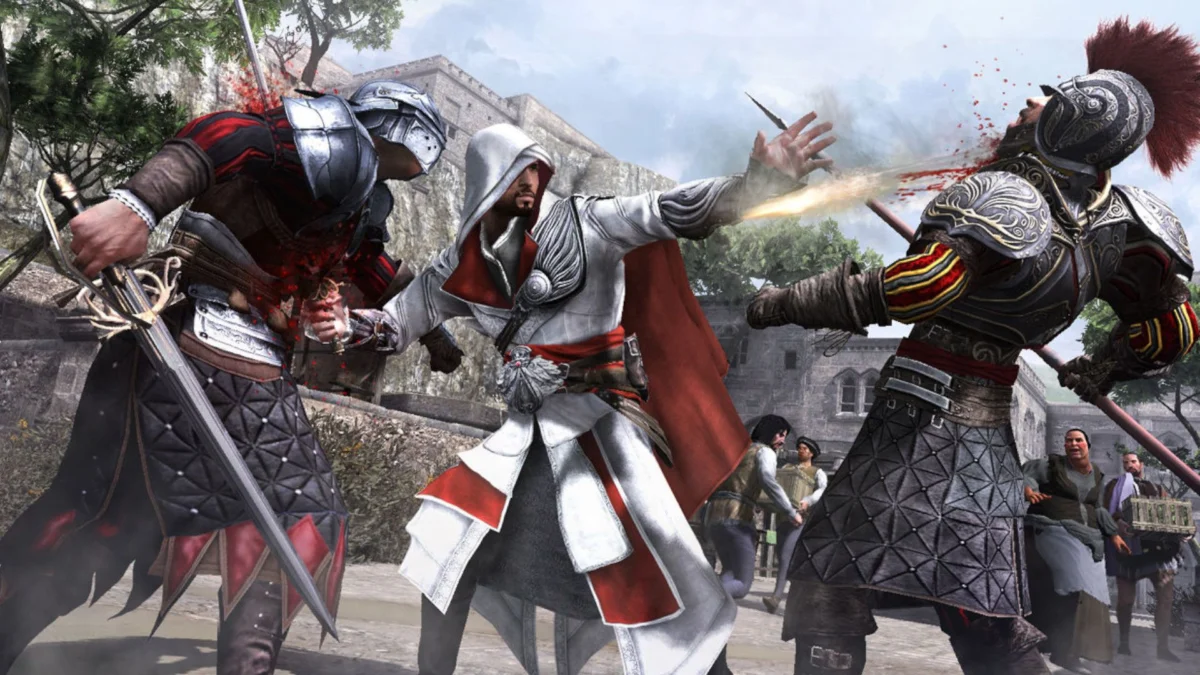
Yet, among the dozens of titles spanning the franchise’s history, Assassin’s Creed Brotherhood (2010) stands out as a unique inflection point. It represents the exact moment when Ubisoft briefly captured a singular creative vision, harmonizing narrative momentum, world-building, and systemic gameplay into a cohesive masterpiece before the franchise’s annual release schedule diluted its core identity.
Chronology: From Tech Demo to Renaissance Peak
To understand the triumph of Brotherhood, one must trace the rapid evolution of the series across its initial iterations:
- 2007 (Assassin’s Creed): The original game functioned largely as an ambitious technical demonstration. While it successfully established the lore of the Assassins versus the Templars and introduced foundational mechanics, its protagonists—Altaïr Ibn-La’Ahad in the past and Desmond Miles in the present—lacked depth, and its mission structures quickly devolved into repetitive tasks.
- 2009 (Assassin’s Creed II): The true proof of concept. By moving the setting to Renaissance Italy and introducing the charismatic Ezio Auditore, Ubisoft transformed a lukewarm tech demo into a global phenomenon. Ezio’s personal vendetta against the Borgia family struck an emotional chord that resonated with millions of players.
- 2010 (Assassin’s Creed Brotherhood): Acting as a direct continuation of Ezio’s story, Brotherhood picked up mere seconds after the events of its predecessor. Rather than stumbling through a slow, formulaic tutorial, the game dropped players straight into the action with fully upgraded gear, only to upend the status quo through a surprise Borgia attack on the family sanctuary of Monteriggioni.
- 2011–Present (The Annualized Era and Beyond): Following Brotherhood, Ubisoft’s global multi-studio model accelerated. Subsequent titles like Revelations, Assassin’s Creed III, Black Flag, Unity, and later sprawling RPGs like Valhalla and Shadows expanded the scope, geography, and historical eras, yet struggled to recreate the tight, systemic harmony achieved in Rome.
Supporting Data: The Mechanics That Redefined Open-World Design
What separated Brotherhood from its predecessors—and subsequent franchise entries—was how it addressed long-standing design critiques through interconnected mechanics.
1. Flexible Stealth and Borgia Towers
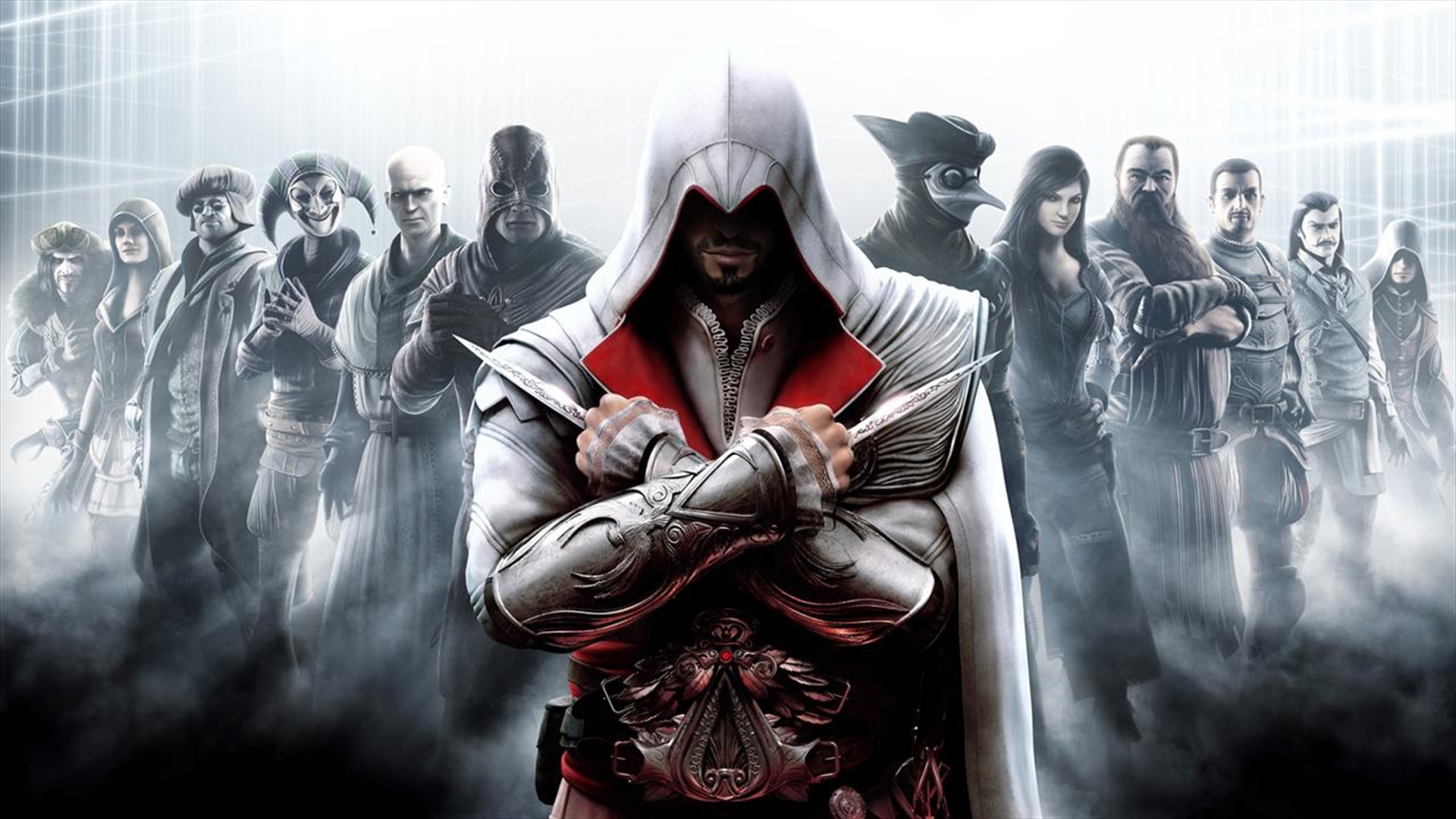
In earlier titles, synchronization points were passive, and freeform stealth often devolved into hiding on benches or behind hired courtesans. Brotherhood replaced traditional viewpoints with heavily guarded Borgia towers spread throughout Rome.
Clearing these towers required tactical infiltration. If spotted, the area’s captain would routinely attempt to flee to a safe room, introducing genuine consequences for failure. Burning down a Borgia tower physically transformed the surrounding urban landscape, liberating local businesses and giving players an immediate, tangible sense of progression.
2. Economic Reconstruction
Progress in open-world games is frequently measured by superficial metrics. Brotherhood tied map liberation directly to economic recovery. Restoring shuttered black-market shops and renovating guild headquarters (such as bases for the Thieves and Courtesans) not only provided regular financial payouts every 20 minutes but visually signaled Ezio’s creeping dominance over Rodrigo Borgia’s regime.
3. The Titular Brotherhood System
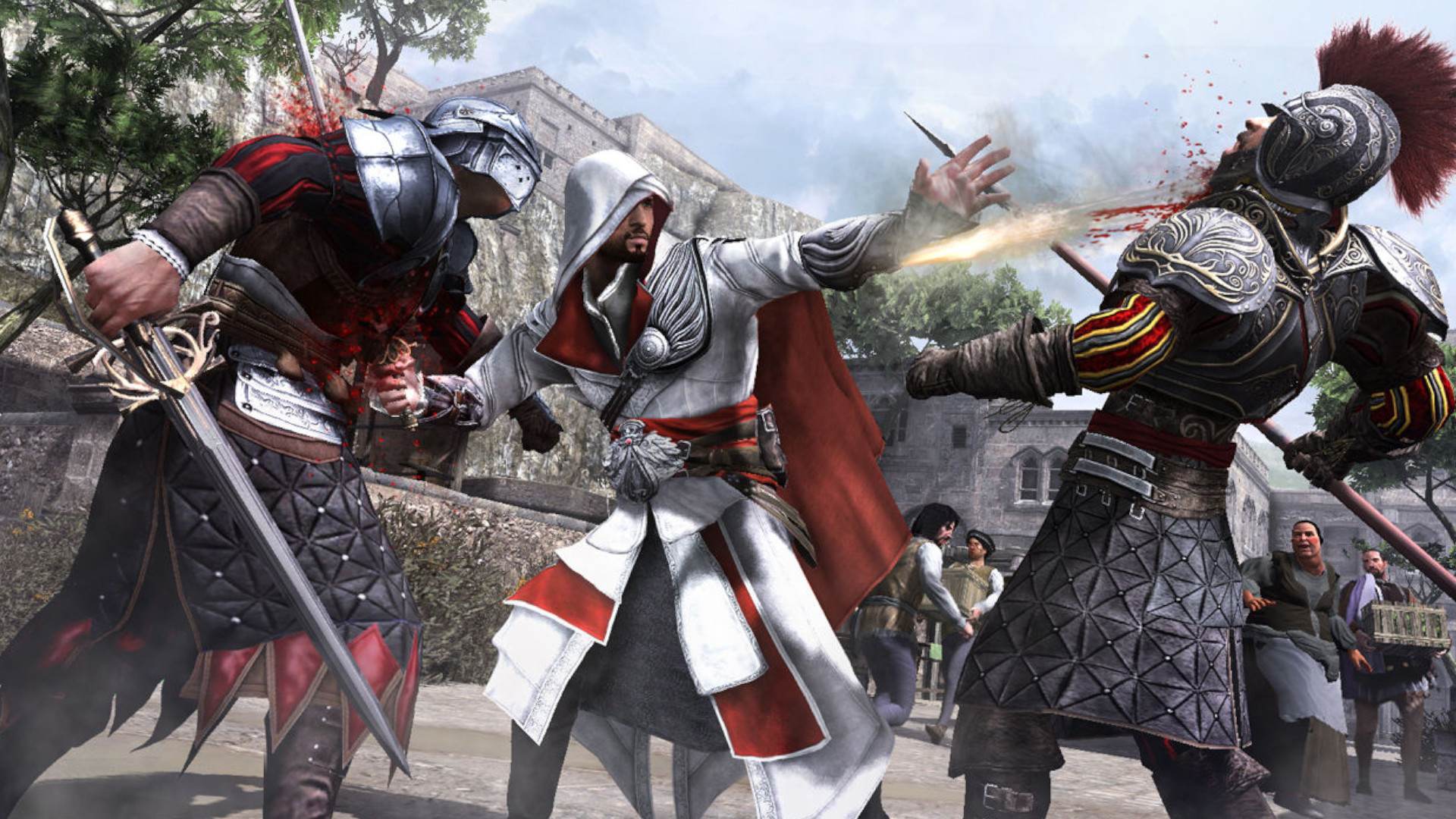
Perhaps the most notable innovation was the recruitment mechanic. Players could rescue oppressed Roman citizens from street-level guards, induct them into the Assassins, and dispatch them across Europe on strategic contracts to earn experience and currency. Crucially, players could also summon these recruits on-demand during combat or stealth operations to execute target kills instantly. This system brilliantly reinforced the overarching power fantasy of rebuilding a shattered clandestine organization.
Official Responses and Industry Reflections
Industry analysts and former Ubisoft developers have frequently pointed to the development cycle of the early 2010s as both a blessing and a curse.
Ubisoft’s expansive multi-studio structure—utilizing teams across Montreal, Quebec, Singapore, and beyond—ensures that financial targets are met with predictable regularity. However, former creative leads and retrospective critics have long noted that this rapid 12-month turnaround stifles long-term creative iteration.
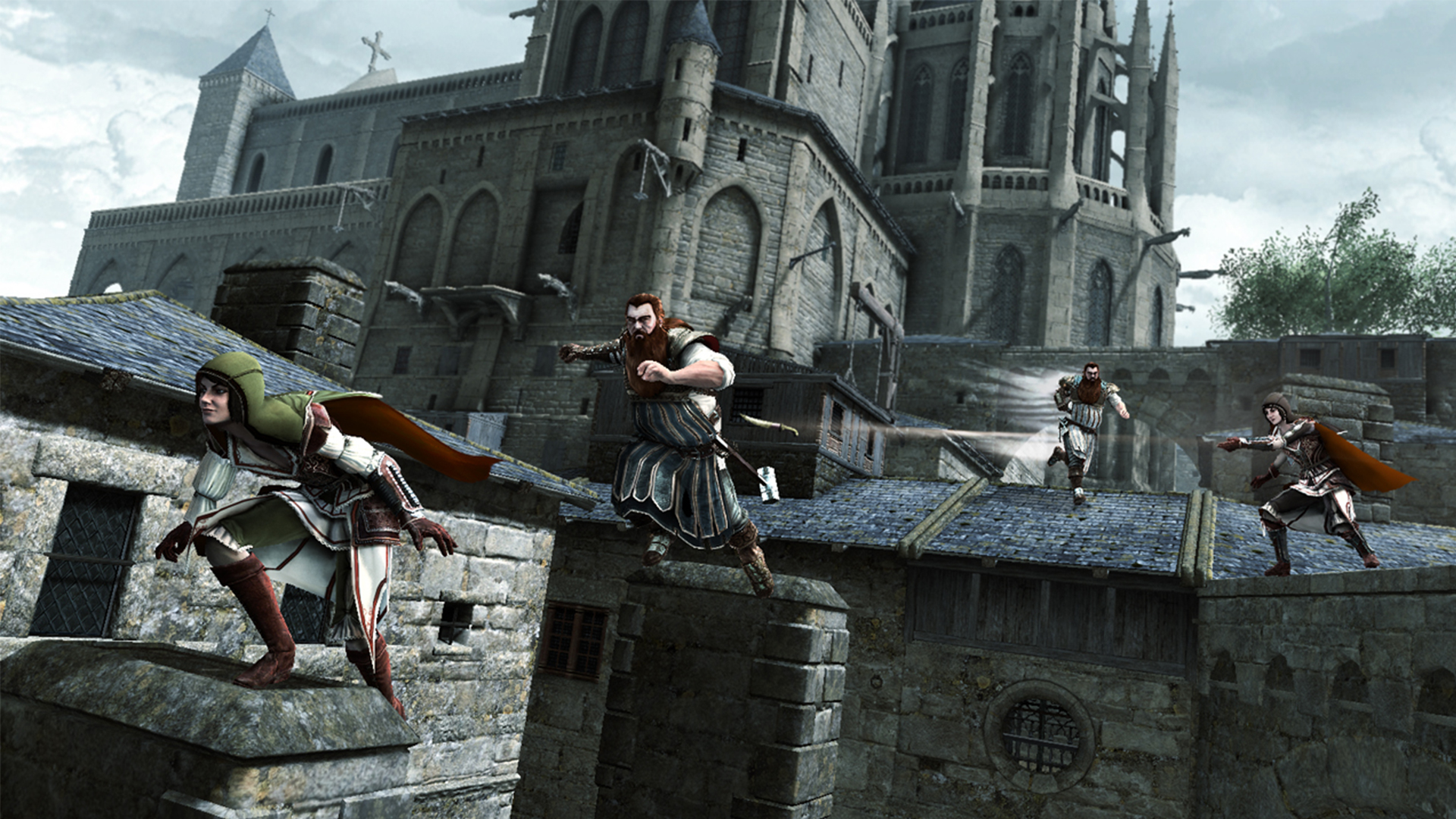
In retrospective analyses published by industry outlets like Edge Magazine, critics noted that lessons learned during the development of Brotherhood were frequently abandoned in subsequent years:
"What must, to the investor, seem like Ubisoft’s greatest asset—a vast network of global studios that can ensure that each successful series yields a new game every year—is its biggest creative problem. That busy schedule means that by the time this year’s Assassin’s Creed hits shelves, work on the next will be well underway."
Subsequent sequels often leaned into experimental bloat. For example, Assassin’s Creed Revelations introduced an overabundance of disparate mechanics, including a tower-defense mini-game, first-person puzzle platforms, and upward of 150 variations of explosive bombs, illustrating a design philosophy that prioritized novelty over structural coherence.
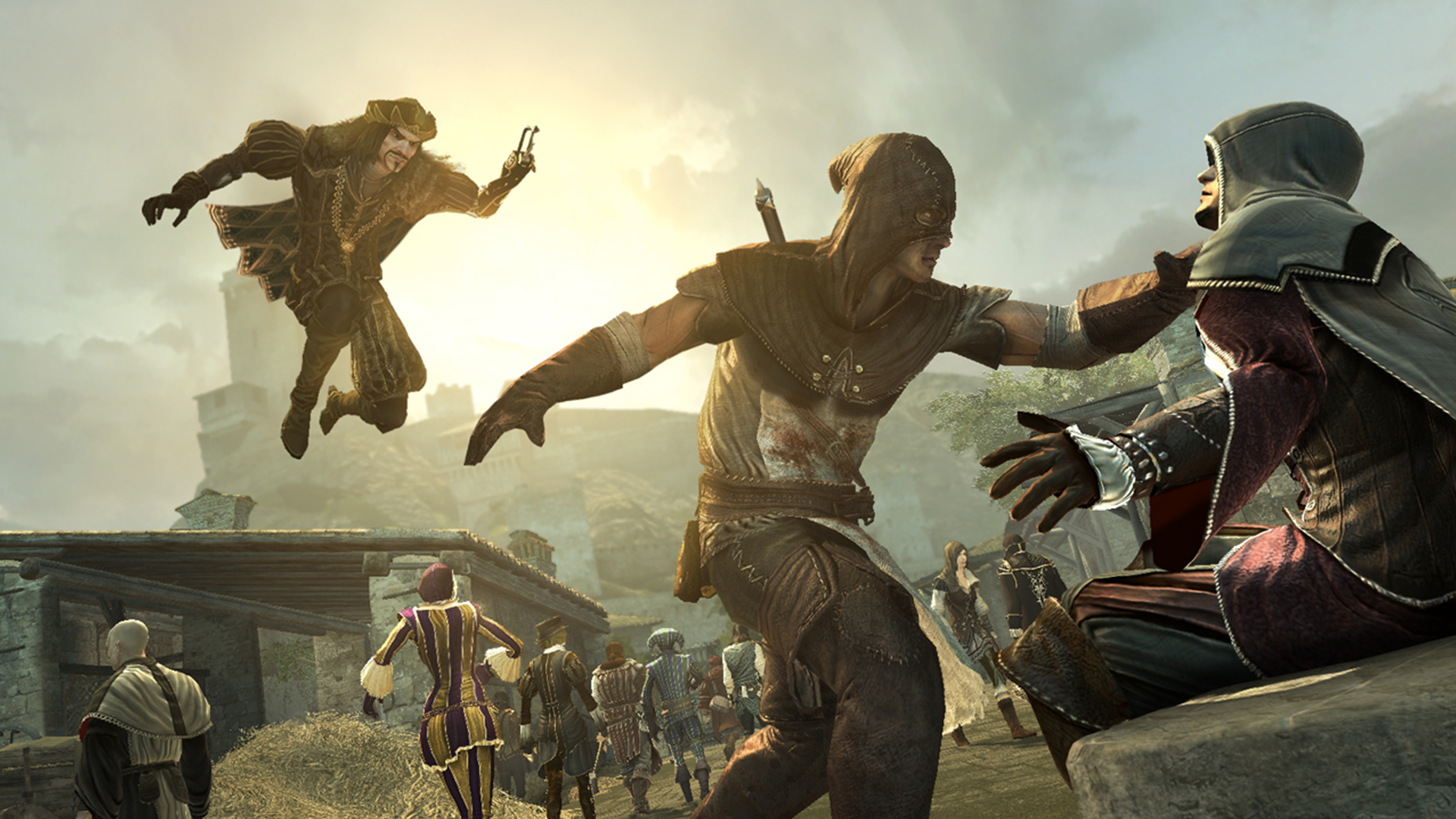
Implications: The Legacy of Rome on Modern Game Design
The shadow of Assassin’s Creed Brotherhood extends far beyond its own franchise. The game’s mechanics—clearing localized outposts to populate a map, synchronizing high points, managing economic investments, and orchestrating contextual minion strikes—became the foundational template for nearly every open-world action title released over the next decade, influencing games ranging from Far Cry to Middle-earth: Shadow of Mordor.
Yet, as modern open-world games have grown increasingly massive, expansive, and flat, the specific magic of Brotherhood has grown harder to find. Modern entries often mistake sheer map size and item density for genuine depth, losing the intimate historical connection and tight narrative pacing that made Renaissance Rome feel alive.
As Ubisoft continues to reinvent its flagship franchise through massive RPGs and multi-era live-service platforms, Brotherhood remains a poignant reminder of what happens when a studio stops chasing sheer scale and instead focuses on mechanical harmony. If modern developers wish to recapture the magic of the Hidden Blade, they could do far worse than to look back to the streets of Rome in 2010, when the most muddled franchise in video games briefly made absolute, brilliant sense.

